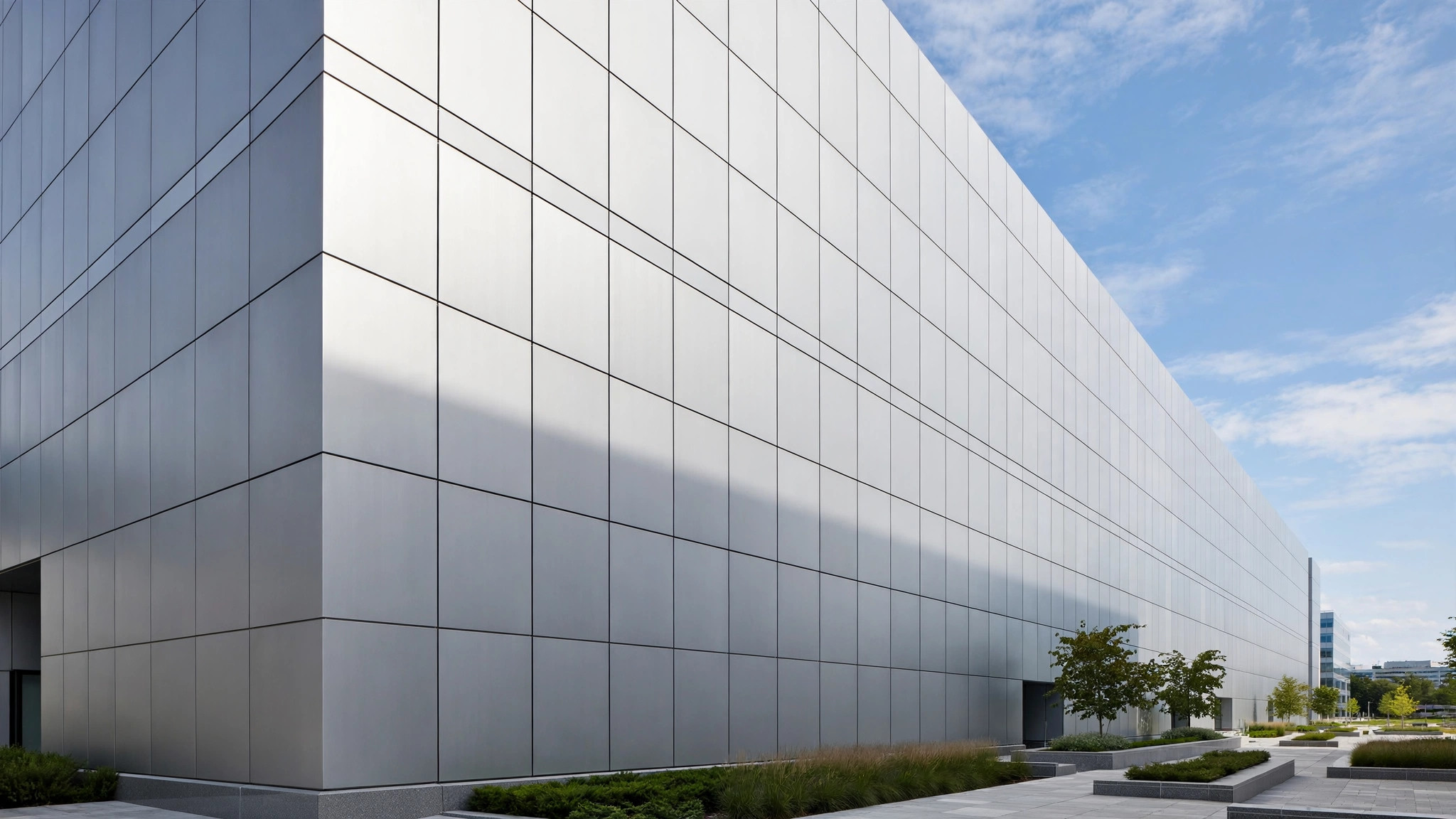
When architects and contractors specify aluminum facade panels, most of the conversation focuses on thickness, alloy, and coating type. But there is another variable that quietly shapes appearance quality and production efficiency: how the paint gets onto the panel. Roll-coated aluminum facade panels — also known as coil-coated or pre-painted panels — arrive at the building already finished, with color and coating applied to the aluminum coil before the sheet is ever cut to size. This article explains how the process works, how it compares with post-painted finishes, and where pre-coated panels fit in a U.S. project specification.
What Roll Coating Is and How It Differs from Post-Painted Panels
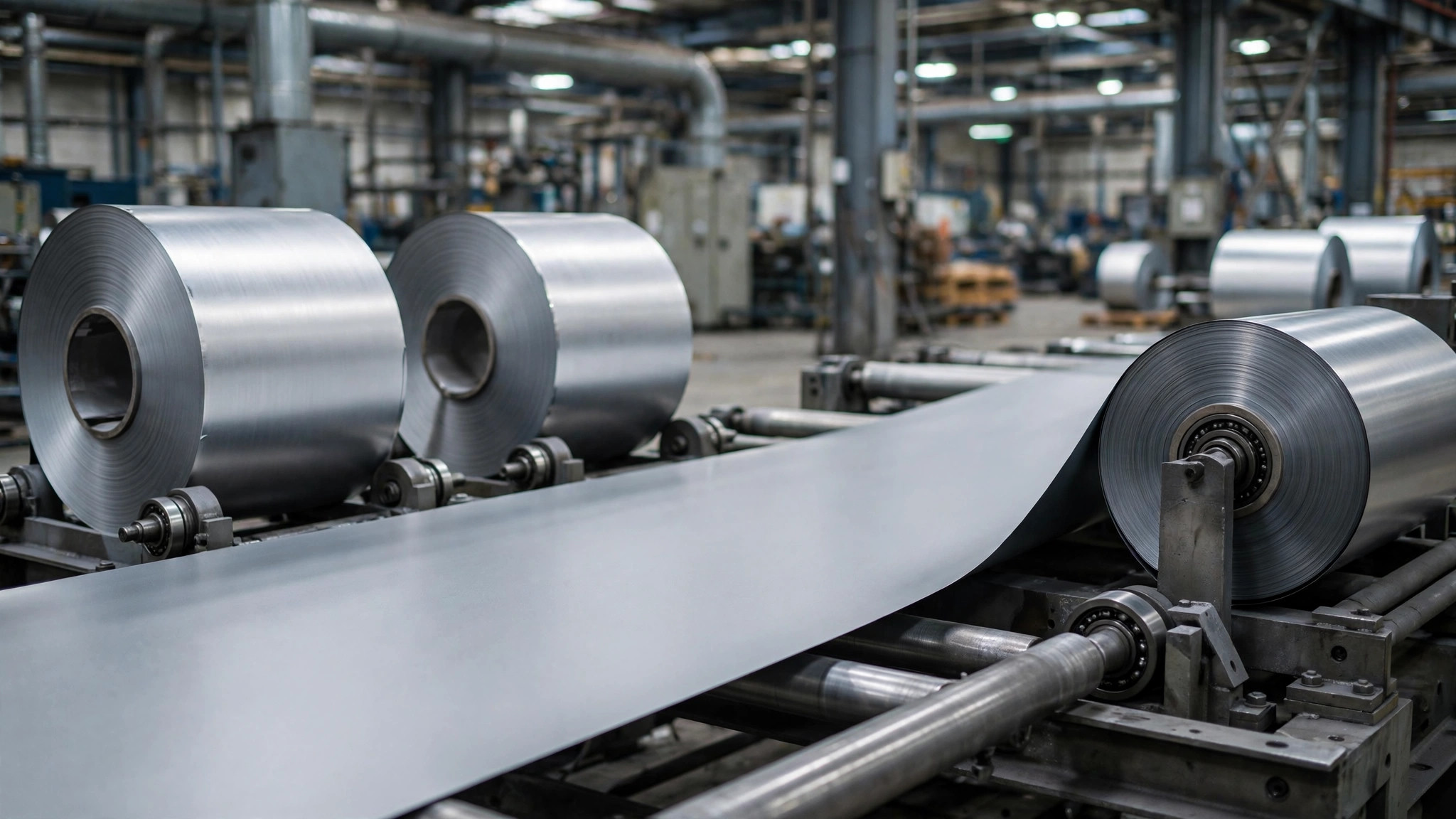
Most solid aluminum panels are post-painted: the sheet is cut, folded, and formed into a cassette first, and then the finished cassette is sent through a spray line for powder coating or PVDF liquid paint. Roll coating reverses the order. The coating is applied to a continuous aluminum coil on a high-speed coil-coating line, the painted coil is then uncoiled, flattened, cut into sheets, and fabricated into panels.
The practical result is a coating that is applied in a tightly controlled, continuous industrial process — uniform film thickness, consistent gloss, and identical color from one end of a coil to the other. Because the panel is fabricated after coating, the shop must protect the finished surface during cutting and folding: protective film is applied before fabrication and removed after installation, and bend radii are designed so the coating does not crack at the fold line.
The Roll-Coating Process: From Aluminum Coil to Finished Panel
A roll-coating line typically runs through these stages: chemical pre-treatment of the aluminum coil (degreasing, etching, and a conversion layer for adhesion), a primer coat applied by reverse-roller, the color topcoat — most commonly PVDF or high-performance polyester — applied by precision rollers, and an oven cure that locks the coating onto the metal. Film build is monitored continuously across the full width of the coil.
Because the process never stops, quality is remarkably consistent: the first meter and the last meter of a coil carry the same color and gloss. For facade projects that require a uniform field appearance — large, flat expanses of panel in a solid color — this consistency is the single biggest argument for specifying roll-coated panels. Panel fabrication follows the standard route: leveling, cutting to size, CNC punching if needed, folding into cassettes, and adding stiffeners and fixing brackets.
Roll Coating vs. PVDF Spray vs. Powder Coating
Buyers often ask which finish is “best.” The honest answer is that each fits a different situation:
- Roll coating (coil coating) — Best color and gloss consistency across large quantities; efficient production for standard panel sizes. Topcoats are commonly PVDF or high-performance polyester systems.
- PVDF spray on fabricated cassettes — Handles complex geometries, perforations, and deep-folded shapes; the industry benchmark for custom architectural finishes.
- Powder coating — Durable and economical for standard colors; an excellent choice for interior applications, soffits, and projects where extreme weather exposure is limited.
The deciding factors are panel geometry, color uniformity requirements, and project scale. A facade of flat rectangular cassettes in a single corporate color is the ideal roll-coating project. A facade with deep-faceted, perforated, or double-curved panels belongs on a spray line.
Why Panel Size and Thickness Matter in Coil-Coated Production
Coil coating imposes its own production logic. The coil has a fixed width, so sheet widths are derived from that width; our standard panels run up to 1300 × 4000 mm. Thicknesses follow the factory’s verified program — 2.0, 2.5, and 3.0 mm in 1100 and 3003 (H24) alloys. Thicker sheets and more complex folds demand more care at the bend line, which is why the bend radius and protective filming are engineered into the fabrication drawing before production begins.
Specifiers should note one constraint: field modifications are more limited with pre-coated panels. Touch-up paint on a roll-coated surface rarely matches the coil-applied finish perfectly, so cutting schedules are finalized in the shop, and any on-site trimming is planned for concealed edges. This is standard practice on well-run projects, but it deserves a line in the specification so expectations are clear.
Color Consistency: The Real Strength of Coil Coating
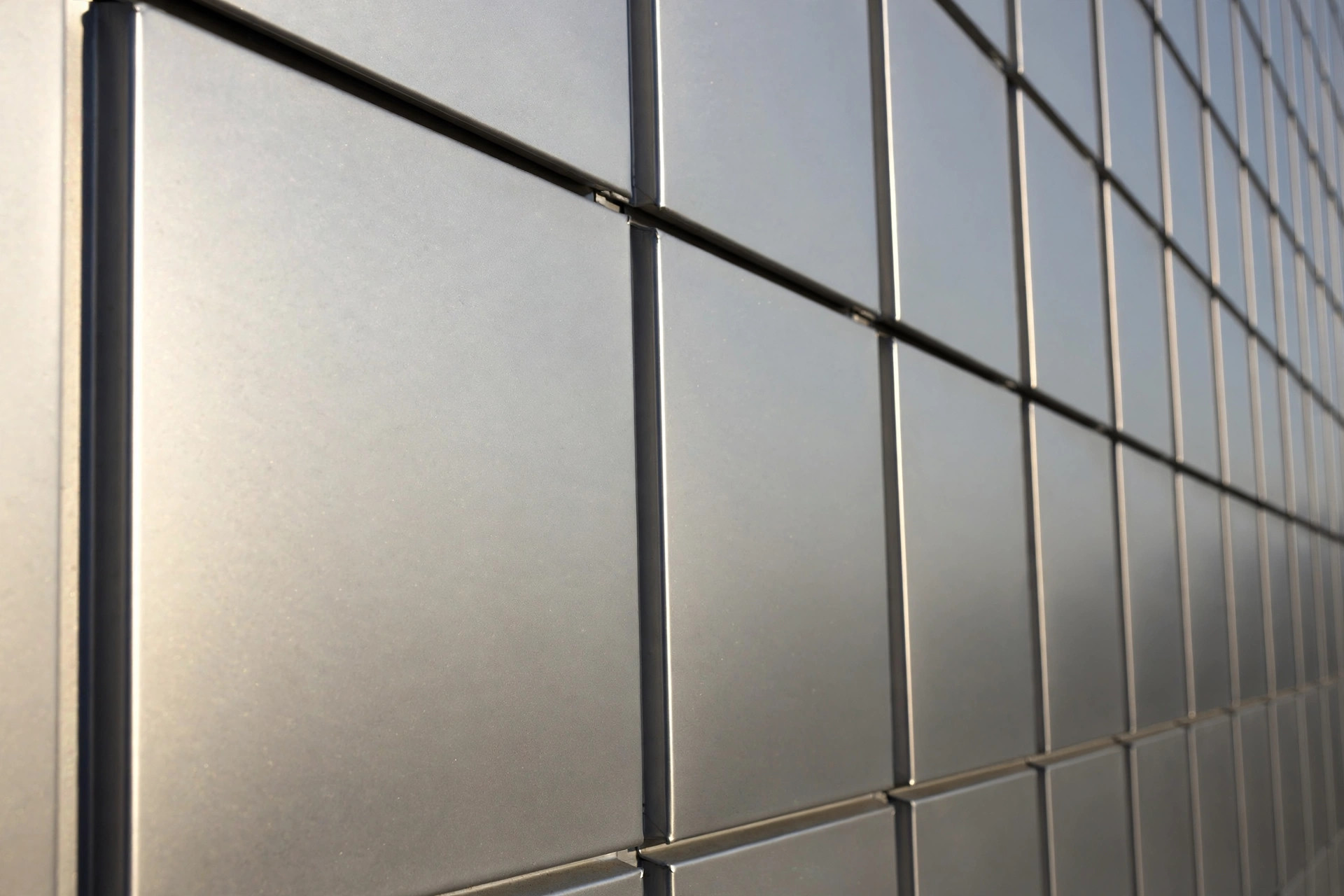
On large facades, the most visible quality defect is not a scratch — it is panel-to-panel color variation. Panels sprayed in different batches, on different days, can drift slightly in hue or gloss, and that drift becomes obvious in raking light. Roll coating largely eliminates this problem: because hundreds of panels can be cut from a single coil lot, the entire elevation shares one continuous coating run.
For projects where this matters, the specification should require that all visible panels for one elevation come from the same coil lot, and that the factory records the coil number on its shop drawings. Reputable factories track this as a matter of routine. When future replacement panels are needed, keeping the coil lot record also makes it possible to order a new production run that matches the original as closely as possible.
Where Roll-Coated Aluminum Facade Panels Fit Best
Roll-coated solid aluminum panels are at their best in these applications:
- Large commercial facades — office buildings, retail centers, and transit facilities with broad, flat panel fields in solid colors.
- Rainscreen systems — ventilated facade cassettes where the panel face is the visual surface and the system behind handles drainage and ventilation.
- Interior feature walls and ceilings — where gloss consistency under artificial lighting is especially demanding.
- Roller shutters and screening elements — flat or gently curved panels produced in high volumes.
They are less suitable for highly sculptural work — deep-folded or double-curved geometries, extensive perforation, or multi-color artistic patterns — where post-painted custom fabrication remains the better choice.
What to Specify When Ordering Roll-Coated Panels
If you are writing the specification or sending drawings for quotation, include these items so the factory can price accurately and deliver the right product:
- Coating system: PVDF or high-performance polyester topcoat, with the desired gloss level and color reference (RAL, Pantone, or a project-specific sample).
- Panel thickness and alloy: 2.0, 2.5, or 3.0 mm in 1100 or 3003 (H24), chosen for wind load and span.
- Coil-lot consistency: all visible panels per elevation from the same coil lot, with the lot recorded on shop drawings.
- Bend and fabrication details: fold geometry, stiffener layout, and fixing system — rain-screen cassette, hook-on, or bolted.
- Surface protection: protective film applied before fabrication and removed after installation; handling and storage instructions for the site.
Roll-coated aluminum facade panels are not a compromise — they are a deliberate choice for projects where uniform appearance and production efficiency matter most. For flat, repetitive facades in solid colors, pre-painted coil coating delivers the most consistent surface a factory can produce. If you are planning such a project, browse the panel systems at juchangalu.com or send your drawings for a detailed quotation tailored to your elevation layout.