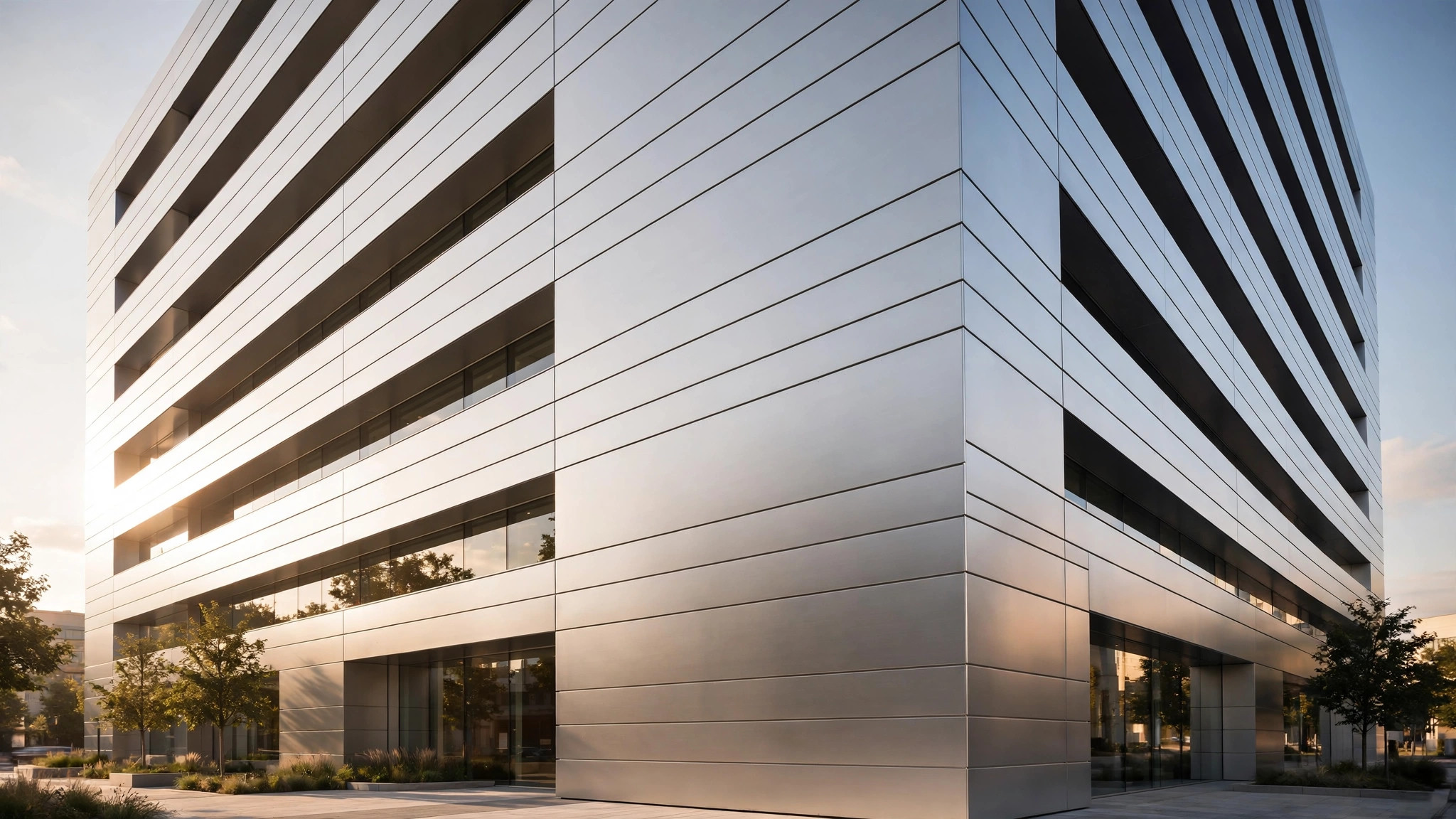
Solid aluminum facade panels are forgiving in many ways — they are rigid, non-combustible, and hold their finish for decades. But that reputation can breed overconfidence. On US commercial projects, the most expensive facade failures rarely come from the panels themselves. They come from the decisions made on site: the fixing that doesn’t move, the sealant that reacts with the coating, the measurement taken one phase too early. This guide walks through seven installation mistakes we see again and again — and what experienced contractors do instead.
1. Forgetting to Design for Thermal Expansion
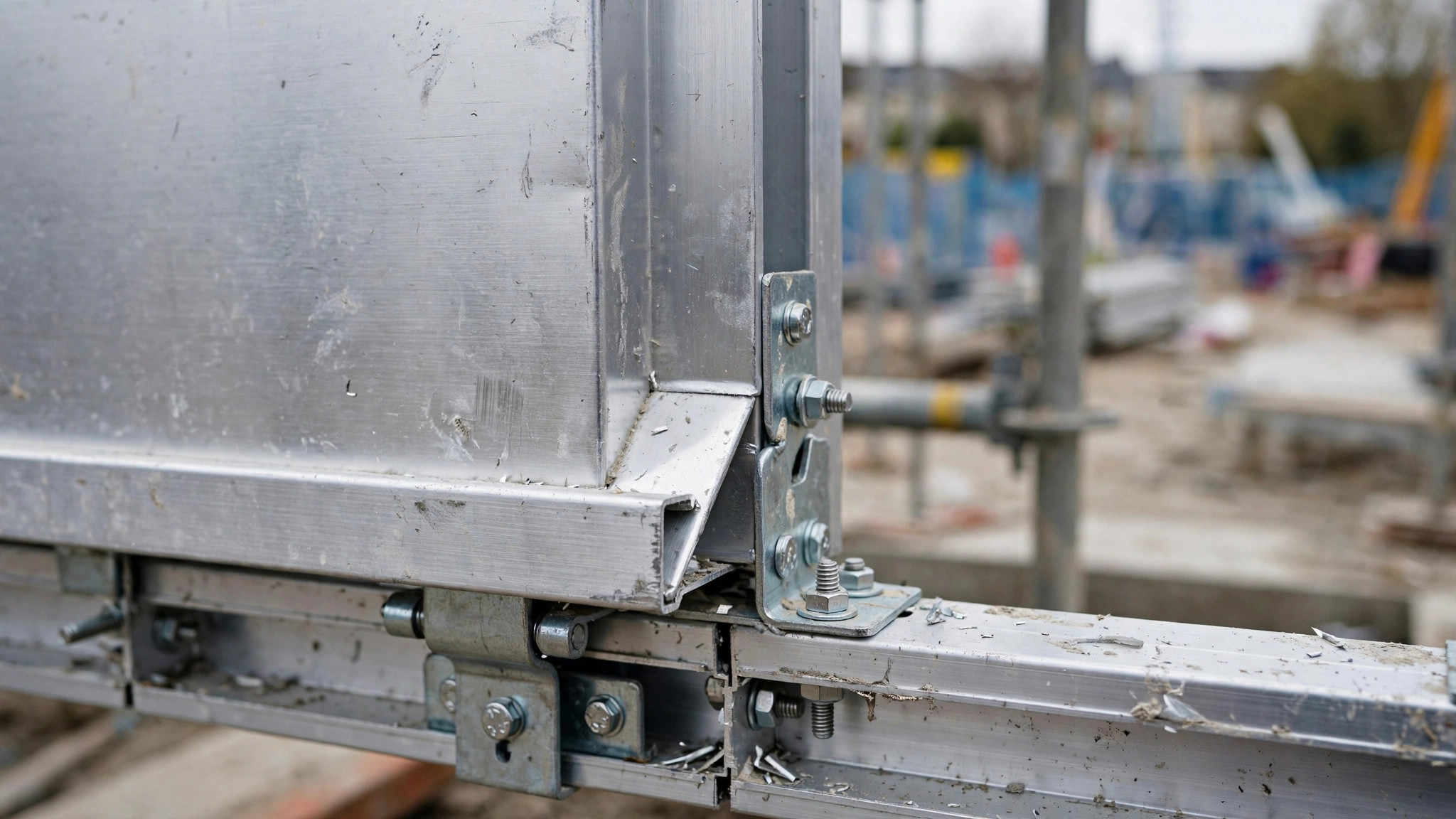
Aluminum moves with temperature — more than steel, more than glass. A solid aluminum panel facade that is rigidly fixed at every point will either buckle, drum (oil-can), or push against adjacent panels when the surface heats up in summer sun. The mistake is treating fixing points as interchangeable: every screw driven tight is another point where movement is blocked.
The practical fix is to design the fixing pattern around movement. Panels are typically held with a combination of fixed points and sliding (floating) points so each panel can expand and contract along its designed axis. Expansion joints at building corners, floor lines, and long runs should be part of the shop drawings from the start, not improvised on the scaffold. Before fabrication begins, confirm with the panel supplier which fixing zones are intended as movement points.
2. Using Incompatible Sealants and Dissimilar Metals
Two invisible mistakes live in the joint cavity. The first is sealant incompatibility: some silicone and polyurethane sealants cure with chemistries that can stain or react with PVDF and powder-coating finishes. Once a PVDF coating is stained by a curing sealant, no cleaning brings back the original color — the panel has to be replaced.
The second is galvanic corrosion from dissimilar metals. Steel screws and brackets in direct contact with aluminum, especially in coastal or de-icing-salt environments, will corrode where they touch. The fix is simple and cheap: use stainless steel or aluminum fasteners, isolate any carbon-steel substructure with EPDM gaskets or isolation washers, and check the sealant’s compatibility data sheet against the panel finish (PVDF, powder coating, or roll coating) before the first cartridge is opened.
3. Skipping Layout Planning Before Panels Arrive
Solid aluminum panels are usually fabricated to the shop drawings — 2.0, 2.5, or 3.0 mm thick sheets cut, folded, and reinforced into cassettes sized to the project grid, within the conventional maximum of about 1300 × 4000 mm. That makes them precise, but also unforgiving: once fabricated, a panel fits the plan or it doesn’t.
The common error is treating the first delivery as the moment to start planning. Experienced installers finalize the panel layout — module widths, joint widths, starter courses, and reveal details — before fabrication, and mark the actual grid lines on the building substrate first. Any mismatch between the approved drawings and field conditions should be resolved with the fabricator while the panels are still on the press, not on the lift. A layout mock-up on the substrate, even with just the first few cassettes, exposes alignment issues when they are still cheap to fix.
4. Handling Panels Without Adequate Support
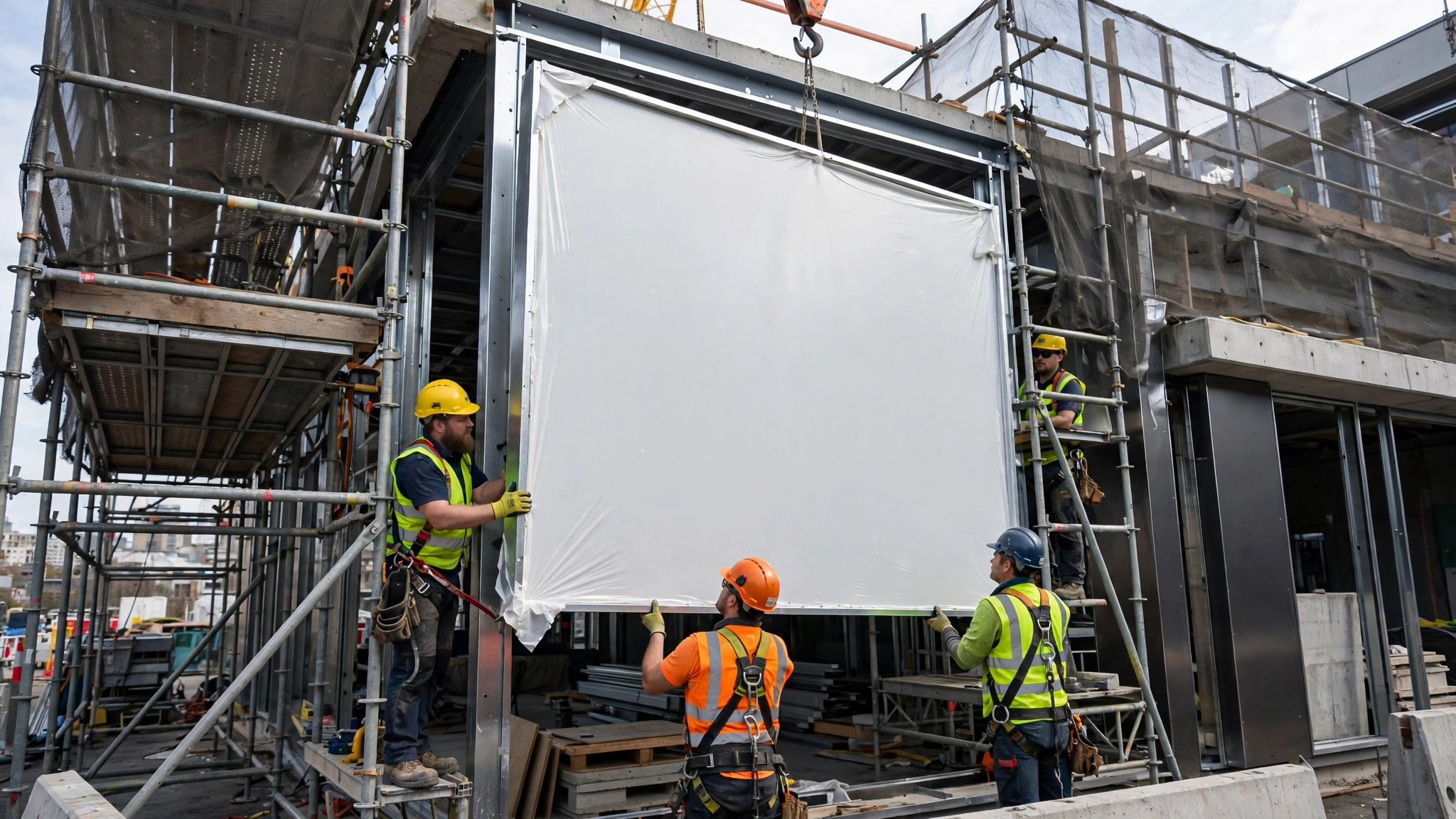
Large-format panels are stiff, but only when supported the way they were designed to be supported — at their stiffening ribs and engineered fixing zones. Carrying a 3 mm panel by its corners, standing it on one edge, or dragging it across a rack invites exactly the damage that is hardest to see until it is too late: subtle bends, creased edges, and scratched finishes that show up only after the protective film comes off.
Set a simple site rule: panels are always lifted with the film on, always carried vertically by two or more workers using the reinforced edges, and always stored flat or near-vertical on padded racks, never stacked horizontally without separation. PVDF and powder-coating finishes are hard, but an edge strike on a neighboring panel will leave a mark that cannot be polished out without changing the gloss.
5. Removing the Protective Film at the Wrong Time
The protective film is the cheapest insurance on the whole facade. Peel it too early — before the adjacent trades are finished — and every panel becomes a target for concrete splatter, welding sparks, and scaffold scuffs. Leave it on too long, especially through a hot summer, and the adhesive can bake onto the coating, leaving residue that resists normal cleaning and may ghost the finish.
The rule of thumb contractors use: keep the film on until the panel is fully fixed, adjusted, and the surrounding wet trades are done, then remove it panel by panel during final cleaning, checking for adhesive residue as you go. If a project stalls with film still on, check with the film and panel supplier how long the film can remain before removal becomes a problem — film rated for a few months of UV exposure is not the same as one rated for a full season.
6. Skipping the Full-Scale Mock-Up
Drawings and material samples approve colors, profiles, and finishes. They do not approve the reality of the wall: how the fixing brackets behave against the real substrate, how the joint widths read at twenty meters, or how the panels sit at corners and floor transitions. The mistake is treating a small color chip as the entire approval and going straight to full production.
A full-size mock-up — even a modest one, a few panels in the exact alloy and thickness, with the actual substructure and joint details — answers questions no sample can: Are the fixing tolerances realistic? Do the reveals stay consistent? Does the PVDF color match hold across panels from different sheets? One mock-up that reveals a problem saves a whole facade of it. Many US general contractors now require a visual mock-up before releasing the balance of the order — treat it as cheap insurance.
7. Ordering Panels Before Final Field Measurements
Buildings are never as square as their drawings. Concrete substrates drift, steel embeds move, and curtain-wall grids shift between design and construction. Ordering every panel from the bid dimensions locks in assumptions that the building may not honor — and remade panels cost far more than one more site survey.
Successful projects split the order into phases: release the standard-field panels on the approved drawings, but hold edge, corner, and termination panels until final field measurements confirm the actual dimensions. Because solid aluminum panels are fabricated per project, the factory can cut later batches to corrected sizes — but only if the measurement schedule is built into the program. Confirm the sequencing with both the installer and the factory before the first purchase order goes out.
Getting It Right the First Time
None of these mistakes is about panel quality — it is about planning, sequencing, and site discipline. The contractors who install solid aluminum facade panels without callbacks share the same habits: they plan the layout before fabrication, protect the finish until the last trade leaves, respect thermal movement, and verify everything with a mock-up and field measurements. Browse the panel options at juchangalu.com, or send us your drawings for a detailed quotation tailored to your project.