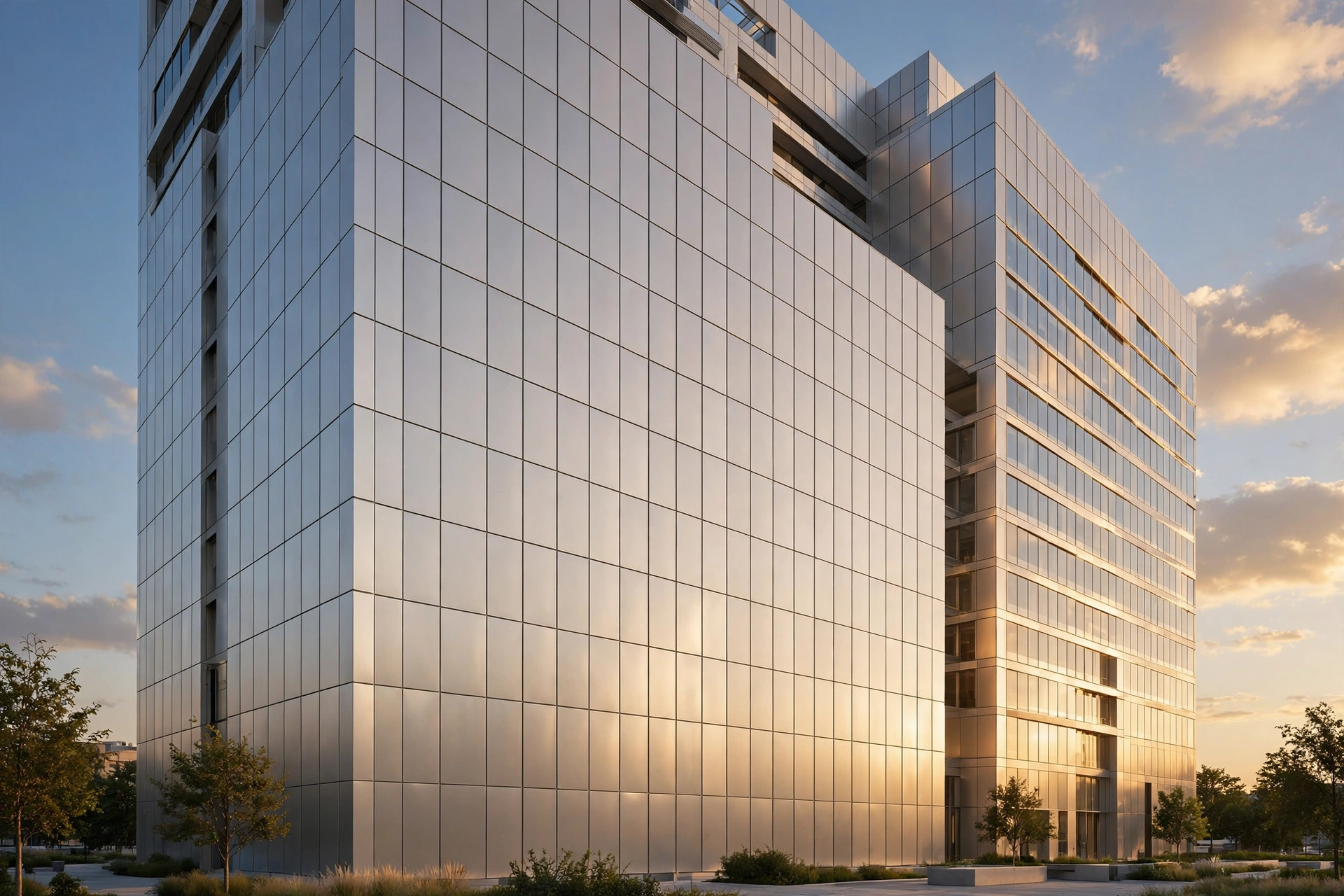
Walk up to a large commercial facade on a sunny afternoon and you may notice something disappointing: panels that were supposed to be the same champagne silver look subtly different from floor to floor. This is color inconsistency — one of the most common, and most preventable, quality complaints in aluminum facade panel projects. For US buyers, architects, and contractors, understanding how color variation happens — and how to control it in specifications and factory processes — is the difference between a crisp, uniform curtain wall and an expensive patch-up job.
Why Color Consistency Matters More Than You Think
A solid aluminum facade panel project can involve thousands of square feet of material produced in multiple batches, often months apart. When adjacent panels differ in shade, the whole building reads as defective — even if every panel meets its structural specification. Color inconsistency is also hard to fix: unlike a dent or scratch, a panel that is half a shade off cannot be “repaired,” only replaced, and replacements made later may match even less well.
On commercial projects, inconsistent color is typically rejected by the architect’s field review or the owner’s punch list. That means re-fabrication, air freight for rush replacements, schedule delays, and a damaged relationship with your client. Specifying color tolerance up front — and choosing a factory that can actually hold it — costs far less than any of these outcomes.
What Causes Color Variation in Aluminum Panels
Understanding the sources of variation helps you ask the right questions when qualifying a supplier:
- Coating batch differences. PVDF and powder-coat paint are mixed in batches. Even with the same formula, microscopic differences in pigment dispersion between paint lots can shift the final color.
- Coating method. Coil-coated (roll-coated) panels are pre-painted in continuous lines and generally show tighter batch-to-batch consistency than panels sprayed individually, because the coating environment — line speed, oven temperature, film thickness — is held constant.
- Application conditions. For post-coated (sprayed) panels, film thickness variation, cure time, and even ambient humidity during spraying can all nudge the final appearance.
- Base metal texture. Surface grain direction of the aluminum sheet influences how light reflects off the finished panel. Factories control this by cutting and orienting panels consistently.
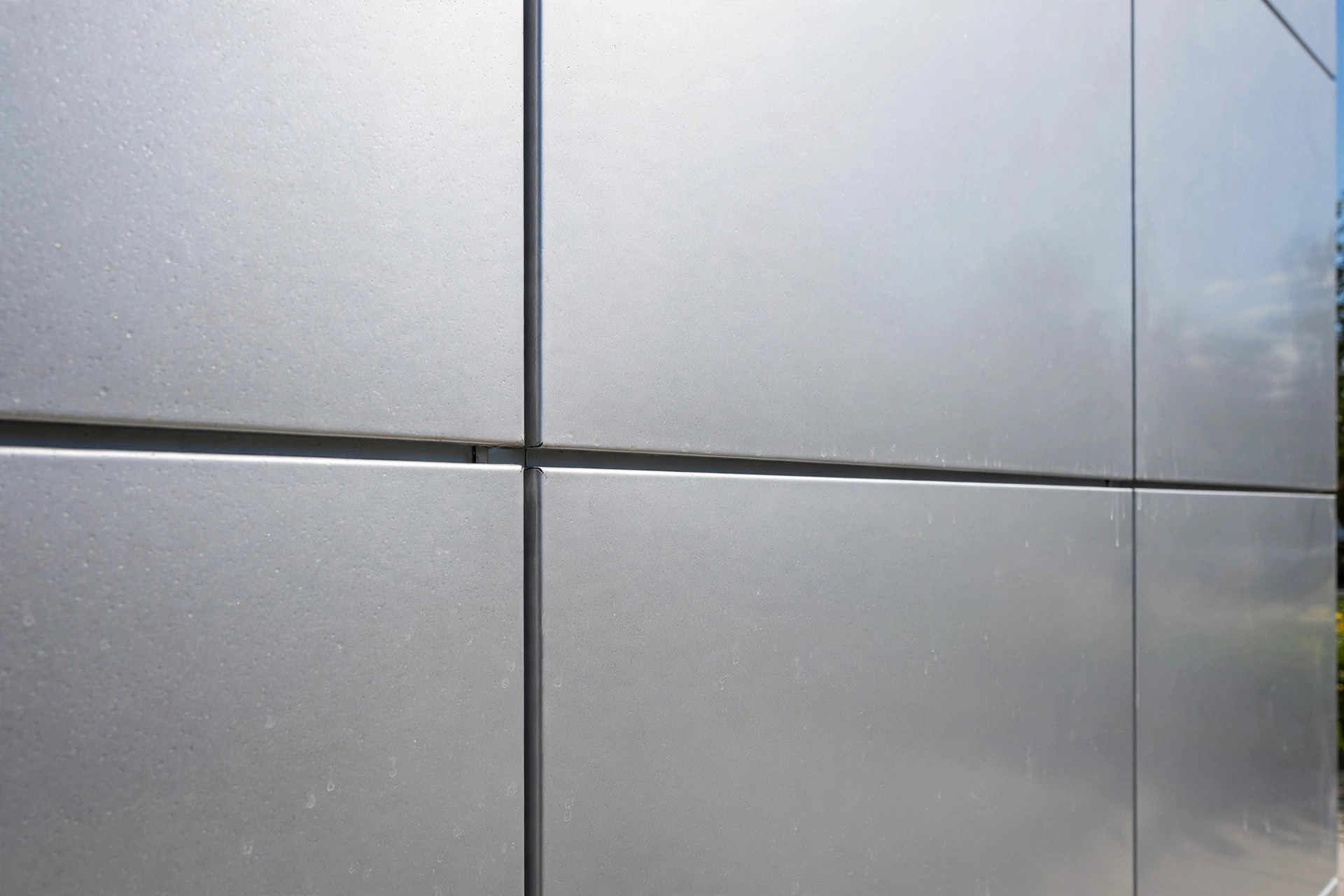
- Viewing geometry. Metallic and pearl finishes shift appearance with the viewing angle. This is not a defect, but it must be accounted for when approving samples — panels should always be evaluated installed vertically, under daylight, at a consistent viewing distance.
ΔE: The Number That Defines “Same Color”
In the facade industry, color difference is measured, not eyeballed. The standard metric is ΔE (Delta E), which quantifies the difference between two colors using a spectrophotometer. A ΔE value of 0 means the colors are identical; larger numbers mean a more visible difference.
For reference, most people cannot detect a color difference below ΔE 1.0 under controlled conditions. In practice, a ΔE of 2.0 or less between adjacent installed panels is generally considered excellent for solid-color facades, and many US specifications set acceptance limits in this range. For metallic finishes, slightly wider tolerance bands are commonly accepted, because flake orientation naturally creates more variation — but the acceptance range should still be defined in writing before production begins.
The key point for buyers: do not rely on a verbal promise of “no color difference.” Ask the factory to state its color-tolerance control in terms of ΔE, measured with a calibrated spectrophotometer, and ask what happens when a batch falls outside that range.
How to Specify Color Consistency in Your Project
A strong specification protects you. Include these elements in your purchase order or submittal requirements:
- Define the acceptance metric. State the maximum allowable ΔE between panels within one elevation (for example, ΔE ≤ 2.0 for solid colors), and how it will be measured (spectrophotometer, D65 light source, measured on installed panels).
- Require a full-size mock-up. Before mass production, have the factory produce a mock-up wall of several square meters using panels from at least two different coating batches. Approve it under natural daylight, standing at the typical viewing distance for the building.
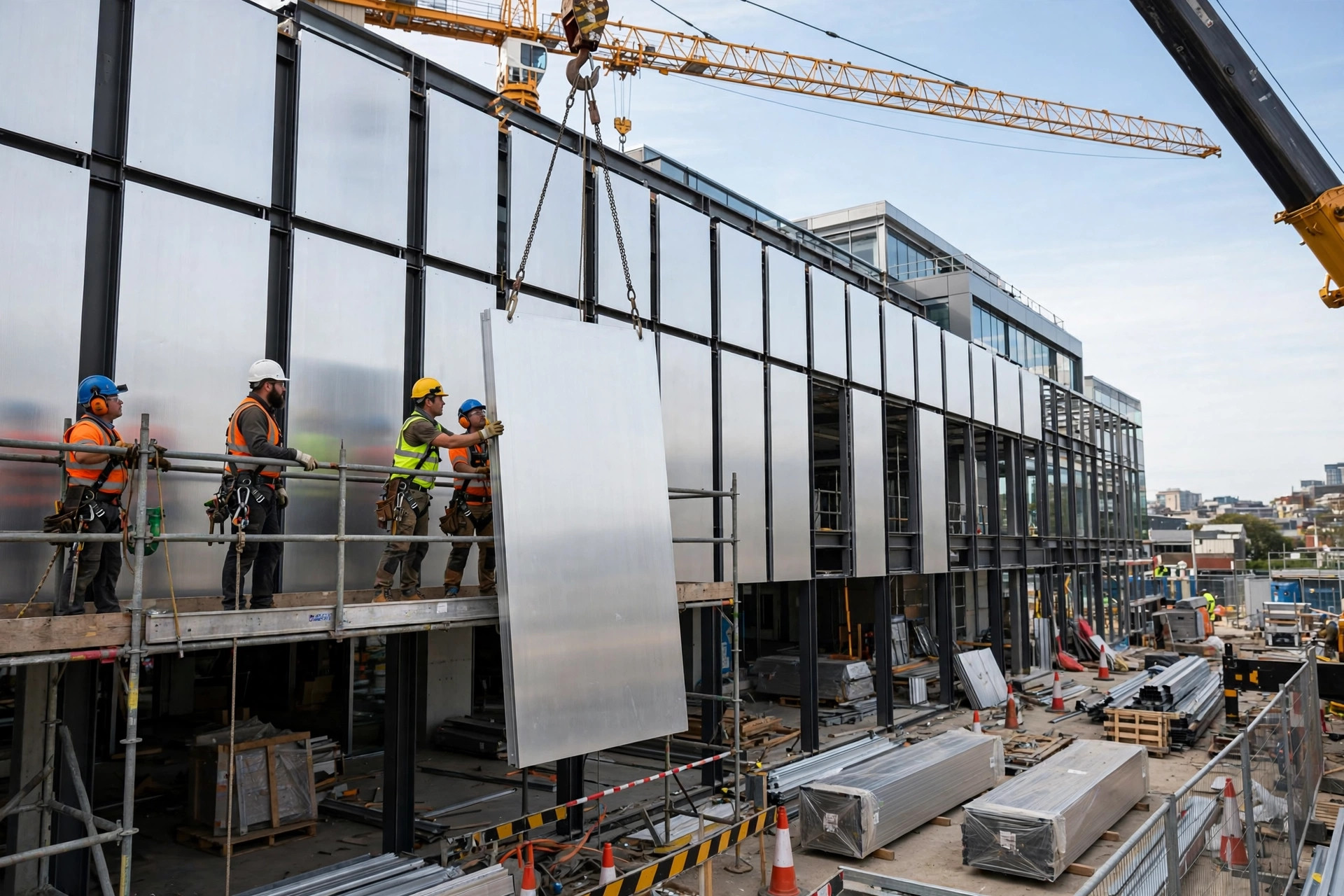
- Control batch planning. Ask the factory to schedule all panels for a single elevation — or better, the whole project — within as few coating batches as practical, and to label panels by batch so installation crews can distribute panels evenly across the facade rather than clustering one batch in one area.
- Specify panel orientation. Require grain-direction arrows on the back of each panel so installers mount every panel the same way. This single step eliminates a surprising number of “color problem” claims.
- Address replacements. Agree in advance on how replacement panels will be matched — ideally produced from a retained paint sample or reference panel, not from memory.
How a Well-Run Factory Controls Batch Consistency
When you tour or audit an aluminum panel factory, look for these controls:
- Single-source paint procurement. Reputable factories buy coating paint for an entire project from one paint supplier, in one order, to minimize lot-to-lot drift.
- In-line color monitoring. Coil coating lines measure color continuously and adjust in real time; good factories also pull periodic samples for spectrophotometer verification against the approved standard.
- Retained reference panels. A physical master panel, signed off by the buyer, is kept in a controlled environment and used to calibrate every production batch.
- Batch records. Every panel’s production batch, paint lot number, and coating date should be traceable, so that if a variation is found, the factory can identify exactly which panels are affected.
- Pre-shipment layout inspection. Before crating, panels are laid out under consistent lighting and visually checked as a group — this catches variation that spot checks miss.
Practical Tips for US Buyers and Contractors
Even with a good factory, a few project-side habits make a real difference. First, order all panels for the project at once rather than phasing orders across months; each production run is a new opportunity for drift. Second, store approved color chips and sample panels in a dark, climate-controlled place — sun-faded reference samples have caused many false “mismatch” disputes. Third, when panels arrive, installers should open multiple crates and blend panels from different batches across each elevation instead of finishing one crate before opening the next. Finally, conduct the architect’s color review before panels are permanently fixed, while repositioning is still cheap.
Color consistency is not luck. It is a chain of small, deliberate decisions — a measurable ΔE target, a daylight mock-up, batch-controlled production, and disciplined installation. Buyers who manage that chain end up with facades that look exactly as the renderings promised. To discuss color control and batch planning for your project, browse our products at juchangalu.com or send your drawings for a detailed quotation.