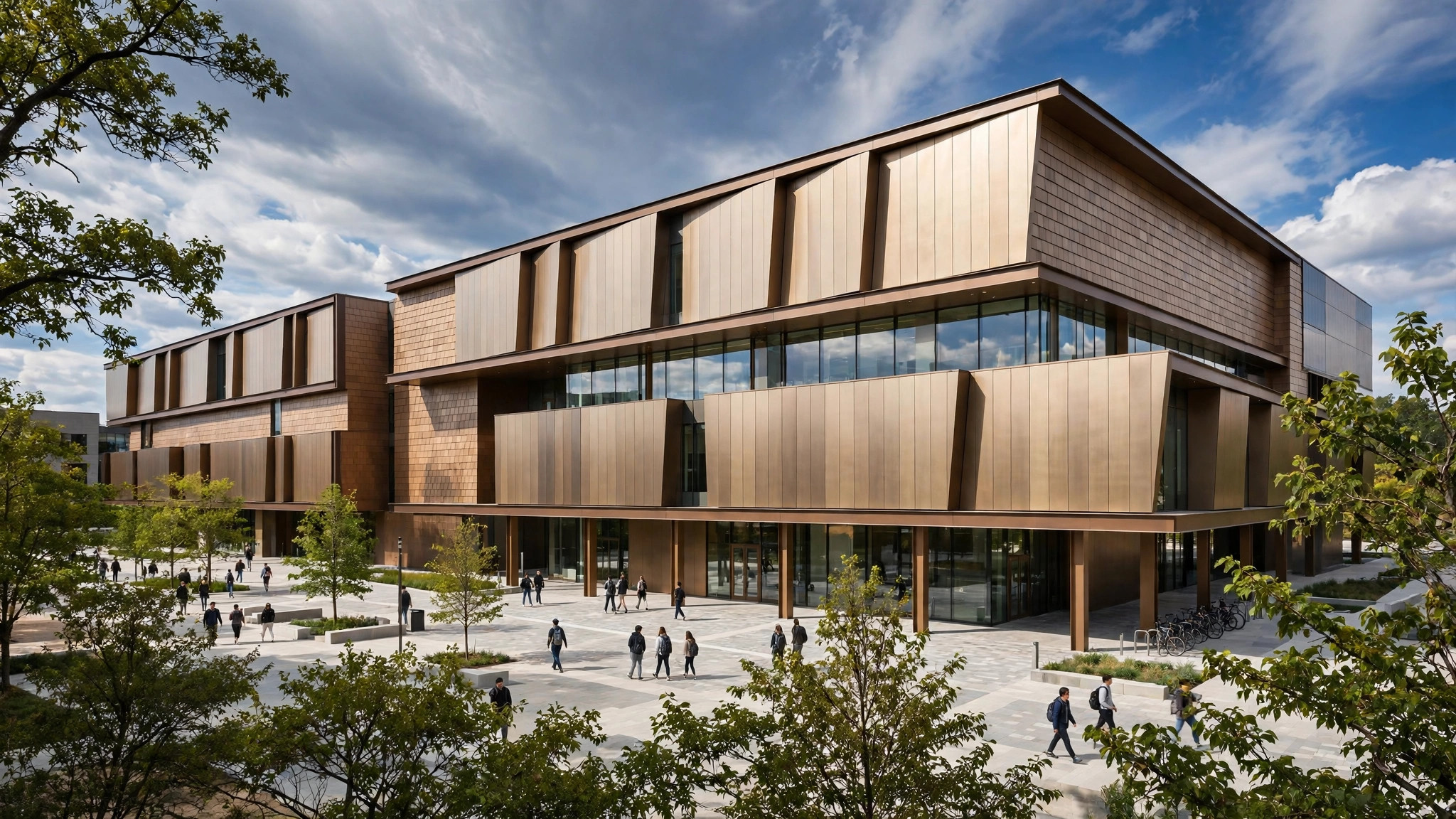
From K-12 schools to university campuses, educational buildings have to work hard: they welcome thousands of students every day, stand up to weather and wear, and represent the institution’s identity for decades. The facade is where all of these demands meet. Solid aluminum facade panels have become a practical choice for school construction and renovation across the US, combining durability, design flexibility, and low maintenance in a way that fits tight public budgets and long building lifecycles.
Why Solid Aluminum Panels Fit Educational Buildings
School facades face a unique combination of challenges. They must resist impact and accidental damage, stay attractive between infrequent renovation cycles, and meet strict safety expectations from parents and school boards. Solid aluminum panels answer these demands well: they are rigid, lightweight, and corrosion-resistant, so they do not crack, spall, or absorb moisture the way masonry or fiber-cement can. A ventilated rain-screen assembly with aluminum panels also allows air circulation behind the cladding, helping manage moisture in the wall—an advantage in schools built in hot-humid or freeze-thaw climates.
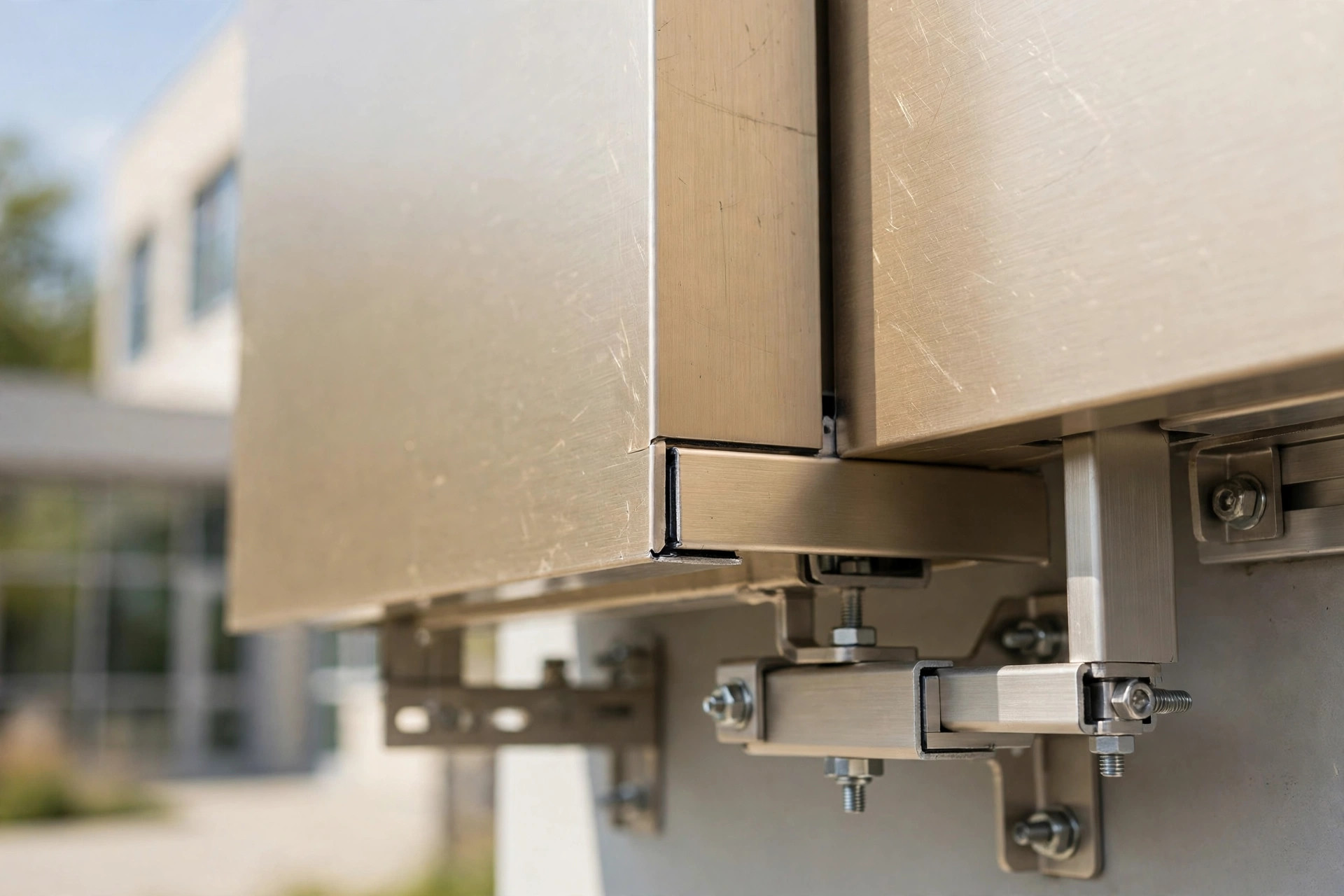
Maintenance is another reason facility managers favor aluminum. A smooth, coated surface sheds dirt and can be washed with water and mild detergent, keeping the building looking fresh without repainting cycles. Individual panels are removable, so a panel damaged by a stray ball or an accidental impact can be swapped out without disturbing the rest of the facade.
Choosing Panel Thickness and Alloy for School Facades
Panel thickness and alloy directly affect rigidity, dent resistance, and fabrication cost. For educational projects, 3.0mm panels are the standard choice for exterior walls, especially at ground level and in high-traffic zones where impact resistance matters most. 2.5mm panels work well for upper-story cladding and soffits, while 2.0mm panels are typically reserved for interior applications such as corridor walls and auditorium linings, where they do not face wind loads.
Alloys 3003 and 1100 in the H24 temper are the industry workhorses for solid aluminum facade panels. 3003 offers slightly higher strength and is widely specified for exterior curtain-wall panels; 1100 is softer and easier to form, which suits decorative bends and curved feature elements at school entrances and atriums. For typical school facades, panels up to 1300 × 4000mm can be fabricated as single pieces, allowing generous module sizes that reduce the number of joints and keep elevations looking clean.
Design Freedom: School Colors, Graphics, and Perforated Panels
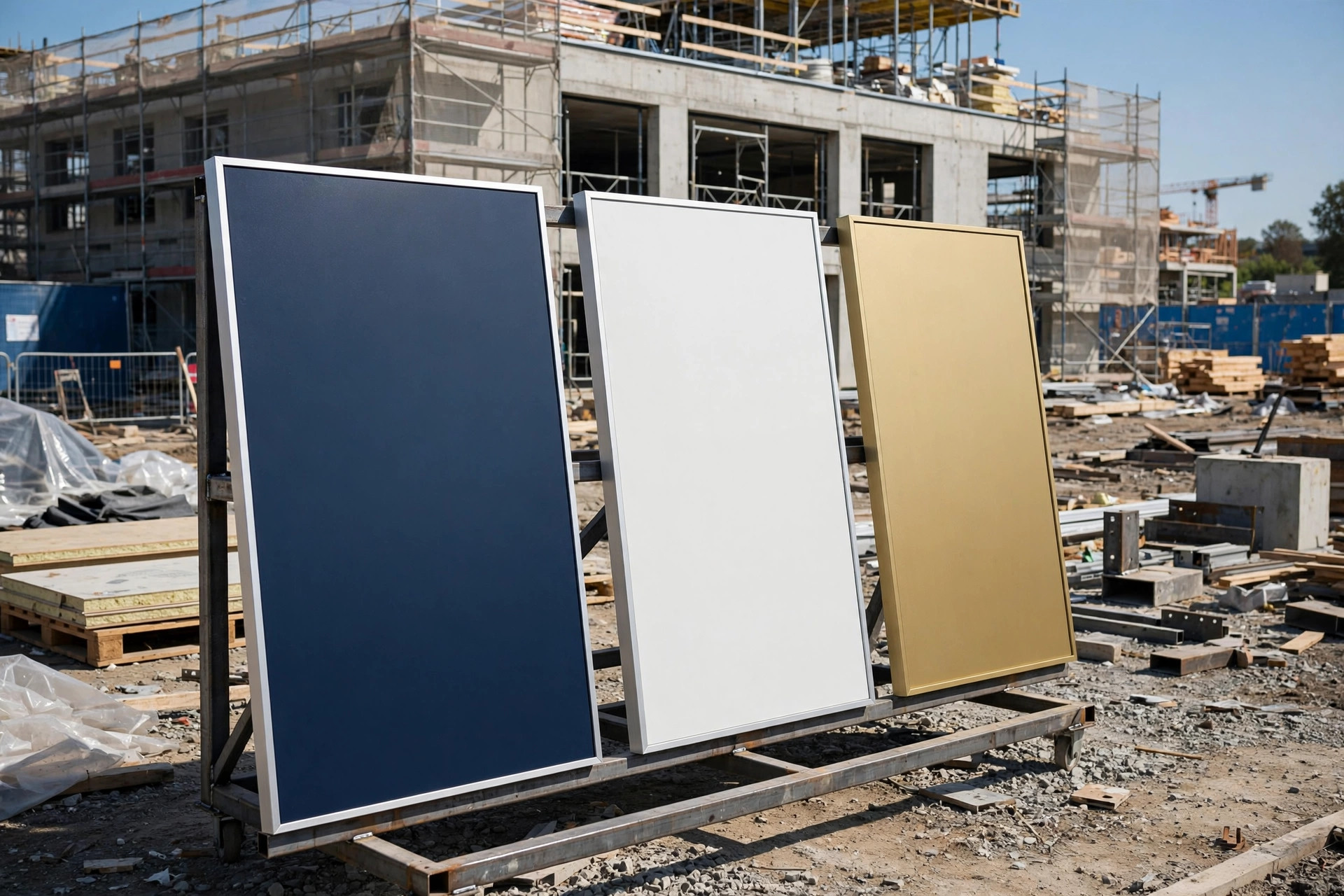
School identity matters, and aluminum panels offer one of the broadest color palettes in exterior cladding. PVDF coatings provide excellent color retention and come in solid colors, metallics, and custom-matched school colors, so the facade can carry the institution’s branding for decades without fading. Powder coating is a cost-effective alternative for less exposed areas, and roll-coated (pre-painted coil) panels deliver consistent finishes for large, repetitive elevations such as classroom wings.
Beyond flat color, perforated and carved aluminum panels open up graphic possibilities: perforated sunshades that double as wayfinding art, cut-out school emblems on entrance canopies, or wood-look and stone-look finishes that bring warmth to libraries and student centers without the upkeep of real wood or stone. Because panels are fabricated to shop drawings, each elevation can carry its own pattern while sharing the same fixing system.
Fire Safety and Code Considerations
Fire safety is non-negotiable in educational occupancies, and solid aluminum panels are a non-combustible cladding material—an important distinction from composite panels with polymer cores. That said, the facade system as a whole—panels, sub-framing, insulation, and cavity barriers—must be detailed and specified to meet the applicable building code for the project. US specifiers should coordinate early with the architect of record and the authority having jurisdiction to confirm the required assembly performance, especially for high-rise dormitories and mixed-use campus buildings.
Practical specification steps include defining the panel alloy and temper, coating type, and thickness in the spec section; requiring shop drawings that show every panel, joint, and fixing; and planning for full-size mock-ups on flagship projects so the design team can approve color, texture, and joint rhythm before production begins.
Maintenance Planning for Busy Campuses
Schools rarely have large maintenance crews, so the facade should be as self-sufficient as possible. Aluminum panels fit this reality: annual or semi-annual washing with clean water and a soft brush is usually enough, and PVDF finishes resist graffiti better than most alternatives—spray paint can typically be removed with approved cleaners without damaging the coating. Facility teams should also schedule a visual inspection of joints and sealants each year, since sealant is the component most likely to need attention over a facade’s life.
It is worth keeping a small stock of spare panels in the school color, ordered with the original batch. Coatings can shift slightly between production batches, and having matching spares on hand means a damaged panel can be replaced invisibly years later.
Budget and Procurement Tips for School Projects
Public school projects live or die by the budget, and aluminum facades can be value-engineered without sacrificing performance. Keeping panel modules within the standard 1300 × 4000mm sheet size avoids oversize fabrication steps and extra material waste. Limiting the color palette to two or three finishes reduces setup costs, while using perforated or carved panels as accents—rather than across the whole facade—delivers visual impact where it counts, at entrances and feature walls.
For phased campus work, where buildings are added over several years, record the exact alloy, thickness, coating system, and color formula in the project files. Sharing this documentation with the panel supplier on later phases helps new panels match the original buildings. Contractors should also coordinate panel delivery with the construction schedule so panels arrive just in time for installation, minimizing on-site storage and handling damage.
Solid aluminum facade panels give schools a facade that is tough enough for daily student life, flexible enough to express school pride, and simple enough for a lean maintenance team to keep looking new. If you are planning a new school building or a campus renovation, browse the panel options at juchangalu.com or send your drawings for a detailed quotation tailored to your project.