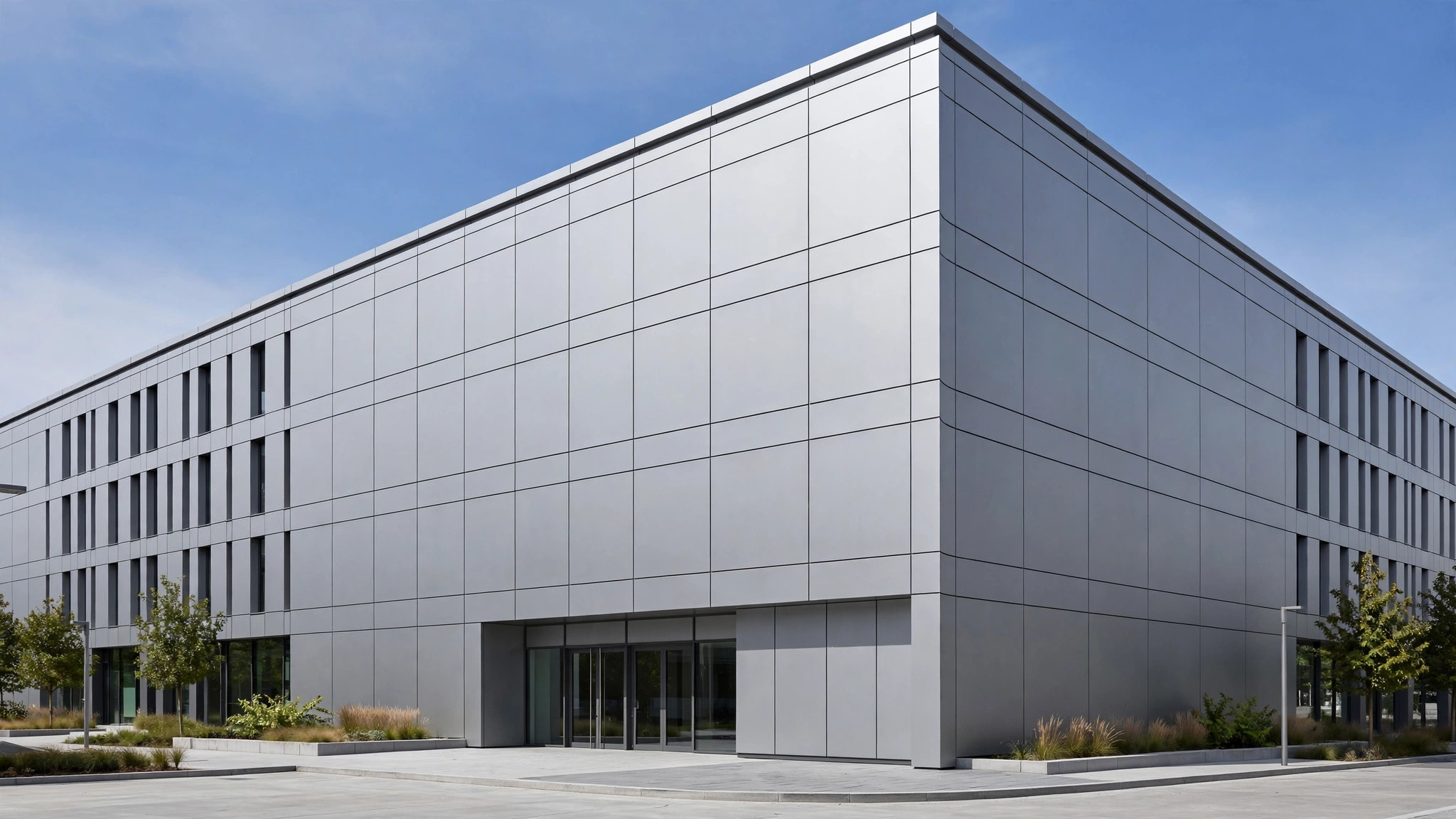
When a US architect, contractor, or distributor asks “how much do solid aluminum facade panels cost,” the honest answer is: it depends — and the range can be wide. Unlike commodity building products, solid aluminum facade panels are engineered-to-order: thickness, finish, pattern, panel size, and quantity each push the final number in a different direction. This guide breaks down the six factors that drive the price, shows public market reference ranges (with sources), and tells you exactly what to send a factory so your quotation comes back accurate on the first round.
1. Thickness: The Biggest Material Driver
Panel thickness is the single largest driver of raw material cost, because it determines how much aluminum goes into every square meter. In the US curtain wall market, solid aluminum panels are commonly specified at 2.0mm, 2.5mm, or 3.0mm. Moving from 2.0mm to 3.0mm can raise material weight by roughly 50%, which flows directly into sheet cost, freight weight, and structural support requirements.
Thicker is not automatically better. A 2.0mm panel suits interior wall cladding and low-wind soffits; 2.5mm is the workhorse for most commercial facades; 3.0mm is reserved for large-format panels, high wind-load zones, and spans between supports. Specifying 3.0mm “just to be safe” on a low-rise project can inflate the material budget without any performance benefit. The right thickness is a structural decision first and a cost decision second — ask the factory for the maximum recommended span for each gauge before you finalize the specification.
2. Surface Finish: PVDF, Powder Coating, or Roll Coating
Finish is the second major cost lever and the one that determines long-term appearance. PVDF (fluorocarbon) coating — typically applied at 70% Kynar 500 / Hylar 5000 resin content — is the premium choice for exterior facades, with color and gloss warranties that far outlast alternatives. Powder coating costs less and performs well for interiors, soffits, and moderate climates. Roll coating (coil coating) is the most economical for flat panels at volume, since the coating is applied to the coil before fabrication.
Custom colors also move the needle. Standard RAL colors run on a routine production schedule; a custom metallic, mica, or color-matched finish requires a separate coating batch, which adds setup cost that is most economical when spread across a large quantity. If budget is tight, ask whether your project color can be matched from the factory’s existing color library before requesting a custom run.
3. Perforation and Pattern Complexity
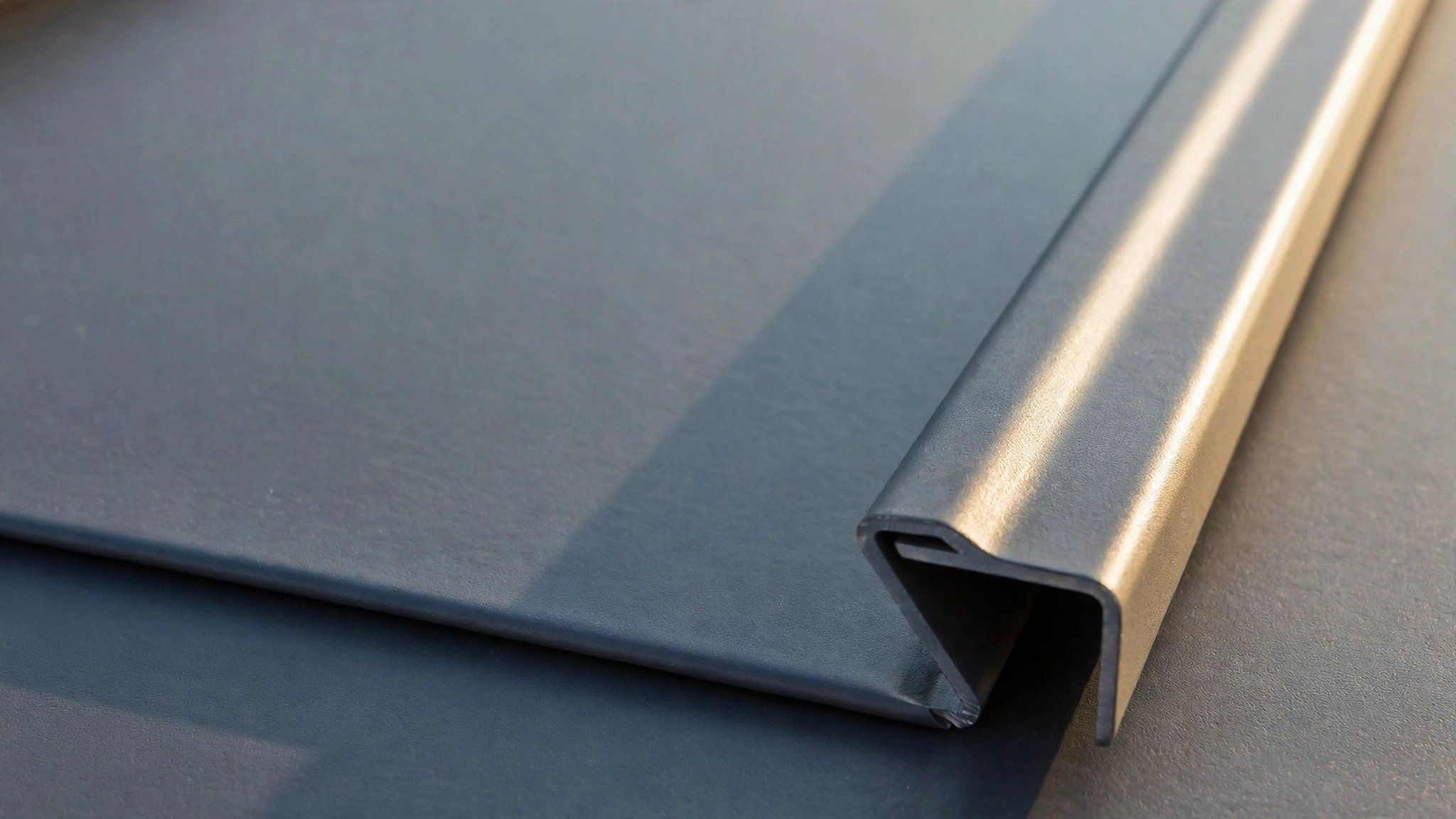
Perforated, carved, and shaped panels add machining time, tooling, and scrap. Cost scales with open-area percentage and pattern complexity: a simple round-hole perforation pattern with low open area adds modest cost, while high-density perforations, custom carved patterns, or intricate laser-cut designs can double fabrication time per panel. Each hole also means more edge finishing and stricter flatness control to prevent distortion during processing.
The practical takeaway: finalize the perforation pattern before requesting pricing, and provide the pattern as a CAD file. Pricing a “perforated panel, pattern TBD” forces the factory to assume worst-case complexity — which guarantees an inflated quote. If the pattern is still in design development, ask for pricing at two or three open-area levels so the design team can weigh aesthetics against budget.
4. Panel Size and Fabrication Complexity
Larger panels reduce the number of joints and installation labor, but they cost more per square meter to make. A 1300 × 4000mm panel — a common maximum sheet size — requires heavier-gauge material to resist oil canning, more precise brake-press work, and stiffer reinforcement ribs. Non-rectangular shapes, folded returns, curved panels, and integrated reveals each add fabrication steps.
Modularize where you can. A facade designed around a repeating module with a few accent shapes fabricates far more efficiently than one where every panel is a unique size. When requesting quotes, note the quantity breakdown by panel type: 200 identical flat cassettes plus 20 feature panels price very differently from 220 unique panels, even at the same total area.
5. Quantity and Order Structure
Volume economics are straightforward but often underestimated. Setup costs — coil slitting, coating batch, brake-press tooling, color matching — are largely fixed per order. On a 500㎡ order they weigh heavily per square meter; on a 5,000㎡ order they nearly disappear. This is why unit pricing drops sharply as quantity rises, and why splitting one building into multiple small orders (different phases, different POs) can quietly raise the total.
Consolidate intelligently: combine phases into a single production run where the schedule allows, or at minimum negotiate the full project quantity as one price basis with staged deliveries. Distributors stocking standard sizes can often access better pricing by committing to a single color and gauge across multiple projects.
6. Sea Freight, Packaging, and Delivery Terms
For US buyers importing from China, freight is a real line item — not an afterthought. Solid aluminum panels ship flat in export crates or on pallets; a 40-foot container typically holds roughly 1,500–2,500㎡ depending on panel thickness, packaging density, and crate design. Because panels are relatively light for their volume, shipments often cube out before they weigh out, so volumetric (dimensional) weight — not just actual weight — shapes the ocean freight calculation.
Packaging quality also carries cost: interleaf film between panels, edge protection, moisture-proof wrapping, and fumigated wooden crates all add line items, but they prevent the far more expensive problem of transit damage. Clarify the Incoterms in your RFQ — FOB, CIF, and DDP quotes are not comparable numbers. A DDP price that includes US customs clearance and last-mile trucking will look higher than FOB Shanghai, but it may be the lower total landed cost once you add your own forwarder’s fees.
Public Market Reference Ranges (With Sources)
So what do buyers actually see in the market? Two public data points, both with important caveats:
- US installed metal siding, $9–17 per square foot (Fixr and Angi 2026 cost guides). This covers residential metal wall siding installed — labor included — and is not a commercial curtain wall number. It is useful only as a rough sense of the installed-cost band for metal cladding in the US market.
- B2B marketplace listings for perforated/carved aluminum panels, roughly $15–65 per square meter (Alibaba and Accio supplier listings, 2026). This is the material-only price band, and it swings with thickness and pattern complexity. It is a price band observed on public listings — not any single factory’s quotation.
Neither figure is your project’s price. Treat them as sanity checks: if a quote lands far outside these bands in either direction, ask why before proceeding. The real number for your project comes from a detailed RFQ — which is exactly what the next section covers.
What to Send for an Accurate Quote: The RFQ Essentials
Factories price what you give them. To get a quote you can actually compare, include these items in your first request:
- Drawings or panel schedule: elevations, panel layout, and a schedule listing each panel type with dimensions and quantities.
- Thickness and alloy: e.g., 2.5mm, 3003-H24 — or ask the factory to recommend based on span and wind load.
- Finish specification: PVDF or powder coating, color code (RAL or custom), gloss level.
- Pattern files: CAD/DXF for perforations or carved patterns, with open-area percentage.
- Quantities by type: separate counts for standard cassettes, feature panels, soffits, and column covers.
- Delivery terms and destination: FOB, CIF to a named US port, or DDP to the job site — plus the target delivery window.
A complete RFQ typically gets a detailed, itemized quotation in days rather than weeks — and it is the only way to compare two factories on equal footing. Send your drawings for a detailed quotation, and make sure every bidder prices the same scope.
Browse the full product range at juchangalu.com, or send your drawings for a detailed quotation tailored to your project’s specification.