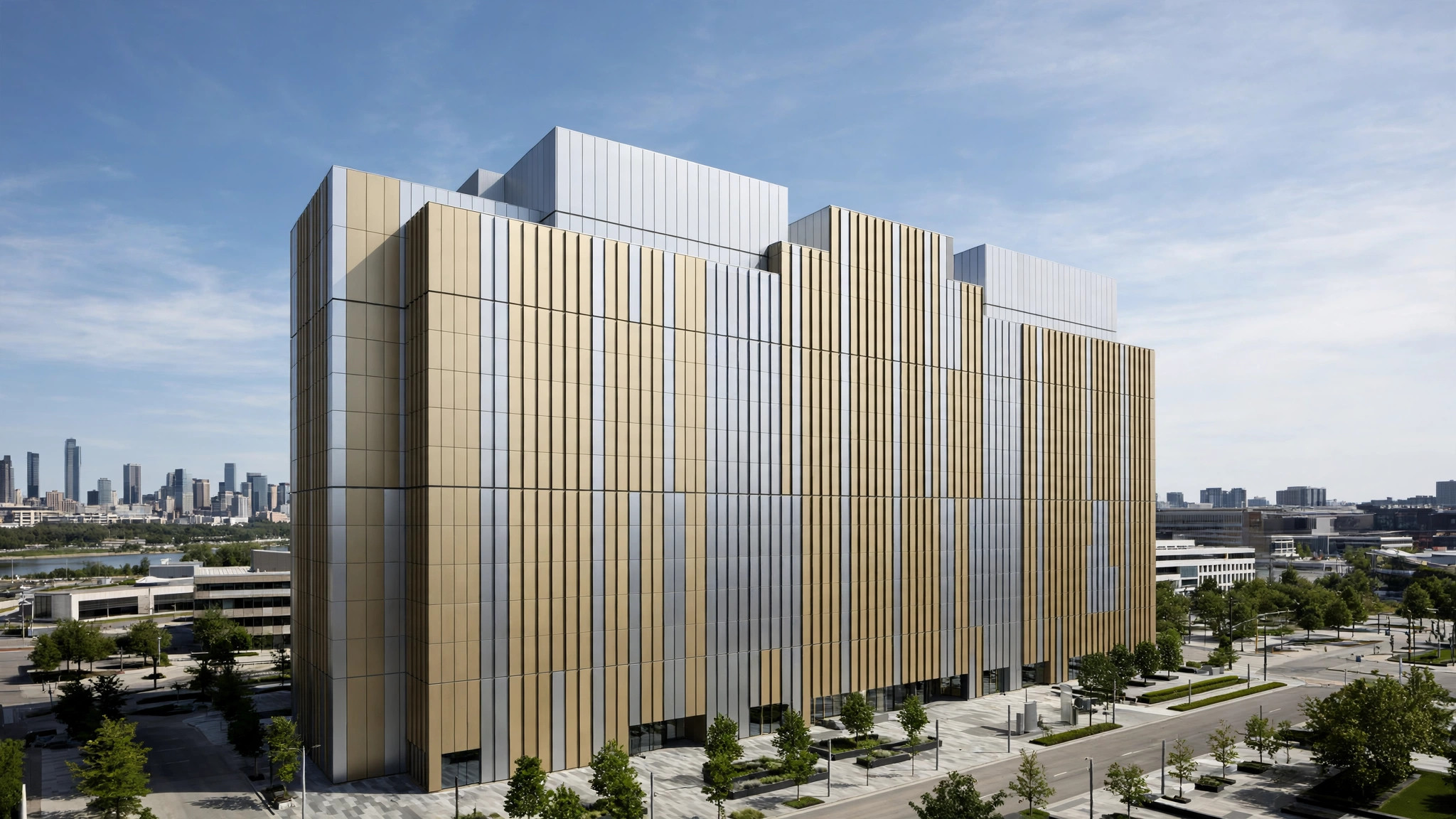
When US buyers request quotes for solid aluminum facade panels, the line item that moves the number most — after thickness — is the finish. Two panels with identical 3.0mm alloy and the same dimensions can carry very different prices and service lives depending on whether they are coated with PVDF, powder coating, or anodized. This guide compares the three most common finishes on solid aluminum facade panels so you can specify the right one the first time, and understand what the cost differences actually buy you.
Why the Finish Decision Comes First
A finish is not decoration. On an exterior facade it is the weather barrier: UV exposure, acid rain, salt spray, temperature cycling, and airborne pollutants all attack the surface long before they threaten the aluminum underneath. A well-chosen finish keeps colors true for decades and reduces maintenance to occasional washing. A poorly matched one — powder coating where PVDF was warranted, for example — can chalk, fade, or peel within years, and recoating a facade in place costs many times what the right finish would have added at the factory.
The practical way to think about it: the finish determines the panel’s service life and maintenance cost, while the alloy and thickness determine its structural performance. Both matter, but the finish is where buyers most often leave money — or decades of life — on the table.
PVDF Coating: The Long-Life Standard
PVDF (polyvinylidene fluoride, often sold under the Kynar 500 or Hylar 5000 brand names) is the premium finish for architectural aluminum. Applied as a liquid spray in multiple coats and oven-cured, PVDF forms a chemically stable film that resists UV degradation, chalking, and fading far better than most alternatives.
What it costs more for: multi-layer application (primer plus two or three topcoats), specialized booths and curing ovens, and the resin itself, which is among the most expensive coating materials in architectural use. On solid aluminum facade panels, PVDF typically carries the highest unit price of the three finishes discussed here.
What it buys: industry-standard performance is commonly specified against AAMA 2605, the highest-performance specification for organic coatings on architectural aluminum. Projects that need color to hold for decades — corporate headquarters, flagship retail, civic buildings, coastal developments with high UV and salt exposure — default to PVDF for good reason. It also tolerates aggressive environments and frequent cleaning without dulling, which matters for facades in polluted urban or marine settings.
Specify PVDF when: the design life is measured in decades, color fidelity is critical, or the site is harsh (coast, high UV, industrial zones).
Powder Coating: The Value Workhorse
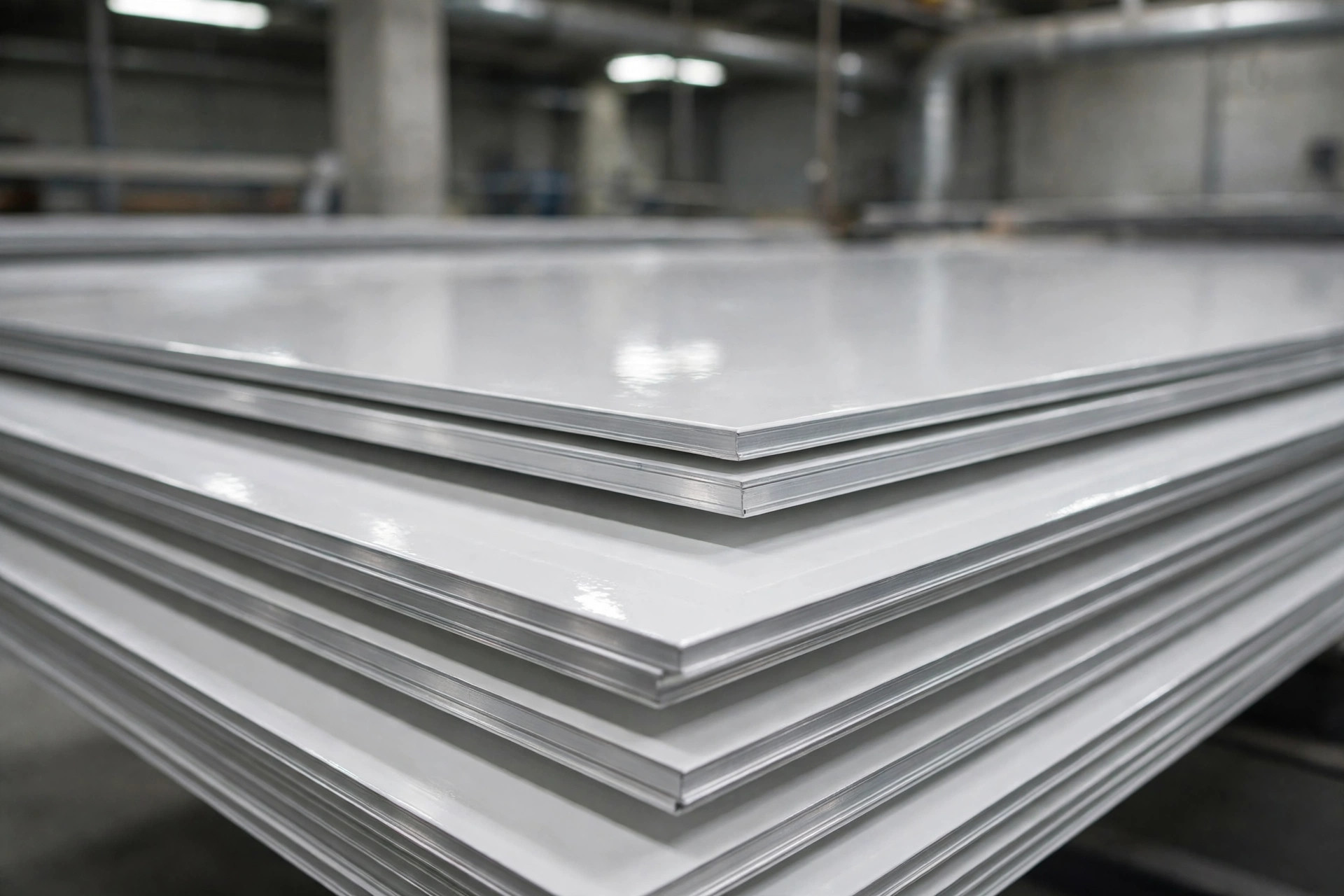
Powder coating applies dry resin powder electrostatically, then cures it in an oven to form a thick, hard, uniform film. On solid aluminum panels it is the most widely used finish for commercial and residential projects worldwide, because the balance of cost, color choice, and durability is hard to beat.
Cost position: powder coating is generally the lowest-cost factory finish of the three. The process is fast, overspray can be reclaimed and reused, and it needs no solvents, which keeps both material and operating costs down. For large volumes of standard RAL colors, it offers the best price per square meter of finished panel.
Lifespan: high-quality exterior-grade polyester or super-durable polyester powders perform well for typical commercial service lives. AAMA 2604, the mid-tier architectural specification, is the common benchmark. In mild to moderate climates, powder-coated aluminum facades routinely serve 10–20 years with minimal maintenance. What you give up versus PVDF is long-term UV resistance: in intense sun, powder coatings chalk and fade sooner, and recoating options are limited once the film weathers.
Specify powder coating when: budget discipline matters, the climate is moderate, and the building’s planned service life or brand refresh cycle is under roughly two decades.
Anodized Finish: The Distinctive Metallic Look
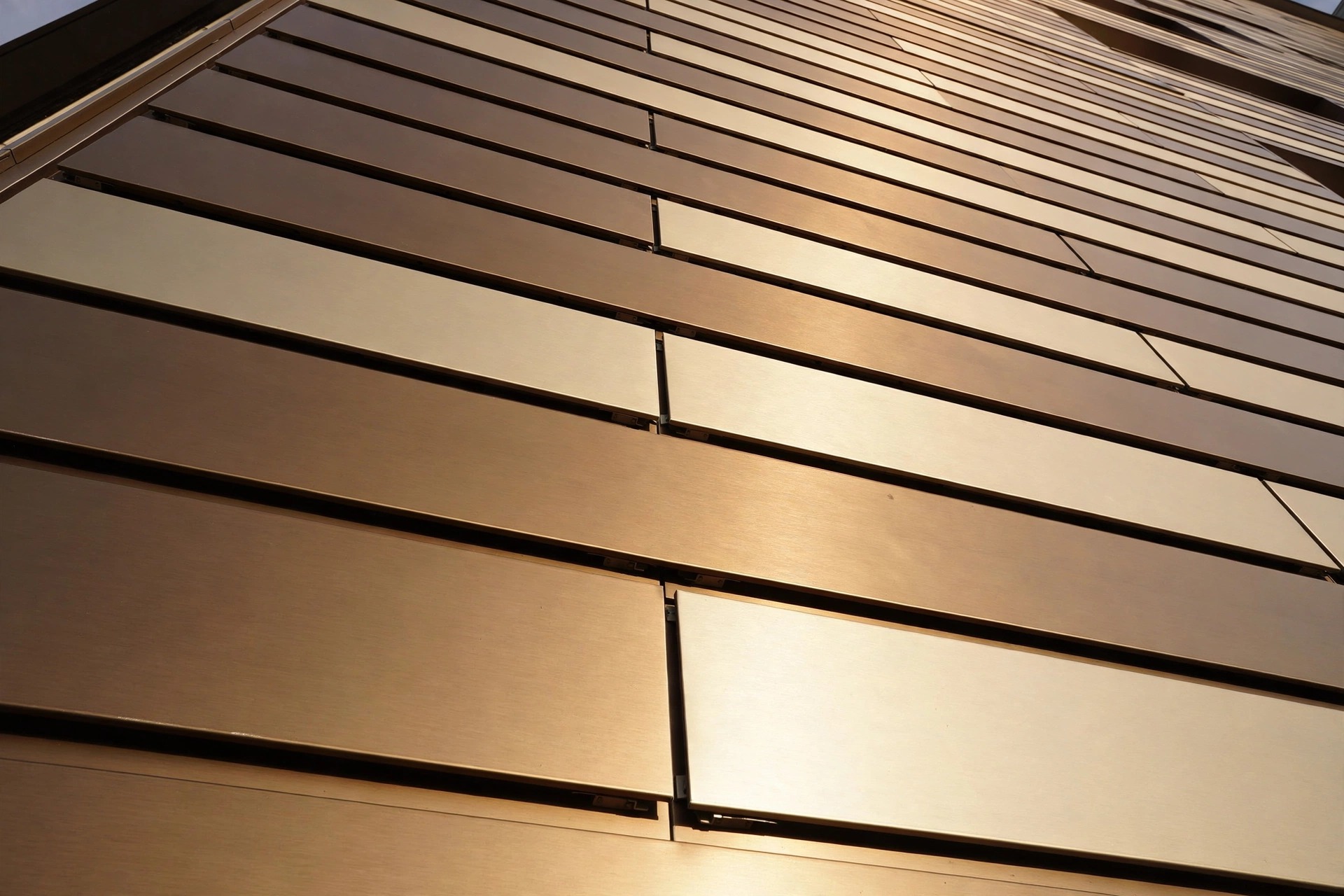
Anodizing is not a coating in the paint sense — it is an electrochemical process that thickens the aluminum’s own oxide layer, producing an integral, metallic finish that cannot peel. The result is a crisp, satin metallic appearance (clear, champagne, bronze, and black being the classics) that designers choose when they want aluminum to read as metal rather than as paint.
Cost and color: anodizing sits in the middle on price for standard colors, but its palette is narrow — deep, saturated custom colors are essentially off the table. That limitation is also its design signature. Where powder coating and PVDF give you any RAL or custom color, anodizing gives you the unmistakable depth of real metal.
Durability notes: the oxide layer is hard and abrasion-resistant, and it resists corrosion well in urban environments. However, anodized surfaces are sensitive to alkaline attack — concrete splash during construction is a classic cause of staining — and color consistency across large batches requires careful process control, since the finish grows out of the metal itself rather than being sprayed onto it.
Specify anodizing when: the design demands a genuine metallic read, the color palette stays within natural metallic tones, and the project team can manage construction-phase protection carefully.
Cost and Lifespan Compared: A Decision Framework
Putting the three side by side, the trade-off is straightforward:
- Powder coating — lowest factory cost, widest standard color range, solid 10–20 year performance in moderate climates. The default for budget-conscious commercial work.
- Anodizing — mid-range cost, unique metallic appearance, excellent abrasion resistance, but limited colors and demanding site protection. A design-driven choice, not a price-driven one.
- PVDF — highest factory cost, unmatched UV and weathering resistance, the standard for 20+ year design lives and harsh environments. The total-cost winner on premium and coastal projects.
Two cautions that experienced buyers apply. First, compare equivalent specifications: ask which AAMA standard each quote is rated against (2603, 2604, or 2605 for coatings), because a “PVDF” label on a thin single coat is not the same product as a 2605-rated multi-coat system. Second, think in lifecycle cost, not unit price: on a facade expected to stand for 25 years, the premium for PVDF is typically a fraction of what even one recoating cycle would cost.
How to Specify the Finish in Your RFQ
To get comparable quotes, spell out the finish as precisely as the dimensions. A complete RFQ line includes: finish type (PVDF / powder / anodized), the performance specification it must meet (e.g., AAMA 2605 for PVDF), color code or RAL number, gloss level, and whether a single sample panel for approval is required before production. For anodized work, add batch-consistency requirements and site-protection notes; for PVDF, confirm the number of coats.
Samples are cheap insurance: one approved finish sample, kept on file and referenced against deliveries, prevents most of the disputes buyers encounter with color and texture. Reputable factories produce approval samples from the same coating line as production panels, so what you sign off on is what ships.
Choosing the right finish is the single highest-leverage decision in a facade panel purchase. Get it right and the panels look as specified for decades; get it wrong and every other detail — thickness, alloy, installation quality — is overshadowed by a failing surface. If your project is still at the specification stage, send your drawings and site conditions to the factory team at juchangalu.com for a finish recommendation matched to your climate, design life, and budget.