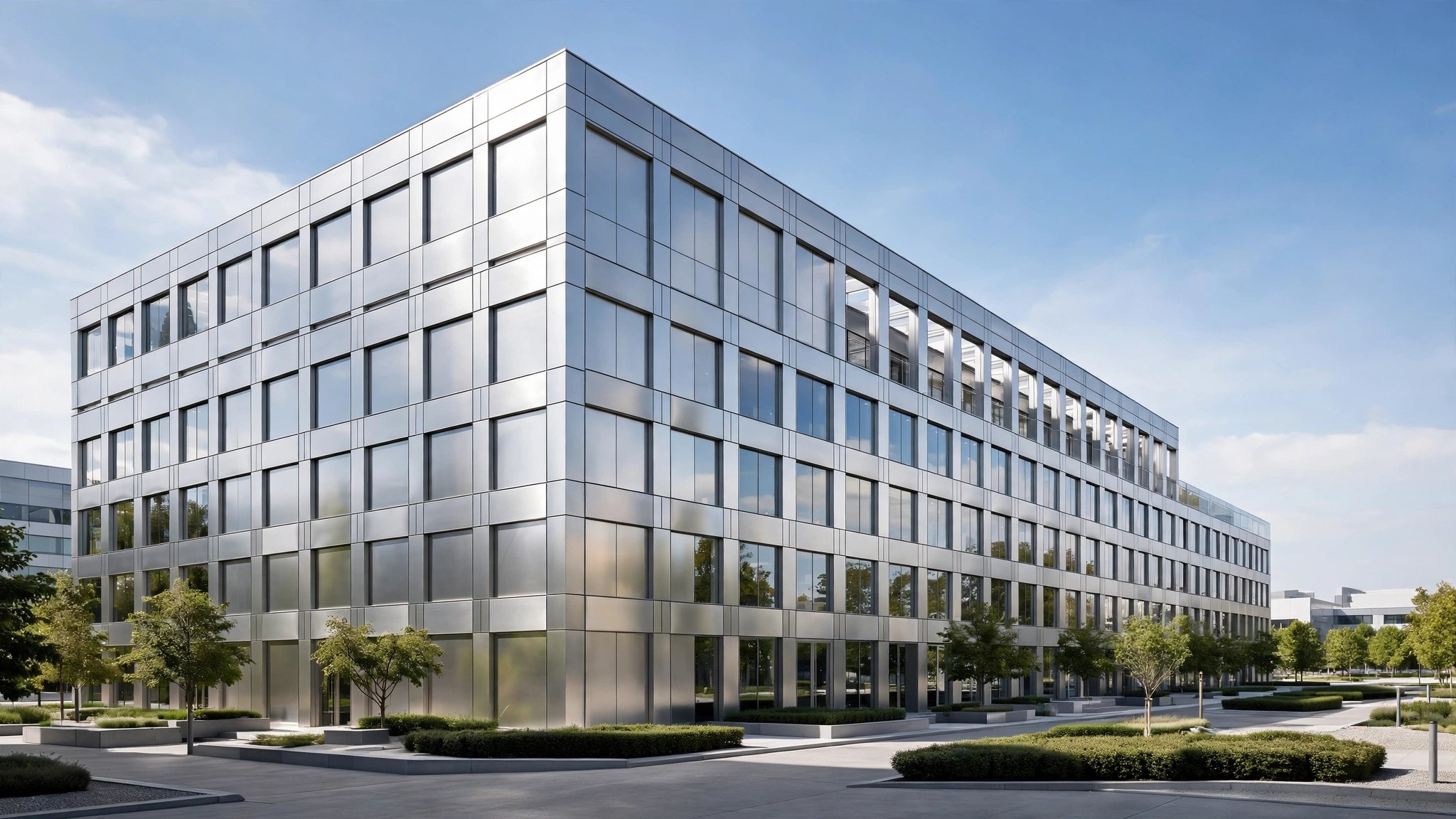
Choosing a curtain wall cladding system is as much a budget decision as a design decision. Architects, contractors, and building owners routinely compare solid aluminum facade panels against glass, natural stone, and high-pressure laminate (HPL) — and many of those comparisons are made on material price alone, which is exactly where budgets go wrong. Installed cost, structural requirements, maintenance demand, and service life can flip the ranking of the “cheapest” option completely over a 30-year building lifecycle.
This guide lays out an honest cost-comparison framework for the four mainstream curtain wall cladding materials, grounded in publicly reported market references. It will not give you a single number for your project — no reputable source can do that without drawings — but it will show you where each material’s cost really sits, which hidden expenses erode apparent savings, and what to include in a request for quotation (RFQ) so you compare apples to apples.
Why Square-Foot Material Price Misleads Curtain Wall Budgeting
A curtain wall budget is made of five layers, not one. Material cost is only the first:
- Material cost: panel or glazing unit price per square meter or square foot
- Fabrication: cutting, folding, coating, or laminating — which varies enormously between a flat panel and a shaped one
- Substructure: support framing, anchors, brackets, and, for heavy materials, additional structural steel
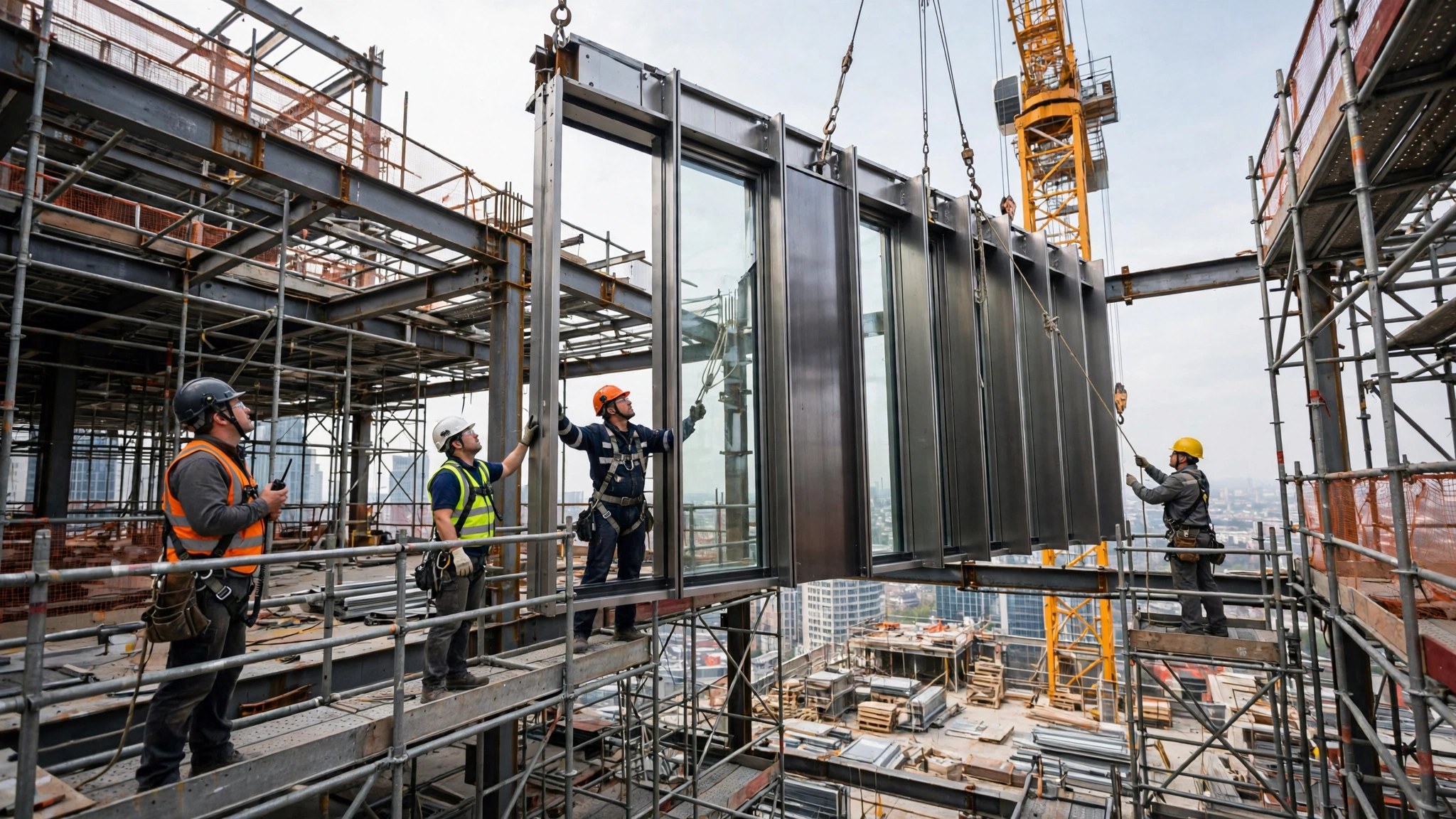
- Installation: labor, access equipment, and weather-dependent schedule risk
- Lifecycle cost: cleaning, repainting or resealing, panel replacement, and energy performance over 20–30 years
Comparing two cladding quotes on panel price alone is like comparing two cars by the cost of their tires. For public reference ranges on the residential side, home-cost databases such as Fixr and Angi reported metal exterior wall siding installations at roughly $9–17 per square foot installed in 2026 — useful as a broad anchor for how installed pricing compounds beyond the raw material, though commercial curtain wall systems are engineered and priced on a different basis. In B2B listing platforms such as Alibaba and Accio, plain solid aluminum facade panels and patterned variants are typically listed across a wide per-square-meter band that moves with thickness, finish, and order volume; that spread is exactly why the frameworks below matter more than any single quoted number.
Aluminum Facade Panels: Mid-Range Price, Low Lifecycle Cost
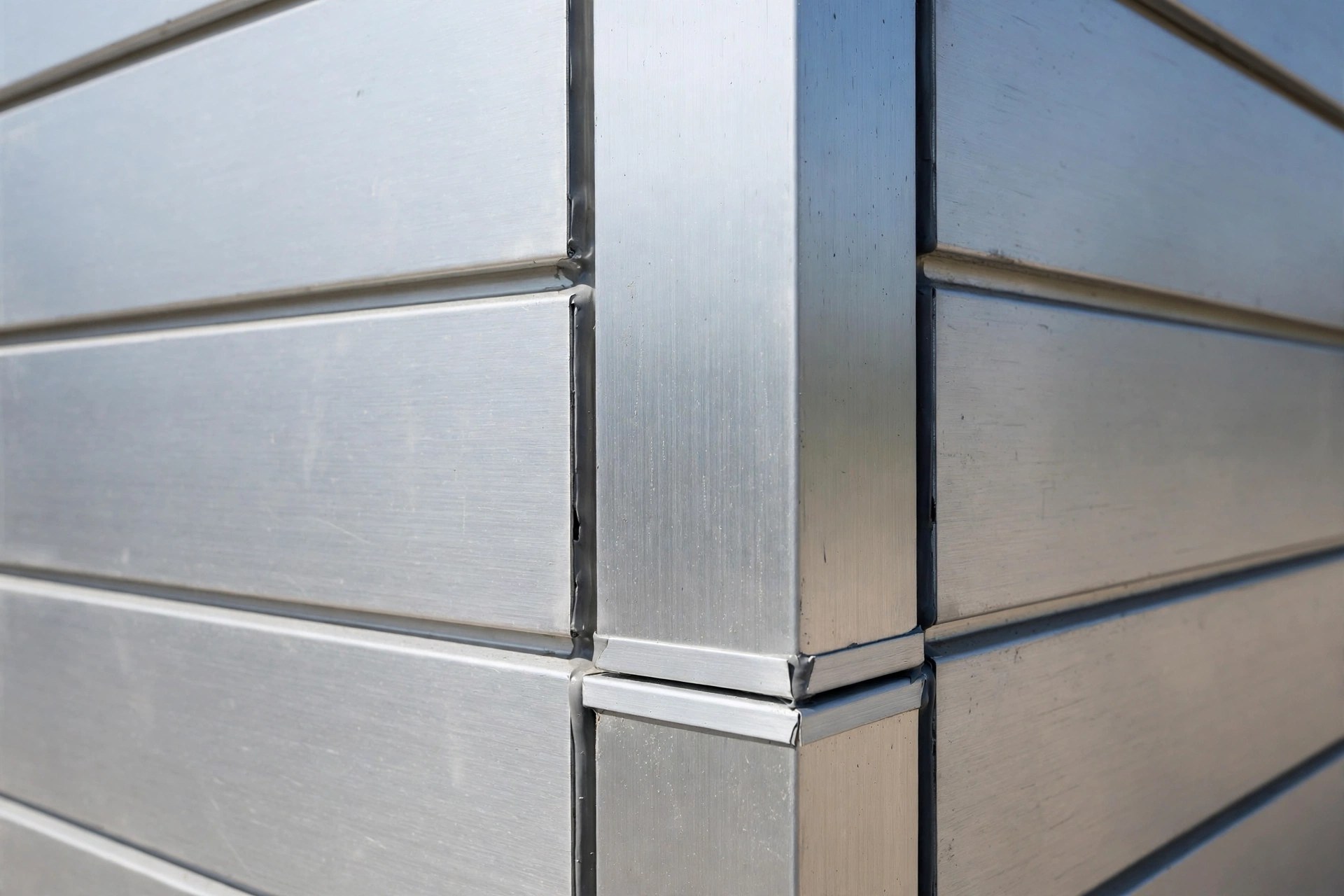
Solid aluminum facade panels — typically 2.0, 2.5, or 3.0 mm thick, in alloys such as 1100 or 3003 H24, finished with PVDF, powder, or roll coating — sit in the middle of the material price range for commercial cladding. Installed costs vary by project size, panel format, and finish, but the cost structure is unusually transparent: standard panel sizes (up to around 1300 × 4000 mm at typical factories), standardized support framing, and cassette-style installation keep labor predictable.
Where aluminum earns its reputation is the second half of the budget. PVDF-coated aluminum typically holds color and gloss for decades with only periodic washing; solid panels do not absorb water, do not spall, and damaged panels can be replaced individually without disturbing the surrounding facade. For a 30-year lifecycle view, aluminum’s total cost is driven far less by upkeep than its competitors — which is why value-engineering that swaps aluminum for a cheaper initial material often costs more by year ten.
Glass Curtain Walls: Premium Installed Cost, High Ongoing Expense
Glass curtain walls carry the highest installed cost of the four options here: structural glazing, unitized framing systems, and specialized installation labor are inherently expensive, and large glass areas bring performance costs that rarely appear in cladding comparisons — higher cooling loads, solar shading devices, and ongoing glass replacement cycles. Sealant joints require scheduled inspection and replacement; spandrel glass fades or delaminates unevenly, making partial replacements visibly mismatched.
None of this makes glass a bad choice — for office towers and retail podiums, the daylight and branding value is real and often worth the premium. But when a developer compares glass against aluminum on a per-square-foot cladding line item, the honest comparison must add glazing-adjacent costs: shading, HVAC load, sealant maintenance, and breakage risk over the building’s life. On lifecycle economics, glass wins the argument only where its daylight and visibility value is the project driver.
Natural Stone Cladding: Luxury Look, Heavy Structure Cost
Granite, limestone, and other natural stone cladding command the highest material price of the four — and then add a second, quieter cost: weight. Stone cladding typically weighs several times what an aluminum panel weighs per square meter, so the substructure, anchor systems, and sometimes the primary structure itself must be upsized. That structural surcharge can exceed the material premium on mid- and high-rise projects.
Maintenance is the other long tail. Stone is porous; without regular sealing, it stains, weathers unevenly, and in freeze-thaw climates can spall. Repairs are stone-by-stone and quarry-dependent — finding a matching slab years later is a well-known industry headache, and one of the reasons designers increasingly reserve stone for lobby levels and feature walls while cladding the upper floors in metal. Specify stone where its prestige value is the point; budget for it as a complete structural system, not a surface.
HPL Panels: Lowest Upfront Cost, Shorter Service Life
High-pressure laminate panels are the lowest-cost option of the four at initial purchase, and their light weight keeps substructure and installation simple. For retail chains and low-rise projects with short refurbishment cycles, that arithmetic is genuinely attractive.
The trade-off sits squarely in the lifecycle column. HPL is a resin-and-fiber product with a shorter proven service life than metal or stone: edges are vulnerable to moisture ingress, large-format panels can warp, and color stability under sustained UV exposure does not match PVDF-coated aluminum. Replacement cycles of 10–15 years are commonly discussed in facility-management practice, which means a building owner may pay for two or even three recladding rounds where aluminum would have required washing. HPL is the right answer for projects with short hold periods or tight upfront budgets — provided the lifecycle math is done honestly.
A Lifecycle Cost Framework for Comparing the Four
Put side by side on a 30-year horizon, the four materials rank differently at each budget layer:
- Material price (low to high): HPL, aluminum, glass systems, natural stone
- Substructure cost (low to high): HPL and aluminum (lightweight), glass (framing systems), stone (heavy anchors and structure)
- Maintenance intensity (low to high): aluminum, glass, stone, HPL — driven by washing vs. sealing/resealing vs. replacement cycles
- Likely first major intervention: HPL at 10–15 years, stone resealing and stone replacement ongoing, glass sealant and glass replacement cycles, aluminum typically washing only for decades
Two rules of thumb emerge. First, lightweight metal cladding shifts cost away from structure and upkeep, so aluminum frequently wins on 30-year total even when it is not the cheapest bid. Second, any material whose “cheap” version depends on a shorter replacement cycle is only cheap for owners who will not hold the building — developers, REITs, and institutional owners should always price the second and third round of cladding when comparing HPL or low-grade alternatives.
What to Put in Your RFQ for an Apples-to-Apples Comparison
To make cladding suppliers compete on equal terms, your RFQ should require, for each material option: panel thickness and alloy or substrate specification, finish type and coating warranty framework, support system and anchor design with loads, installed price broken into material, fabrication, substructure, and labor, scheduled maintenance requirements for the first 15 years, and the cost and lead time of replacement panels or matching procedures. Ask bidders to price a 30-year maintenance scenario, not just day-one supply and install.
A factory that can answer all of those questions with drawings, test data, and a clear replacement-parts policy is usually a factory worth shortlisting. If you are comparing solid aluminum panels against the other three materials for a US commercial project, browse the panel systems at juchangalu.com or send your drawings and target finish for a detailed quotation built around your actual scope — that is the only basis on which a real cost comparison can be made.