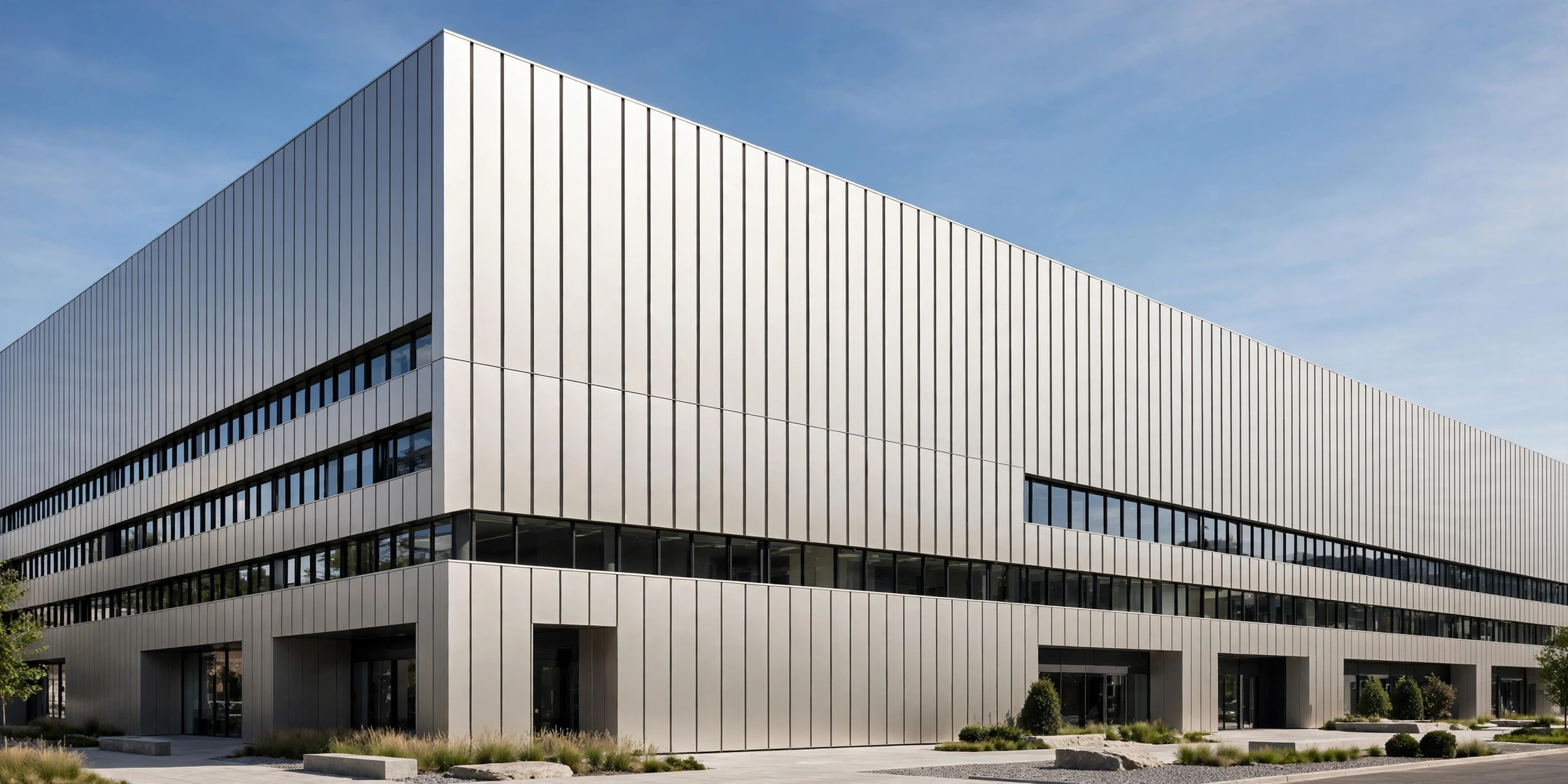
From thirty feet away, a solid aluminum panel and an ACM panel look almost identical. Same crisp reveals, same flat metallic surface, same architectural rhythm across the facade. Up close — in the submittal meeting, in the code review, in the change order that quietly eats your contingency — the two materials behave very differently. Fire performance, weight, forming limits, and long-term replacement all diverge, and picking the wrong one is expensive to undo once the substructure is on the building.
This guide is not another parameter table. It is a decision tree for US architects, specifiers, and contractors who need to answer one practical question: for this project, should we specify solid aluminum panels or ACM/MCM?
Solid Aluminum Panels and ACM/MCM: What Is Actually Different
Solid aluminum panels are a single skin of aluminum, typically 2.0mm, 2.5mm, or 3.0mm thick (our factory works with 1001 and 3003-H24 alloys, in panel sizes up to 1300 × 4000mm, finished with PVDF, powder coating, or roller coating). The panel is fabricated — cut, folded, and reinforced — from one continuous sheet.
ACM (aluminum composite material) and MCM (metal composite material) are sandwich panels: two thin aluminum skins bonded to a core. The core may be polyethylene (PE), a fire-retardant (FR) compound, or a mineral core. The skins do the weathering; the core does most of the stiffening.
Everything that follows — fire behavior, weight, flatness, forming — traces back to this single construction difference. Hold onto it as you read.
Filter One: Fire Performance Is the First Gate
Fire is where the two materials part ways most sharply, and it is the first question to settle because it can disqualify one option before anything else matters.
- Solid aluminum is a non-combustible material. There is no core to ignite, melt, or delaminate — the panel itself simply does not burn. That is why it shows up on high-rise, hospital, and school projects where the fire strategy demands non-combustible cladding.
- ACM/MCM fire behavior is determined by the core. PE-core panels are combustible and have been restricted or banned for many high-rise applications in the US after years of code evolution. FR-core and mineral-core panels perform very differently — but “ACM” alone tells you nothing. You must know the core, and you must know what the project’s fire protection engineer and the authority having jurisdiction (AHJ) will accept.
A practical rule: if the project is a high-rise, an assembly occupancy, a healthcare or education building, or simply in a jurisdiction with strict facade fire rules, start with solid aluminum and make ACM prove it belongs. Always verify specific requirements against the governing code and a licensed code consultant — no article can make that compliance call for your project.
Filter Two: Flatness, Panel Size, and the Oil-Canning Question
Large, flat, uninterrupted facade fields are the hardest thing to make look perfect in metal, and this is where ACM historically earned its reputation: the sandwich construction is stiff for its weight, so big flat modules resist oil canning (that visible waviness in reflected light) better than a thin single skin of the same size.
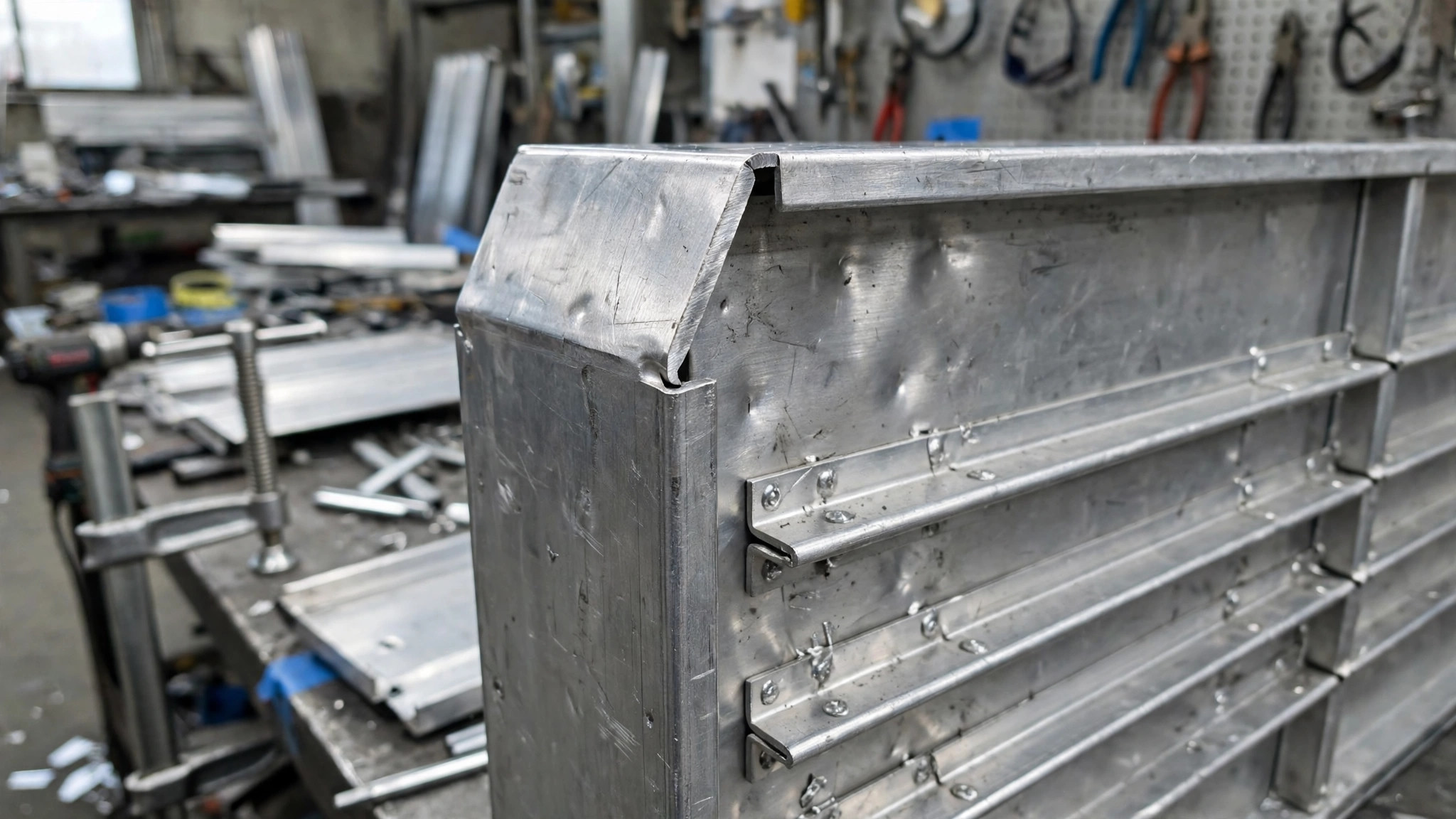
Solid aluminum answers back with thickness and fabrication. A 3.0mm solid panel with properly engineered stiffeners and cassette returns holds flatness very well — and it does so without a bonded core that can delaminate decades later. The trade-off to weigh is this: ACM gives you easy flatness on large modules; solid aluminum gives you flatness through material and fabrication quality, which is exactly what a good shop drawing review should verify.
For projects with standard module sizes (our solid panels run up to 1300 × 4000mm), either material can deliver a clean elevation. When modules get oversized or the design demands zero visible waviness under raking light, push both suppliers for flatness tolerances in writing and ask how they achieve them.
Filter Three: Weight and What It Does to the Structure
ACM/MCM is lighter than solid aluminum of comparable stiffness — roughly half the weight per square foot in typical configurations. That matters in three places:
- Substructure and anchoring: lighter cladding means lighter secondary framing and smaller anchors, which can reduce structural cost on large facades.
- Retrofit and recladding: when an existing building’s structure has limited reserve capacity, every pound matters. ACM’s weight advantage is often the deciding factor in recladding projects.
- Handling and installation speed: lighter panels go up faster with smaller crews and less lifting equipment — a real line item on the schedule.
Solid aluminum’s extra weight is the price of its monolithic construction. On new construction with a structural engineer already sizing the facade support, it is usually a non-issue. On retrofits, run the numbers with the engineer before you fall in love with either material.
Filter Four: Forming Freedom — Curves, Folds, and Carved Geometry
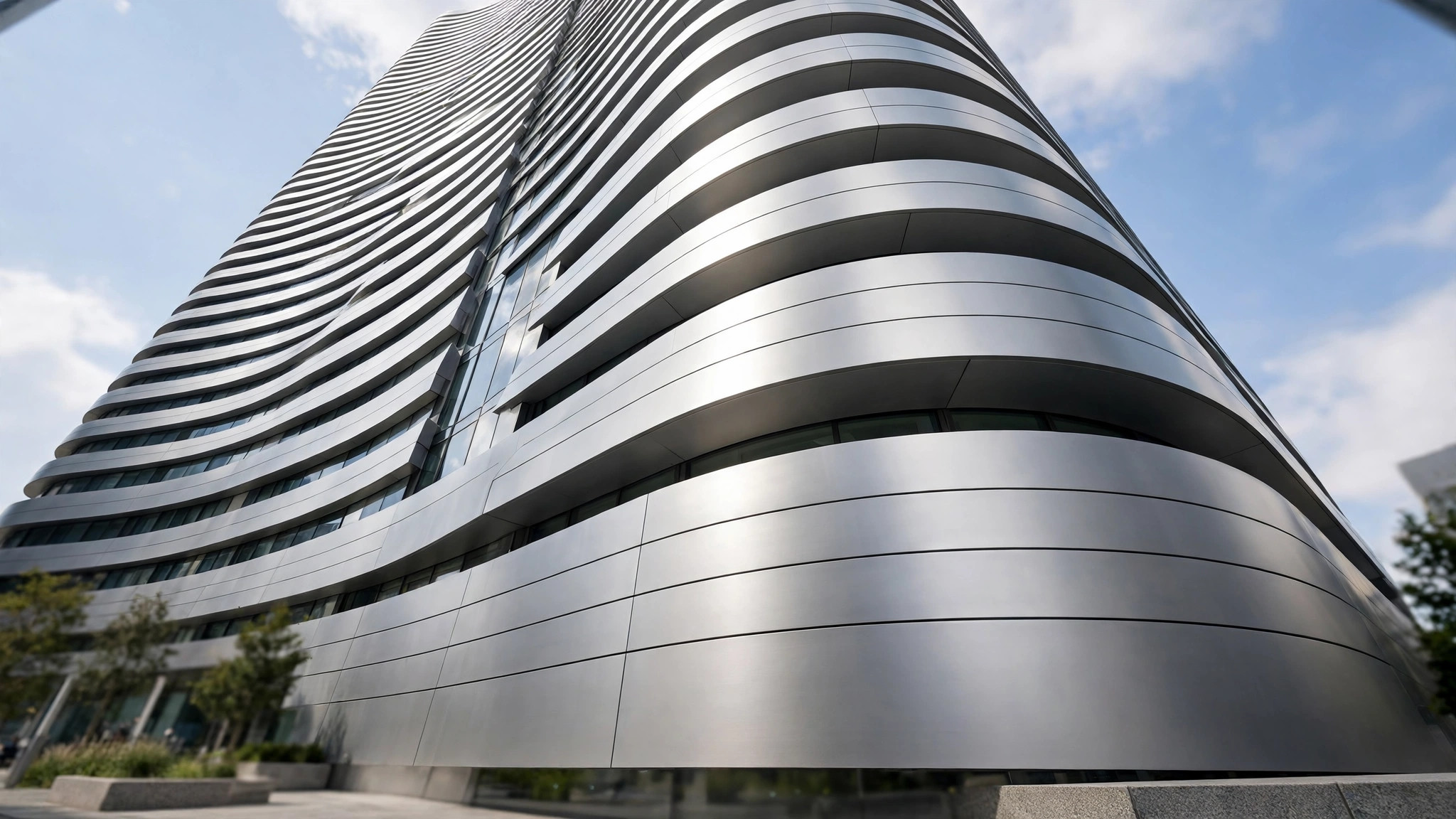
If your facade has curves, this filter decides quickly. Solid aluminum can be rolled, bent, folded into deep cassettes, perforated, and carved into custom patterns — all in one continuous sheet. Curved column covers, wave walls, 3D folded panels, and high-perforation-ratio sunscreens are solid aluminum’s home turf.
ACM is formed by routing a V-groove and folding — excellent for crisp rectilinear cassettes, limited for true curves. Tight radii and complex geometry either cannot be done or require segmented, faceted approximations that change the design intent.
So: rectilinear rainscreen with standard cassettes — either works. Anything curved, folded in three dimensions, or perforated beyond a simple grid — specify solid aluminum and stop debating.
Filter Five: Cost Logic — First Cost vs. Lifecycle
On a per-square-foot material basis, ACM is generally the lower first-cost option — thinner skins and an inexpensive core cost less than a 2.5mm or 3.0mm solid sheet. But facade decisions that stop at material cost are how projects end up expensive.
Run the full comparison instead:
- Fabrication complexity: a simple flat ACM cassette is cheap to fabricate; a folded solid aluminum cassette with stiffeners costs more in the shop. As geometry gets complex, the gap narrows — and for curved work, solid aluminum may be the only bid you get.
- Substructure: ACM’s lighter weight can trim framing and anchor costs, partially offsetting solid aluminum’s material advantage in reverse.
- Replacement and repair: a damaged solid panel is replaced with an identical solid panel — same material, same coating chemistry. ACM replacement must match not just the color but the core type and the original manufacturer’s system, which gets harder as product lines change over the years.
- Coating life: both materials commonly use PVDF finishes with comparable weathering performance; compare coating specifications (resin content, film thickness) rather than assuming one lasts longer.
The honest summary: ACM usually wins on first cost for flat, rectilinear facades; solid aluminum earns its premium where fire, geometry, or long-term serviceability dominate the decision.
The Decision Tree: Five Questions for Your Project
Walk through these in order. The first “yes” that points decisively is usually your answer.
1. Does the fire strategy or the AHJ effectively require non-combustible cladding? High-rise, healthcare, education, assembly occupancies — if yes, specify solid aluminum. If ACM is proposed, demand the core type, test data, and written AHJ acceptance before anything else.
2. Is the geometry curved, folded, or heavily perforated? If yes, specify solid aluminum. ACM’s routed-and-folded forming cannot follow the design.
3. Are the panel modules very large with a zero-tolerance flatness expectation? If yes and the modules are flat rectangles, ACM deserves a serious look — then verify the solid aluminum supplier’s flatness tolerances before ruling them out.
4. Is this a recladding project with limited structural reserve? If yes, ACM’s weight advantage may be decisive. Get the structural engineer involved early either way.
5. What dominates the budget — first cost or 30-year serviceability? First cost favors ACM on simple facades; long service life, easy panel replacement, and coating consistency favor solid aluminum.
If you answered “neither strongly” to all five, you have a genuinely neutral project — in which case, bid both materials and let the numbers and the submittal quality decide.
When the Answer Is “Both”
Many successful facades mix the two: solid aluminum for the curved entrance canopy, folded feature fins, and column covers, with ACM covering the large flat field areas. This is a legitimate value-engineering strategy — but it creates one risk to manage: visual consistency. Two different manufacturers, two different coating lines, and the “same” color can read differently in daylight. If you mix materials, specify the color from a single coating supplier’s system, require physical samples of both materials side by side, and keep a retained sample on file for future replacement matching.
Specify with Confidence, Not with Habit
The most common mistake in this decision is not technical — it is habitual. Teams specify ACM because the last project used ACM, or solid aluminum because the detail library is already drawn. Run the five questions honestly on each new project, document why the answer came out the way it did, and the submittal review gets dramatically easier: every choice has a reason attached.
If your project is leaning toward solid aluminum — for fire performance, for curved geometry, or for long-term serviceability — browse our solid aluminum facade panel range at juchangalu.com, or send your drawings and panel schedule for a detailed quotation tailored to your specification.