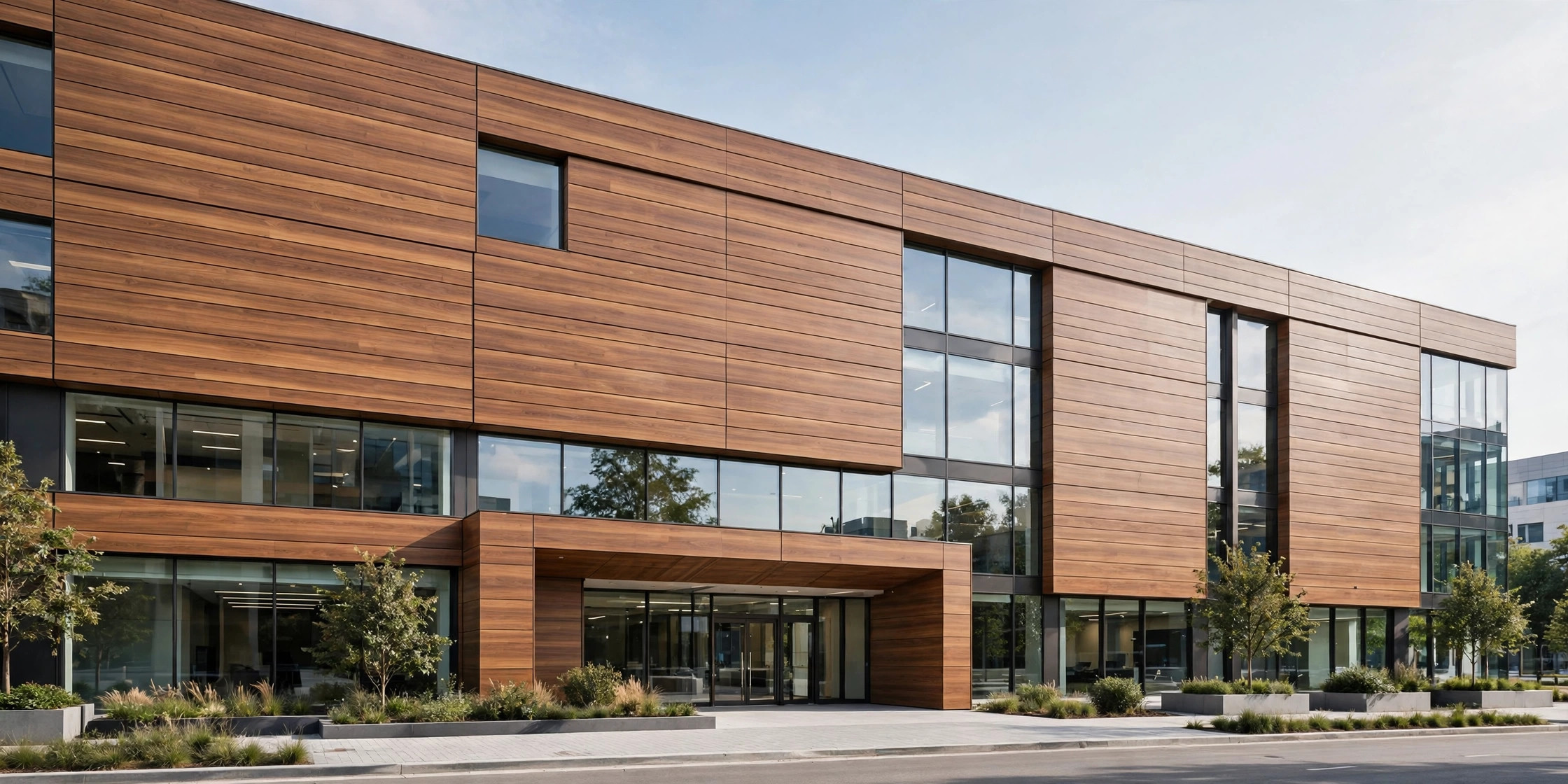
Architects keep coming back to the look of wood. A warm timber facade softens a glass tower, gives a retail frontage a crafted feel, and photographs beautifully on day one. The question that follows — usually asked once the maintenance budget lands on someone’s desk — is what that look costs to keep. Over a 10-year horizon, real wood cladding and wood-grain aluminum panels diverge sharply in upkeep, and the difference is worth mapping before you specify either one.
This comparison is written for US buyers, architects, and distributors evaluating both options. The cost figures for wood maintenance below are public reference ranges (Angi 2026 data, residential siding context; commercial facades scale differently). They illustrate cost drivers — not any single supplier’s quotation.
What Real Wood Cladding Demands Over 10 Years
Real wood on a facade is a living maintenance schedule. UV exposure breaks down lignin at the surface, causing the familiar silver-gray weathering that starts within the first year on south and west elevations. Moisture cycling makes boards swell and shrink, opening checks and cracks that invite water ingress, fungal decay, and — in many US regions — termites and woodpeckers.
Keeping wood presentable means refinishing on a regular cycle. Professional re-staining of exterior wood siding runs about $2–$5 per square foot for materials and labor combined, or $1,400–$8,000 per cycle for a typical home, according to Angi’s 2026 data. On a commercial facade — larger area, lift or scaffold access, stricter safety requirements — per-cycle costs scale accordingly. Most exterior stains need renewal every 2–4 years on sun-exposed elevations, which means 3–5 full refinishing cycles in a 10-year window, each requiring surface prep, masking, and drying time while the building face is a work zone.
Then there are repairs. Replacing damaged wood boards costs $6.25–$18.75 per square foot including materials and labor (Angi 2026), with species selection the biggest variable. Boards that have absorbed moisture warp or cup; fasteners corrode; sealant joints fail. Every repair also creates a visible patch — new boards rarely match weathered ones, which pushes owners toward earlier full refinishing just to even out the appearance.
What Wood-Grain Aluminum Panels Demand Over 10 Years
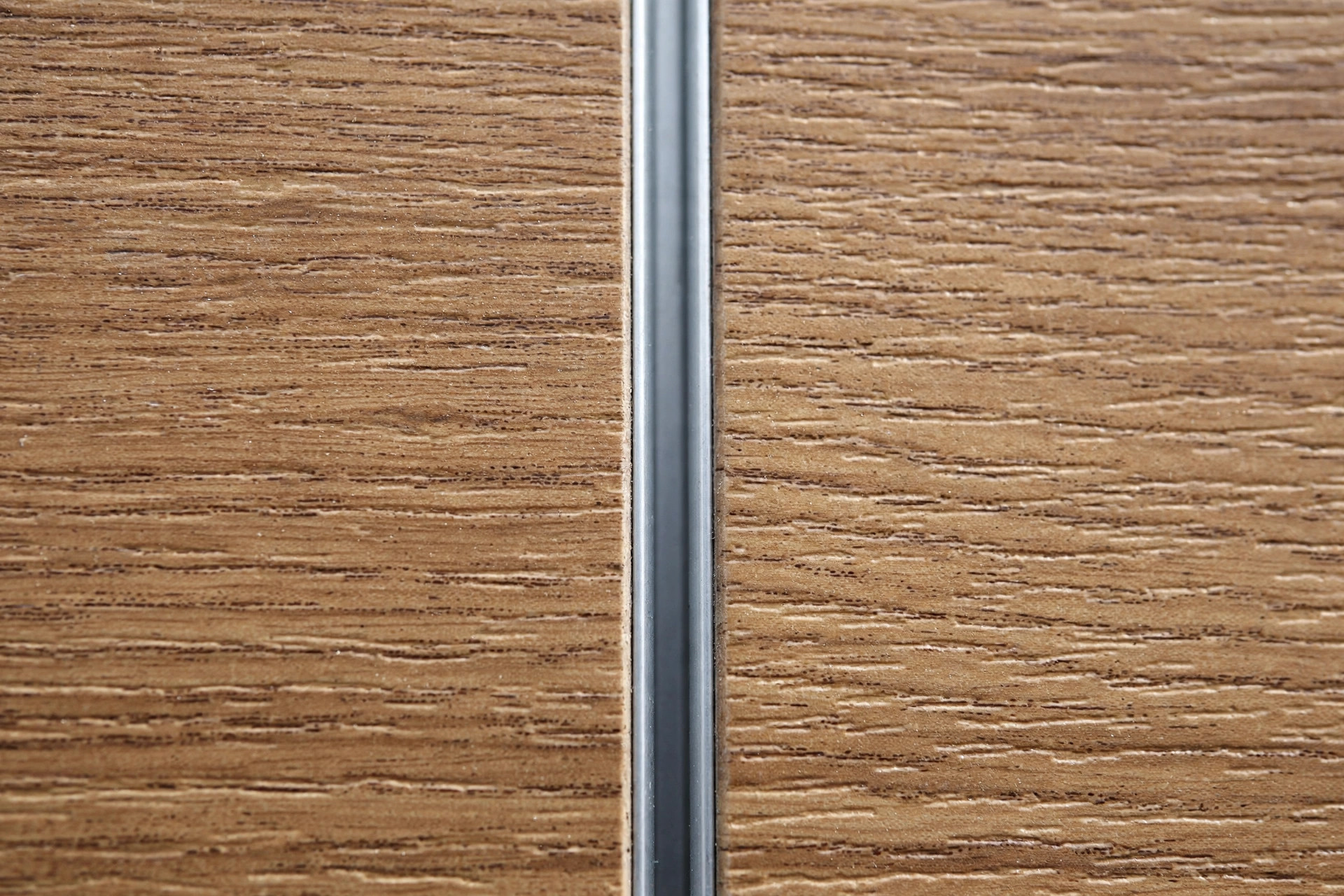
Wood-grain aluminum panels (also called wood-look or wood finish aluminum panels) carry the pattern as a durable coating — PVDF, powder coating, or roll coating — bonded to solid aluminum sheet, typically in 2.0, 2.5, or 3.0mm thickness with alloys such as 1001 or 3003-H24. There is no substrate to rot, no grain to check, and no finish cycle to schedule.
Routine upkeep is washing: periodic rinsing or cleaning with water and a mild detergent removes dust, pollution film, and biological growth. That is the maintenance program — no sanding, no staining, no sealing, no color matching between old and new sections. The coating systems used on quality architectural panels are engineered for color retention and chalk resistance under UV exposure, so the facade reads the same in year ten as it did at handover.
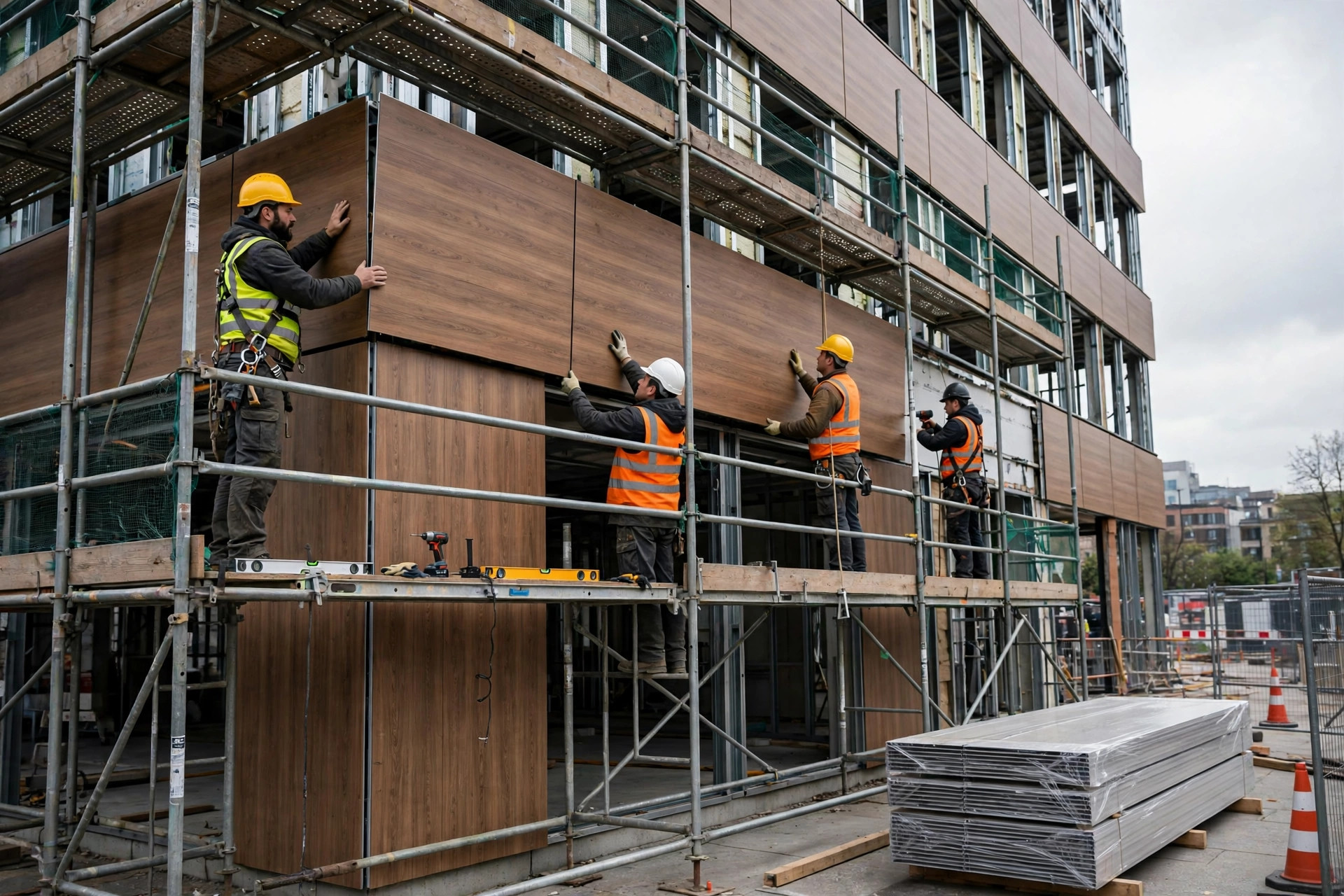
Repairs are panel-level, not surface-level. A damaged panel can be unclipped and replaced with one from the same production batch and color reference; because the wood pattern is a manufactured finish rather than a weathered natural material, replacement panels blend in instead of standing out. Keeping a small attic stock of spare panels from the original batch is standard practice and costs little compared with a single wood refinishing cycle.
Head-to-Head: The 10-Year Cost Drivers Compared
- Refinishing cycles: Real wood typically needs 3–5 stain/seal cycles in 10 years; wood-grain aluminum needs none — cleaning only.
- Repair costs: Wood board replacement at $6.25–$18.75 per square foot (public reference data); aluminum panel replacement is a localized swap with no re-coating of surrounding areas.
- Labor access: Every wood refinishing cycle re-mobilizes lifts, scaffolding, and masking on an occupied building; aluminum cleaning is light work by comparison.
- Appearance risk: Wood weathers unevenly by elevation and exposure, and repairs create visible patches. Manufactured wood-grain finishes age far more uniformly.
- Fire performance: Solid aluminum panels are non-combustible; wood cladding carries combustibility restrictions on many commercial and high-rise applications under the IBC.
- End of horizon: At year 10, a maintained aluminum facade typically needs nothing more than continued cleaning, while wood faces another refinishing cycle — and the cycle count keeps compounding in years 10–20.
Where the Math Changes: Building Type and Climate
The comparison shifts with scale and exposure. On a single-story retail box in a mild climate, the maintenance gap is moderate. On a multi-story office, school, or hotel in a high-UV or coastal climate, it widens dramatically: more facade area multiplies each refinishing cycle, salt air accelerates wood decay, and access equipment costs rise with height.
Chain and franchise rollouts are a special case. A consistent brand appearance across dozens of locations is hard to maintain when each wood facade weathers at its own pace; wood-grain aluminum holds the specified color and pattern from site to site, which is why retail and hospitality programs increasingly specify manufactured finishes.
Climate also decides repair frequency for wood. Freeze–thaw regions stress joints and coatings; humid regions invite fungal growth and insects; wildfire-prone areas add ignition risk that aluminum simply does not carry. None of these eliminate aluminum’s washing routine, but none of them restart its cost clock the way they do for wood.
What to Verify Before You Specify Wood-Grain Aluminum
If the maintenance math points you toward wood-look aluminum, confirm a few things with your supplier before issuing the specification:
- Coating system: Ask whether the wood-grain finish is PVDF, powder coating, or roll coating, and what each means for your project’s exposure.
- Finish warranty framework: Understand what the coating warranty covers and excludes — reputable suppliers document this clearly. Warranty terms vary by manufacturer, so confirm the specifics in writing.
- Color and batch records: Ask how the factory archives color references so that replacement panels ordered years later can be matched.
- Physical samples: Review full-size samples in daylight — printed grain patterns vary in realism, and only a physical sample tells you whether the effect holds at facade distance.
- Alloy and thickness: For rainscreen cassettes, 2.5mm or 3.0mm solid aluminum in 3003-H24 is a common specification; confirm wind-load and flatness requirements with your structural consultant.
The Bottom Line for Buyers
Real wood cladding buys you authenticity at the price of a permanent maintenance program — one that compounds every few years and resets unevenly across elevations. Wood-grain aluminum panels buy you the same visual warmth with a maintenance routine measured in wash cycles, not refinishing cycles. For commercial projects where the facade must look intentional in year ten without a second capital campaign for upkeep, that difference is usually the deciding factor.
If you are comparing options for an upcoming project, browse the wood-grain panel range at juchangalu.com — or send your drawings and target finish for a detailed quotation tailored to your facade area and specification.