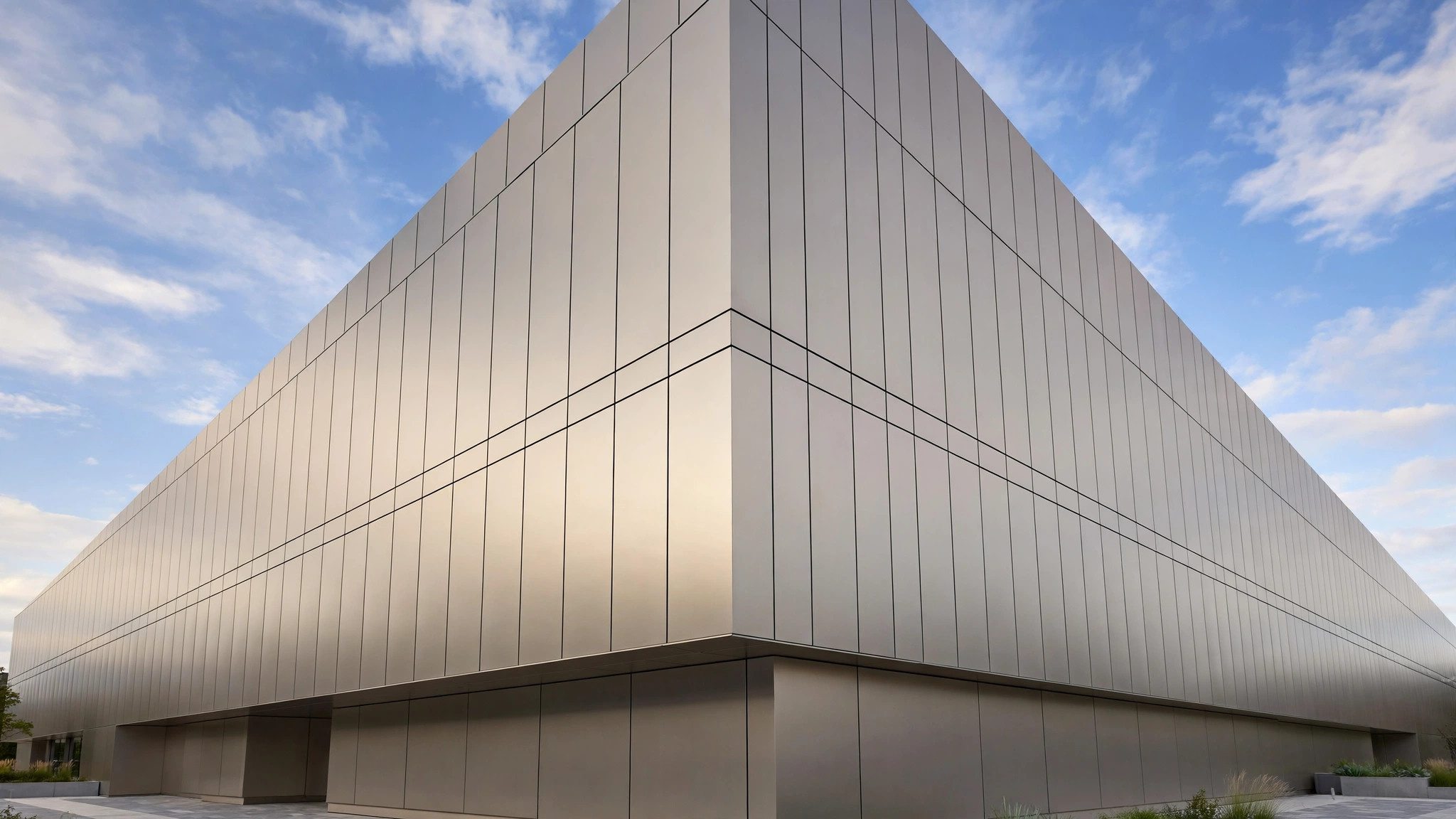
Ordering aluminum facade panels from a factory in China is a high-value decision: a single order can cover thousands of square meters, and the panels will define your building’s appearance for decades. A glossy website and a fast reply to your first email tell you almost nothing about whether that factory can actually deliver. The buyers who get the best results treat factory vetting as a structured process, not a gut feeling. Here are the ten questions that matter most before you place an order.
1. What Aluminum Alloys and Thicknesses Do You Actually Stock and Produce?
A credible aluminum panel factory should be specific. For solid aluminum facade panels, the common alloys are 1100 and 3003 in the H24 temper, supplied in 2.0mm, 2.5mm, and 3.0mm thicknesses. Ask which thicknesses the factory keeps in regular production and what its standard maximum panel size is — a typical capability is around 1300 x 4000mm. Vague answers such as “any thickness, any size” are a warning sign: real production lines have real limits, and a factory that will not state them may be trading rather than manufacturing. Request a sample panel in the exact alloy and thickness you plan to specify, and check its flatness and edge quality yourself.
2. What Coating Lines Do You Run, and Who Supplies the Coating?
The finish is what your client sees — and what fails first if it is done badly. Ask whether the factory applies PVDF fluorocarbon coatings in-house, what coating brand it uses, and whether it also offers powder coating and roller coating for different applications. PVDF is the standard for exterior architectural panels in the US market because of its resistance to chalking, fading, and chemical attack. A factory that can name its coating supplier and explain its pretreatment process (cleaning, chromate conversion, priming) is far more credible than one that simply lists “PVDF available” on a product page.
3. Can You Show Me Your Fabrication Equipment?
Aluminum facade panels are not bought off a shelf; they are cut, folded, punched, welded, and stiffened to your drawings. Ask for photos or a short video of the production floor: CNC punching machines, bending machines, welding stations, and the coating line. You are looking for evidence of a complete fabrication chain, not a warehouse of finished stock. If the factory refuses to show its floor, or sends only stock photos, treat that as a serious gap in transparency.
4. How Do You Control Color Consistency Across Batches?
Color mismatch between panels is one of the most common complaints on facade projects, and it is almost impossible to fix after installation. Ask how the factory controls color: do they measure color difference (Delta E) against an approved sample, do they keep retained samples from each production batch, and how do they schedule coating runs so that panels for one elevation are produced together? A factory with a real answer will talk about batch management and retained samples; a factory without one will say “no problem” and move on.
5. What Quality Inspection Happens Before Shipment?
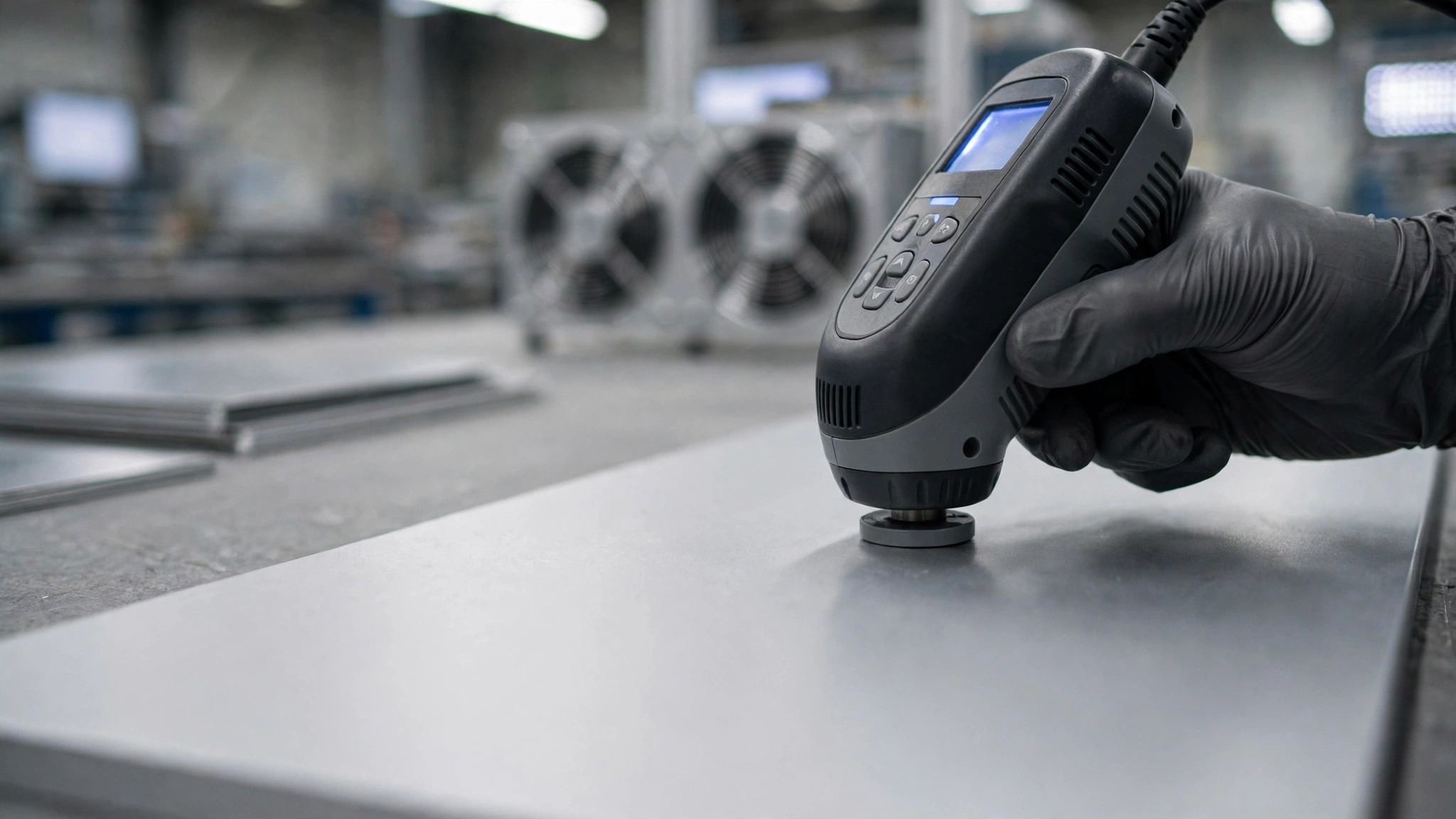
Ask for the factory’s pre-shipment inspection checklist. It should cover panel dimensions and diagonal tolerances, flatness, coating adhesion, color against the approved sample, and packaging condition. Ask whether you or a third-party inspector can attend the inspection, and whether the factory will share photos and measurement reports for your order before it leaves the plant. Inspection is not an insult to a good factory — it is standard practice for US buyers, and good factories welcome it.
6. Can You Provide References from US or Export Projects?
Domestic project photos do not prove export capability. Ask specifically for US projects, or at minimum for export projects with similar specifications: panel size, coating type, and order volume. References do not need to include client contact details — project names, locations, and photos are enough to confirm the factory has shipped comparable work. If a factory has no export references at all, your order becomes its learning curve, and you should price that risk into your decision.
7. How Are Panels Packed for Ocean Freight?
Aluminum panels travel a long way by sea, and damage in transit is expensive and slow to remedy. Ask how panels are packed: protective film on the coated face, edge protectors, foam separators between panels, and whether panels are crated or palletized for container loading. Ask what happens if panels arrive damaged — who files the claim, and how are replacements scheduled? Packaging details reveal how seriously a factory takes the export part of its business.
8. What Documentation Comes with the Order?
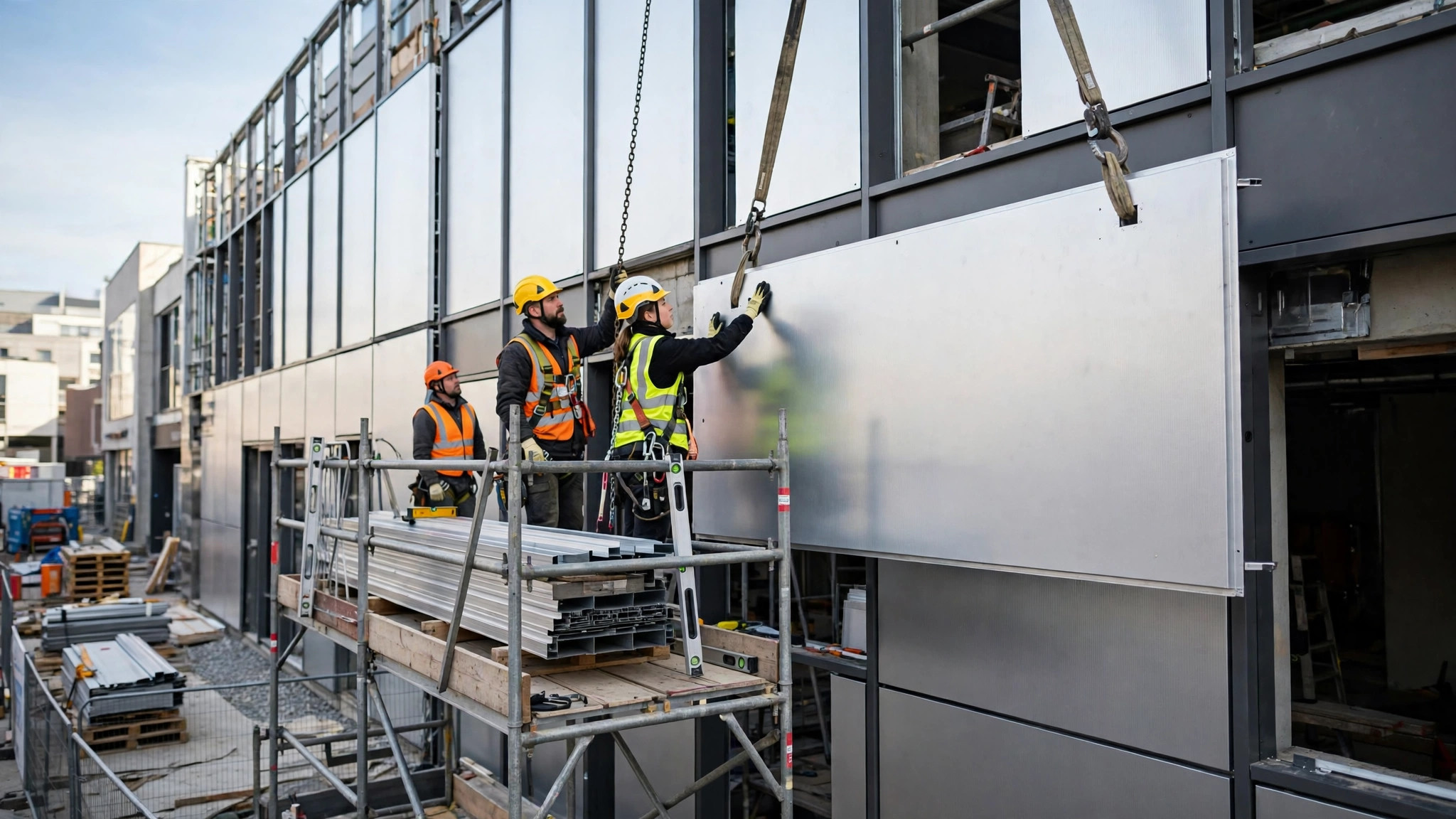
US projects run on paperwork: shop drawings, material certificates, coating test reports, and packing lists. Ask what the factory provides as standard, and whether it can supply mill certificates for the aluminum coil and technical data sheets for the coating system. Confirm that shop drawings are produced from your approved drawings, not from a generic template, and ask who reviews and signs them off before production begins.
9. How Do You Handle Samples and Mock-Ups?
Before committing to a full order, you will want a color sample, and for larger projects a full-size mock-up panel. Ask how the factory handles this: how long samples take, whether the sample is produced on the same coating line as the production run, and whether the sample cost is credited against the order. A factory that treats samples as a serious step — with the same coating and the same quality checks — is a factory that understands how US projects are actually approved.
10. Who Is Your Point of Contact, and How Do You Communicate During Production?
Finally, ask who you will actually talk to once production starts. A single named contact who understands your drawings, your schedule, and your quality requirements is worth more than a fast sales reply. Ask how production progress is reported: weekly photos, inspection reports, or a production schedule you can follow. Clear communication during production prevents the most common export problem of all — a container arriving that does not match what you thought you ordered.
Vetting a factory is not about finding a perfect supplier; it is about finding one whose capabilities, quality controls, and communication habits match the demands of your project. Ask these ten questions, compare the answers across two or three factories, and the right partner usually becomes obvious. The cheapest quote rarely survives that comparison — and the factory that answers thoroughly is usually the one that delivers thoroughly, too.
When you are ready to compare, browse the product range at juchangalu.com, or send your drawings for a detailed quotation.