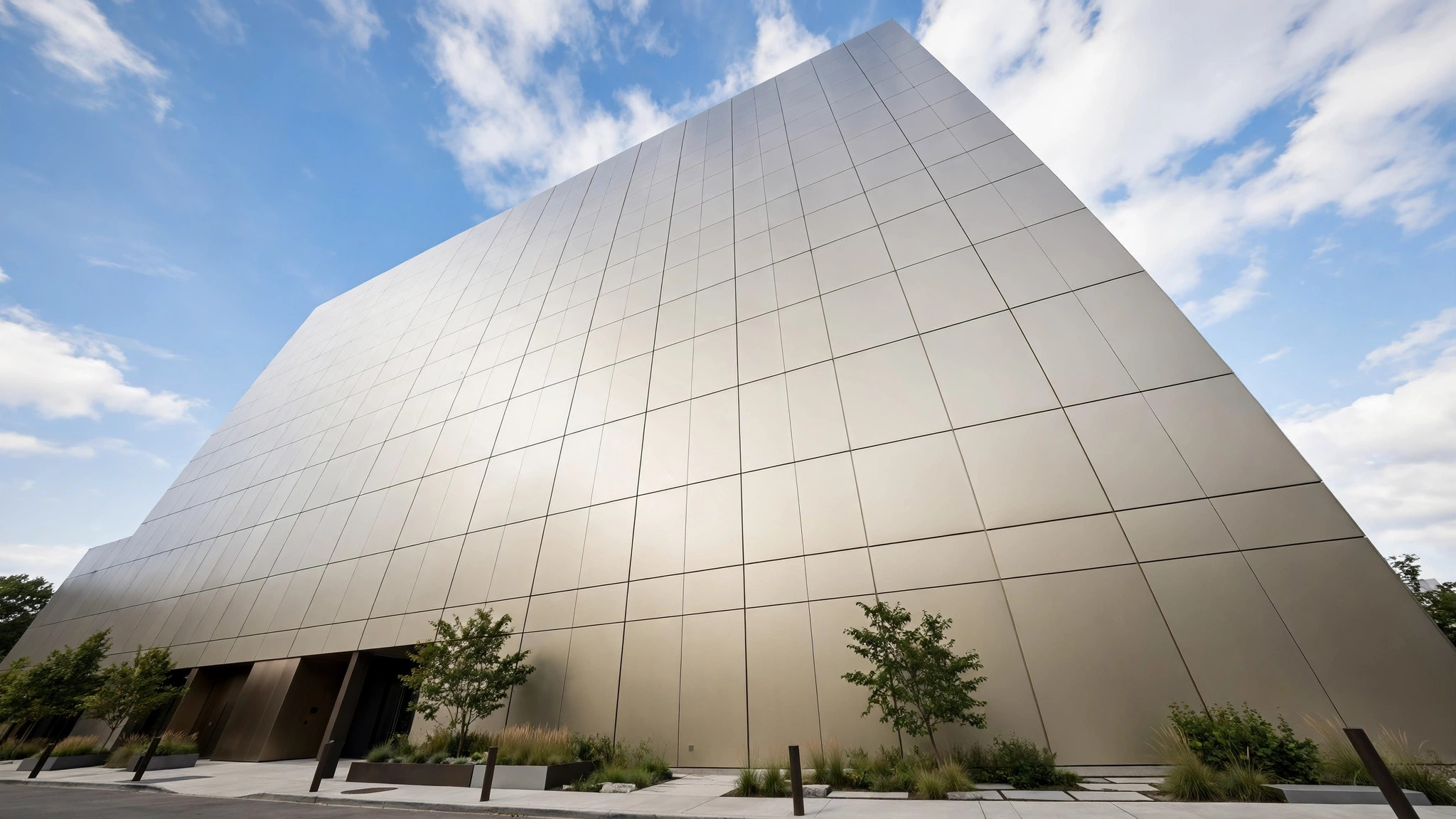
When a US buyer compares aluminum facade panel suppliers, the conversation usually starts with thickness, alloy, and price per square meter. Yet the document that quietly protects the project for decades after installation is the finish warranty — a written statement of what the coating manufacturer and the panel fabricator will stand behind, for how long, and under which conditions. Understanding that framework before you specify or order helps you compare suppliers on equal terms.
This guide describes common industry practice, not the terms of any single supplier. Every manufacturer writes its own warranty document, and the exact coverage always comes from the document issued with your order.
Why Finish Warranties Matter More Than the Panel Itself
Solid aluminum panels are inherently durable. The substrate — commonly 3003-H24 alloy in 2.0, 2.5, or 3.0 mm thickness — does not rust, and with proper detailing it can serve for decades. What changes over time is the surface: the PVDF, powder coating, or anodized layer that gives the panel its color and protects it from weather.
That is why the finish warranty, rather than a warranty on the bare metal, is the document buyers should read first. A coating failure shows up as chalking, fading, peeling, or corrosion creeping in from an exposed edge. On a large facade, recoating or replacing affected panels costs far more than the original price difference between a standard finish and a premium one.
Many project specifications also require the coating to meet a recognized standard, such as AAMA 2605 for PVDF, and require a written finish warranty — without it, a bid may be technically non-compliant even if the price looks attractive.
What a Typical PVDF Finish Warranty Covers
PVDF (polyvinylidene fluoride) coatings are the most common premium finish for architectural aluminum panels, and their warranties follow a fairly consistent industry pattern. A typical PVDF finish warranty addresses four performance areas: color retention (the coating will not fade beyond a defined limit, usually measured in Delta E units — dark and vivid colors are more vulnerable than light neutrals), chalk resistance (no powdery, faded surface film beyond a specified rating), adhesion (no peeling, cracking, or flaking from the substrate), and film integrity (no checking, cracking, or blistering under normal weathering).
Coverage is usually stated as a period of years, commonly 10 to 20 years for PVDF finishes. The number alone tells you little: two warranties of the same length can differ sharply in fade thresholds, exclusions, and claim procedures. Compare the performance limits, not just the headline years. Ask who the warrantor is — coating manufacturer, fabricator, or both — and confirm the warranty will be issued in the project owner’s name.
What Finish Warranties Usually Exclude
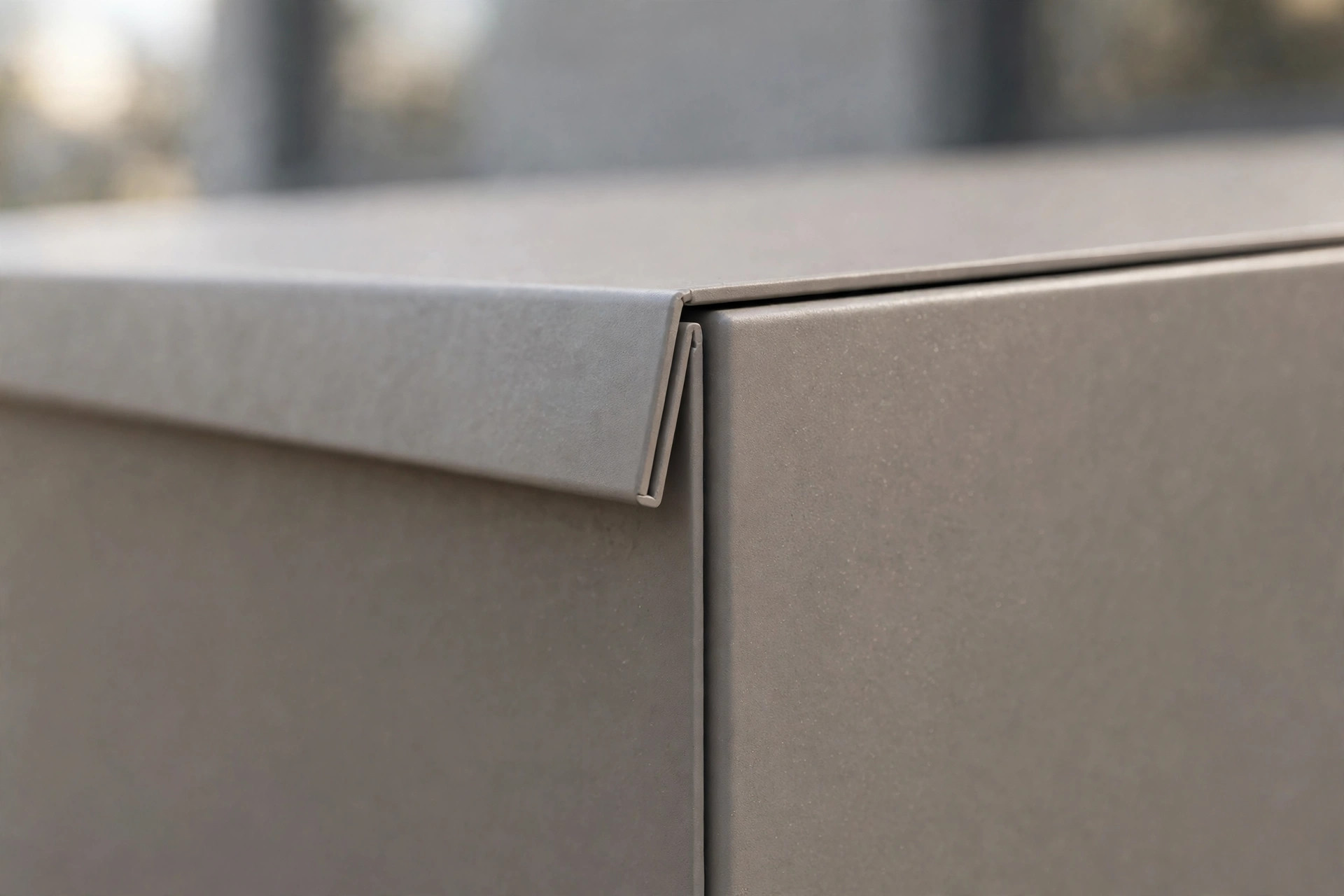
Every finish warranty has exclusions, and knowing them prevents the most common disappointment: assuming a problem is covered when it is not. Common exclusions include damage during handling, transport, or installation — scratches and dents after the panels leave the factory; improper cleaning — abrasive cleaners, strong chemicals, and close-range pressure washing, so warranties typically require cleaning per the coating manufacturer’s maintenance guide; corrosive or unusual environments — salt spray or industrial fumes may fall outside standard coverage or require a specially rated system, so coastal projects deserve a specific conversation; damage from other trades or the building itself — mortar, sealant smears, welding spatter, or water leaking from the wall cavity are not coating failures, even though the symptom appears on the panel surface; and normal weathering — minor changes that do not cross the defined fade or chalk thresholds are considered normal aging, not a warranty event.
Powder Coating and Anodized Finishes: How Coverage Differs
Not every project needs PVDF, and the warranty framework changes with the finish type. Powder coating warranties generally cover adhesion, color retention, and chalking, but the stated performance limits and timeframes are typically more modest than those for PVDF. Powder coatings perform well in many commercial applications, especially interior panels and moderate exterior exposure. For harsh climates, coastal sites, or dark colors, compare the powder coating warranty’s fade and chalk limits against the PVDF alternative and weigh the price difference against the risk.
Anodized finishes are a different case. Anodizing thickens the aluminum’s natural oxide layer electrochemically rather than applying a paint film. Its warranties typically address color stability and corrosion of the anodic layer, using different measurement methods than paint warranties. Because anodized surfaces show color variation more readily between batches, the warranty and specification should address batch-to-batch color consistency explicitly.
Check that the warranty document matches the finish named in the specification: a project that specifies PVDF but receives a powder-coated panel with a powder-coating warranty is not receiving the same product.
The Fine Print: Conditions That Can Void Coverage
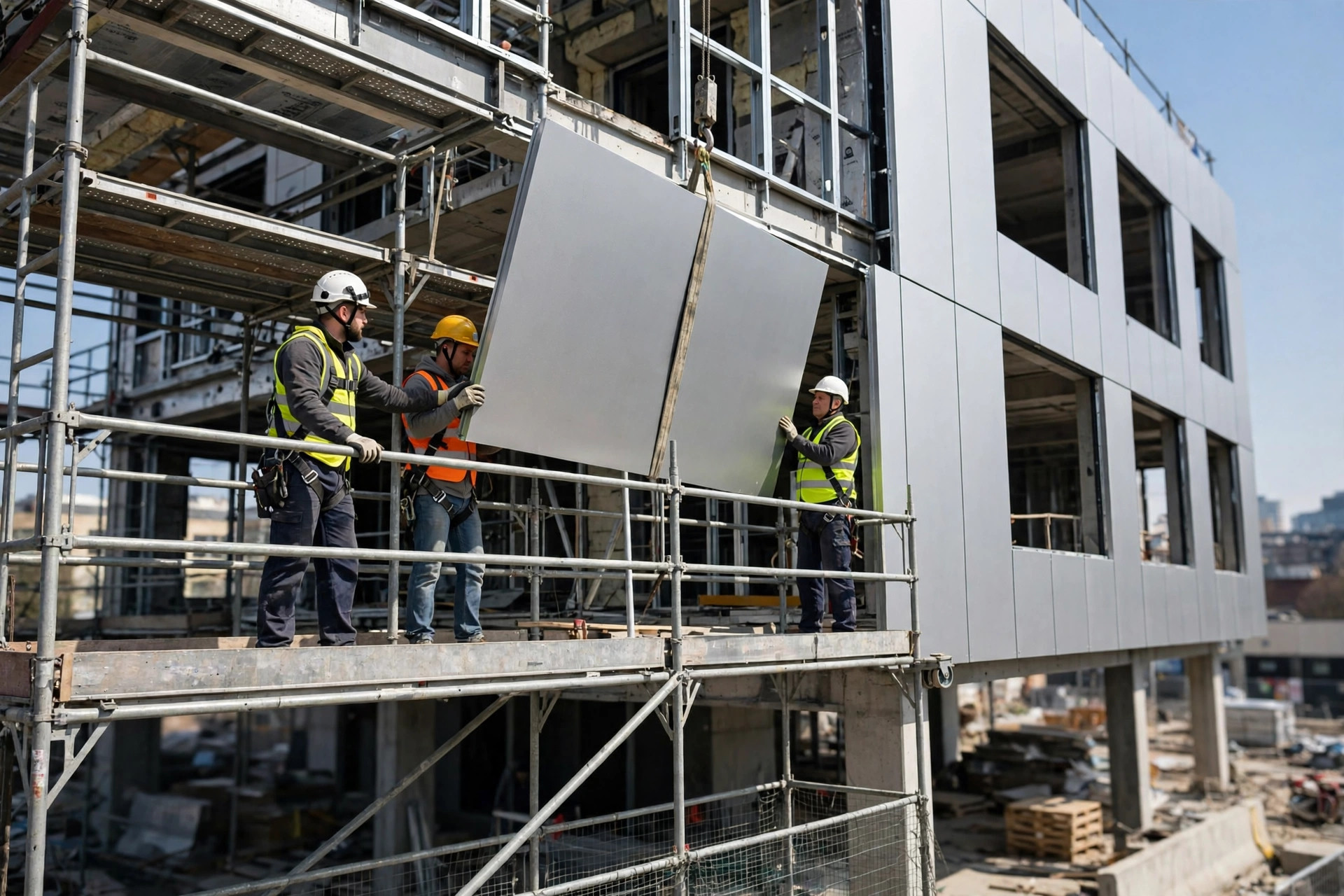
Most finish warranties are conditional, and the most common conditions are worth checking before installation begins: approved cleaning and maintenance — follow the coating manufacturer’s cleaning schedule and keep a maintenance log as evidence if a claim is disputed; compatible materials — sealants, gaskets, and fixings in contact with the panel must be compatible with the coating, since an incompatible sealant is a common cause of denied claims; timely notification — claims usually must be reported within a defined window after the defect is discovered; inspection access — the warrantor typically reserves the right to inspect the panels before approving a remedy; and remedy limits — many warranties limit the remedy to repair, recoating, or replacement of the affected panels, not consequential costs such as scaffolding or reinstallation labor.
What to Ask Before You Specify or Buy
Before you place an order or finalize a specification, use the warranty document as a comparison tool. Ask every candidate supplier the same questions and compare the answers side by side: Who issues the finish warranty, and in whose name? What are the exact performance limits for fading, chalking, and adhesion, and how are they measured? What is excluded, and are there special conditions for coastal or industrial environments? What maintenance is required, and which cleaning products are prohibited? What is the remedy if a claim is accepted — repair, replacement panels, recoating, or a cash settlement — and who bears the labor and access costs? How and when must a claim be reported? Can the supplier provide a sample warranty document before the order, not after delivery?
A supplier who answers these questions and provides a sample warranty document offers something more valuable than a low price: a predictable outcome.
Finish warranties do not make a facade maintenance-free, and they do not replace good detailing, careful installation, and regular cleaning. What they do is set a clear, written expectation for how the most visible part of your building will age — and give you a defined path if it does not age as promised. Read the document before you buy and keep it with the project records.
Browse the range of solid aluminum facade panels at juchangalu.com, or send your drawings and finish requirements for a detailed quotation.