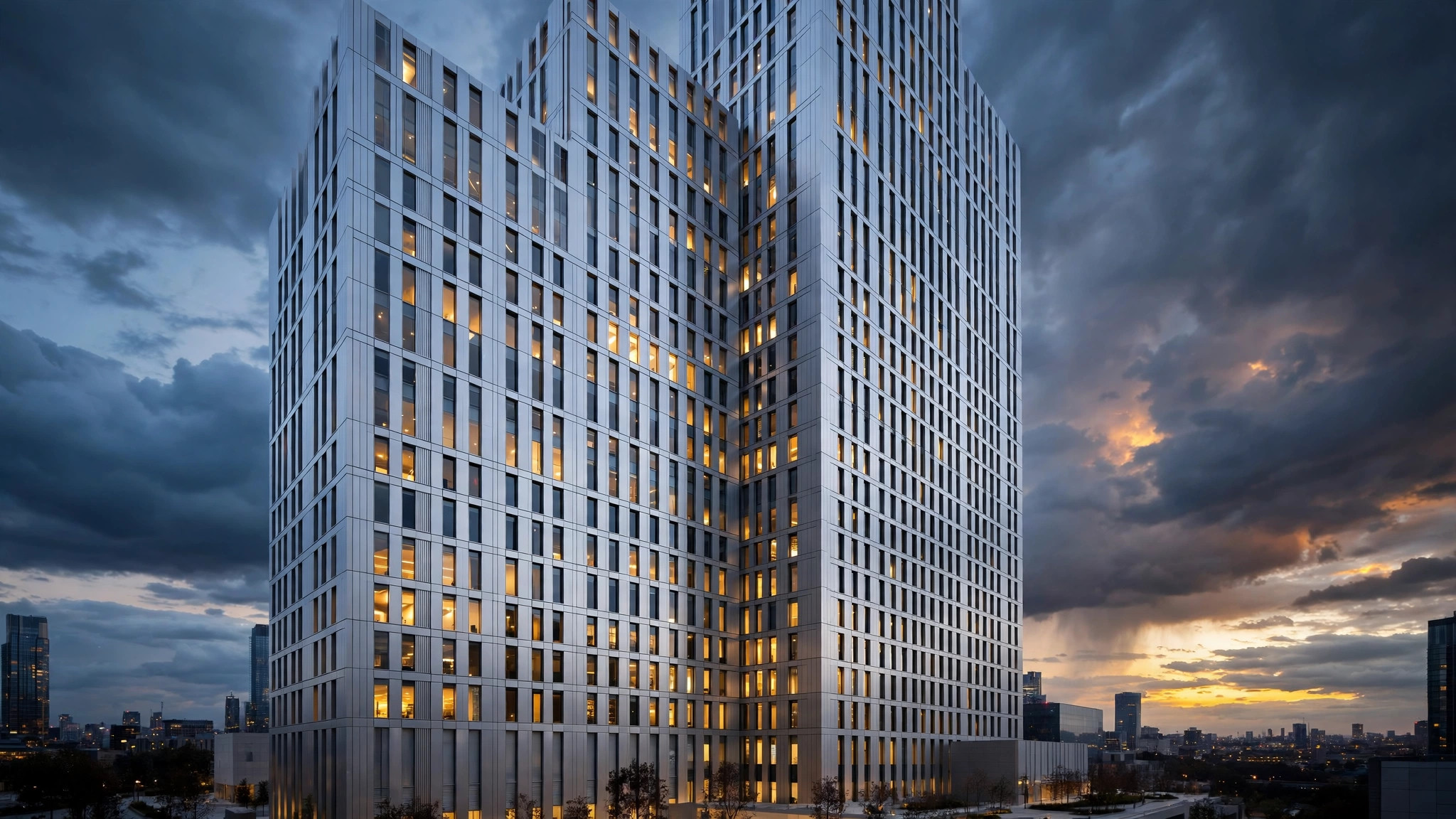
When a fire breaks out in a high-rise building, the facade can either stay out of the way — or become the fastest path the flames travel. This guide covers what inspectors look for, what test reports they’ll ask about, and what your spec package should contain.
Why Fire Code Scrutiny Is Highest on High-Rise Facades
Low-rise buildings and high-rise buildings are treated very differently under the IBC. Once a building exceeds certain height thresholds, the code assumes evacuation takes longer, fire department access is harder, and any vertical flame spread on the exterior wall becomes a life-safety issue for occupants on upper floors. That is why cladding systems on high-rise projects attract questions from plan reviewers, general contractors, and insurance carriers that a two-story office building never sees.
For buyers sourcing aluminum facade panels internationally: fire code documentation belongs in the specification and submittal package from day one — missing it is one of the most common reasons cladding submittals get held up in US plan review.
The IBC Framework: What Actually Regulates Facade Panels
The IBC regulates exterior walls primarily through Chapter 14 (Exterior Walls), with requirements that interact with the building’s type of construction (Types I–V), occupancy classification, and fire separation distance. Section 1406 covers combustible materials on the exterior side of exterior walls, and it is the section that generates the most questions for panel suppliers.
The key idea to understand: the code doesn’t regulate “aluminum facade panels” by product name. It regulates whether the exterior wall assembly, or the materials attached to it, are combustible or non-combustible, and how they perform when exposed to fire. Solid aluminum panels are non-combustible — standard test methods such as ASTM E136 classify metals like aluminum as non-combustible. That matters in code review, because the strictest provisions in Section 1406 apply specifically to combustible cladding materials such as plastic-based composite panels.
What a buyer should check: confirm with the code professional or architect of record which type of construction the project is, and how the local amendments to the IBC apply. Code requirements vary by jurisdiction — a city may adopt the IBC with local amendments that add layers on top of the model code.
Combustibility: The Question Every Inspector Asks
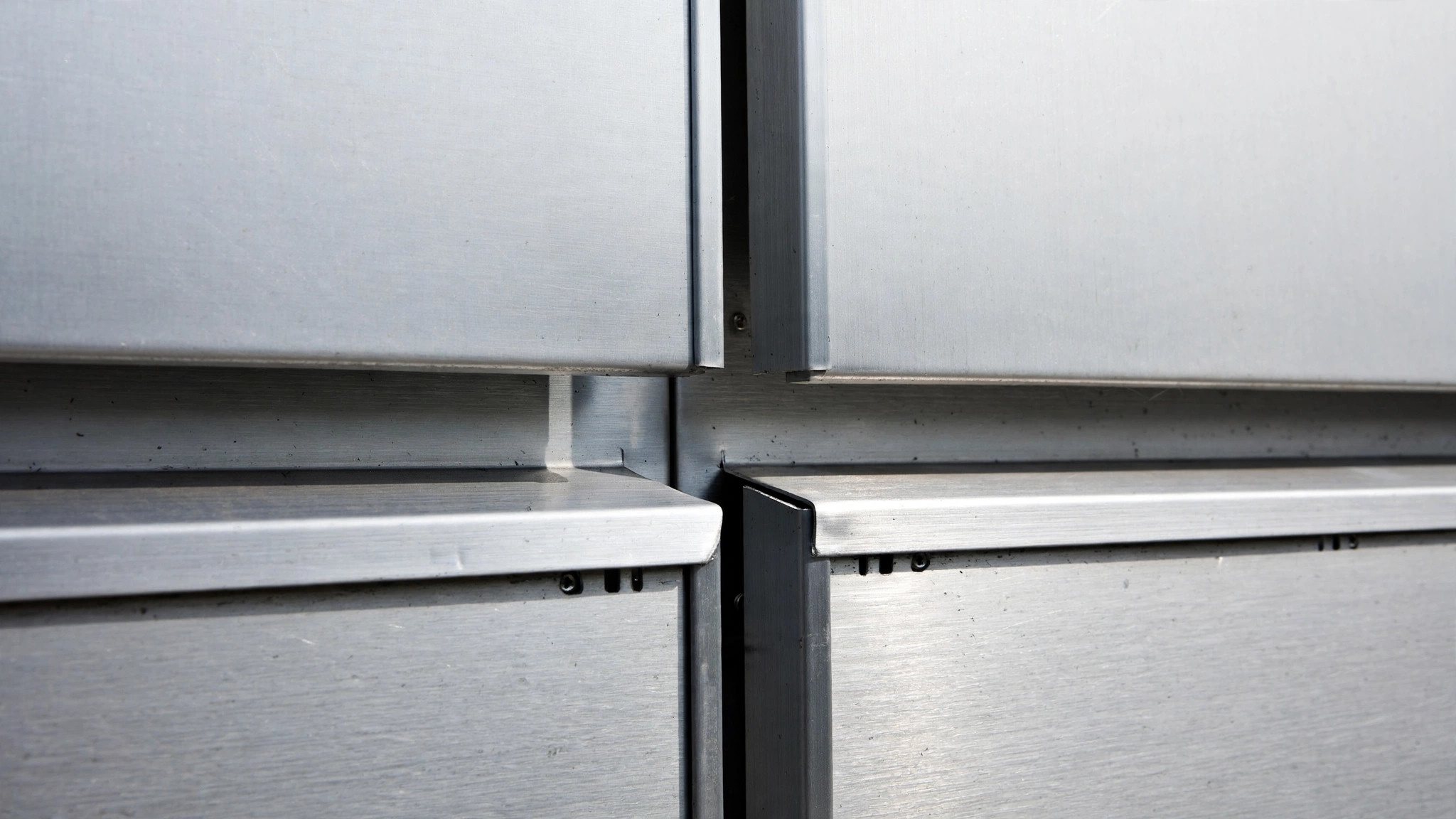
The single most useful fire-related property of a solid aluminum facade panel is that the metal skin itself does not contribute fuel to a fire. Buyers should understand the distinction the code draws:
- Solid aluminum panels (typically 2.0–3.0mm, single-skin aluminum) are non-combustible by nature of the material.
- Metal composite panels with polymer cores (such as ACM/MCM products with polyethylene cores) are combustible materials and face additional code restrictions, including height limits and assembly testing.
- The finish coating (PVDF, powder coating, or roll coating) is a thin organic layer. Its contribution to fire performance is addressed separately through the assembly’s tested configuration.
For specifiers: ask the manufacturer for a clear statement of the panel material construction — solid aluminum skin vs. composite with combustible core — because that classification determines which code sections apply. Keep this documentation in the submittal package; plan reviewers routinely ask for it.
NFPA 285: The Test That Comes Up in Submittals
Anyone who has worked on a US curtain wall or cladding project has heard of NFPA 285, Standard Fire Test Method for Evaluation of Fire Propagation Characteristics of Exterior Wall Assemblies Containing Combustible Components. This is the full-scale assembly test the IBC references for exterior wall assemblies that contain combustible materials.
What buyers need to know about NFPA 285 in practice:
- The test evaluates an entire wall assembly — panels, insulation, air gaps, cavity barriers, and attachment system — not a single panel. A passing result for one manufacturer’s assembly does not automatically transfer to a different assembly configuration.
- It is triggered by combustible components in the assembly. A wall built with solid aluminum panels and non-combustible insulation, in an appropriate configuration, does not have the same testing burden as a wall containing combustible insulation or combustible-core panels.
- Submittals citing NFPA 285 results should identify exactly which assembly was tested — panel type and thickness, insulation type, cavity width, and firestopping details. Reviewers check that the tested assembly matches what’s being built.
For buyers: when a supplier claims an NFPA 285–tested system, request the test report and verify the assembly configuration matches your project.
Finish Coatings and Fire Performance: What to Verify
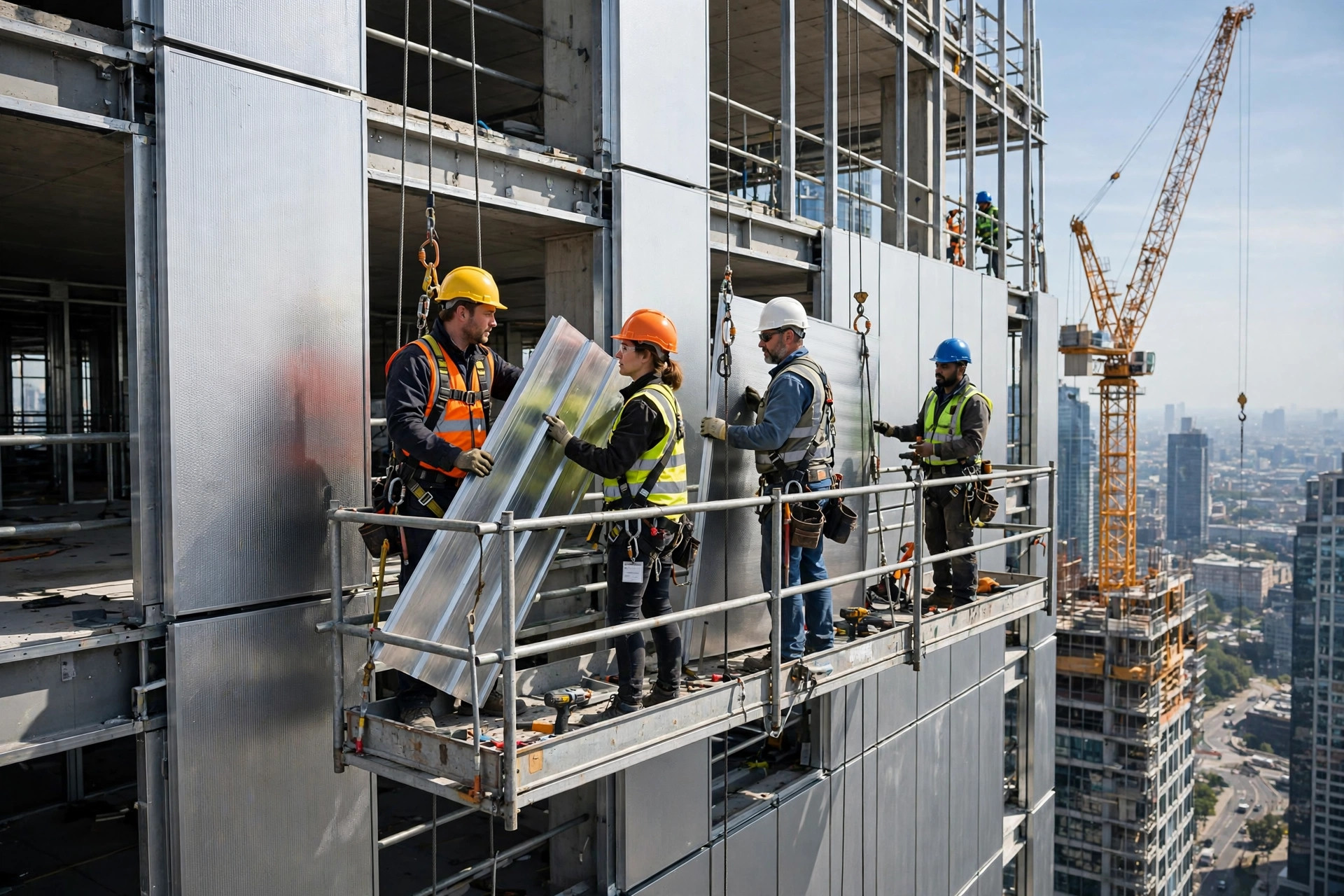
PVDF, powder coating, and roll-coated finishes are all thin organic coatings, typically measured in tens of microns. Buyers sometimes ask whether the finish changes the fire classification of the panel. The standard industry answer: the panel’s combustibility classification is based on the substrate material, and coatings are addressed through assembly-level testing and code provisions for combustible finish materials where applicable.
Practical steps for a specification:
- Request the manufacturer’s technical data sheet for the finish system, including coating thickness and type (PVDF, powder, roll coat).
- Where the code or the AHJ requires it, confirm whether any flame-spread or smoke-developed index testing (ASTM E84) documentation is available for the finished panel.
Your Spec Checklist: What to Confirm Before Procurement
Before releasing a purchase order for aluminum facade panels on a high-rise project, make sure the following items are in order:
- Project’s construction type and occupancy — determines which IBC chapters and sections apply.
- Panel material statement — solid aluminum (non-combustible) vs. composite with combustible core, in writing from the manufacturer.
- Assembly composition — panel, insulation type, air cavity, cavity barriers, and attachment system documented as one assembly.
- Test reports matching the assembly — NFPA 285 report (where combustible components are present), ASTM E84 data (where required), and ASTM E136 classification for the substrate.
- Local amendments and AHJ interpretations — confirmed with the architect of record or code consultant, since jurisdictions modify the model code.
- Mock-up review — a full-size mock-up lets the architect, contractor, and inspector verify joint details, cavity barriers, and finish before production quantities are committed.
Note: this guide is a buyer’s orientation, not a code interpretation — have the architect of record or a licensed code consultant verify requirements for your building.
Why Solid Aluminum Simplifies the Fire Conversation
Specifying solid aluminum panels removes an entire layer of code complexity. Because the panel material is non-combustible, the fire code discussion focuses on the assembly — insulation, cavity design, and firestopping — which simplifies submittals and plan review.
For contractors bidding high-rise work, a non-combustible cladding skin is easier to defend in front of an AHJ than a combustible alternative requiring assembly testing and height limitations. When requesting a quotation, ask for the panel material classification and available test documentation alongside pricing — it makes your own bid package stronger.
Planning a high-rise facade project and need solid aluminum panels with documented specifications? Browse products at juchangalu.com or send your drawings for a detailed quotation.