American architects and curtain wall contractors are fielding a new kind of RFQ question: “Can you provide an EPD?” As green building programs push carbon accounting upstream into material selection, solid aluminum facade panels are being evaluated on more than finish, thickness, and price. For US buyers sourcing aluminum veneer panels from overseas factories, understanding embodied carbon — and the Environmental Product Declarations (EPDs) that document it — is becoming as basic as knowing your coating specification.
Here is how to read that documentation — and what it cannot tell you — before you write carbon language into a project manual.
Why Embodied Carbon Has Entered the Facade Conversation
Operational carbon — the energy a building consumes over its life — has long dominated sustainability discussions. But as buildings get more efficient, the carbon locked into materials accounts for a growing share of a project’s footprint. LEED whole-building life-cycle assessment credits, Buy Clean policies in several US states, and corporate net-zero commitments all reward projects that document lower-carbon material choices.
For metal wall panels, that documentation usually arrives as an EPD: a standardized, third-party-verified document reporting a product’s environmental impacts — including global warming potential — based on a life-cycle assessment (LCA). When a design team asks for one, they want numbers in a common format they can compare across bids.
What an EPD Actually Tells You About an Aluminum Panel
EPDs for construction products follow ISO 14025 and, in most cases, the EN 15804 product-category rules. A few things this means for aluminum facade panels:
- Functional unit: impacts are usually reported per square meter of panel at a defined thickness and coating. Check that the EPD’s declared unit matches what you are buying — an EPD for 3.0mm panels does not automatically represent 2.0mm panels.
- System boundary: most panel EPDs cover stages A1–A3 (raw material supply, transport to the factory, and manufacturing). Two EPDs with different boundaries are not directly comparable.
- Third-party verification: a credible EPD is independently verified and registered in an EPD program operator’s database. An unverified “carbon report” from the supplier’s own marketing team is not the same thing.
- What it does not tell you: an EPD says nothing about structural adequacy, coating durability, or fire performance. It answers the carbon question — nothing more.
EPDs expire (typically after five years) and PCRs evolve, so confirm the document is current before referencing it in a submittal package.
Where the Carbon Actually Sits in an Aluminum Facade Panel
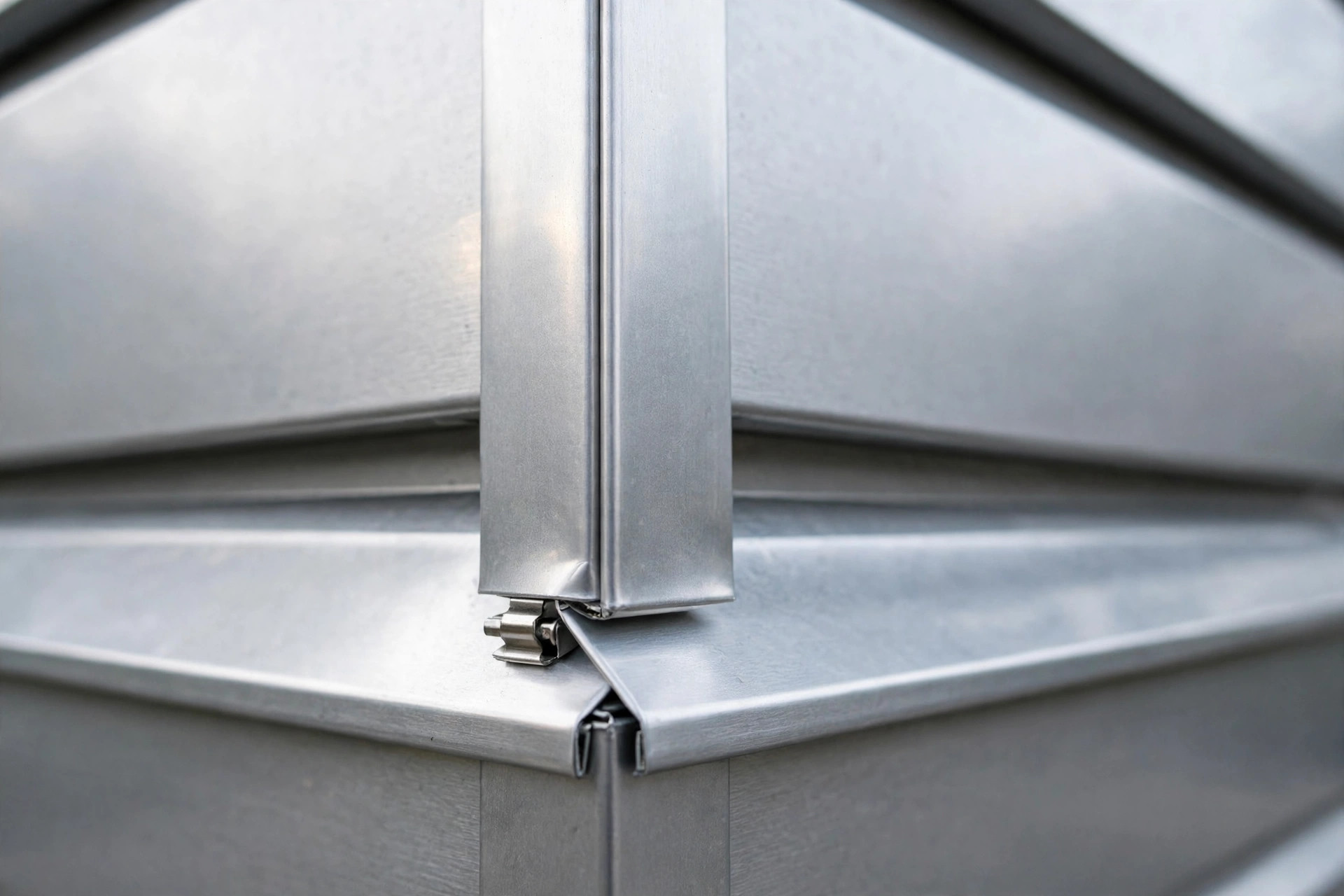
For solid aluminum panels, the embodied carbon profile is dominated by one stage: primary aluminum production. Smelting alumina into aluminum is enormously electricity-intensive, so a panel’s carbon footprint is largely set by the energy mix feeding the smelter — hydropower-based production carries a fraction of the footprint of coal-powered production. Two visually identical 3.0mm PVDF-coated panels can show dramatically different A1–A3 results in their EPDs for this reason alone.
Downstream stages matter less but are not trivial. Alloying, rolling, panel fabrication (cutting, folding, stiffening), and surface treatment — PVDF coating, powder coating, or anodizing — each add smaller carbon increments. Efficient nesting of panel layouts during CNC cutting also reduces scrap, and scrap returned to the remelt loop performs far better than scrap sent to landfill in a full LCA.
When comparing suppliers on carbon, the smelter’s energy source and the share of recycled content are the two variables that move the needle.
Recycled Content: The Buyer-Friendly Carbon Lever
Aluminum is infinitely recyclable without loss of material properties, and remelting scrap uses a small fraction of the energy required for primary smelting. Industry groups report that roughly three-quarters of all aluminum ever produced remains in use today — the metal you specify may already be on its second or third life.
When a supplier claims a recycled content percentage, ask what it means in practice:
- Pre-consumer vs. post-consumer: pre-consumer process scrap returned within the same factory is common and easy to document; post-consumer recycled content from end-of-life products is rarer and more valuable in carbon terms.
- Documentation: the claim should be traceable — a chain-of-custody statement, mill certificates, or third-party certification — not a line in a sales email.
- Product-specificity: a factory’s corporate average may differ from the content of the panels you receive. Ask for the number tied to your product and production run where possible.
For specifiers, recycled content is the most actionable carbon lever: documentable, auditable, and directly tied to the A1–A3 number in the EPD.
What Specifiers Should Ask Suppliers
Before writing embodied carbon language into a project manual, put these five questions to every panel supplier on the shortlist:
- Do you have a current, third-party-verified EPD for this exact panel type and thickness? Generic or expired EPDs do not survive submittal review.
- What is the A1–A3 global warming potential per declared unit, and which PCR version was used? This lets your consultant compare apples to apples.
- What recycled content is documented for the product, and how is it verified? Accept mill certs and chain-of-custody statements; be skeptical of round numbers with no backup.
- Can you identify the smelter energy basis behind your carbon number? Vagueness here is a signal.
- Will the carbon documentation be tied to the delivered panels? Submittals and closeout documents should reference the same EPD and recycled content figures you specified.
These questions cost nothing to ask and quickly separate documented suppliers from sales-driven claims.
Practical Specification Language That Works
You do not need to be a life-cycle analyst to write effective carbon requirements. Performance-based language outperforms brand-name restrictions and keeps the bidding field fair:
- Require a current, third-party-verified EPD conforming to EN 15804 (or an equivalent PCR) for each panel type and thickness, submitted with the shop drawings.
- Cap A1–A3 global warming potential per declared unit only after benchmarking real EPDs — an arbitrary threshold will either exclude everyone or mean nothing.
- Require documented recycled content with traceability, stating whether pre-consumer, post-consumer, or both are acceptable.
- Ask bidders to state the EPD program operator and registration number so the documents can be verified in minutes.
Pair carbon requirements with your usual quality controls: color tolerance, coating specifications, and flatness tolerances are evaluated separately. Carbon documentation is one more submittal item — not a replacement for the engineering ones.
The Bottom Line for US Buyers
Embodied carbon is moving from a “nice to have” narrative to a line item in submittal packages, and aluminum facade panels are squarely in scope because primary smelting dominates their footprint. The evaluation tools already exist: ask for a current EPD, read the A1–A3 number, verify the recycled content, and write performance-based spec language any qualified factory can answer.
Suppliers that can produce this documentation quickly reveal something important about their operation. Where the carbon number may soon decide who wins the bid, that paperwork is becoming as competitive an asset as the panel itself. Browse the product range at juchangalu.com, or send your drawings and specification requirements for a detailed quotation.