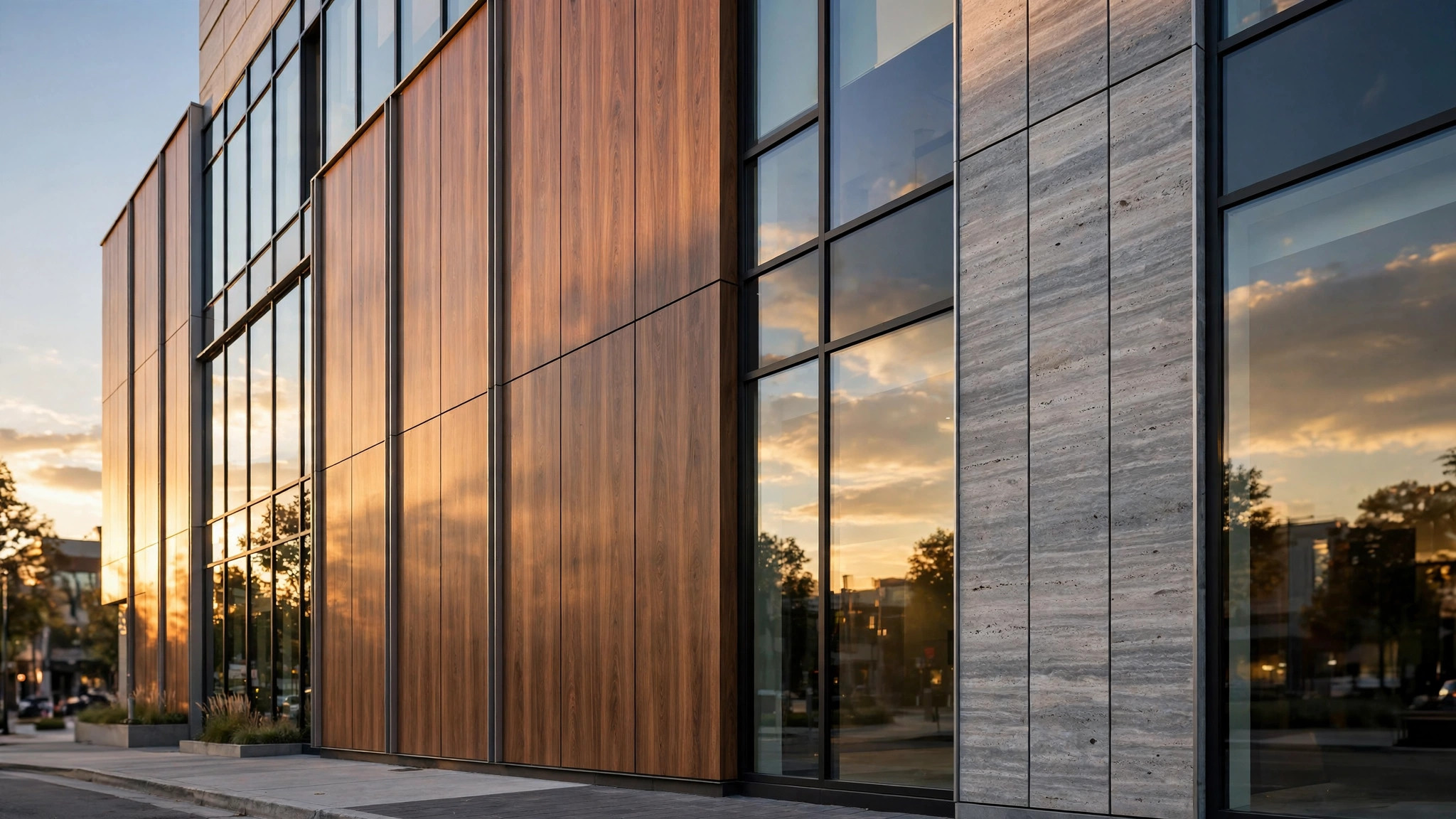
Wood and stone have anchored architectural design for centuries, but on a modern façade they come with real liabilities: rot, cracking, staining, and maintenance bills that never stop. That is why wood-look and stone-look aluminum façade panels have become one of the most requested finishes in solid aluminum panel construction. They reproduce the grain, texture, and color of natural materials on a rigid, weatherproof aluminum substrate — giving architects the look they sketched without the lifecycle costs the owner fears.
This guide explains how these finishes are produced, where they perform best, and what to check when specifying aluminum veneer panels with natural-material patterns.
How Wood-Look and Stone-Look Finishes Are Made
Unlike a simple solid-color spray, natural-material patterns are applied to solid aluminum panels through a roller coating (roll coating) process. A continuous coil or pre-cut sheet of aluminum passes under precision rollers that transfer a multi-layer coating system onto the surface:
- Base coat — establishes the underlying tone (warm brown for wood, grey or beige for stone).
- Pattern transfer — engraved or printed roller cylinders stamp realistic grain veins, knots, or stone veining onto the surface. High-end lines use high-definition engraving so the pattern reads naturally at viewing distance.
- Protective topcoat — a clear, weather-resistant layer locks in color and shields the pattern from UV fading, moisture, and abrasion.
The result is a finish that looks like oak, walnut, teak, travertine, or slate from the street — but behaves like aluminum. Because roller coating is a controlled factory process rather than a hand-applied finish, color consistency from panel to panel is far better than with on-site applied materials, which matters on large façades where a mismatch would be obvious.
Why Specifiers Choose Aluminum Veneer Panels Over Real Wood or Stone
1. Weather resistance and dimensional stability
Real wood moves with humidity, warps, and needs resealing. Natural stone is heavy and can stain or spall in freeze-thaw climates. Wood-look and stone-look aluminum façade panels are non-combustible, will not rot, and stay flat — a decisive advantage on commercial façades in harsh climates.
2. Weight and structural economy
A 2.5 mm solid aluminum panel weighs a fraction of a comparable stone cladding system. On retrofit projects, that can mean no structural reinforcement of the existing building — a cost difference that often decides the material.
3. Large panel formats
Wood-look aluminum panels are available in large formats — up to approximately 1300 × 4000 mm in standard production — allowing long, continuous grain runs across a façade. Real wood boards and stone slabs cannot span those distances without joints.
4. Lower lifetime maintenance
No staining, sealing, or repointing. Routine cleaning with water and mild detergent keeps the finish presentable for years, similar to standard PVDF-coated aluminum facade panels.
Choosing the Right Pattern and Color
The catalog for aluminum veneer panels typically covers three families:
- Wood grain — oak, walnut, teak, cedar, and weathered barn-wood tones. Warm grains suit hospitality, retail storefronts, and residential-commercial mixed use. Note that grain direction matters: specify whether the grain runs vertically or horizontally, because panels from one batch should share orientation to look intentional.
- Stone texture — travertine, marble veining, granite speckle, and slate. Cooler, more formal; common on office towers, bank branches, and civic buildings.
- Custom patterns — some factories can develop a bespoke print from a reference photo of a specific wood species or stone, subject to setup volume. If brand consistency demands an exact match, ask about custom print capability early — it affects the schedule.
Always request full-size physical samples before final approval. On-screen renders compress grain detail, and two factories’ “walnut” can look quite different. Hold the sample at arm’s length in daylight — that is how the façade will actually be seen.
Specification Checklist for Buyers
When requesting a quotation for wood-look or stone-look aluminum facade panels, confirm these items so the price you compare is the price you get:
- Substrate alloy and temper — 1100 or 3003 aluminum in H24 temper is the common, weldable, and stable choice for façade-grade panels. Ask what the factory actually uses.
- Panel thickness — 2.0, 2.5, and 3.0 mm are the standard façade thicknesses. Thicker panels resist wind load and oil-canning better on large cassettes; 3.0 mm is the safer call for high-rise exposure.
- Coating system — confirm whether the pattern layer is roller-coated and what topcoat protects it. Exterior-grade weathering performance should be stated in writing, not assumed.
- Pattern continuity — for long grain runs, ask how the factory manages pattern alignment across panels and whether it can supply panels numbered in installation sequence.
- Edge and joint treatment — cassette (folded-edge) panels with concealed fixings hide panel edges and make grain joints read as clean shadow lines.
- Fire behavior — because the substrate is solid aluminum, these panels carry the same non-combustible substrate advantages as standard solid aluminum façade panels — one reason they are specified on projects where composite panels face restrictions.
Where These Panels Shine in Real Projects
Retail and hospitality. Storefronts and hotel podiums use walnut or teak grains to add warmth at pedestrian level while keeping the upper tower in a cooler finish — two moods, one material system, one installer.
Education and healthcare. Wood-look aluminum veneer panels give lobbies, atriums, and soffits a welcoming timber feel with none of timber’s infection-control or fire-rating headaches.
Transit and public buildings. Stone-look panels deliver the gravitas of travertine or granite on stations and civic buildings at a fraction of the installed weight and cost.
Residential balconies and soffits. Smaller-format wood-grain cassettes are a popular balcony-cladding choice, standing up to sun and rain far better than timber battens.
Installation and Maintenance Notes
Wood-look and stone-look aluminum façade panels install exactly like standard solid aluminum panels — cassette or tray systems on aluminum sub-frames, with open or closed joints. Two details deserve attention:
- Protect the finish during handling. Pattern coatings scratch like any painted surface. Keep protective film on until the final clean, and insist on clean-glove handling on site.
- Plan the grain layout. A simple elevation drawing marking grain direction per panel prevents the most common aesthetic failure: grain running sideways on one panel because nobody planned it.
Maintenance is straightforward: wash down once or twice a year with clean water and a soft brush or low-pressure rinse. Avoid abrasive pads and strong solvents, which can dull the pattern layer.
The Bottom Line
Wood-look and stone-look finishes let you design with the warmth of timber and the solidity of stone while building with the durability of solid aluminum. For US buyers weighing lifecycle cost against design intent, that combination is increasingly the deciding factor — not a compromise, but the point.
Ready to compare samples? Browse the aluminum façade panel range at juchangalu.com, or send your elevations and drawings for a detailed quotation on patterned aluminum veneer panels in the finish your project needs.