
Distributors who serve the commercial cladding and architectural metals trade know that the right product line can turn one-off orders into repeat business. Solid aluminum panels have earned their place in that line: architects specify them for rainscreens, contractors trust them on recladding projects, and building owners appreciate a non-combustible facade that holds its finish for years. For US distributors, adding solid aluminum panels is less about chasing a trend and more about filling a structural gap between raw sheet stock and finished curtain wall systems. Done well, it creates a high-value product family that contractors return to project after project.
Why Solid Aluminum Panels Belong in a US Distributor’s Catalog
The demand case is straightforward. Ventilated rainscreen construction continues to grow in the US commercial market because it manages moisture and thermal performance better than barrier walls. Solid aluminum panels are one of the most practical cladding choices for these systems: they are non-combustible, dimensionally stable, and compatible with standard cassette and hook-on attachment methods. Recladding is another steady driver. As mid-century office buildings, retail centers, and transit facilities come up for facade renewal, contractors need a lightweight, code-friendly reskin material that installs quickly over existing structures.
For a distributor, the strategic benefit is positioning. Contractors already call you for sheet, fasteners, and accessories. When you can also supply finished facade panels — cut, folded, and coated to specification — you become the single source for the cladding package instead of one line item on a purchase order. That consolidation is what keeps accounts sticky.
Build a Core Stocking Range Around Proven Specifications
You do not need to stock every possible configuration to serve this market well. A tight, well-chosen core range covers the large majority of US project inquiries. The proven workhorses are solid aluminum panels in 2.0, 2.5, and 3.0 mm thicknesses, in 1100 or 3003 (H24) alloy, with standard sheet sizes up to 1300 × 4000 mm. Keep the thickest option for projects that demand extra rigidity and the thinner gauges for soffits, fascias, and interior work.
Finish is the other half of the stocking decision. PVDF coatings remain the specifier’s default for exterior facades because of their weathering performance; powder coating and roller coating offer cost-effective alternatives for interior or less exposed applications. On color, a conservative neutral palette — whites, grays, charcoals, champagne, and bronze — will satisfy most baseline demand, with project-specific colors handled through your factory partner’s make-to-order program.
Cut-to-Size and Folding Services: The Value-Added Margin Multiplier
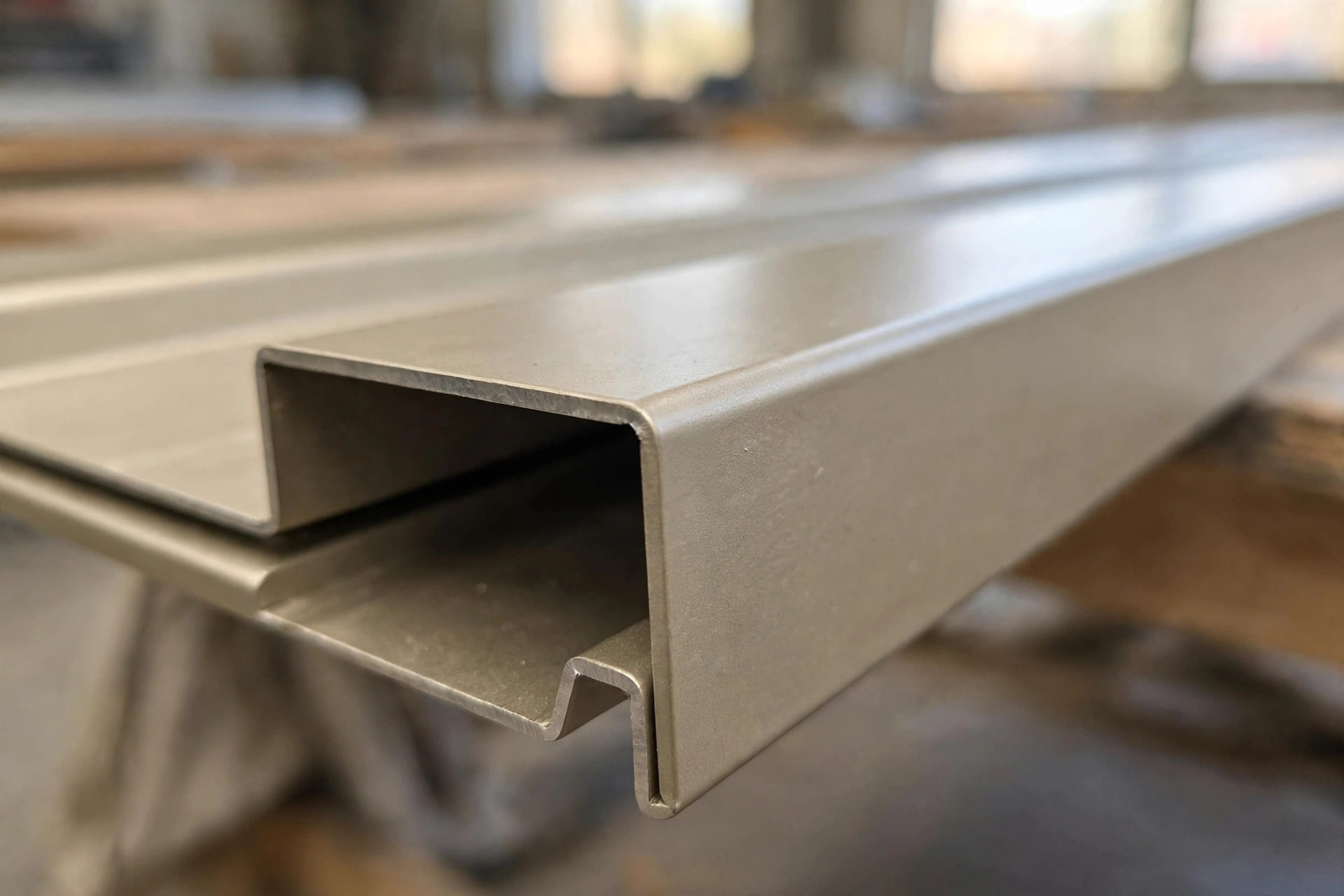
Panels sold as flat stock are a commodity; panels delivered as ready-to-install cassettes are a service. The margin difference between the two is exactly where a distributor can win. Most US contractors do not have the brake presses or folding equipment to turn flat sheet into folded cassette panels themselves — and many prefer not to. If your operation can offer cut-to-size, CNC routing, and precision folding, you capture the fabrication value that would otherwise go elsewhere.
Consistency is the key to making this work. Folded panels must arrive with clean, uniform edges and dimensions that match the approved shop drawings. Work with a factory partner that fabricates to tight tolerances and whose coating process does not crack or craze at the fold lines — a tell-tale sign of quality that contractors notice immediately on the scaffold. Document your tolerance standards in writing so installers know what to expect before the first bundle lands.
Help Contractors Win Bids with Samples and Submittals
On commercial projects, the contractor who controls the submittal package often controls the win. Distributors who keep a sample library — color chips, finish samples, and small folded cassette mock-ups — let estimators and architects confirm selections fast, without waiting weeks for factory samples from overseas. When a spec calls for a custom color, having a stocked chip book and a reliable recolor path shortens the approval cycle and keeps your bid in the running.
Pair samples with documentation. Product data sheets, finish specifications, and straightforward installation references make an estimator’s job easier and reduce the back-and-forth that delays orders. The distributors who grow fastest in this segment treat submittal support as a service line, not an afterthought.
Store and Handle Panels Without Costly Damage
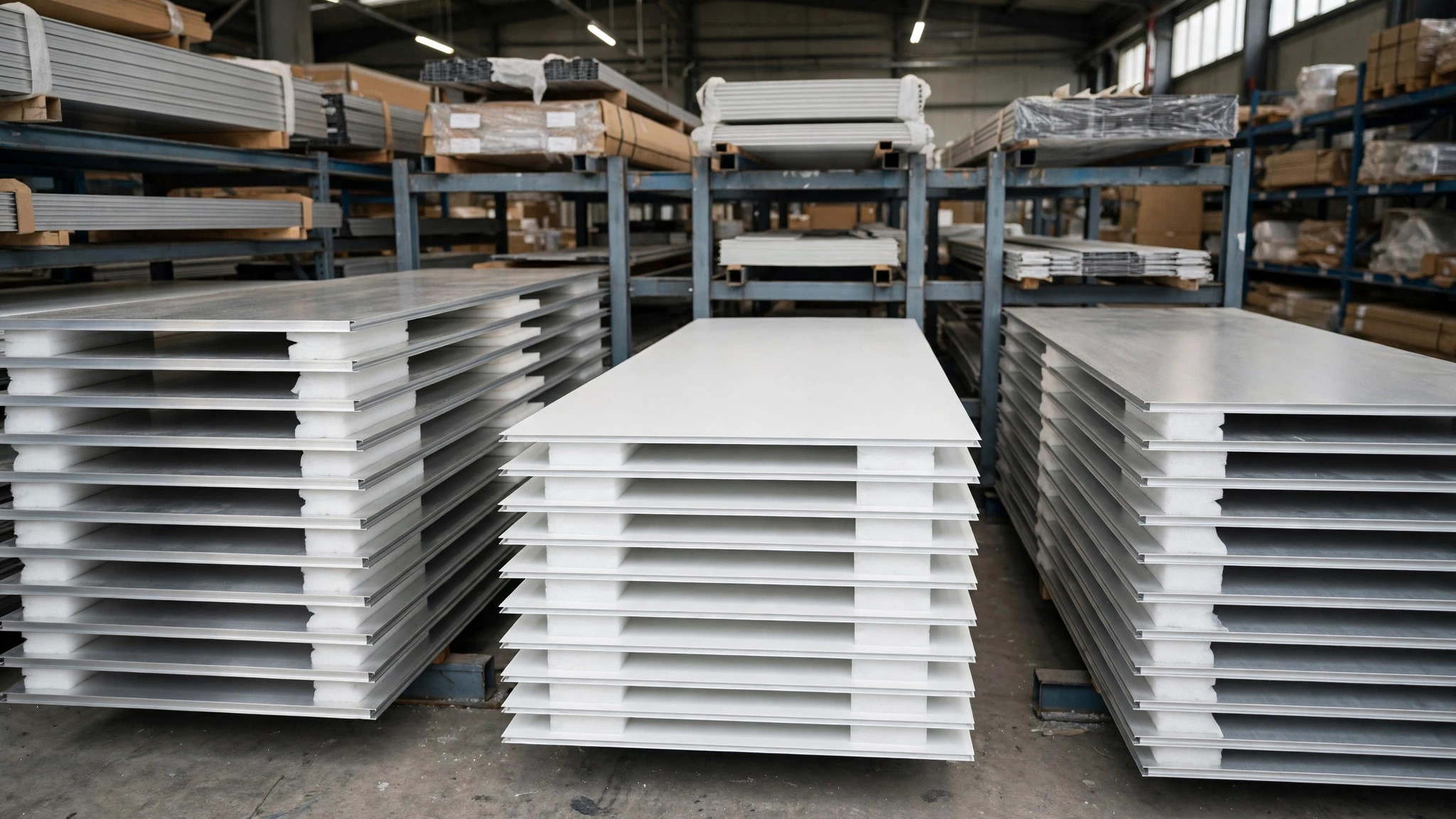
Aluminum panels arrive ready to be the visible face of a building, so every scratch, dent, or edge ding is a cost. Store flat panels horizontally on a clean, flat rack, stacked with interleaving protection between sheets, and never place heavy loads on top of a finished stack. Folded cassettes ship best in upright cradles or separated with foam protection so the folded flanges do not rub against neighboring panels.
- Keep panels under cover — prolonged standing water and trapped moisture are the enemy of coated surfaces.
- Handle coated faces with clean gloves; fingerprints etched into a PVDF or powder finish are difficult to remove.
- Inspect every incoming bundle against the packing list before signing, and photograph any transit damage immediately.
- Rotate stock so first-in bundles ship first, keeping finishes consistent within a single project.
A distributor known for delivering pristine panels earns a reputation that travels between contractors faster than any sales pitch.
Choosing the Right Factory Partner
None of the above works without dependable supply. Look for a factory that offers consistent panel quality across production runs, reliable packaging, and an engineering team that can work from your customers’ drawings. Ask how they verify thickness and coating uniformity, and whether they can support both stocked gauges and custom fabrication from the same production line. Clear communication — in English, with drawing review as standard — is the practical difference between a vendor and a partner.
Adding solid aluminum panels to your lineup is a deliberate move, not a gamble: stock the proven gauges and finishes, invest in cutting and folding capacity, and back it up with samples and submittal support. If you are evaluating suppliers, browse the products at juchangalu.com or send your drawings for a detailed quotation.