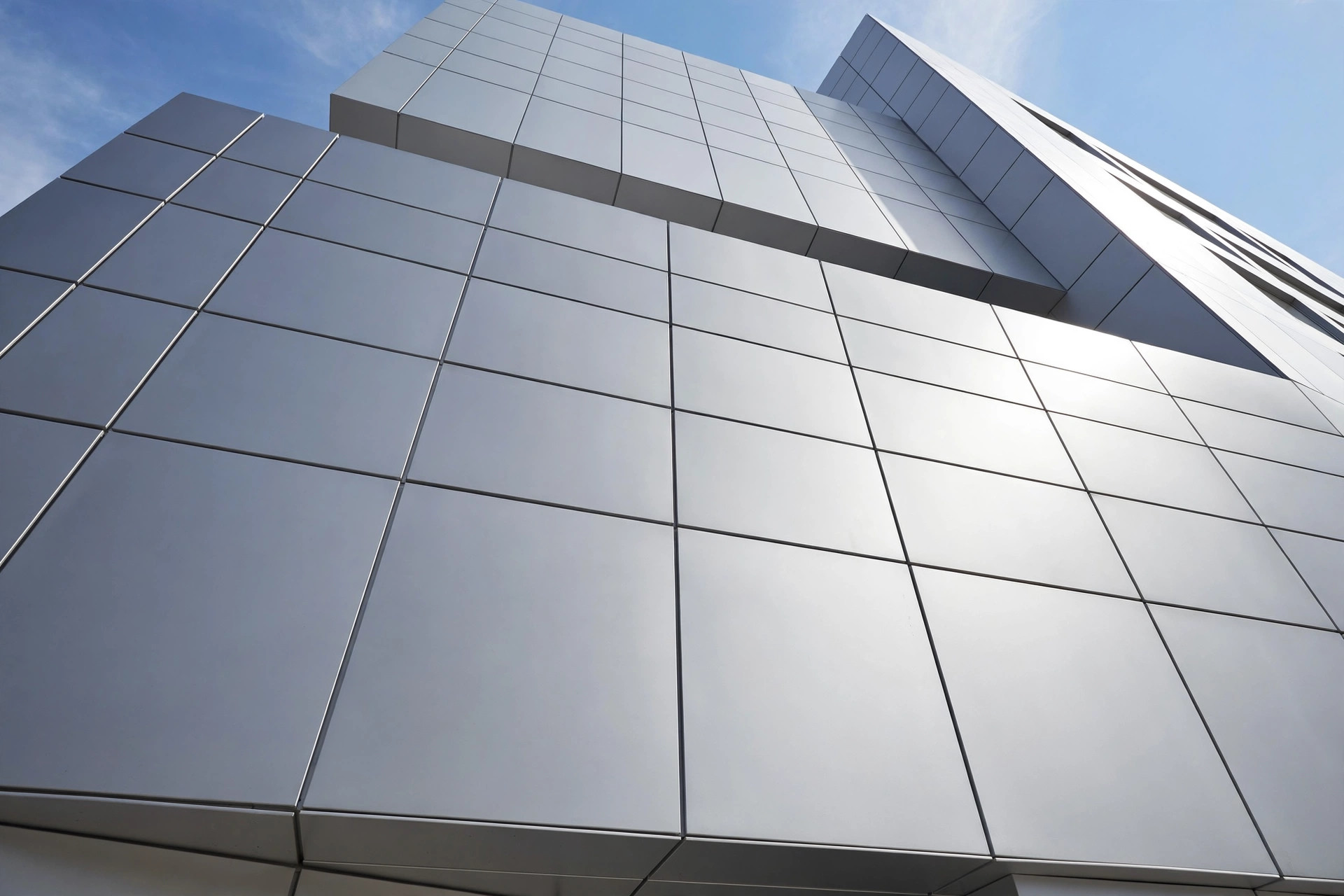
If you are sourcing solid aluminum façade panels for a US project, you will likely receive quotations from several factories that look nothing alike: one prices by the square meter, another by the panel, a third bundles engineering and hardware into a single lump sum. Comparing them on price alone is the fastest way to approve a bid you will regret later.
This guide walks you through how to read an aluminum façade panel quotation line by line — what each item should say, which technical details must be stated explicitly, and the red flags that signal a supplier you should think twice about.
What a Complete Quotation Should Contain
A professional quotation breaks the scope into clearly priced line items instead of hiding everything in one number. Look for these, at minimum:
- Panel supply. Priced per square meter or per panel, with the total panel area and quantity stated. Flat panels and folded cassette panels should be listed separately, because fabrication work differs significantly.
- Material specification. The exact alloy and temper (for example, 3003-H24) and the nominal thickness — 2.0, 2.5, or 3.0 mm for solid aluminum façade panels. “Standard aluminum” is not a specification.
- Surface finish. The coating system spelled out: PVDF fluorocarbon coating, powder coating, or roller coating — plus the color reference (a RAL code or an approved physical sample). Two suppliers quoting “silver grey” may be quoting two completely different finishes.
- Fabrication details. Cutting, CNC folding, edge returns, stiffener ribs, and corner welding where applicable. For cassette panels, the quotation should state the fold depth and stiffener arrangement, since these drive both cost and flatness performance.
- Subframe and fixing system. Whether aluminum brackets, rails, screws, and anchors are included — and if so, which components exactly. Hardware is where many “cheap” quotes quietly leave a gap.
- Engineering and shop drawings. Clarify who produces fabrication drawings from your architectural drawings, how many revision rounds are included, and who signs off before production.
- Packing. Export-grade packing for container shipment: protective film on the finished face, foam or cardboard separation between panels, and crating or palletizing details.
- Freight and delivery terms. The Incoterm stated in full (EXW, FOB, CIF, DDP) and the named port or delivery address. A price that looks low is often just missing the ocean freight.
Technical Specifications Worth Checking Twice
Beyond the line items, the technical notes attached to a quotation reveal how seriously a factory takes quality. Verify each of the following:
Alloy, temper, and thickness tolerance
3003-H24 is the workhorse alloy for folded façade panels: good formability, reliable strength after folding. Confirm the thickness tolerance band (a common export standard is ±0.1 mm on a 3.0 mm panel) and ask whether the quoted thickness is nominal or minimum. A panel quoted at 3.0 mm but delivered consistently at 2.8 mm is a different product.
Panel size limits
Conventional production caps out around 1300 × 4000 mm for a single solid aluminum panel. If your design calls for larger cassettes, confirm feasibility in writing — oversized panels need special handling in coating and folding, and not every factory can do them.
Coating standard and film thickness
For PVDF coatings, ask for the dry film thickness and whether the coating is a two-coat or three-coat system. For powder coating, confirm the film thickness range and the curing process. A quotation that names a finish without any measurable standard attached to it cannot be compared against one that does.
Flatness and dimensional tolerances
Ask for the factory’s stated tolerances on panel diagonal difference, edge straightness, and surface flatness after folding. Reputable fabricators will quote these numbers without hesitation; a supplier that has never been asked may be one you have to ask twice.
Red Flags in a Panel Quotation
These patterns show up again and again in quotations that cause trouble downstream:
- A single lump-sum price with no breakdown. You cannot compare it, you cannot value-engineer it, and you cannot tell what was left out.
- Vague material descriptions. “High-quality aluminum,” “premium coating,” “standard thickness” — none of these can be verified on delivery.
- Finish specified without a reference. A color name alone, with no RAL code, no physical sample approval step, and no coating system named.
- Accessories excluded without being listed as excluded. The panels are quoted; the brackets, screws, and sealants are simply never mentioned, and surface later as a change order.
- No tolerance or QC documentation. A serious factory will offer mill certificates for the aluminum coil, coating batch records, and a pre-shipment inspection report. Their absence is information.
- Unrealistic uniformity. If one bid is dramatically lower than the rest on identical scope, something in the material, finish, or fabrication scope is different. Find out what before you celebrate.
Questions to Ask Before You Approve
Use these as a checklist on your final call with the factory:
- Who produces the shop drawings, and how many revision rounds are included in the price?
- How is color approved — by RAL code alone, or by a physical sprayed sample signed off before production?
- What exactly is included in export packing, and how are panels separated and protected inside the container?
- Which documents ship with the goods: packing list, mill certificates, coating records, inspection report?
- If panels arrive damaged or out of tolerance, what is the documented remedy process?
Comparing Quotations Apples to Apples
Once you have two or three detailed quotations, normalize them before comparing. Convert everything to a cost per square meter of finished panel area under identical terms (same Incoterm, same finish system, same thickness and alloy). Separate the panel supply from engineering, hardware, and freight so you can see where each supplier is actually cheaper — and where one is simply quoting less scope.
A quotation you can read clearly is the first quality control step of the whole project. The factories worth working with are the ones whose paperwork answers your questions before you ask them.
To see how a detailed, line-item quotation looks in practice, browse the product range at juchangalu.com — or send your drawings for a detailed quotation built around your project’s actual panel schedule.