Aluminum Facade Panel Sizes Explained: Standard Blanks, Module Planning, and Cutting Waste
·Industry insights
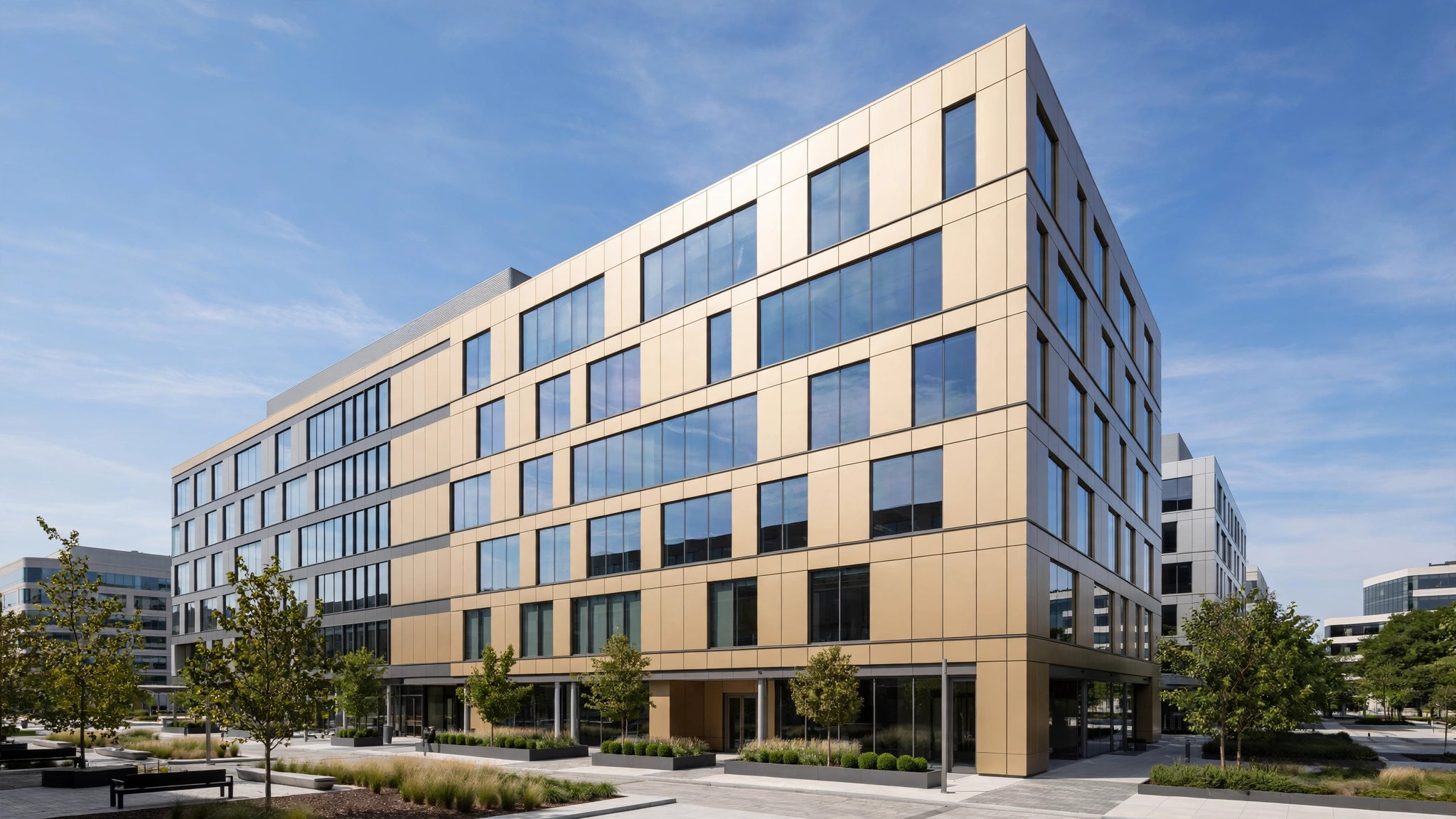
Most facade RFQs start with color, thickness, and finish. Panel sizes often come last, treated as a detail the factory will sort out. In practice, size decisions made early — during elevation design, before shop drawings — ripple through material cost, fabrication time, and joint layout. For US buyers sourcing solid aluminum facade panels, understanding how panel sizes work can save real money in cutting waste and avoid schedule surprises.
This guide explains standard blank sizes, module planning, and the trade-offs between large and small panels.
Why Panel Size Decisions Belong Early in the Design Process
A facade elevation is a grid. Every grid line becomes a panel edge, a joint, a folded return, and a unit of labor. When architects choose panel modules without checking what the factory can actually produce and ship, projects end up with oversized panels that need custom tooling and transport permits, or thousands of small panels that inflate installation cost per square foot.
Locking in panel sizes during design development lets the distributor or contractor price accurately. A project with three standard module sizes will almost always cost less per square foot than one with thirty custom sizes.
Standard Blank Sizes: What Factories Actually Work With
Solid aluminum panels are fabricated from flat aluminum blanks — sheets or coils of a given width and length — that are cut, folded, stiffened, and coated. The practical maximum is limited by three things: the blank size the factory stocks, the width of its folding equipment, and the coating line.
At Juchang Aluminum, our standard maximum panel size is 1300 × 4000 mm (approximately 51 × 157 inches), fabricated from 2.0, 2.5, or 3.0 mm solid aluminum in alloys 1100 and 3003-H24. This covers the great majority of US commercial facade modules. Standard surface finishes — PVDF, powder coating, and roll coating — are applied to these blank sizes before or after fabrication, depending on the coating method.
Buyers should confirm three size-related facts with any factory before finalizing the spec:
Maximum finished panel size — the largest single cassette the factory can fabricate, fold, and coat.
Maximum coil or sheet width — this sets the practical ceiling even when folding capacity is larger.
Cutting tolerance — reputable factories hold blank cutting tolerances within ±0.5 mm, which matters for tight joint reveals.
Planning Your Facade Module: Aligning Panel Joints with the Building Grid
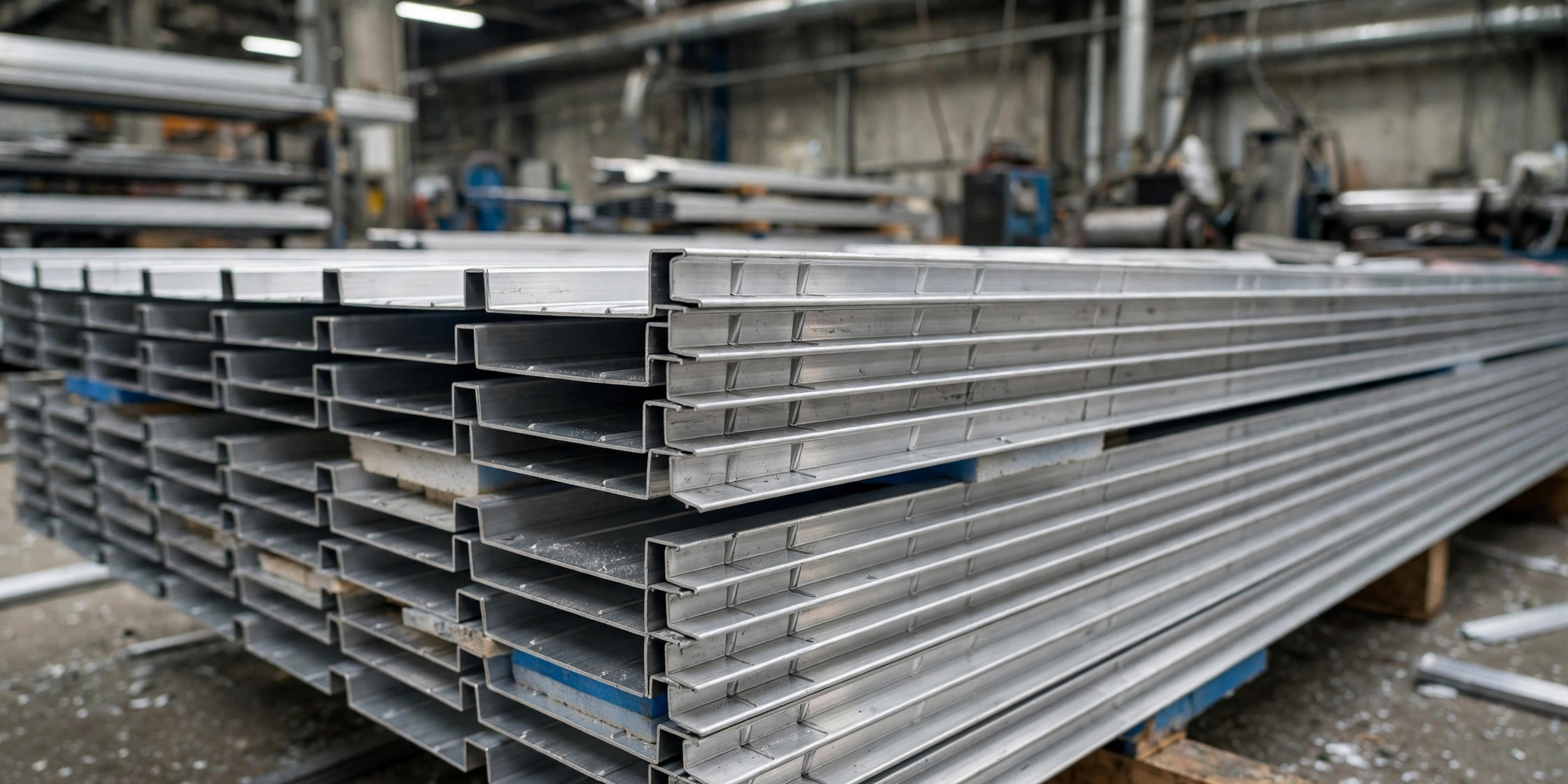
Folded solid aluminum panels with stiffener ribs, ready for coating and packing. Factory cutting and folding capacity set the practical ceiling for finished panel sizes.
Module planning means choosing panel dimensions that divide the facade elevation cleanly. A 1200 × 3000 mm module repeats neatly across a floor height and a column bay; a 1187 × 3012 mm module does not. Clean modules reduce the number of distinct sizes, cutting setup time, jig changes, and mix-up risk on site.
Good module planning follows a few practical rules:
Match the structural grid. Set panel joints to fall on column lines or slab edges where possible. Panels that span odd structural conditions need custom edge stiffeners.
Design to the blank. If the factory’s maximum is 1300 × 4000 mm, keep folded panel dimensions a comfortable margin inside that limit, leaving room for manufacturing tolerance.
Minimize unique sizes. Group similar dimensions into a small set of standard modules. Distributors often report that the difference between five module sizes and twenty is a measurable line item on the quotation.
Plan the reveals. Joint width (typically 8–20 mm on US rainscreen facades) is part of the module. Include it in the elevation dimensions so panels arrive at the sizes the installer expects.
When the elevation includes curves, corners, and soffits, module planning gets more complex — but the same principle holds: fewer distinct shapes, cleaner budget.
Cutting Waste and Cost: How Size Choices Affect the Budget
Every panel is cut from a blank, and blanks come in fixed sizes. When a panel module divides the blank evenly, cutting yield approaches 100 percent. When it does not, the offcuts become scrap — and the buyer still pays for it, embedded in the per-panel price.
Consider a blank of 1300 × 4000 mm. A 1200 × 2000 mm module yields two panels per blank with minimal waste. A 1400 mm-wide module exceeds the blank width entirely and forces the factory to source wider material at a premium — or the architect to redesign. A 900 × 1300 mm module yields four panels per blank, but creates four times the panels to fold, coat, pack, and install.
Waste also interacts with finish. PVDF-coated panels are usually coated as flat blanks before folding, so cutting yield directly affects coated material. Powder-coated panels can be coated after folding, which gives the factory more freedom to nest odd sizes.
Practical takeaways for buyers:
Ask the factory for a cutting layout for the main module sizes before approving the order. A transparent supplier will show the yield.
Expect lower unit prices when module sizes divide standard blanks cleanly.
Budget extra for small or irregular panels — they carry higher fabrication and packing cost per square foot even when material waste is low.
Large Panels vs Small Panels: Handling, Tolerance, and Flatness Trade-Offs
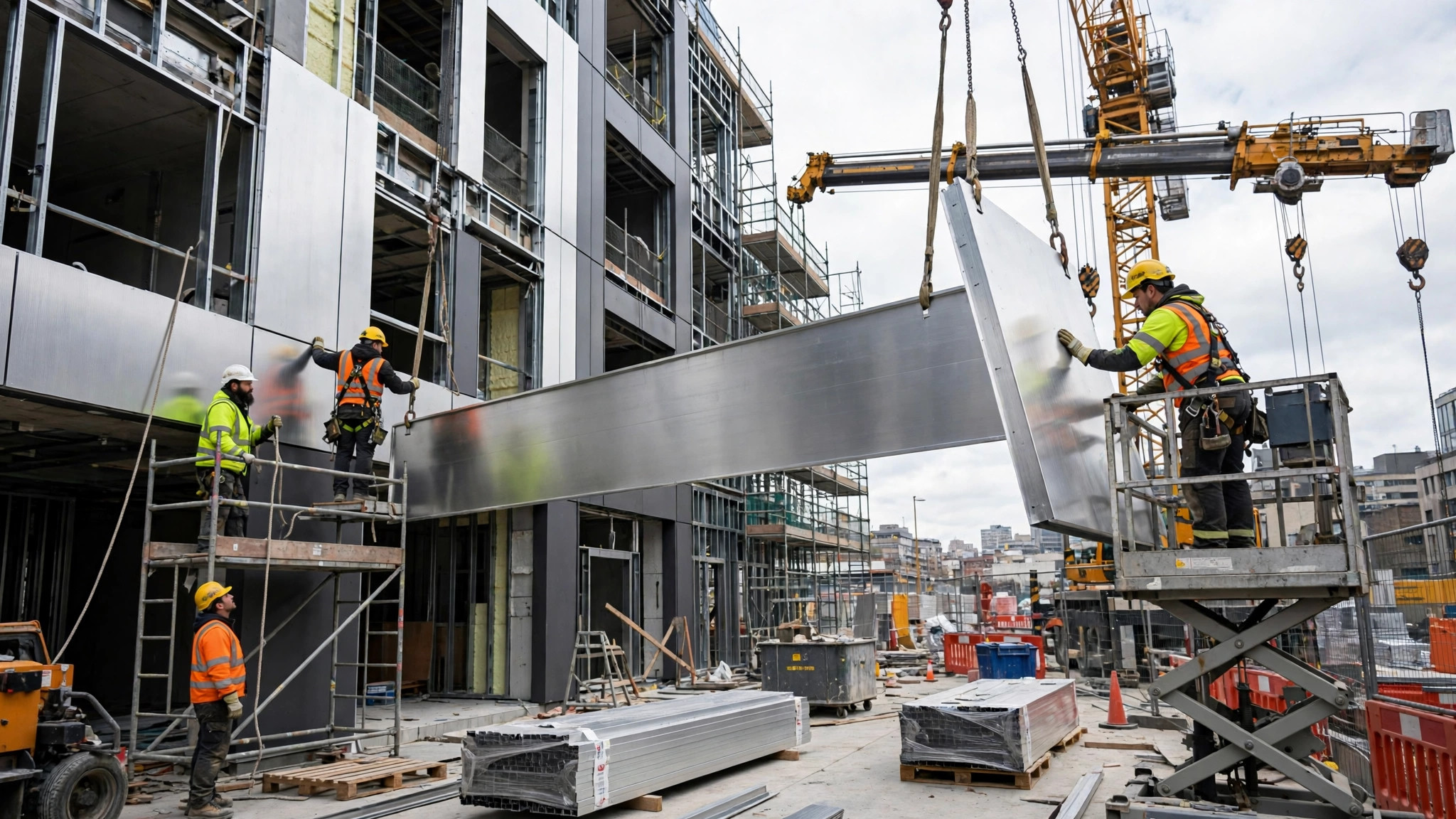
Large-format panels going up on site. Oversized cassettes reduce joint count but demand reinforced stiffening, bigger lifting equipment, and tighter flatness inspection.
Architects love large, monolithic panels with minimal joints. Factories can make them, but scale brings trade-offs worth weighing honestly.
Large panels: fewer joints, higher demands
Large-format panels — approaching the 1300 × 4000 mm maximum — create a clean, premium facade with fewer visible joints. But they are heavier to handle, need reinforced stiffeners and larger lifting equipment on site, and are more sensitive to oil canning, the visible waviness that shows on broad flat metal surfaces. They also pack fewer square feet per crate, raising shipping cost per square foot.
Small panels: flexible, but labor-intensive
Smaller modules handle curved geometries, tight site logistics, and partial replacement easily. They are lighter, easier to install, and cheaper to ship. The cost is in the joints: more panels mean more folded edges, more fasteners, and more installation hours per square foot. A facade of small panels can also look busy if the joint pattern is not part of the design intent.
For most US commercial projects, the sweet spot is a mid-size module — roughly 1200 × 2400 to 1300 × 3600 mm — balancing visual scale, flatness, and installation productivity. Projects chasing the oversized look should budget for upgraded stiffening and tighter flatness inspection.
What to Include in Your RFQ About Sizes
Size information turns a rough budget into an accurate quotation. When requesting quotes for custom aluminum facade panels, include:
The maximum finished panel size and the number of distinct module sizes.
Elevation drawings with joint layout, so the factory can check modules against its blank sizes.
Any curved, corner, or sloped panels flagged separately — they are priced differently from flat cassettes.
Finish per panel type, since coating sequence affects how sizes are nested and cut.
Delivery constraints: container vs breakbulk, and any site access limits that cap crate dimensions.
Panel sizes are not a footnote to the specification. They are one of the main levers on cost, schedule, and installed quality — and they are cheapest to get right on paper, before a single blank is cut. Browse our aluminum facade panel options at juchangalu.com, or send your elevation drawings for a detailed quotation.