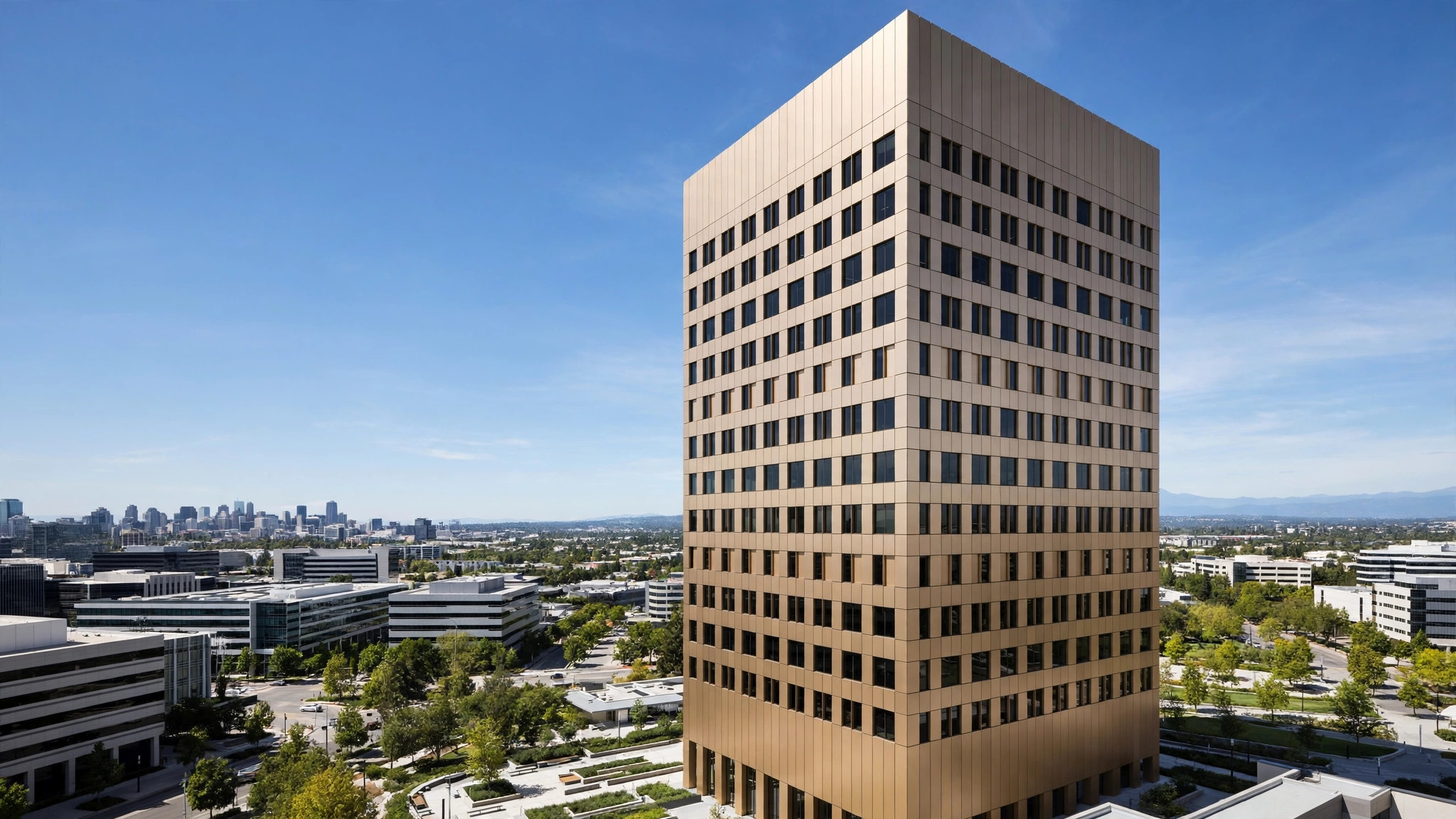
When US buyers request a quote for solid aluminum facade panels, one of the first questions a factory asks sounds deceptively simple: 2.0, 2.5, or 3.0mm? The answer reaches far beyond a single line on the specification sheet. It changes how much aluminum you are buying per square foot, how flat the facade stays on a large-format panel, how many fixing points the substructure needs, and — ultimately — what the project costs to build.
Why Thickness Is a Budget Decision, Not Just a Specification
Most facade specifications treat panel thickness as a technical detail buried in the spec book. In reality, it behaves like a cost lever. Every tenth of a millimeter adds aluminum, and aluminum is priced by weight. A 3.0mm panel carries 50% more metal than a 2.0mm panel of the same size. That extra metal shows up not only in the factory’s material cost, but also in freight charges, structural support, and labor on site.
What Thickness Actually Changes: Weight, Strength, and Flatness
Aluminum has a density of about 2.70 g/cm³, so the math is refreshingly simple: a 2.0mm solid aluminum panel weighs roughly 5.4 kg/m², a 2.5mm panel about 6.75 kg/m², and a 3.0mm panel about 8.1 kg/m² — before coatings and stiffeners. Those numbers matter in three concrete ways:
- Weight and freight. Ocean freight from China is charged by weight or volume, and aluminum panels usually hit the weight limit first. Choosing 3.0mm over 2.0mm can add roughly 50% to the metal weight of the shipment, which flows directly into your landed cost per square foot.
- Stiffness and span. Bending stiffness grows with the cube of thickness, so a 3.0mm panel is substantially more rigid than a 2.0mm one. Thicker panels can span larger modules with fewer support points, which means fewer panels, fewer fixings, and less substructure steel.
- Surface flatness. Thin panels on large formats are prone to “oil canning” — visible waviness under changing light and temperature. A thicker panel, or the same panel with factory-installed stiffeners, keeps the facade crisp. Reworking oil-canned panels on site is one of the most expensive fixes in facade work.
2.0mm vs 2.5mm vs 3.0mm: A Head-to-Head Comparison
Here is how the three standard thicknesses compare on the dimensions that matter to a buyer’s budget and schedule:
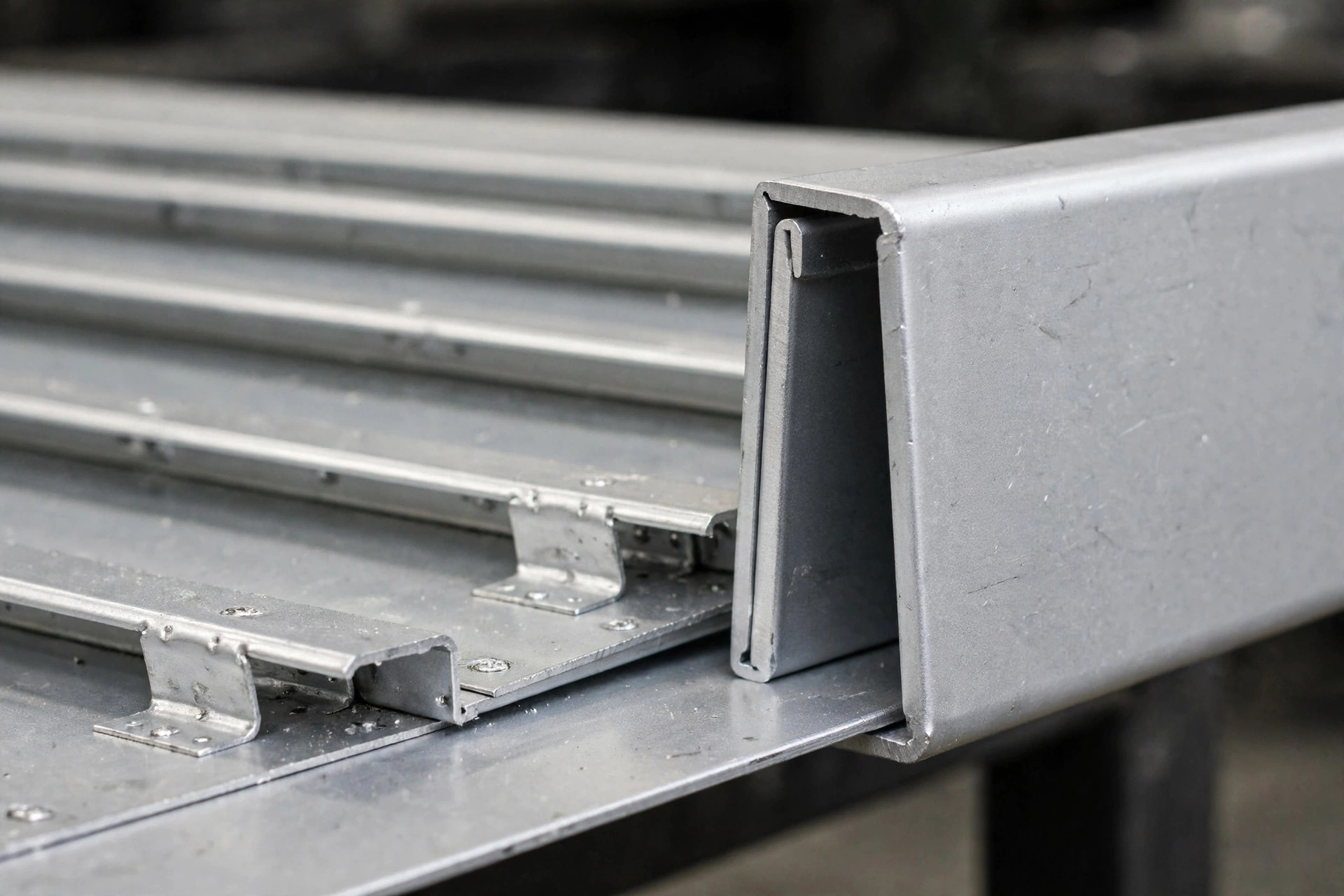
- 2.0mm — the economical choice for controlled conditions. Lightest and lowest in material cost. Best suited to smaller panel modules (typically under 1.2m wide), interior walls, soffits, and column covers in sheltered locations. On large exterior formats, 2.0mm needs closer stiffener spacing or narrower modules to avoid deflection — which can quietly add fabrication cost back in.
- 2.5mm — the commercial sweet spot. The most commonly specified thickness for ventilated rainscreen facades in the US market. It balances weight, rigidity, and cost, handles standard module sizes (up to about 1300×4000mm, a typical factory maximum) with normal stiffener layouts, and keeps freight weight moderate. For most office, retail, and institutional facades, this is where experienced specifiers land.
- 3.0mm — the heavy-duty option. Maximum stiffness for large-format panels, high-wind zones, and prominent feature areas where flatness under raking light is critical. The trade-off is the highest material and freight cost per square foot. It also allows wider module layouts, which can reduce the total panel count and substructure work — sometimes offsetting the higher per-panel cost at the system level.
A note on alloy: thickness and alloy work together. Panels in 3003-H24 temper offer better formability and stiffness than softer tempers at the same thickness, which is why experienced factories quote both together. Ask your supplier which alloy and temper the quoted thickness assumes.
How Thickness Flows Through Your Project Budget
Rather than thinking in terms of a single “price per panel,” trace how thickness ripples through the whole project cost:
- Material cost scales with weight. As a first approximation, the metal content — and therefore the factory’s material cost — rises roughly in proportion to thickness. Everything else being equal, a 3.0mm panel costs the factory about 50% more in aluminum than a 2.0mm panel.
- Fabrication cost barely moves. Cutting, folding, and punching a 2.5mm sheet takes nearly the same machine time as a 2.0mm one. This means fabrication is a smaller share of total cost on thicker panels — good news if your design needs rigidity.
- Freight follows weight. For US importers, sea freight is a visible line item. The 50% weight premium of 3.0mm over 2.0mm translates into measurably higher container utilization cost, especially on full-container shipments of solid panels.
- Substructure and labor can offset the premium. Thicker panels spanning wider modules reduce the number of panels, brackets, and fixing points. On large facades, the savings in substructure steel and installation labor can meaningfully narrow — or even erase — the cost gap between thicknesses at the installed-cost level.
- Rework risk is the hidden line item. A too-thin panel that oil-cans after installation may require replacement panels, remobilization, and schedule delays. Specifying adequate thickness up front is the cheapest insurance against this scenario.
Public B2B listings (for example on Alibaba and Accio) show panel prices tracking thickness, finish, and pattern complexity in broad bands — useful for market sensing, not a substitute for a project-specific quote. For an accurate number, a factory needs your drawings: panel sizes, layout quantities, color and finish, and delivery terms.
A Practical Decision Framework for Choosing Thickness
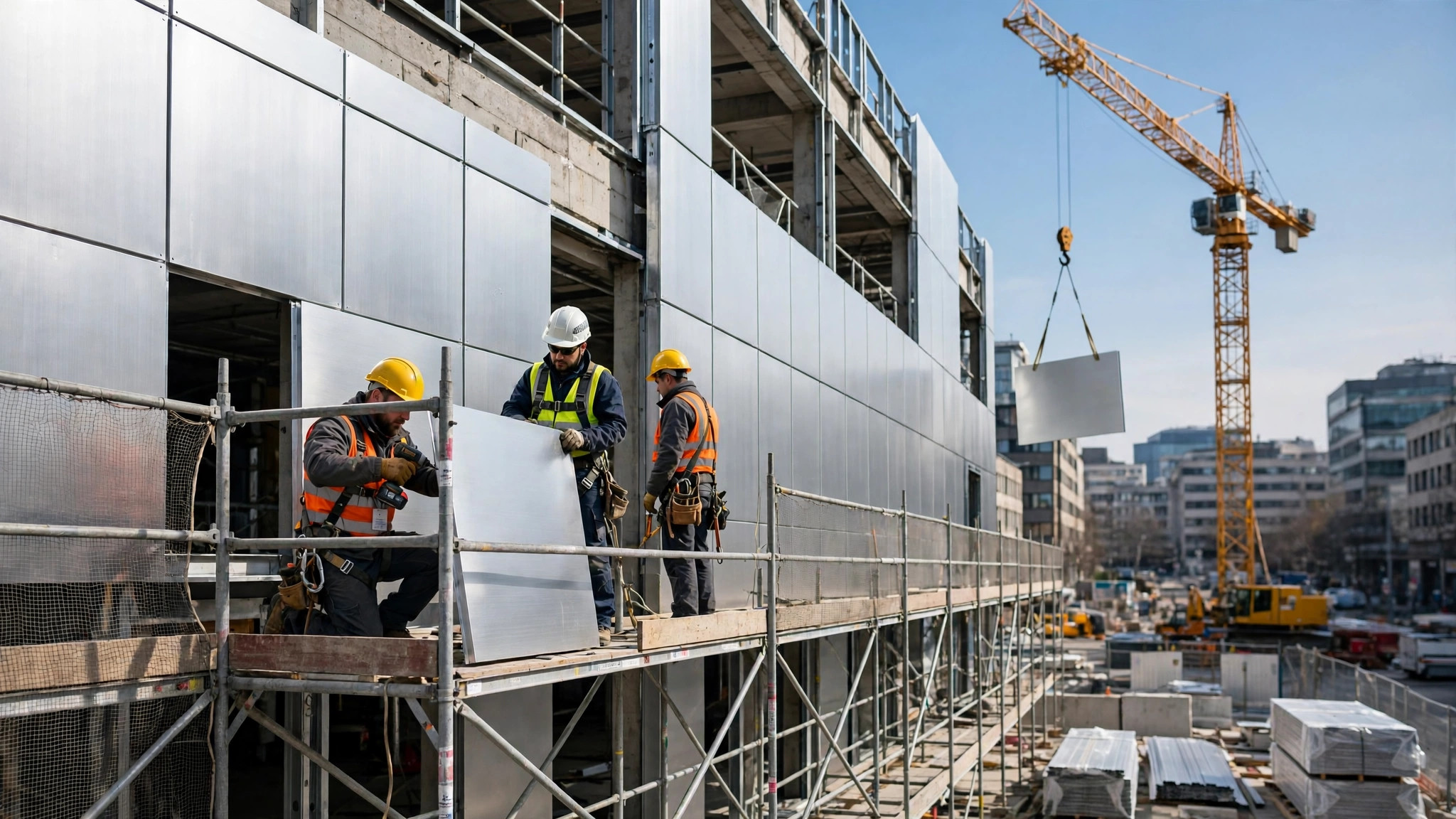
Use these five questions to converge on the right thickness before you request quotes — answering them up front also gets you faster, more comparable quotations from suppliers:
- What is the largest panel module? Modules wider than about 1.2m on exterior facades generally call for 2.5mm or 3.0mm; smaller modules and interior applications are often fine at 2.0mm.
- What is the wind exposure? High-rise and coastal projects with elevated design wind pressures favor 3.0mm or engineered 2.5mm layouts with verified stiffener spacing.
- How critical is visual flatness? Feature walls, entrances, and facades seen under raking sunlight justify thicker panels; service areas and soffits usually do not.
- What does the finish require? PVDF, powder coating, and roll coating all add a thin film, but they do not change structural behavior — do not count on a premium finish to compensate for an under-specified substrate.
- What is the total installed cost, not just the panel price? Model material, freight, substructure, and labor together. The “expensive” 3.0mm option sometimes wins once fewer panels and fixings are counted.
When in doubt, 2.5mm in 3003-H24 temper is the specification most US commercial projects converge on — proven, economical, and readily available from experienced facade panel factories.
Choosing the right aluminum panel thickness is one of the highest-leverage decisions in a facade budget. If you are weighing 2.0mm against 2.5mm or 3.0mm for an upcoming project, send your elevation drawings to the Juchang team for a detailed quotation — or browse the product range at juchangalu.com to see standard sizes, finishes, and fabrication options.