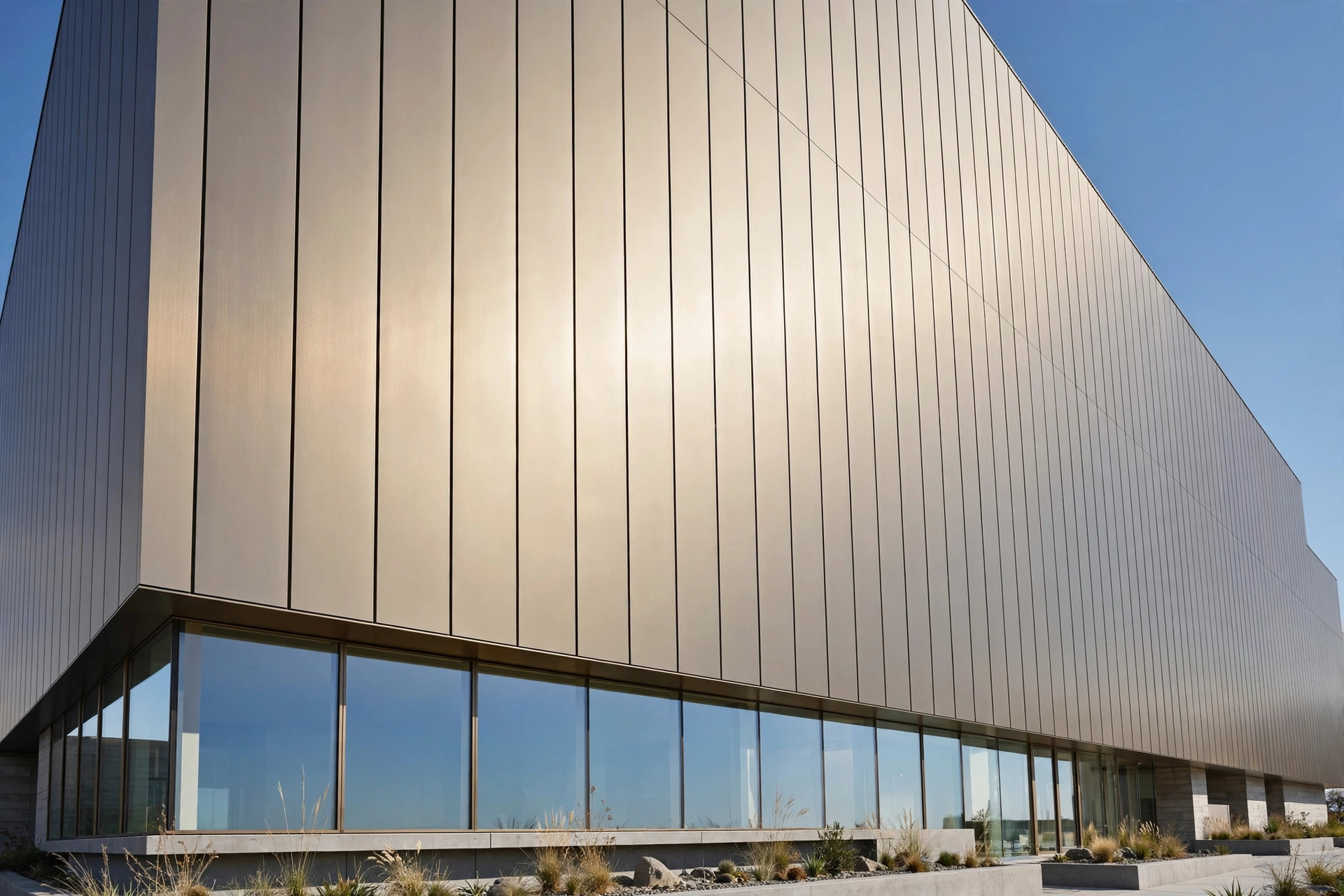
When an architect or contractor opens a specification for aluminum facade panels, the document often reads like alphabet soup: AAMA 2605, ASTM B209, E119, E84, C1376. Behind every one of those codes is a specific performance question that matters on site: will the finish hold its color after ten years of sun? Will the panel sit flat after installation? Will the assembly meet the local fire code?
This guide explains the main North American standards behind solid aluminum panels and shows how a buyer or specifier can read a panel spec sheet with confidence. It is not a substitute for engineering review, but it will help you ask your supplier the right questions before a purchase order is signed.
Why Standards Matter for Aluminum Facade Panels
A facade lives a hard life. It faces UV radiation, rain, temperature swings, pollution, and mechanical wind loads for decades. Standards exist so that “durable” is not just a marketing claim — it is a measurable property, tested the same way no matter which factory made the panel.
For solid aluminum veneer panels, three families of standards cover almost everything: coating performance (AAMA specifications), raw material quality (ASTM metal standards), and fire and structural behavior (ASTM and code-referenced tests). A complete spec sheet from a reputable supplier should let you trace the panel back to all three.
Coating Standards: AAMA 2603, 2604, and 2605
The American Architectural Manufacturers Association (AAMA) publishes the most widely referenced coating specifications for aluminum architectural products. They define three performance tiers:
- AAMA 2603 — Basic performance. Standard spray-applied coatings for interior or low-exposure applications. The weathering requirement is modest, and gloss/color retention is limited.
- AAMA 2604 — High performance. Requires ten years of outdoor exposure with defined limits on chalking, fading, and gloss loss. Many commercial projects specify 2604 as a practical baseline for exteriors with moderate sun exposure.
- AAMA 2605 — Superior performance. The top tier, built around 70% PVDF (fluoropolymer) resin coatings. It demands ten-year outdoor weathering with tight limits on color change and chalk, plus humidity, chemical, and salt-spray resistance. For high-end facades — and for harsh climates — 2605 is the benchmark.
Practical tip: when a supplier says “PVDF coating,” ask which AAMA tier the finish is formulated to meet. The resin name alone does not tell you the film thickness, the number of coats, or the tested weathering performance. A clear answer — “70% PVDF, 3-coat system, designed to AAMA 2605” — is what you want to see.
Material Standards: ASTM B209 and Alloy Designations
The metal itself is governed by ASTM B209, the standard specification for aluminum and aluminum-alloy sheet and plate. It defines chemical composition, mechanical properties, and tolerances for the alloys commonly used in facade work.
Solid aluminum facade panels are typically formed from sheet in the 1100 or 3003 alloy families in H24 temper — a combination chosen for formability, corrosion resistance, and adequate strength for cassette and hook-on systems. Common face-panel thicknesses are 2.0 mm, 2.5 mm, and 3.0 mm, selected according to panel size, wind load, and visual flatness requirements. Panels can commonly be produced in large formats, with typical maximum sheet sizes around 1300 × 4000 mm, depending on the fabrication equipment.
When comparing quotes, check that every bidder is pricing the same alloy, temper, and thickness. A price that looks low may simply be a thinner gauge or a softer temper than the specification requires.
Fire and Structural Tests: E84, E119, and Wind Load
Solid aluminum panels are a non-combustible material — the metal itself does not burn or contribute fuel to a fire. That is one of the core reasons the industry shifted toward solid panels on many project types. The relevant tests to understand:
- ASTM E84 (surface burning characteristics) measures flame spread and smoke development on exposed surfaces. Aluminum sheet inherently performs well here.
- ASTM E119 (fire endurance of assemblies) applies to full wall assemblies, not to the panel alone. Always remember: a panel is one layer of a system that includes the supporting structure, insulation, and fixings.
- Structural and air/water testing — ASTM E330 (structural performance under wind load), E283 (air leakage), and E331 (water penetration) are typically run on the complete curtain-wall or panel assembly to prove it meets the project’s design pressures.
For a buyer, the takeaway is simple: ask whether test evidence exists at the assembly level for fire and weather performance, and at the panel level for coating and metal quality. A supplier should be able to point you to both.
Reading a Spec Sheet: Tolerances and Flatness
Two numbers that often decide whether a facade looks crisp or wavy are thickness tolerance and flatness (oil-canning control). ASTM B209 gives the allowable thickness tolerance for each gauge; tighter in-house tolerances are a sign of a supplier that controls its process. Flatness depends on the alloy temper, the panel depth (cassette return height), the stiffener layout behind the face sheet, and the fixing design.
Questions worth putting in your RFQ:
- What alloy and temper is quoted, and what thickness tolerance is guaranteed?
- How are stiffeners arranged behind the face sheet, and what is the maximum panel size before oil-canning risk increases?
- What is the coating system (resin type, number of coats, dry film thickness) and which AAMA tier is it formulated to meet?
- Can the supplier provide panel-level test summaries and assembly-level fire/weather references?
- What are the fabrication tolerances for overall panel dimensions and joint alignment?
Bringing It Together on Your Next Project
A well-written specification for aluminum facade panels is not a list of brand names — it is a chain of performance requirements: alloy and thickness from ASTM B209, finish performance from AAMA 2605 or 2604, fire behavior from E84 and assembly-level E119 evidence, and structural soundness from E330-type assembly testing. When every link in that chain is documented, the risk moves off the buyer’s desk and onto the paper where it belongs.
If you are preparing drawings for a facade project and would like to compare panel options, browse the range at juchangalu.com — or send your drawings and panel layout for a detailed, specification-matched quotation.