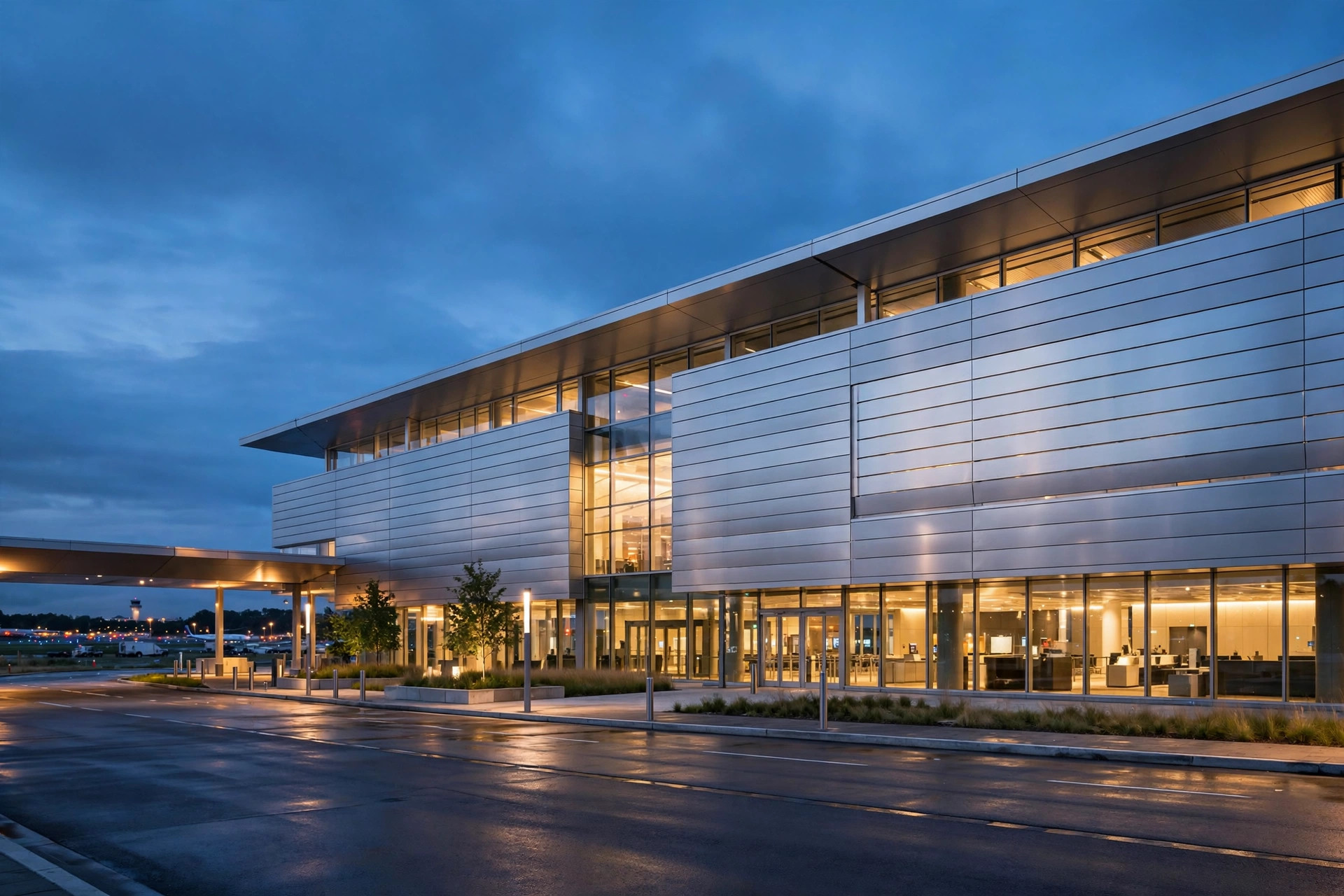
Airport terminals never get a second chance to make a first impression. Every year, hundreds of millions of passengers judge a city the moment they step off the jet bridge — and the terminal facade is the first and last thing they see. For architects and contractors working on airport and transportation projects, the exterior cladding material has to satisfy an unusually demanding brief: monumental scale, round-the-clock operation, constant passenger traffic, harsh weather exposure, and a construction schedule that cannot slip. This is exactly why solid aluminum facade panels have become a go-to specification for modern terminals, concourses, and transit hubs across the United States.
Why Airports Keep Choosing Solid Aluminum Facade Panels
Terminal buildings combine several of the toughest conditions any facade material can face. The envelope wraps enormous spans, sits exposed to jet blast, de-icing chemicals, and urban pollution, and must look pristine year after year with minimal maintenance windows — an airport cannot simply close a concourse for facade repairs. Solid aluminum facade panels answer all of these requirements at once. Unlike stone, which is heavy and limits design freedom, or aluminum composite panels, which raise well-documented fire-performance questions, solid aluminum panels deliver a non-combustible single-skin metal solution that is light enough for large spans and durable enough for decades of service. For specifiers, that combination of safety, lightness, and design flexibility makes aluminum facade panels a rational default for transportation architecture.
Large-Format Panels for Terminals and Concourses
Airport architecture is about scale. A single terminal elevation can run hundreds of meters, and architects want that scale expressed in clean, continuous surfaces rather than a patchwork of small tiles. This is where the dimensional capability of the panel factory matters. Solid aluminum facade panels are commonly produced in thicknesses of 2.0, 2.5, and 3.0mm, with sheet sizes up to 1300×4000mm — large enough to cover generous bays in a single panel and create the calm, monumental rhythm that airport design demands. The 3003 H24 alloy typically specified for exterior cladding provides the strength and formability needed for such large-format cassettes, while 2.5mm and 3.0mm gauges give the flatness and wind-load resistance that long terminal elevations require. When evaluating a supplier, always confirm the maximum sheet size and the flatness control on large panels — visible waviness on a terminal facade is a defect that passengers will notice from the curb.
Durability Where Crowds and Weather Meet
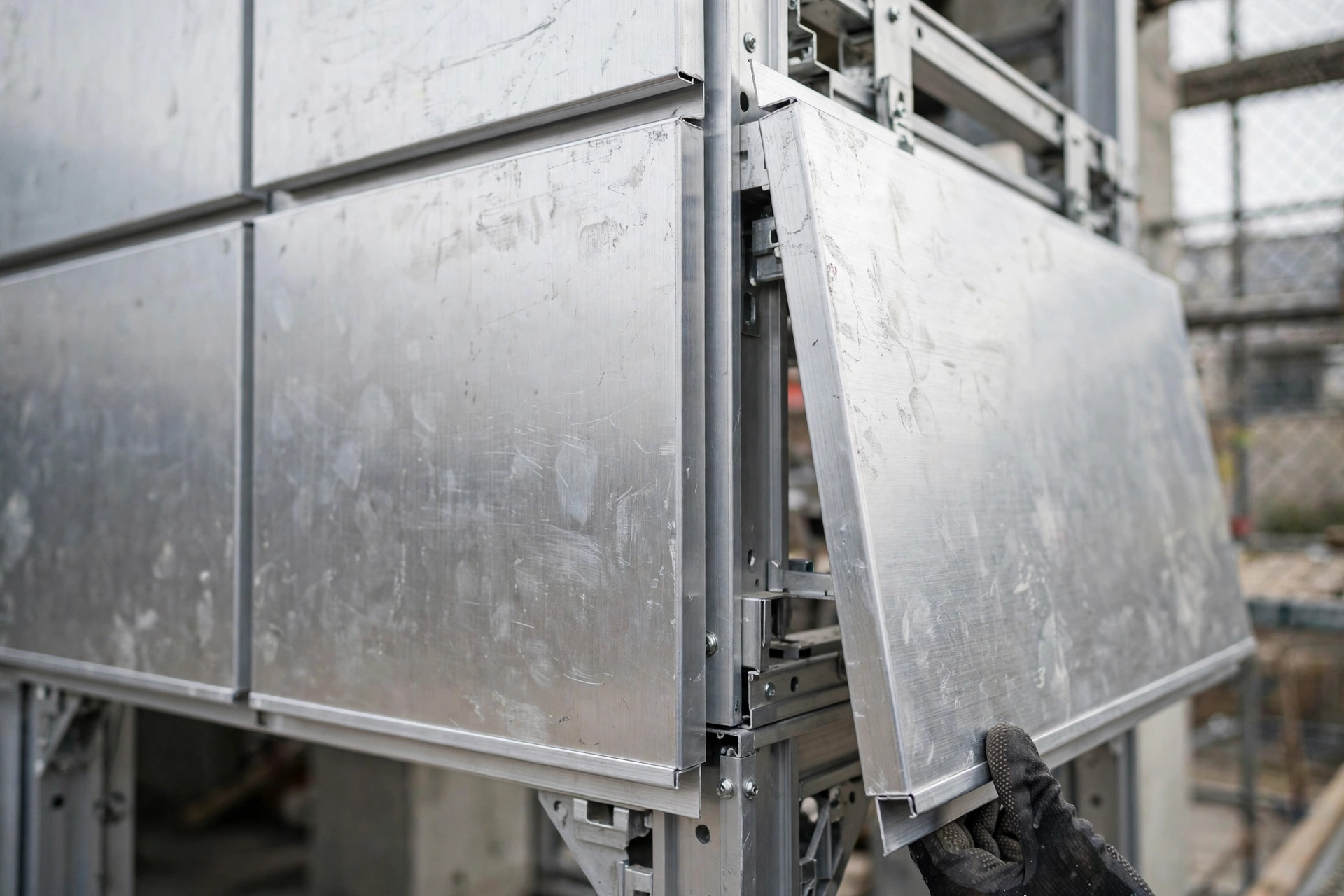
A transportation terminal is a working building, not a monument. Baggage carts, maintenance vehicles, and constant foot traffic put real mechanical stress on the lower facade zones, while the upper zones take the full force of sun, rain, and air pollution. Solid aluminum panels handle this double duty because the metal skin is homogeneous: scratches and impacts do not expose a different core material, and the surface can be specified to match the exposure. For the most demanding exterior zones, PVDF fluorocarbon coatings — applied by spray for cassette panels or by continuous coil coating for flat applications — offer the best long-term color retention and resistance to UV, salt air, and chemical fallout. Powder coating provides a cost-effective alternative for sheltered or interior-transit applications, and both systems bond to a full-metal substrate that will not delaminate. A simple rule of thumb for specifiers: put the highest-grade finish where passengers and weather meet the building, and you can safely value-engineer the finish on protected soffits and service areas.
Curved and Signature Forms Without Compromise
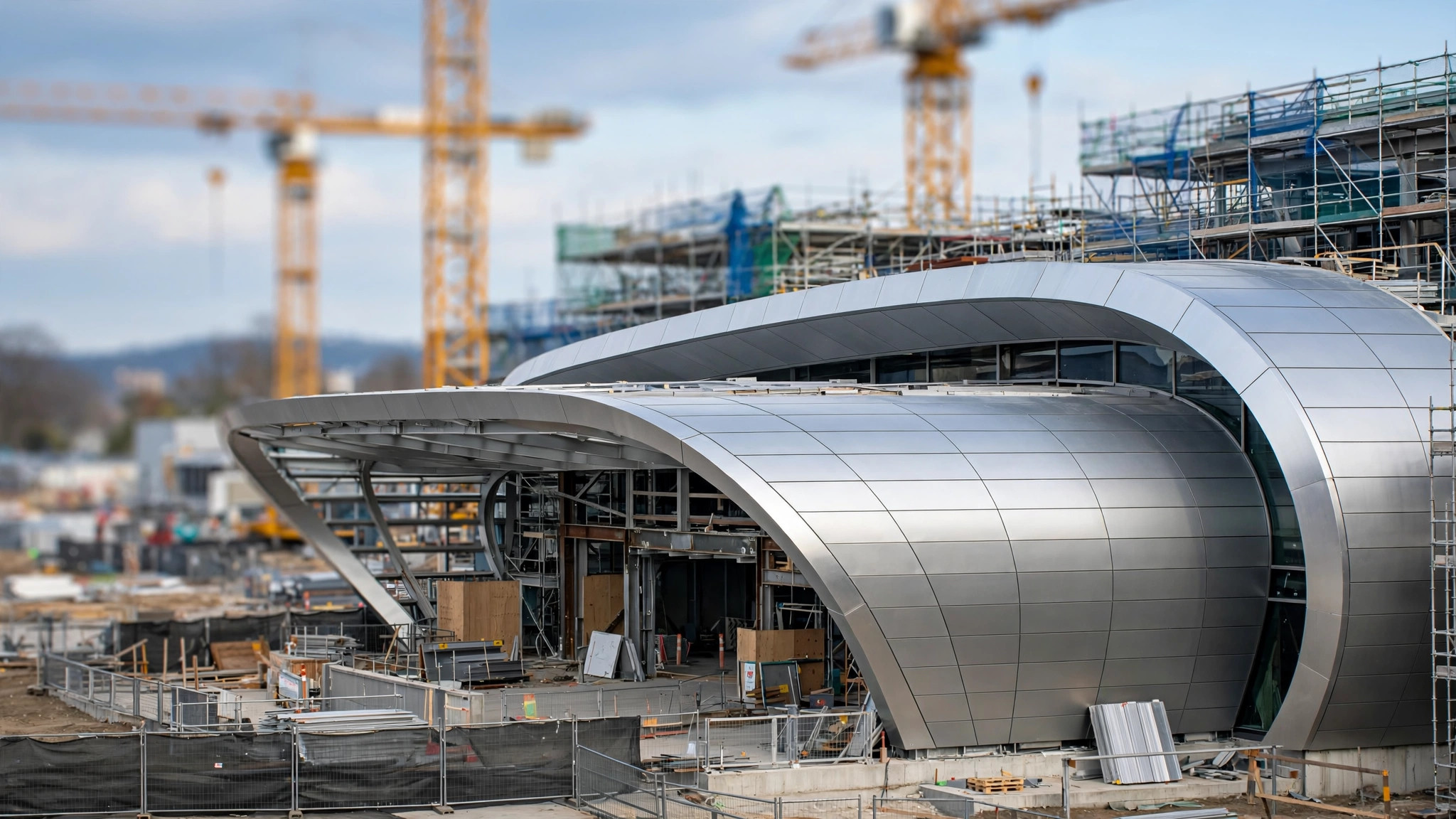
Modern airports are often designed as signature structures — flowing rooflines, curved entry canopies, and sculptural concourse forms that announce a city’s identity. Solid aluminum is one of the few facade materials that can follow those geometries without switching to an entirely different cladding system. Sheet aluminum in the 3003 H24 temper bends, folds, and curves cleanly, so the same material specified for flat terminal walls can be shaped into curved fascia panels, column covers, and flowing canopy soffits. This continuity matters: a single cladding material across flat and curved zones keeps color matching manageable and simplifies the contractor’s scope. The practical limit is the fabrication shop, not the material — confirm with the factory what minimum bending radii it can hold at each thickness, and request a curved sample panel before finalizing the shop drawings.
Maintenance Realities for 24/7 Transportation Facilities
Here is the question every airport facilities manager asks: what happens in year ten? Transportation buildings run around the clock, so maintenance access is always a negotiation. The good news is that cassette-style aluminum facade panels are inherently serviceable. Individual cassettes can be unhooked and replaced without disturbing adjacent panels, which means a damaged panel at a baggage-hall entrance can be swapped during an overnight shift rather than triggering a facade-wide intervention. Routine cleaning is equally straightforward: solid aluminum panels with quality PVDF or powder coatings wash down with water and mild detergent, and the coatings resist the graffiti and grime that transit facilities inevitably attract. For owners, the lifecycle argument is compelling — a facade that can be cleaned, touched up, and selectively repaired panel by panel protects the terminal’s appearance without disrupting operations.
Specifying Panels for Phased Terminal Construction
Airport projects are rarely built in one continuous campaign. Terminals expand in phases, concourses get extended a decade later, and renovation work must match existing cladding. This phased reality makes color and finish consistency a procurement issue, not just an aesthetic one. When specifying aluminum facade panels for a transportation project, lock down the coating system and color reference early, and structure the purchase so future phases can reorder the identical finish from the same factory. Experienced buyers also build a small attic stock of spare cassettes into the original order — a handful of extra panels, stored on site, eliminates the risk of a batch mismatch when a panel needs replacing five years later. Finally, because airport construction involves multiple trades working in tight sequence, confirm the factory’s shop-drawing and numbering process: each cassette should arrive on site pre-labeled for its exact position, so the installation crew can work from the drawings without field-cutting a single panel.
Airport and transportation projects reward materials that combine scale, durability, and design freedom — and punish materials that don’t. Solid aluminum facade panels, in the right thickness, alloy, and finish, give architects the large-format, curved, and color-consistent surfaces these buildings demand, while giving contractors a light, serviceable system that installs cleanly and maintains easily. If you are specifying cladding for a terminal, concourse, or transit hub, browse the aluminum facade panel options at juchangalu.com or send your drawings for a detailed quotation tailored to your project’s panel schedule.