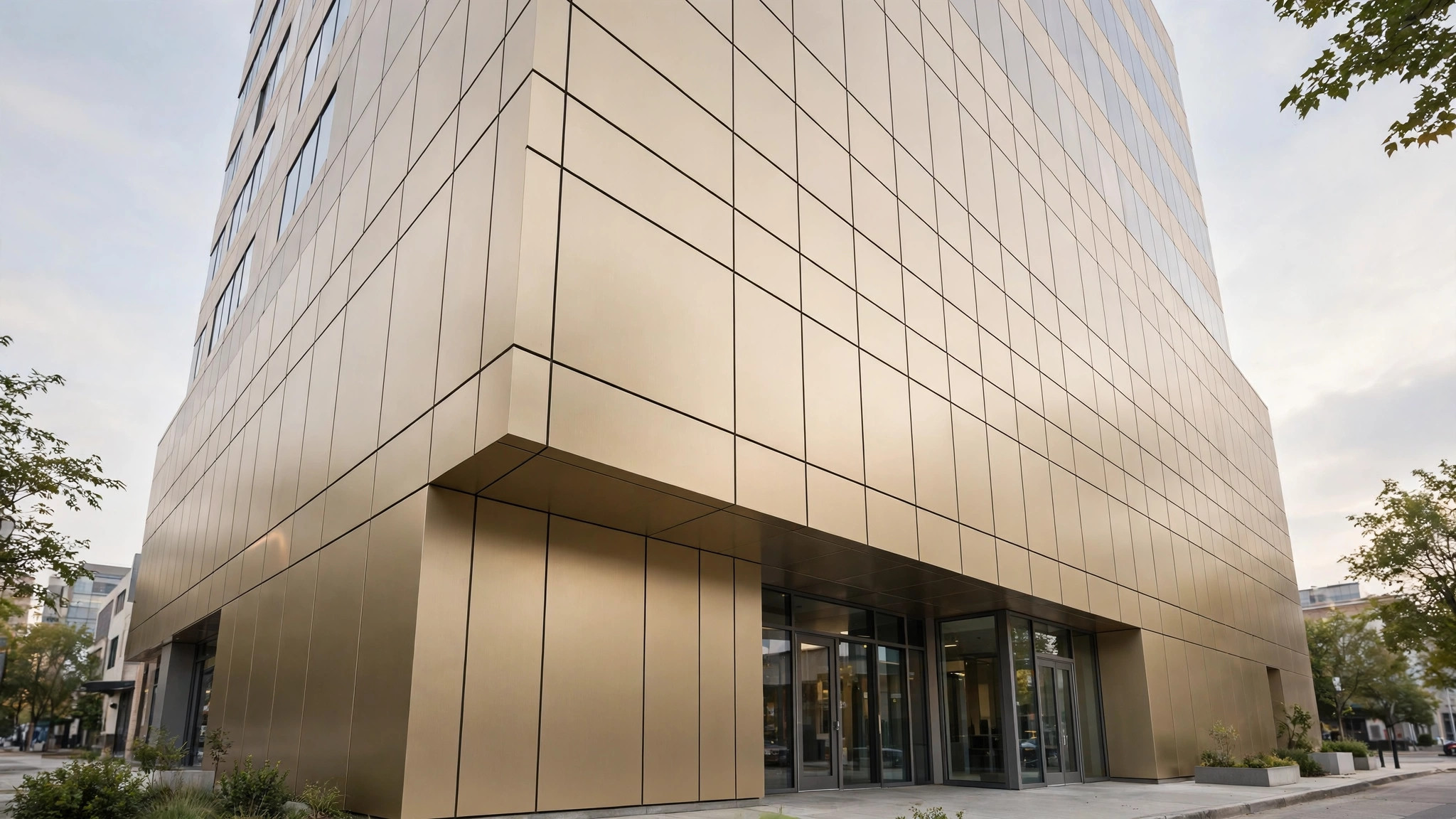
Solid aluminum facade panels are prized for their durability, but “low maintenance” does not mean “no maintenance.” A structured maintenance plan protects the finish, preserves the building’s appearance, and helps owners catch small problems — loose fasteners, clogged drainage channels, scratched coatings — before they become expensive repairs. This guide outlines a practical cleaning schedule, inspection checklist, and repair approach for PVDF-coated and powder-coated aluminum veneer panels.
Why Aluminum Facade Panels Need Scheduled Maintenance
PVDF fluorocarbon coatings are among the most weather-resistant finishes available for metal cladding, and solid aluminum panels themselves will not rust. Over years of exposure, however, panels accumulate airborne dirt, pollution film, algae, and bird droppings. In coastal or industrial zones, salt spray and chemical deposits can dull the finish if left unchecked. Regular cleaning also gives facility staff a reason to look closely at the facade — which is how early signs of sealant failure, panel movement, or impact damage get noticed in time.
The good news: unlike many cladding materials, solid aluminum panels can be washed with simple methods and common cleaning agents, and individual panels can be replaced without disturbing the whole wall.
Recommended Cleaning Schedule
How often you wash depends on environment. A reasonable baseline, following general metal-facade industry practice, is:
- Urban and suburban buildings: wash once a year.
- Near highways, industrial areas, or dense construction: wash every 6 months.
- Coastal locations: wash every 3 to 6 months to remove salt deposits before they can degrade the finish.
- After major events: inspect and wash after sandstorms, wildfire smoke, or heavy pollution episodes.
Keep a simple log of each cleaning — date, areas washed, products used, and anything unusual observed. This record is useful when discussing finish condition with the original panel supplier or a coating warranty claim.
How to Wash Aluminum Facade Panels Safely
Use the right products
For routine washing, lukewarm water with a mild detergent is enough. A soft sponge or non-abrasive cloth removes most grime. Rinse from the top down so dirty water does not streak across clean areas below, and finish with a clean-water rinse to avoid detergent residue.
- Safe: water, mild soap or detergent, isopropyl alcohol on a soft cloth for stubborn marks.
- Avoid: abrasive pads, steel wool, and strong alkaline or acidic cleaners, which can scratch or chemically attack the coating.
- Test first: always try any new cleaner on a hidden area, such as a panel behind rooftop equipment, before washing the visible facade.
Mind the water pressure
Pressure washers can be used on large flat areas, but keep the pressure moderate and the nozzle at a safe distance — aggressive blasting can force water into open joints or damage sealant edges. Never direct a jet into panel joints, weep holes, or the gaps around windows and flashings; these are designed to drain, not to be sealed against pressure.
Inspection Checklist: What to Look For
Combine cleaning visits with a walk-around inspection. Binoculars or a drone survey work well for upper floors. Check for:
- Panel alignment: any panel sitting proud of its neighbors, or visible unevenness that was not there before, can indicate a loose fixing or thermal-movement issue.
- Joint condition: look for cracked, pulled-away, or missing sealant in open or sealed joints. Sealant that has hardened and lost elasticity should be replaced.
- Fasteners and clips: on accessible low-level areas, check that exposed screws and clips are tight and free of corrosion.
- Drainage paths: cassette (tray) panel systems rely on ventilation and drainage behind the face. Make sure weep holes at the bottom of panels are not blocked by debris, nests, or hardened sealant.
- Surface damage: note scratches, dents, graffiti, and coating chips — mark their locations on a facade elevation drawing for the repair list.
- Staining below joints: rust-colored or dark streaks can point to water getting in where it should not, or to a dissimilar-metal reaction at a fixing point.
Photograph anything suspicious and compare with previous years’ photos. A slow-developing issue is easy to miss year to year without a visual record.
Repair Options: Touch-Up vs Panel Replacement
Minor coating damage
Small scratches that do not reach bare metal can often be touched up with manufacturer-matched touch-up paint. Clean the area first, apply thin coats, and feather the edges. Be aware that touch-up spots may weather at a slightly different rate than the factory finish, so they are best reserved for small, inconspicuous areas. For large scuffed zones or damage down to bare metal, panel replacement gives a far better result.
Replacing a single panel
One of the practical advantages of rainscreen cassette systems is that individual panels can be removed and replaced. The replacement should match the original in thickness (commonly 2.0, 2.5, or 3.0 mm for facade-grade solid aluminum panels), alloy, and coating color. Color matching deserves attention: order the replacement from the same coating batch if possible, or expect a subtle tone difference on older facades, since PVDF finishes weather gradually over years.
If your building uses perforated, embossed, or custom-folded panels, share the original shop drawings with the fabricator — hole patterns and fold geometry must match for the replacement to sit flush.
Special Situations
Coastal and high-humidity environments
Salt is the main enemy. Stick to the 3-to-6-month wash cycle, pay extra attention to the lower floors where spray is heaviest, and confirm that drainage channels behind panels stay clear so trapped saltwater cannot sit against the aluminum.
Graffiti
Remove graffiti promptly — the longer it sits, the harder it is to clean without affecting the finish. Test a mild solvent-based graffiti remover on a hidden panel first, and avoid aggressive scrubbing that could polish a matte finish into a glossy spot.
Post-storm checks
After severe wind or hail, inspect for dented panels, displaced trims, and debris lodged in joints. Dents in solid aluminum panels are cosmetic rather than structural, but large deformed panels can trap water and should be scheduled for replacement.
Putting It on Paper: A Simple Maintenance Plan
For building owners and facility managers, a one-page maintenance plan keeps everyone aligned. It should name the panel type and finish, the washing interval for the building’s environment, who performs the work, the products approved for use, and a calendar of inspection dates. Attach the facade elevation drawings with panel numbering — when a repair is needed, “panel A-214, third floor, south elevation” is far more useful than “somewhere on the south side.”
Solid aluminum facade panels reward a little routine attention with decades of reliable service. A clean, inspected, and promptly repaired facade is not just about looks — it is how owners protect one of the building’s most visible and valuable assets.
Planning a new aluminum facade project or refurbishing an existing one? Browse products at juchangalu.com or send your drawings for a detailed quotation.