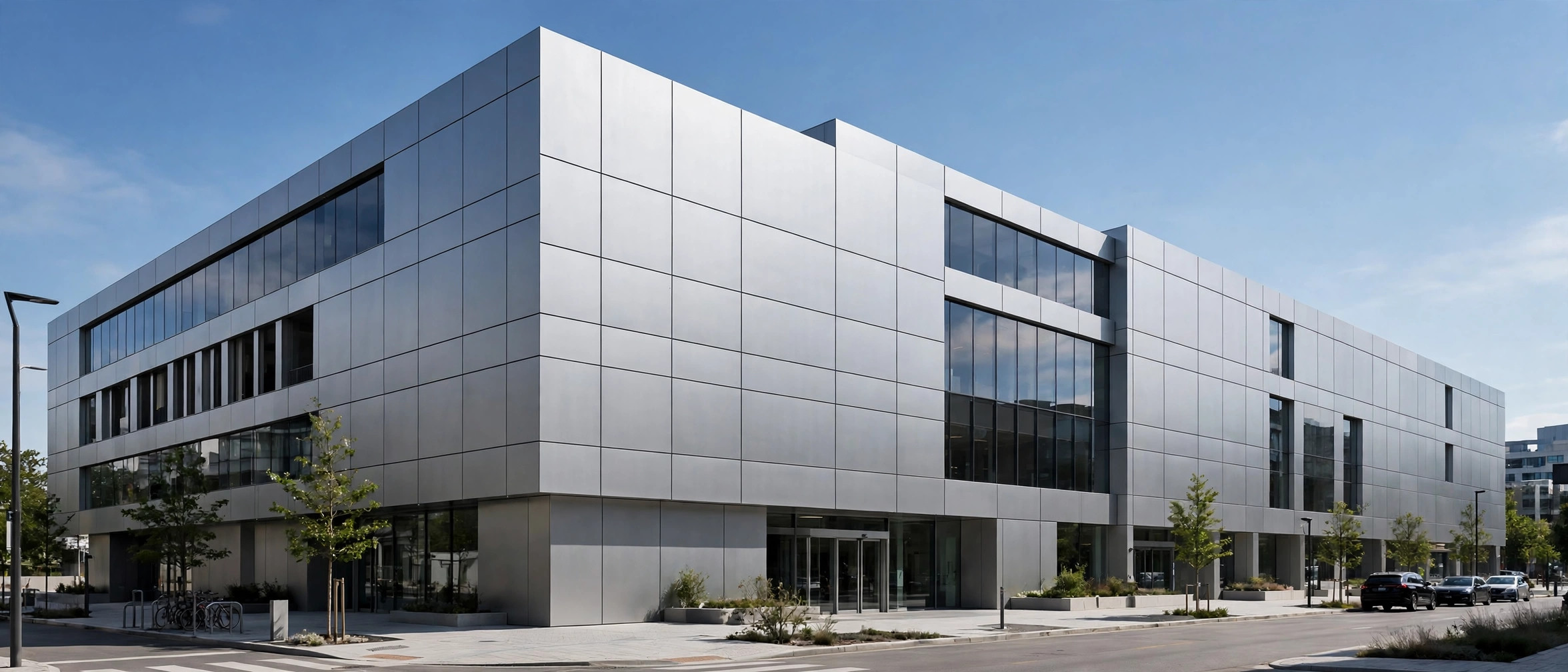
Solid aluminum facade panels are chosen for their clean lines, durability, and design flexibility. But even a well-specified project can be let down by surface defects that only show up once the panels are on the building: a wavy reflection across a flat wall, two adjacent panels that do not quite match in color, or a chipped edge discovered during installation. For US buyers sourcing panels from overseas, most of these problems are preventable — if you know what to look for and what to ask the factory before production starts. This guide explains the three most common defects in solid aluminum panels, why they happen, and how a capable factory prevents each one.
Why Defects Matter More on Imported Panels
When panels are fabricated locally, a defective piece can be remade in days. When panels ship from a factory in China to a job site in the United States, a remake means a new production run, new export packing, and weeks of sea freight — plus the cost of re-scaffolding a finished elevation. That is why defect prevention belongs in the specification and ordering stage, not in the punch list. The three defects below account for the majority of quality complaints on solid aluminum facade projects, and each one has a clear, checkable cause.
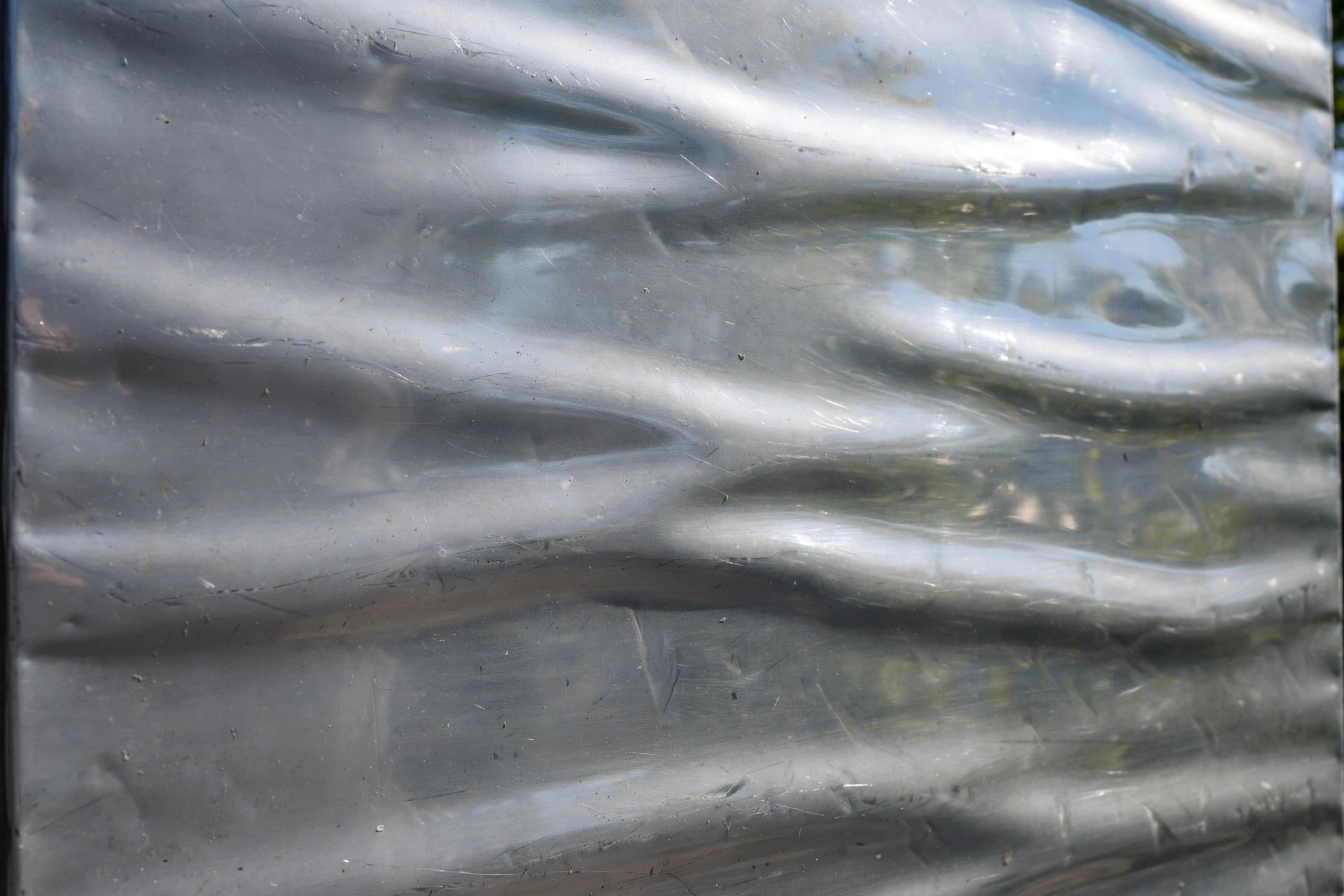
Oil Canning: The Wavy Reflection Problem
Oil canning is the visible waviness or rippling that appears on the face of a flat metal panel, especially under raking sunlight. It is not a structural failure — the panel still performs — but on a large, flat elevation it can be the first thing a building owner notices, and the hardest thing to fix after installation.
The main causes are well understood. Thin-gauge panels spanning wide distances between fixings are the most vulnerable: a 2.0mm panel on a large cassette will show more movement than a 3.0mm panel on the same module. Uneven residual stress from the cutting and folding process can also leave the face slightly out of plane, and thermal expansion on a dark-colored south-facing wall can amplify the effect on hot days.
Factories prevent oil canning in several ways. First, they match gauge to panel size — using 2.5mm or 3.0mm sheet for large modules, and adding stiffening ribs or a bonded reinforcement to the back of wide panels. Second, they control the folding process so that stress is distributed evenly across the panel face rather than concentrated at one bend. Third, they keep the panel’s flatness within a stated tolerance and check it on a flat table before the coating stage. When you order, ask the factory for its flatness tolerance and whether large panels receive back stiffeners as standard. A supplier that answers with a number rather than a promise is the one to trust.
Color Variation Between Panels
Color variation is the second most common complaint, and the most misunderstood. Two panels can leave the factory in the same batch, in the same specified color, and still look different on the wall. The reasons are usually one of three things: different coating batches, different coating lines, or different viewing angles on metallic and pearlescent finishes.
PVDF and powder coatings are mixed in batches. Even with tight controls, a new batch of the same RAL color can drift slightly, and panels coated on different days — or on different lines — can sit side by side with a visible step. Metallic finishes add another variable: the aluminum flakes in the coating reflect light directionally, so two identical panels can look different simply because one is viewed from the left and the other from the right.
Good factories manage this by coating all panels for one elevation, or one project phase, from a single coating batch, and by keeping a retained sample from that batch for comparison. They also measure color difference with a spectrophotometer and work to a stated Delta E tolerance — commonly Delta E ≤ 1.0 for solid colors — rather than judging by eye alone. Before you place an order, ask three questions: will all panels for my project be coated from one batch, what Delta E tolerance do you guarantee, and can you supply a retained sample with the shipment? If the factory cannot answer the first question, plan your order so that panels for a single visible elevation ship together.
Edge Damage and Handling Defects
Edge damage is the most avoidable defect of all, because it usually happens after the panel is perfectly made. Chipped corners, dented folded edges, and scratches along the face are typically caused during handling, stacking, or transport — not during fabrication. A folded cassette edge is thin and exposed, and a single careless lift can deform it enough that the panel no longer sits flush with its neighbors.
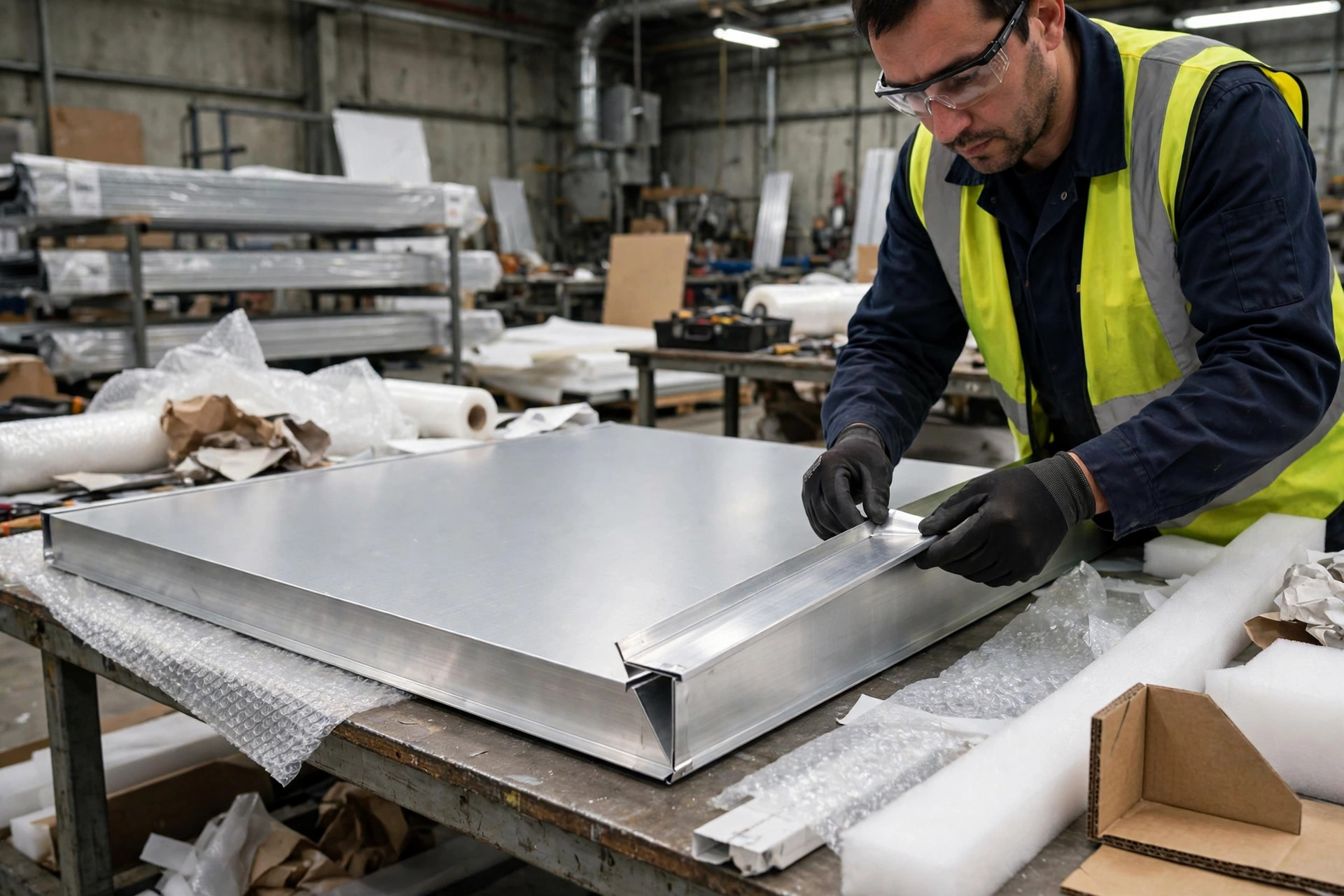
Prevention starts at the factory. Panels should be separated by protective interleaving paper, not stacked face to face. Corners should be protected with edge guards before the panels go into the crate, and crates should be built to the panel size rather than forcing panels into a generic box. At the coating stage, the finish should be fully cured before packing — a soft, under-cured coating picks up marks from anything that touches it.
As the buyer, your leverage is in the packing specification. Ask the factory to describe its export packing in writing: interleaving material, corner protection, crate construction, and how panels are secured against movement in transit. Then inspect on arrival using a simple checklist — check a sample of corners and folded edges before signing the delivery note, and photograph any damage immediately. Damage found at delivery is the shipper’s and supplier’s problem; damage found a week later is usually yours.
A Buyer’s Pre-Order Checklist
You do not need to be a metallurgist to buy good panels. Before you confirm an order, run through these five checks with your supplier:
- Gauge matched to module size: confirm the thickness (2.0, 2.5, or 3.0mm) and whether large panels get back stiffeners.
- Flatness tolerance in writing: ask for the number, and how it is measured before coating.
- Single-batch coating: confirm all panels for one elevation come from one coating batch, with a stated Delta E tolerance.
- Retained sample: request a sample from the same coating batch to keep for future matching.
- Export packing specification: interleaving, corner protection, and crate construction described in the order, not just promised verbally.
A factory that answers these questions clearly — with numbers, samples, and written packing specs — has already shown you how it prevents defects. One that answers with general assurances has shown you something else.
Conclusion
Oil canning, color variation, and edge damage are not mysteries. Each has a known cause, a known prevention method, and a question you can ask before you order. The buyers who have the fewest problems on site are not the ones who found the cheapest panels — they are the ones who specified flatness, coating batch control, and packing in writing, and verified them on delivery. If you are planning a facade project and want to talk through panel gauge, finish, and packing for your specific elevations, browse products at juchangalu.com or send drawings for a detailed quotation.