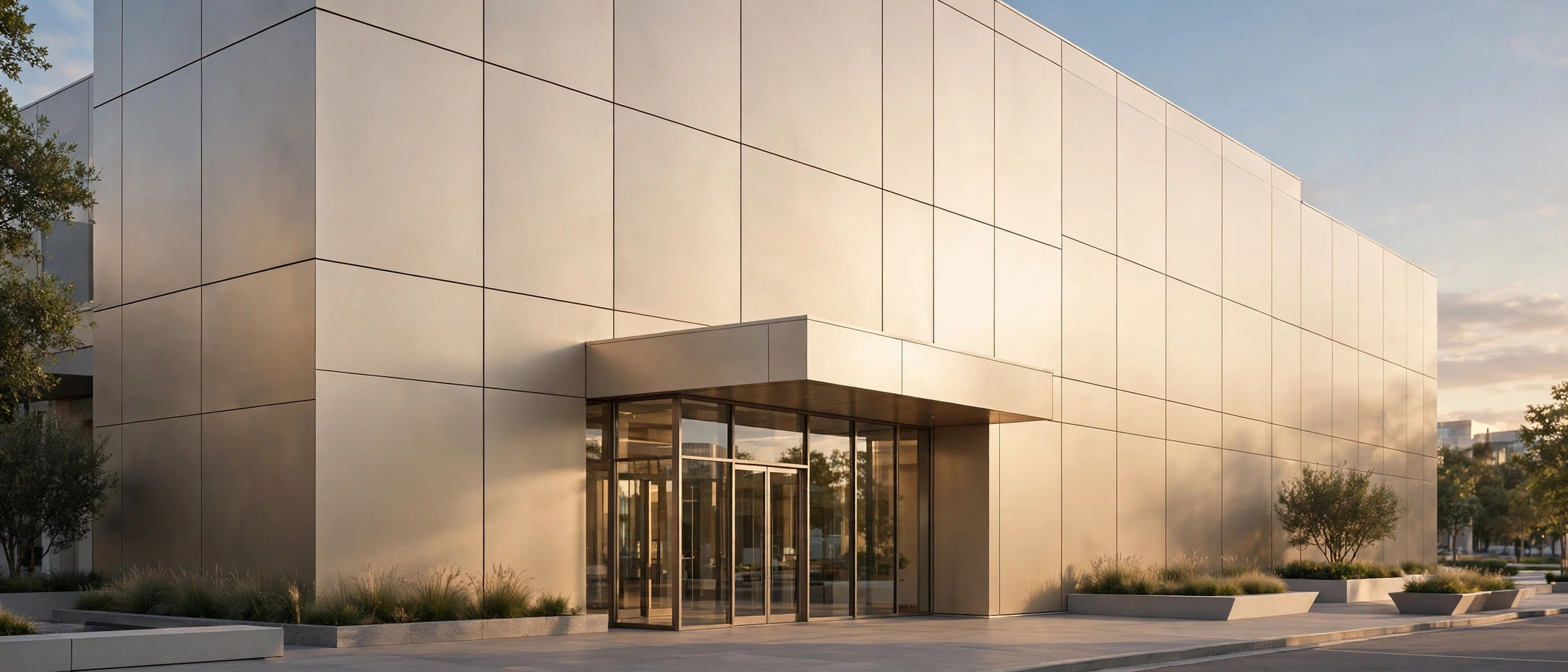
When a project moves beyond a standard commercial facade, the cladding conversation often narrows to three metals: solid aluminum panels, zinc, and copper. All three can deliver a premium look, but they do not behave the same way on a building, on a budget, or over decades of weather. Choosing well means looking past the first impression and weighing weight, detailing, maintenance, and how each metal ages in place.
This guide compares aluminum panels with zinc and copper cladding for architects, contractors, and distributors specifying facades for offices, cultural buildings, retail flagships, hotels, and high-end residential projects in the United States.
Why Premium Metal Cladding Is a Different Buying Decision
With commodity cladding, the decision is often driven by unit cost and availability. With premium metals, it is driven by the whole system. Panel size, joint design, substrate, ventilation, and installer experience all affect the final result, and they affect each metal differently. A material that looks beautiful as a small sample can disappoint at full scale if its movement, reflectivity, or patina behavior was not planned for.
Three questions help frame the choice early. How flat and uniform must the facade read from across the street? How much maintenance is the owner willing to accept, and who will do it? Is the design intent a stable, controlled color, or a surface meant to change with time? Aluminum, zinc, and copper answer those questions in very different ways.
Solid Aluminum Panels: The Practical Premium
Solid aluminum facade panels offer a combination: a crisp, architectural flatness, a wide range of stable colors and textures, and a weight that is light for a metal cladding. That lighter weight simplifies support structure and handling on site, and it makes larger panel formats practical. Juchang’s solid aluminum panels are commonly produced in thicknesses of 2.0, 2.5, and 3.0 mm, in alloys including 1001 and 3003 H24, with a conventional maximum panel size of 1300 by 4000 mm, subject to design and fabrication requirements.
Surface finish is where aluminum gives specifiers the most control. PVDF coatings, powder coatings, and roll coatings each offer different balances of color range, texture, and long-term appearance, and colors can be matched across batches, replacement panels, and related components such as soffits, column covers, and fascia.
Aluminum is also versatile in fabrication. Panels can be folded, perforated, and curved within fabrication limits, and detailed around windows, corners, and parapets. For projects that need perforated sunshades, carved patterns, or wood-look and stone-look finishes without the upkeep of natural materials, solid aluminum is often the most practical route to a premium result.
Zinc Cladding: The Living Patina
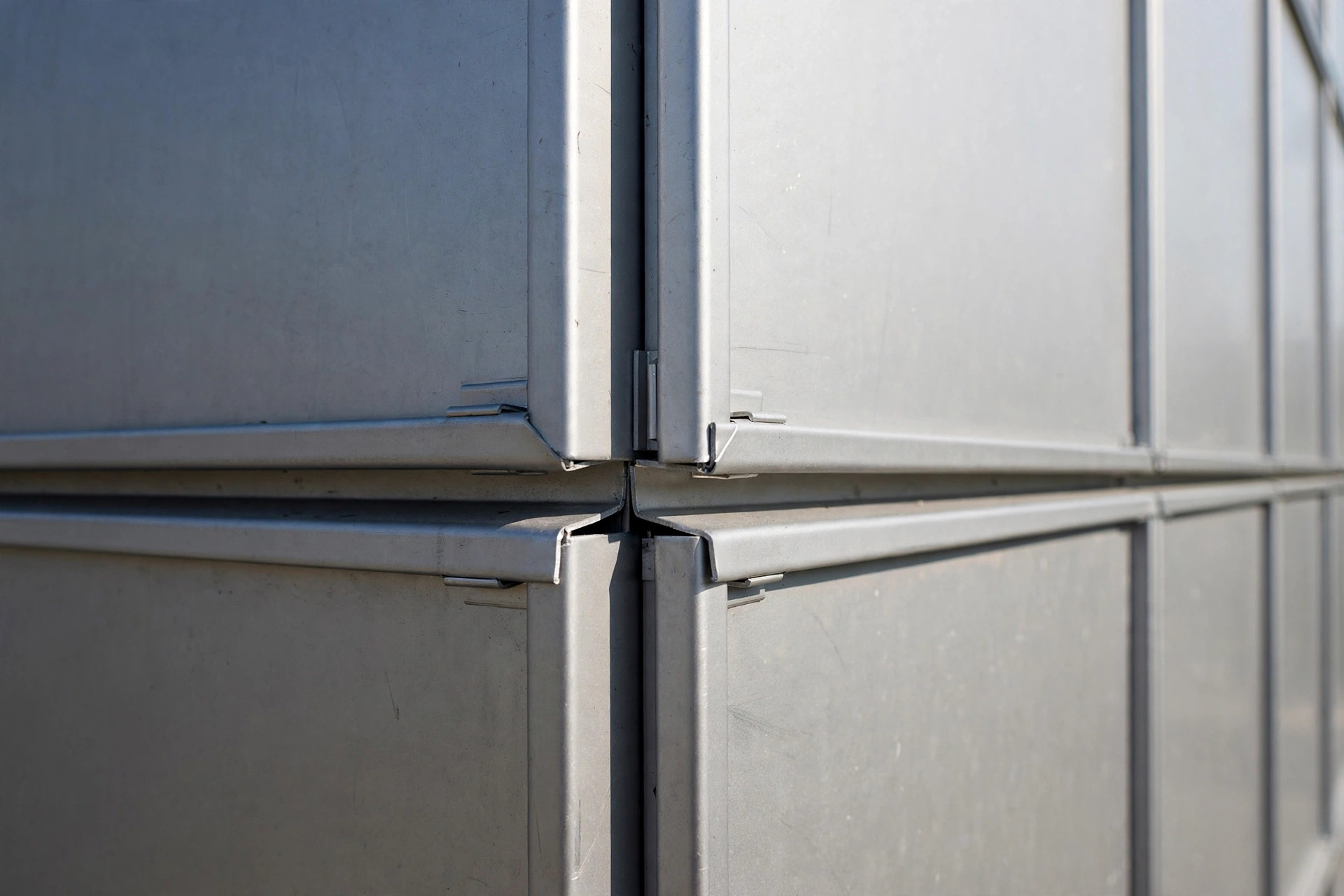
Zinc is chosen for character. Left to weather naturally, it develops a soft gray patina that changes subtly with exposure, orientation, and climate. Pre-weathered zinc is also available for projects that want a more uniform starting appearance. The result is a facade that feels quiet and textured, and pairs well with stone, timber, and glass.
That living surface is both the appeal and the commitment. Buyers who specify zinc should expect variation across elevations and over time, and plan details that suit it: standing seams, careful flashing, and separation from dissimilar materials where required. Zinc work also rewards experienced installers, since seaming, folding, and soldering are craft skills and the quality of those joints is visible in the finished facade.
Copper Cladding: The Statement Metal
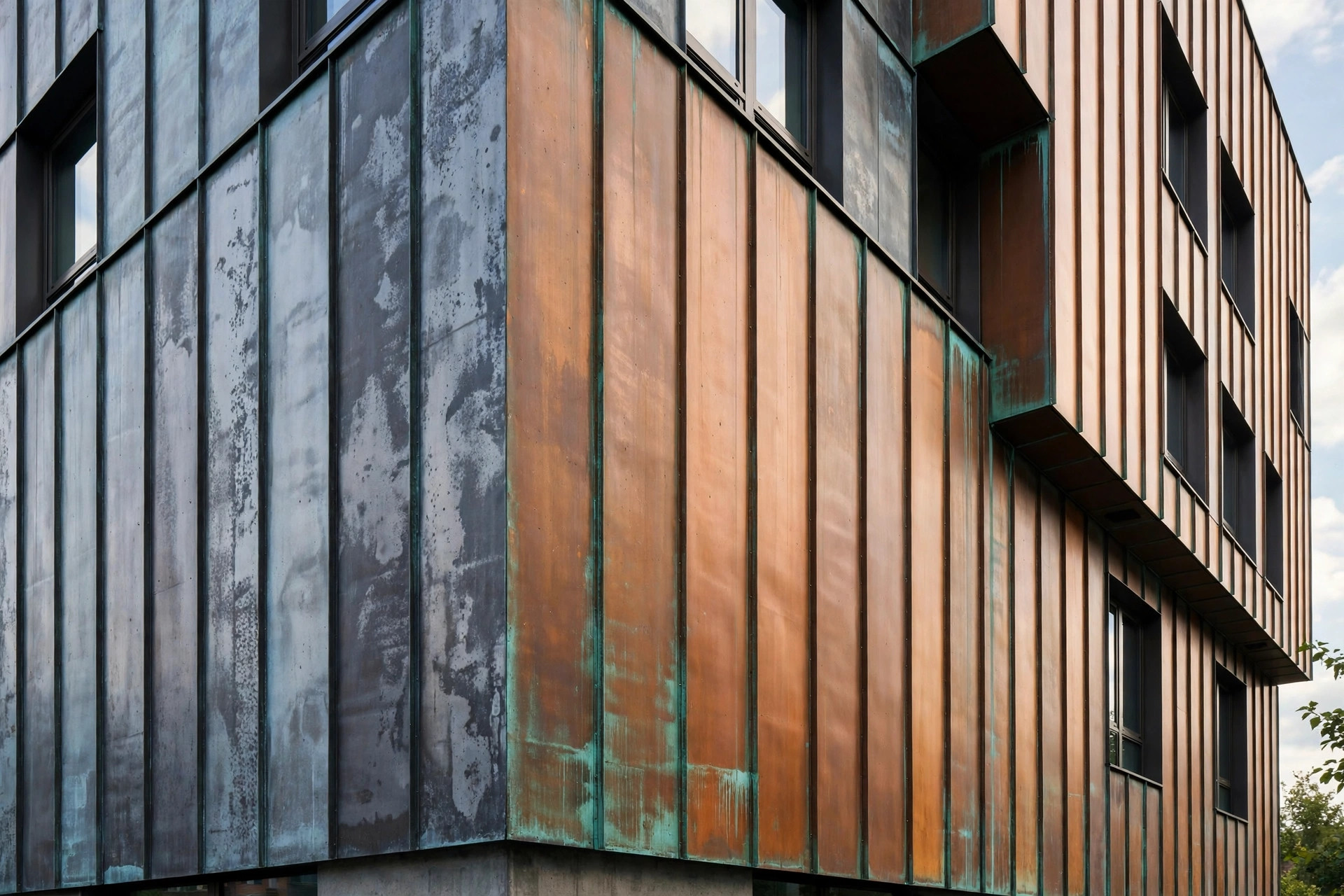
Copper makes the boldest first impression of the three. New copper is bright and warm, and as it weathers it moves through brown tones toward the green verdigris familiar from historic roofs and landmarks. That narrative is why copper is often reserved for entries, feature walls, canopies, and signature buildings where the facade itself is part of the brand.
The same drama requires planning. Color change is uneven at first, influenced by rain exposure, orientation, and detailing, and runoff can stain adjacent materials if it is not managed. Copper is also a premium material in both raw cost and specialized labor, so it is most often used selectively, as an accent, rather than across an entire large facade. Used that way, it delivers maximum visual impact for a controlled portion of the budget.
Side by Side: Cost, Weight, Maintenance, and Lifespan
On upfront cost, solid aluminum panels are generally the most accessible of the three for large facades, because the material, fabrication, and installation system are well established and scalable. Zinc sits in a middle premium band, with specialized labor adding to the total, and copper is typically the highest, especially when detailed and installed to the standard its appearance demands. Those relative positions matter more than any single price figure, because panel size, finish, quantity, and site conditions move every project’s total.
On weight and structure, aluminum has a clear advantage. Its lighter weight eases handling and reduces demands on the support system, which helps on tall buildings, recladding projects, and structures where added load must be kept low. Zinc and copper are heavier metals, and their support and fixing design should be confirmed early with the project engineer.
On maintenance, aluminum with a quality coating is the lowest-touch option: routine cleaning and periodic inspection are the norm, and color stays controlled. Zinc needs knowledgeable inspection of seams and flashings, and acceptance that its surface will evolve. Copper needs detailing that manages runoff and an owner who embraces its changing color. On lifespan, all three are long-lived when detailed, ventilated, and installed correctly. The difference is what they look like along the way: aluminum holds a specified color, zinc settles into a gray patina, and copper travels from bright metal to brown to green.
How to Specify the Right Metal for Your Project
Start with the design intent, not the material sample. If the brief calls for a large, flat, color-controlled facade, a repeatable finish across phases, and straightforward maintenance, solid aluminum panels are usually the strongest fit. If it calls for a natural, matte, evolving surface with a crafted seam detail, zinc deserves serious consideration. If it calls for a landmark accent and the owner values copper’s transformation, use copper where it will be seen and appreciated.
Next, test the choice against the building: exposure, prevailing weather, and how each elevation will weather differently, plus the installer’s experience and whether details around windows, corners, and parapets are resolved before fabrication. For aluminum, confirm panel thickness, alloy, finish, color reference, and joint layout in the submittal. For zinc and copper, confirm seam type, patina expectation, and runoff management in the same package. Finally, think about the future: how replacement panels will be matched, how the facade will be cleaned and inspected, and what records will be kept.
Aluminum, zinc, and copper are not interchangeable, and that is the point. Each offers a different balance of control, character, and cost. When the choice matches the building, the owner, and the maintenance reality, any of the three can produce a facade that still looks intentional decades after installation. To explore solid aluminum panel options, browse products at juchangalu.com, or send drawings for a detailed quotation.