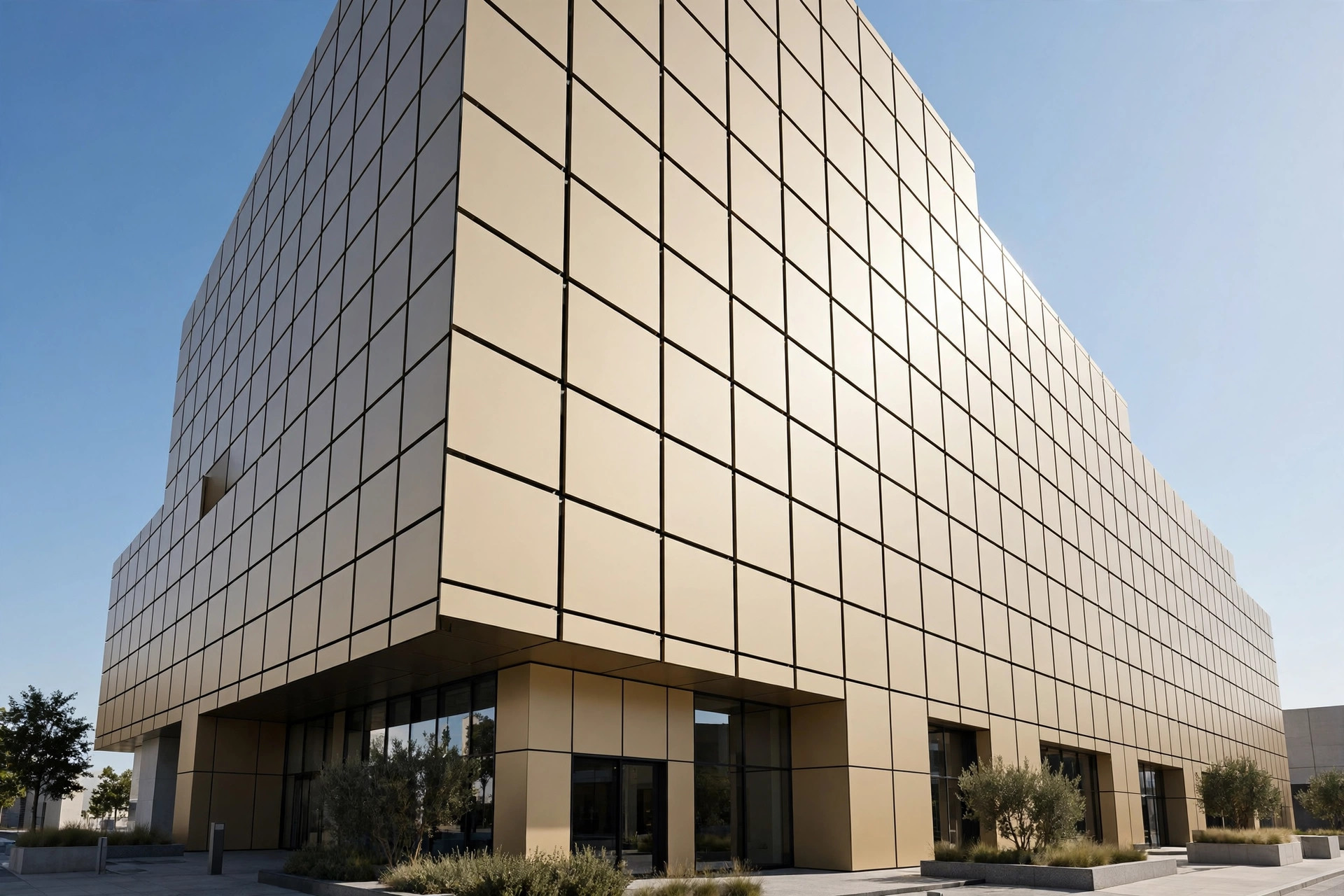
On a facade project, the most expensive mistake is rarely the panel price — it is the panel that arrives in a color, finish, or flatness that nobody approved. For US architects, contractors, and distributors sourcing solid aluminum panels, a disciplined sample approval process is the cheapest insurance a project can buy. This guide walks through how experienced buyers move from color chips to full-size mock-ups before production begins.
Why Sample Approval Matters More for Aluminum Panels Than for Most Cladding
Solid aluminum panels are fabricated, not extruded to a fixed profile. Every panel is cut, folded, welded, polished, and coated to order, so every batch carries small variations: color shifts between coating runs, perforation patterns rendered from drawings, and the hand of the fabricator all leave their mark on the finished panel.
That is why paper or screen-based approvals fail. A RAL code states the intended color; only a physical sample shows how it looks under real light, next to glass and stone, and across the factory’s full 1300 x 4000 mm maximum panel size. Once approved, the sample becomes the standard for inspections, punch lists, and closeout documentation — protecting both buyer and factory.
The Four Levels of Aluminum Facade Panel Samples
A professional approval process moves through progressively more representative samples. Not every project needs all four levels, but knowing what each one proves helps you request exactly what your project requires.
Level 1: Color chips and finish swatches
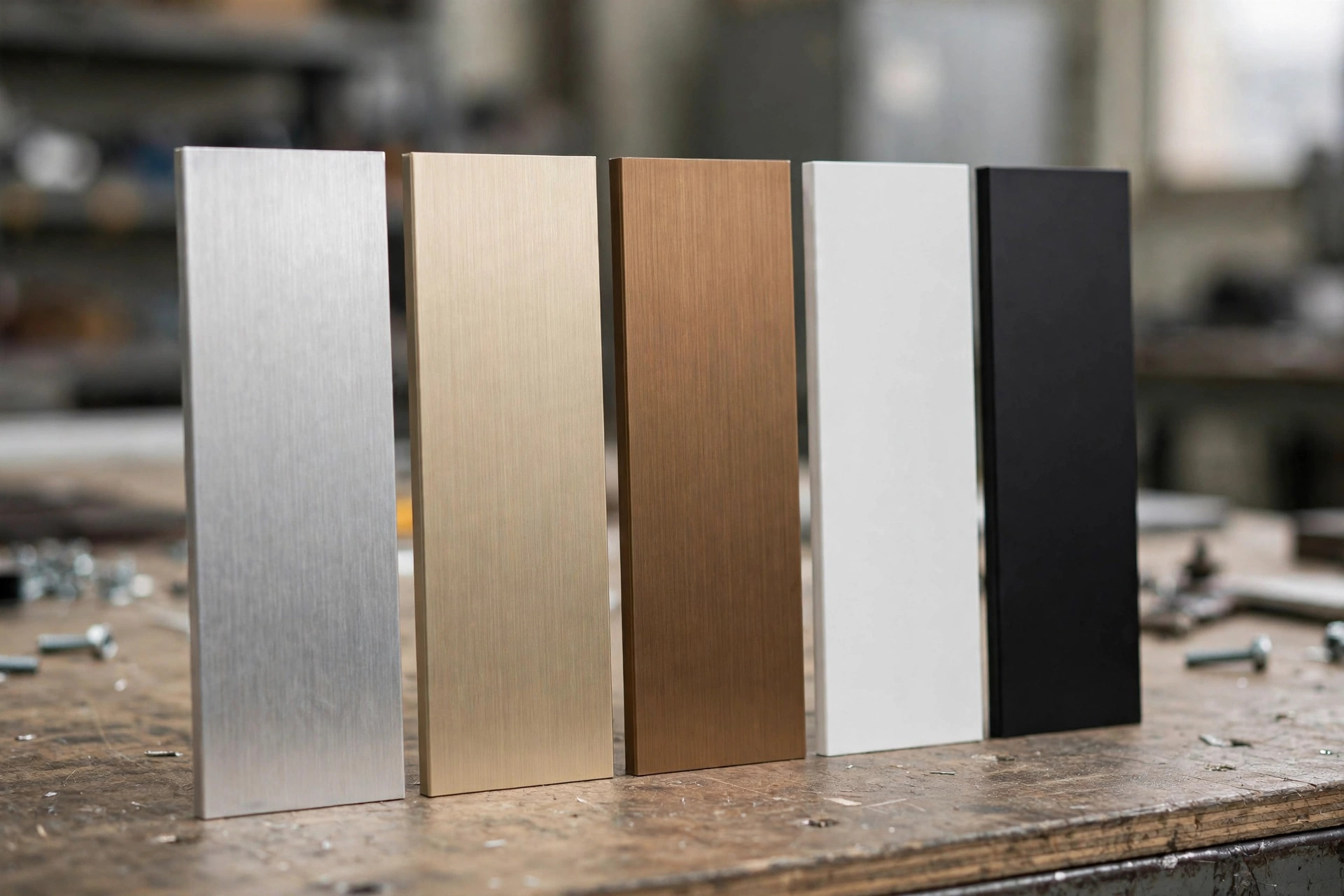
Small coated chips are the starting point for color and finish selection. Compare candidates side by side in natural daylight, not only under office lighting — solid colors, metallics, and wood-look or stone-look finishes all read differently outdoors. Keep the rejected chips too; they document the decision trail.
Level 2: Flat panel samples
A small flat panel in the exact coating system specified for the project — PVDF, powder coating, or roller coating — proves finish texture, gloss level, and coating uniformity far better than a chip. Check it from arm’s length and from a few meters away; facades are viewed from both.
Level 3: Formed samples with folded edges
A formed sample includes the folded edges and stiffener details of a real panel, cut from 2.0, 2.5, or 3.0 mm sheet in the specified 1100 or 3003-H24 alloy. This is where fabrication quality shows: fold crispness, smoothness of welded corners, and coating evenness across edges and faces. For perforated designs, it should carry the actual hole pattern from the drawings.
Level 4: Full-size panel and visual mock-up
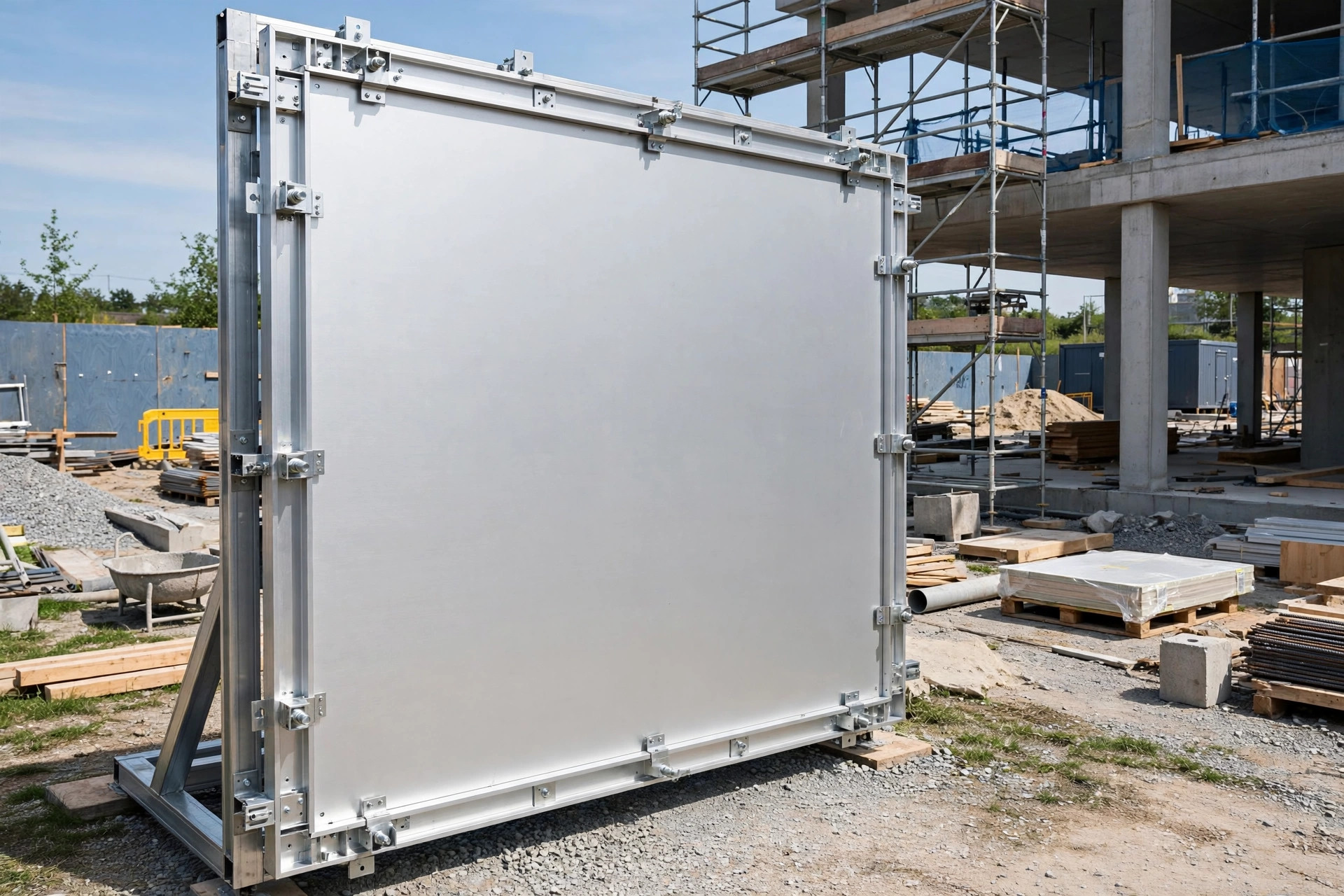
For large or design-critical projects, nothing replaces a full-size panel in its cassette configuration. A visual mock-up — several panels assembled into a representative wall section — shows joint widths, panel flatness at full width, and how the system reads as a wall rather than a swatch.
What to Check on Every Sample: Color, Finish, and Workmanship
Review samples methodically instead of relying on first impressions. A simple checklist keeps the review consistent across team members and revision rounds.
- Color match: Compare against the specified standard under daylight. Confirm solid colors show no mottling or uneven tone.
- Finish and gloss: Matte, satin, and high gloss reflect the sky differently — confirm the gloss level matches the design intent, especially for metallics.
- Coating uniformity: View the surface at a shallow angle. It should be continuous, with no thin spots or color pooling near folded edges.
- Fabrication quality: Edges should fold cleanly without cracking the coating; welded corners should be ground smooth; brackets should sit square.
- Perforation accuracy: Verify hole size, pitch, and pattern alignment against the shop drawings — small deviations are visible at facade scale.
- Panel flatness: Check for oil canning, the visible waviness that appears on wide panels under changing light. Correct thickness (2.5 or 3.0 mm for large panels) and a sound stiffener layout keep it under control.
Photograph every sample under consistent lighting and keep dated notes per round. If a sample is rejected, record exactly why, so the revision targets the real problem.
When a Full-Size Mock-Up Is Worth It
Mock-ups add cost and time, but they earn their place where the facade is the building’s identity: signature towers, cultural buildings, corporate headquarters, and any project with custom perforation, folded geometry, or mixed finishes.
A useful mock-up includes at least a 3 x 3 panel grid with real joint widths, one representative corner condition, and the actual fixing system. Review it at the distance the public will see it — from across the street, not just from the scaffold. Watch joint alignment, coating continuity, and how shadows fall across folded or perforated areas at different times of day.
On remote projects, a mock-up review can be done with high-resolution photos and a video walkthrough. Ask the factory to photograph it in morning, midday, and late-afternoon light. That effort is small compared with re-fabricating a full elevation.
Approving and Freezing the Standard: Reference Samples Done Right
Once the final sample is accepted, it becomes the reference standard for the whole production run. Treat it accordingly:
- Sign and date it. Buyer and factory each keep a signed copy. Mark the display face and note the viewing conditions.
- Record the production context. Note the alloy, thickness, coating system, and color code behind the sample, so the factory can reproduce the exact combination.
- Protect it. Store reference samples flat, face up, away from sunlight and moisture. A faded or scratched reference is worse than none.
- Use it at receiving. When panels arrive on site, the reference sample is the first thing the inspection compares against.
For multi-phase projects, order extra reference panels from the first approved batch. Coating color can drift slightly between runs over months or years; the original reference lets you quantify any drift and decide whether the next phase needs a new approval round.
Red Flags That Tell You to Stop and Revisit
Most sample problems are fixable, but some patterns signal deeper trouble. If the factory cannot produce a formed sample whose folded edges match the drawing, the fabrication process needs review. If color varies noticeably across a single sample, coating quality control is inconsistent. If a supplier resists providing a full-size panel for a large project, that resistance is itself information.
Also watch the revision loop: one or two rounds of refinement are normal; five rounds of the same unresolved defect are not. A factory that documents each revision and explains what changed will document production the same way.
Conclusion: Samples Are Where Facade Risk Gets Cheap
Every hour spent on sample approval is worth many hours avoided in site disputes and re-fabrication. For aluminum facade panels — custom-fabricated, coated to order, and viewed at building scale — the sample is the contract made physical.
Start with chips, prove the finish on flat and formed samples, mock up what matters, and freeze a standard you can defend on site. To see the colors, finishes, and perforated options available, browse the products at juchangalu.com — or send your drawings for a detailed quotation tailored to your project’s panel schedule.