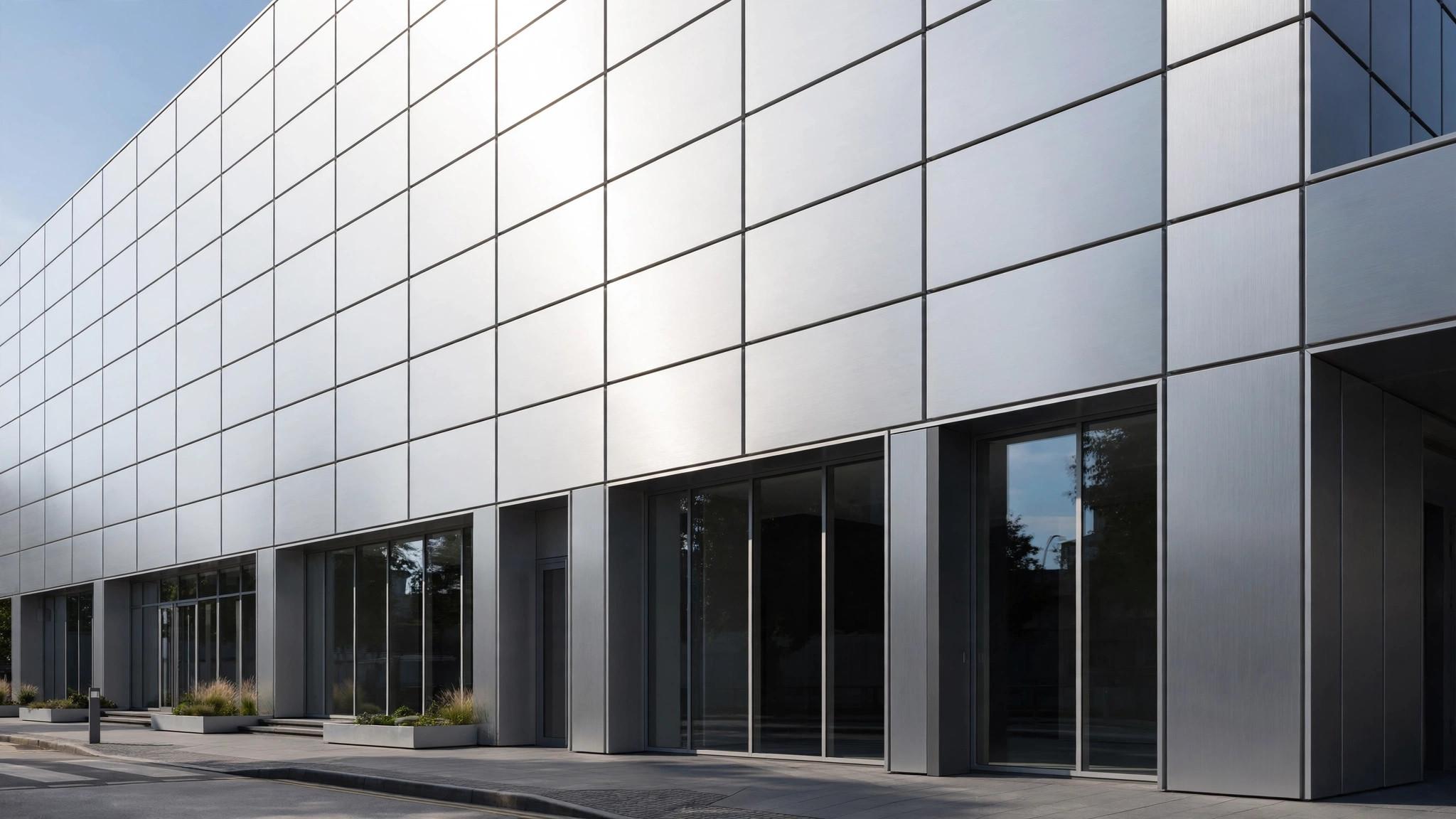
Getting an accurate quote for custom aluminum facade panels starts long before the factory sees your email. Most of the price differences buyers encounter are not caused by one factory being cheaper than another. They are caused by one RFQ being clearer than another. A vague request invites a vague number, and a vague number turns into change orders, delays, and arguments once production begins.
This checklist walks through the eight items every request for quotation should include, so the price you receive reflects the panels you actually need. It is written for US architects, contractors, and distributors who want cleaner comparisons between suppliers.
Why Most Panel Quotes Come Back Wrong
A facade panel is not a stock product. Every panel is cut, folded, and coated to a specific size, shape, and color, and the price depends on those details. When a request only says “aluminum panels for a four-story office building,” the factory has to guess at panel size, thickness, finish, quantity, and delivery schedule. Different factories guess differently, so the quotes that come back are not comparable — and the lowest one is often the one that assumed the least.
The fix is not a longer email. It is a structured RFQ that answers the factory’s real questions before they are asked. A complete request typically gets a faster, tighter quote, and it protects the buyer: when every supplier quotes the same scope, the comparison is honest.
The 8 Items Every RFQ Should Include
A good RFQ for custom aluminum facade panels covers eight things. If you can answer all eight, the factory can price your project without follow-up questions.
- Project drawings: elevation drawings and panel layout plans showing where panels go, including windows, corners, and parapet details.
- Panel sizes and quantities: a panel schedule listing each panel type, its dimensions, and the quantity required, including allowance for spares.
- Panel thickness and alloy: the specified thickness, commonly 2.0, 2.5, or 3.0 mm for solid aluminum panels, and the alloy, such as 1001 or 3003 H24.
- Surface finish and color: the finish type — PVDF, powder coating, or roll coating — plus a color reference, such as a RAL code or a physical sample.
- Panel shapes and details: flat panels, folded cassettes, perforated or carved panels, curved sections, and any special edge or return details.
- Fixing system: the mounting method the project uses, such as a cassette system, rainscreen clips, or a visible fixing detail.
- Delivery schedule and destination: the required delivery date or window, and the delivery location, including the port or job site.
- Trade terms and documentation: the Incoterm (for example FOB or CIF), plus any required documents such as mill certificates, coating test reports, or submittal drawings.
If any item is still undecided, say so and ask the factory to quote both options.
Drawings: What the Factory Actually Needs
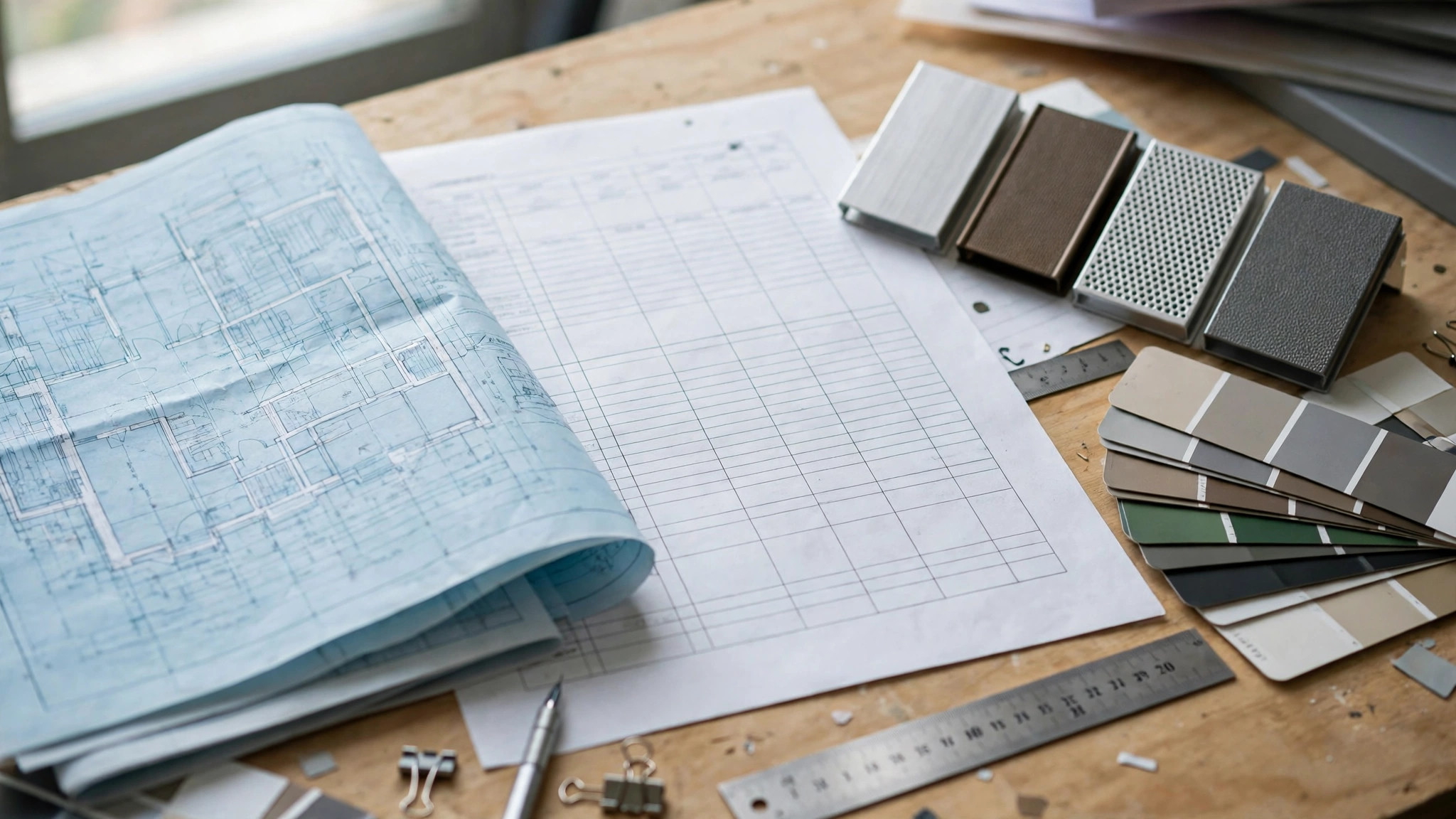
Elevation drawings are the single most useful attachment in an RFQ. They show panel proportions, joint lines, and how the facade meets windows, doors, and corners. A panel layout plan, even a simple one, tells the factory how many unique panel sizes exist. A facade with twelve panel sizes costs more per square meter than one with three, even at the same total area.
A drawing that shows return depth, joint width, and fixing arrangement lets the estimator price folding and hardware accurately. If shop drawings do not exist yet, dimensioned architectural elevations are usually enough for a budget quote — but label it as such, and expect the factory to confirm the price once shop drawings are issued.
For curved, perforated, or carved panels, include the pattern drawing or perforation rate — a perforated panel’s open area affects both price and structural behavior.
Panel Size, Thickness, and Finish: The Cost Drivers
Three choices drive most of the unit price. The first is panel size. Larger panels use material more efficiently but are harder to keep flat and harder to ship, so there is a practical balance. Juchang’s solid aluminum panels are commonly produced in thicknesses of 2.0, 2.5, and 3.0 mm, in alloys including 1001 and 3003 H24, with a conventional maximum panel size of 1300 by 4000 mm, subject to design and fabrication requirements.
The second is thickness and alloy. A thicker panel resists wind load and oil canning better on tall or exposed elevations, but it also uses more material. The RFQ should state the thickness the engineer specified, or ask the factory to recommend one based on panel size and wind load.
The third is the finish. PVDF coatings, powder coatings, and roll coatings differ in color range, gloss options, and long-term performance. State the finish and the color reference in the RFQ. If color matching matters, include a physical sample or a RAL code, and ask how the factory controls batch-to-batch color consistency.
Quantities, Schedule, and Trade Terms
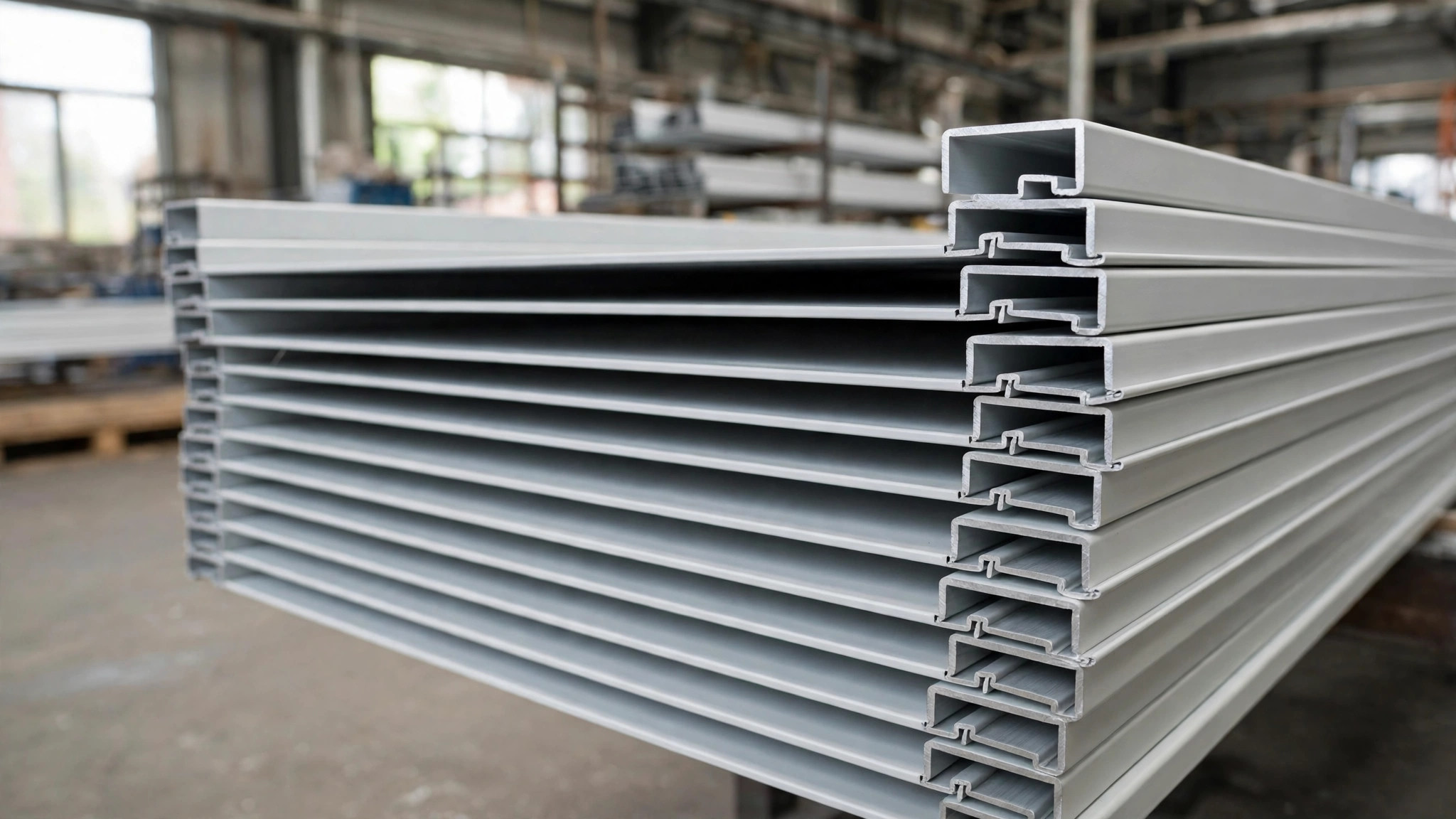
Quantity changes the price in two ways. Larger orders spread setup and coating-line costs across more panels, and the factory can nest cutting more efficiently when it knows the full panel schedule, including spares. Always state the quantity per panel type, and whether the order is a single shipment or phased deliveries.
State the delivery schedule up front. Custom panels move through cutting, folding, coating, inspection, and packing, and coating lines run on a schedule. A request that says “needed in six weeks” gets a different answer than one that says “first shipment in ten weeks, balance in fourteen.” Give the factory the real date, and ask what production and sea freight steps sit between the order and delivery.
Trade terms deserve one line in the RFQ. State the Incoterm and the delivery point — for example, FOB Shanghai or CIF Los Angeles — so that freight and insurance are either included or excluded the same way in every quote. Also list the documents you need: submittal drawings, mill certificates, and coating test reports are the usual set for US commercial projects.
How to Compare Quotes Apples to Apples
Once the quotes arrive, compare them on the same basis. Check that each supplier quoted the same panel sizes, thickness, alloy, finish, and quantity, and whether freight, insurance, packing, and crating are included, along with submittal drawings and samples. A quote that looks low often excludes one of these items.
Ask each supplier the same follow-up questions. What is the panel tolerance on size and flatness? How is color consistency controlled between batches? What does the packing look like, and how are panels protected for sea freight? The answers reveal more about the supplier than the price does.
Finally, request a sample before committing to a full order. A small color chip confirms the finish, and a full-size mock-up confirms the folding, the joint, and the flatness. A factory that welcomes a mock-up is confident in its work.
A clear RFQ is the cheapest quality control a buyer can buy. It costs an afternoon to prepare, and it saves weeks of corrections later. Prepare the eight items above, send the same package to every supplier, and judge the answers side by side. To explore solid aluminum panel options, browse products at juchangalu.com, or send drawings for a detailed quotation.