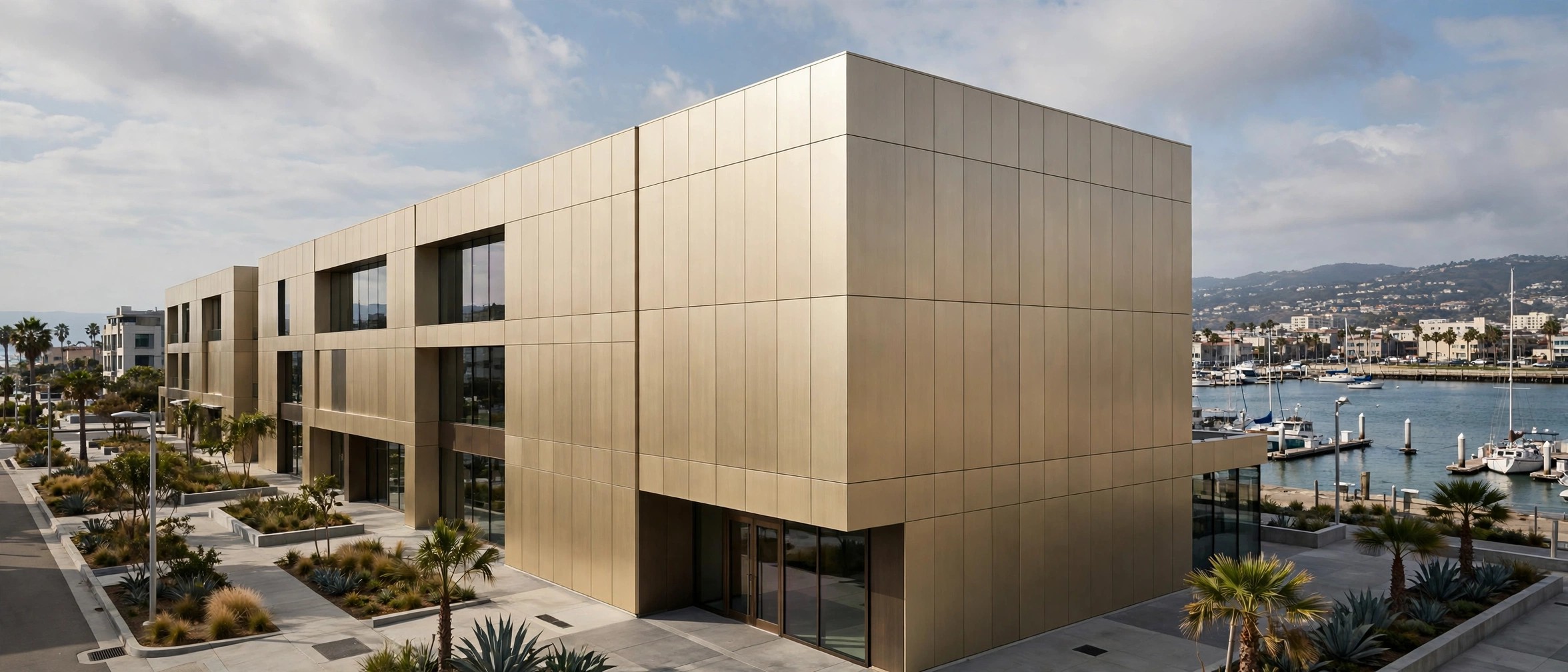
Along the US Gulf Coast and the Atlantic seaboard, a building’s facade is more than a visual statement — it is the first line of defense when a hurricane makes landfall. For architects, contractors, and owners specifying cladding in hurricane-prone regions, choosing a facade system that can survive extreme wind pressures and windborne debris is a code-driven decision. This guide explains what hurricane-rated aluminum facade panels are, what Miami-Dade NOA certification actually tests, and what US buyers should verify before placing an order with any panel supplier.
Why Hurricanes Dictate Facade Design on the US Coast
Hurricanes attack buildings in two ways at once. Sustained winds create enormous positive and negative pressures on cladding — the suction on leeward walls and roof edges can exceed the windward pressure several times over. Simultaneously, the wind turns ordinary objects — roof gravel, tree limbs, detached signage — into projectiles that strike facades at highway speeds.
In Florida, this dual threat is codified in the Florida Building Code’s High-Velocity Hurricane Zone (HVHZ), which covers Miami-Dade and Broward counties. Outside the HVHZ, ASCE 7 wind maps classify most of the Gulf and Atlantic coasts as high-wind regions, requiring exterior cladding to be designed and tested for specific wind pressures based on building height, exposure category, and proximity to the shoreline. A panel that performs beautifully in a Chicago summer may be entirely wrong for a Fort Myers waterfront condo.
For buyers, the practical takeaway is simple: in hurricane zones, facade selection starts with the code and the test standard, not with color swatches.
What Miami-Dade NOA Certification Actually Tests
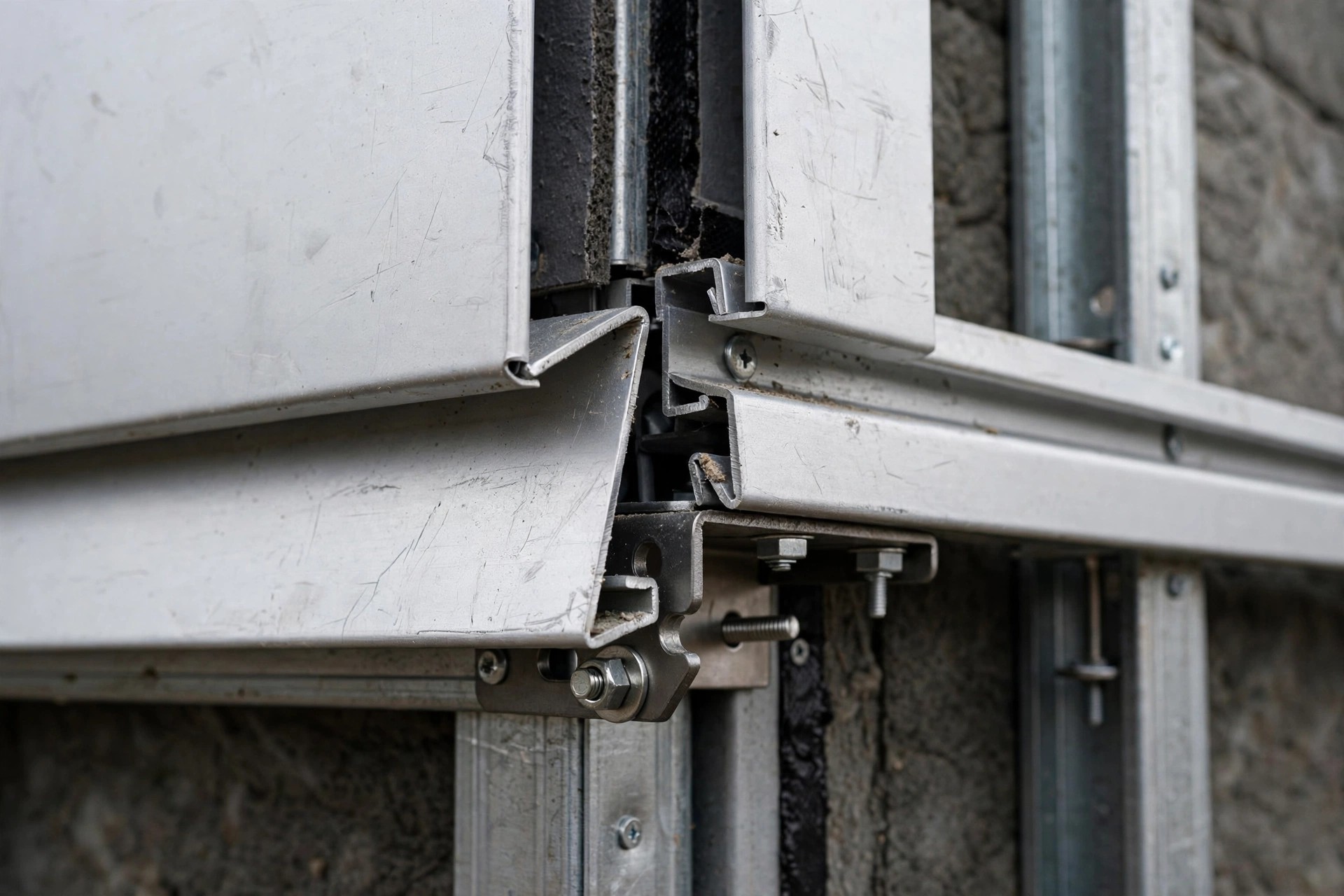
The most recognized hurricane standard for exterior cladding in the United States is the Miami-Dade Notice of Acceptance (NOA) — a product approval issued after a product passes the county’s test protocols (TAS). Although it is a county approval, architects and insurers across the country treat it as the gold standard for windborne-debris resistance.
The core tests behind an NOA for wall cladding include:
- TAS 201 (impact test): A 9-pound 2×4 lumber missile is fired at the cladding at 50 feet per second (the “large missile” test) to simulate windborne debris. In the HVHZ, cladding below 30 feet of height must survive this impact.
- TAS 202 (static air pressure test): After impact, the specimen is cycled through thousands of positive and negative pressure cycles to simulate hours of hurricane-force wind, verifying the cladding stays attached.
- TAS 203 (small missile test): Above 30 feet, cladding is struck with multiple small steel balls (the “small missile” test) and then pressure-cycled in the same way.
Passing means the product held its ground — no breach of the envelope, no loss of attachment — through both impact and cyclic loading. An NOA document lists the tested assembly, the allowable design pressures, and the approved installation details. It is the assembly that is approved, not just the panel: the same aluminum sheet mounted with different fastening patterns may or may not pass.
Why Solid Aluminum Panels Are a Strong Candidate for Hurricane Zones
Solid aluminum facade panels bring several characteristics that matter in wind engineering:
- Lightweight strength: Aluminum’s strength-to-weight ratio keeps cladding dead loads low, which simplifies the structural design of the support system. Typical facade panels are produced in 2.0mm, 2.5mm, and 3.0mm thicknesses, with 3.0mm panels commonly specified where higher wind pressures demand stiffer, more rigid panels.
- Non-combustibility: Solid aluminum is a non-combustible material, a requirement for many high-rise and multifamily projects in Florida, where the International Building Code limits combustible cladding on tall buildings.
- Predictable fabrication: CNC-folded cassette panels with hemmed edges and reinforced corners distribute wind loads evenly across the fixing points, reducing stress concentrations that can cause failure in cyclic loading.
- Alloy stability: Common facade alloys such as 3003 H24 offer good formability and corrosion resistance, which matters in salt-laden coastal air.
None of this replaces testing, however. The engineering advantage of aluminum only translates into a code-compliant facade when the complete assembly — panel, anchors, fasteners, substrate — has been analyzed by a licensed professional engineer and, where required, tested to the applicable standard.
What to Ask Your Panel Supplier Before Ordering
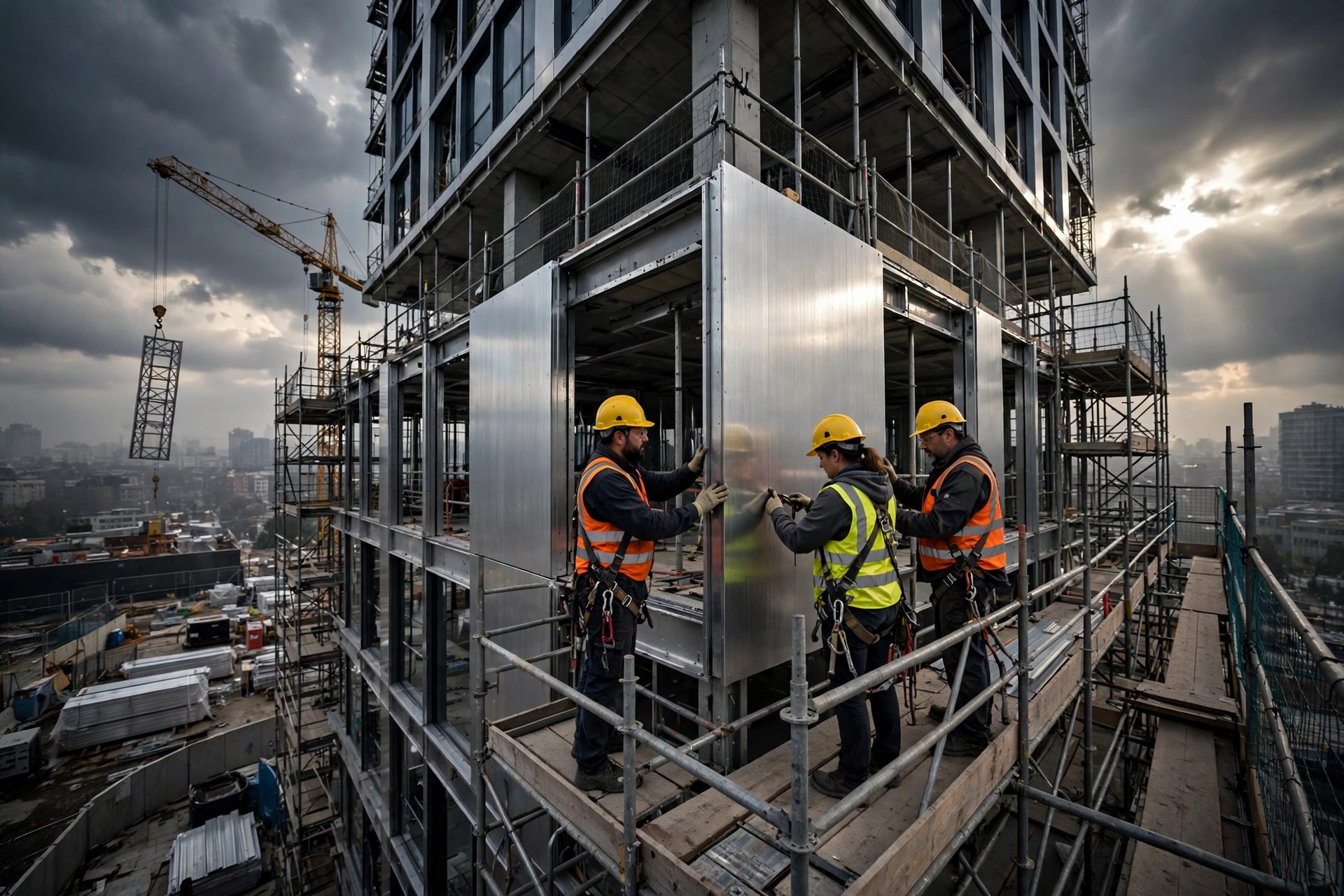
Hurricane-zone projects shift the burden of proof onto the supply chain. When evaluating an aluminum panel manufacturer — particularly an overseas factory — US buyers should ask for these documents and commitments:
- Test reports for the exact assembly: Ask whether the factory has worked with third-party laboratories on impact and pressure testing for cassette systems of similar geometry, and request the report numbers. If the project requires an NOA, confirm whose approval covers the installation and its expiration date.
- PE-stamped structural calculations: Every hurricane-zone facade needs project-specific engineering: design pressures from ASCE 7, anchor pull-out values for the substrate, and fastener schedules. A competent supplier provides shop drawings that a licensed engineer reviews and stamps for the jurisdiction.
- Fastening details: Request section details showing anchor types, edge distances, and fixing spacing. Ask how the system handles thermal movement, because wind cycling plus temperature swings stress every connection point.
- Material traceability: Mill certificates for the aluminum coil, coating batch records, and panel-by-panel QC records make future warranty claims and panel replacement far easier.
- Sample approval on the record system: For hurricane-zone work, the approved sample should document not only color and finish but also panel thickness, stiffener configuration, and edge detail — the variables that affect structural performance.
Suppliers who answer these questions precisely, with documents rather than assurances, are the ones worth advancing to the quotation stage.
Specifying Panels for Wind Loads: Practical Rules of Thumb
While final numbers always come from the project engineer, these principles help buyers frame realistic expectations:
- Thickness follows pressure: Higher design pressures and larger panel modules push the specification toward 2.5mm or 3.0mm panels. Large-format panels (up to the common production limit of 1300×4000mm) may need intermediate stiffeners to control deflection under wind load.
- Cassette depth matters: A folded cassette with 25–30mm returns is significantly stiffer than a flat sheet of the same thickness. The return depth is a structural variable, not just a visual one.
- Fastener density increases near edges and corners: Wind pressures peak at building corners and roof edges (ASCE 7 zones 4 and 5). Expect tighter fastening schedules in these zones, with larger panels potentially subdivided.
- Open joints vs. sealed joints: Ventilated rainscreen systems with open joints relieve pressure differentials behind the cladding, while sealed systems must resist the full pressure. The system choice affects both engineering and cost.
- Finish durability in coastal air: PVDF (fluorocarbon) coatings remain the benchmark for coastal facades thanks to their resistance to UV degradation and salt spray; confirm the coating system matches the project’s exposure classification.
Key Takeaway for US Buyers
Hurricane-rated facade selection is an engineering process before it is a purchasing process. Start with the design pressures and the applicable test standard, verify that the proposed assembly has credible test data or PE-stamped calculations behind it, and treat fastening details and material traceability as deliverables — not afterthoughts.
For your next coastal or high-wind project, you can browse product options at juchangalu.com — or send your drawings and wind-load requirements to receive a detailed quotation engineered around your project’s specific conditions.