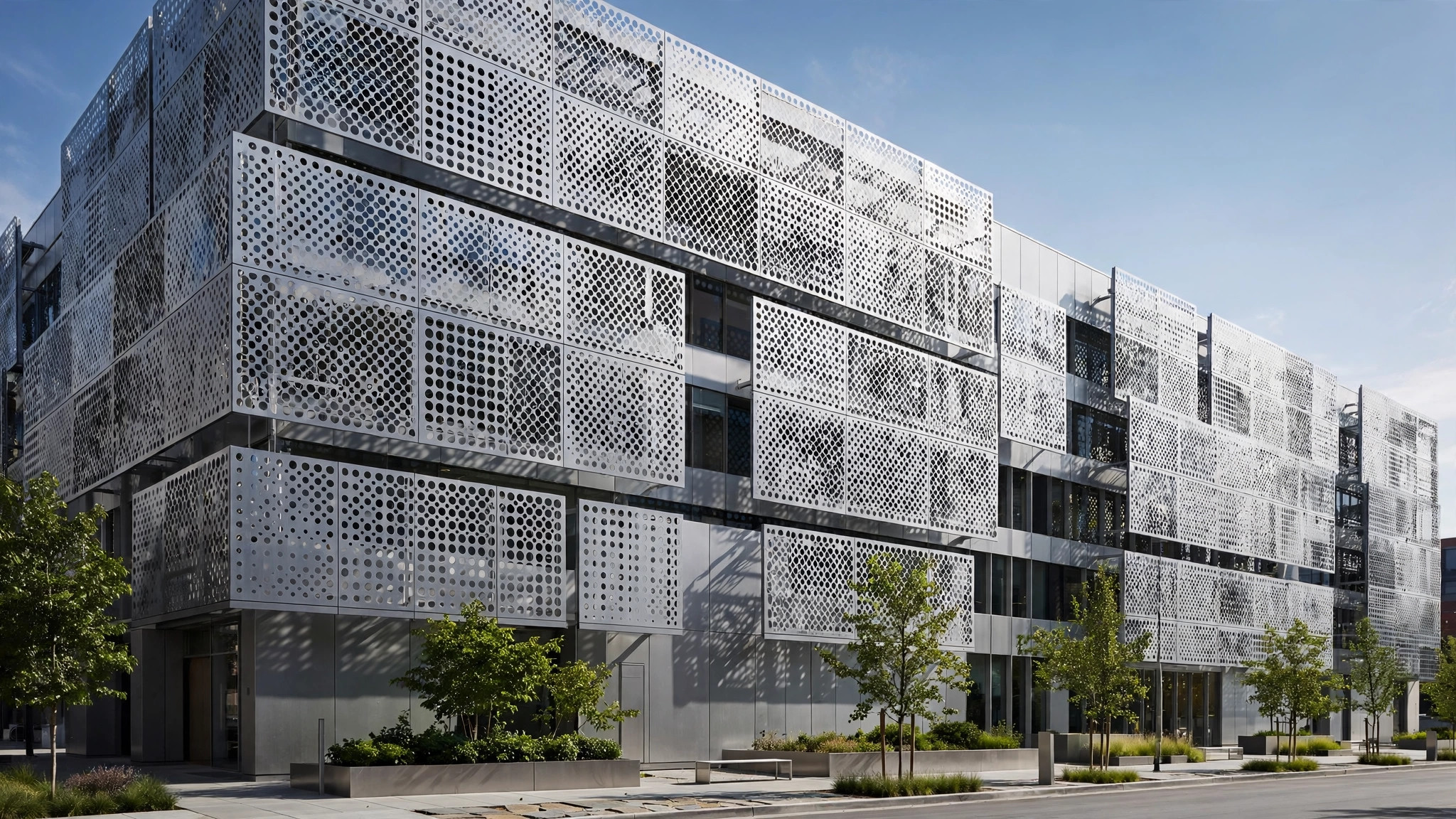
When two suppliers quote the same perforated aluminum facade panel and their prices differ by 40 percent, pattern density is usually the reason. Perforation transforms a plain solid aluminum panel into a shading screen, a ventilation skin, or a decorative feature wall — but every hole is punched, finished, and paid for. Understanding how pattern density affects both cost and performance helps you specify the right panel the first time and compare quotes on equal footing.
What Pattern Density Means: Open-Area Percentage
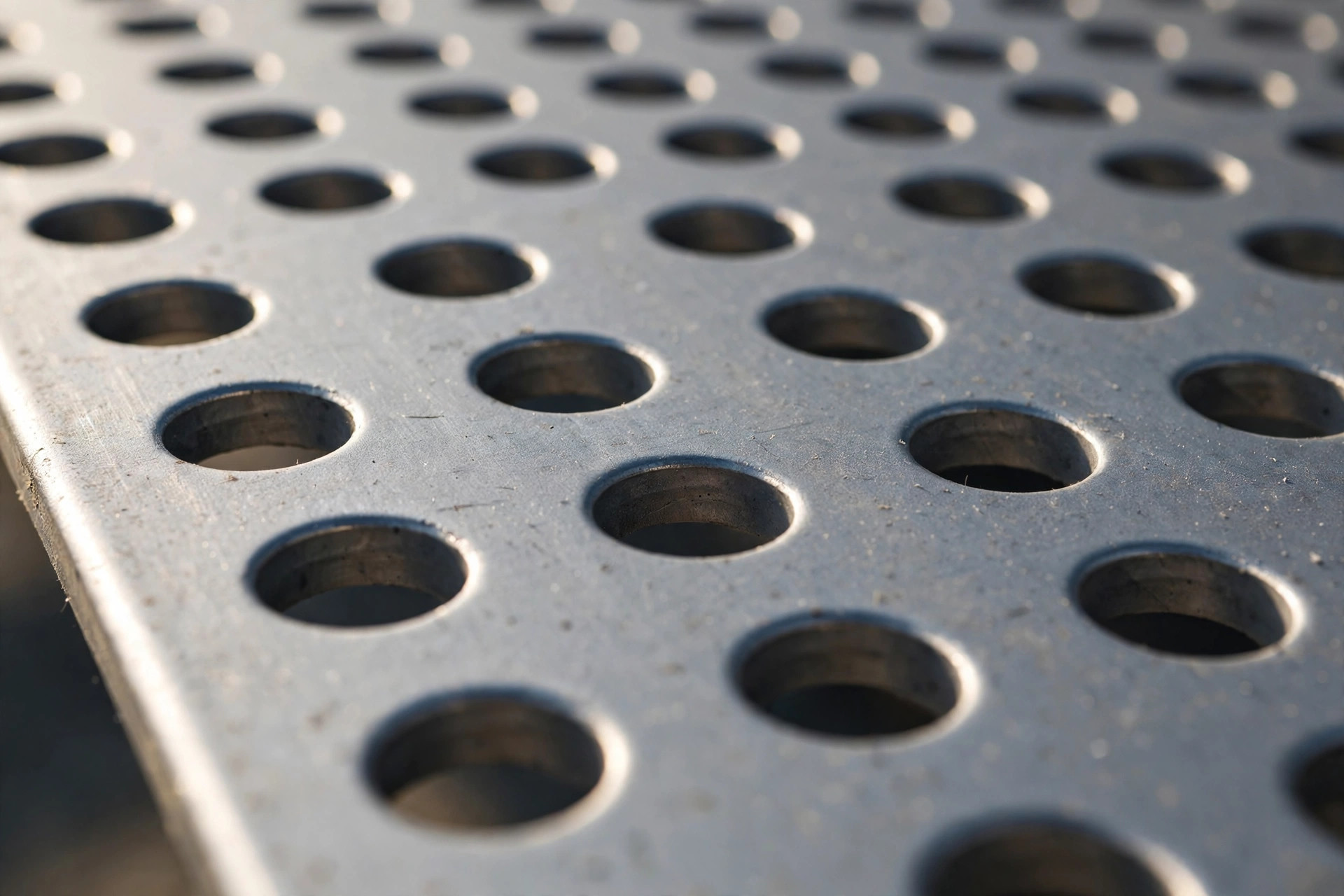
Pattern density is measured as open-area percentage: the share of the panel surface that is open holes rather than solid metal. A panel rated at 30% open area has roughly one-third of its surface removed. Common patterns include round holes, square holes, slots, and custom shapes, each defined by hole size and pitch (the spacing between hole centers).
Typical commercial specifications fall between 20% and 50% open area. Below that range, panels behave more like solid panels with texture; above it, they behave more like mesh screens. The open-area percentage you choose is the single biggest lever on fabrication cost — and on how the finished facade performs in sun, wind, and weather.
How Open Area Drives Fabrication Cost
A perforated panel can cost two to three times more than a plain solid panel of the same size. Six factors explain most of that premium:
- Punching time. CNC punching time rises roughly in proportion to hole count. A one-square-meter panel at 40% open area can contain thousands of holes, and each hole is an individual punch. Fine patterns with small holes take far longer than coarse patterns covering the same area.
- Tooling. Standard round and square holes use existing punch dies. Custom shapes, tight tolerances, or graduated patterns that change density across the panel require custom tooling — a one-time cost that is economical only at volume.
- Material thickness. Perforation weakens the sheet. A high open area that works fine at 2.0mm on a small interior panel may demand 2.5mm or 3.0mm to span safely between supports on a weather-exposed facade, and thicker sheet means more aluminum per square meter.
- Material waste. Every punched hole produces scrap. Aluminum scrap is recyclable, but the material removed still factors into the cost of each panel.
- Finish over edges. PVDF, powder, and roll-coated finishes must coat every perforation edge cleanly. Heavily perforated panels need more coating care to keep edges fully covered and color consistent.
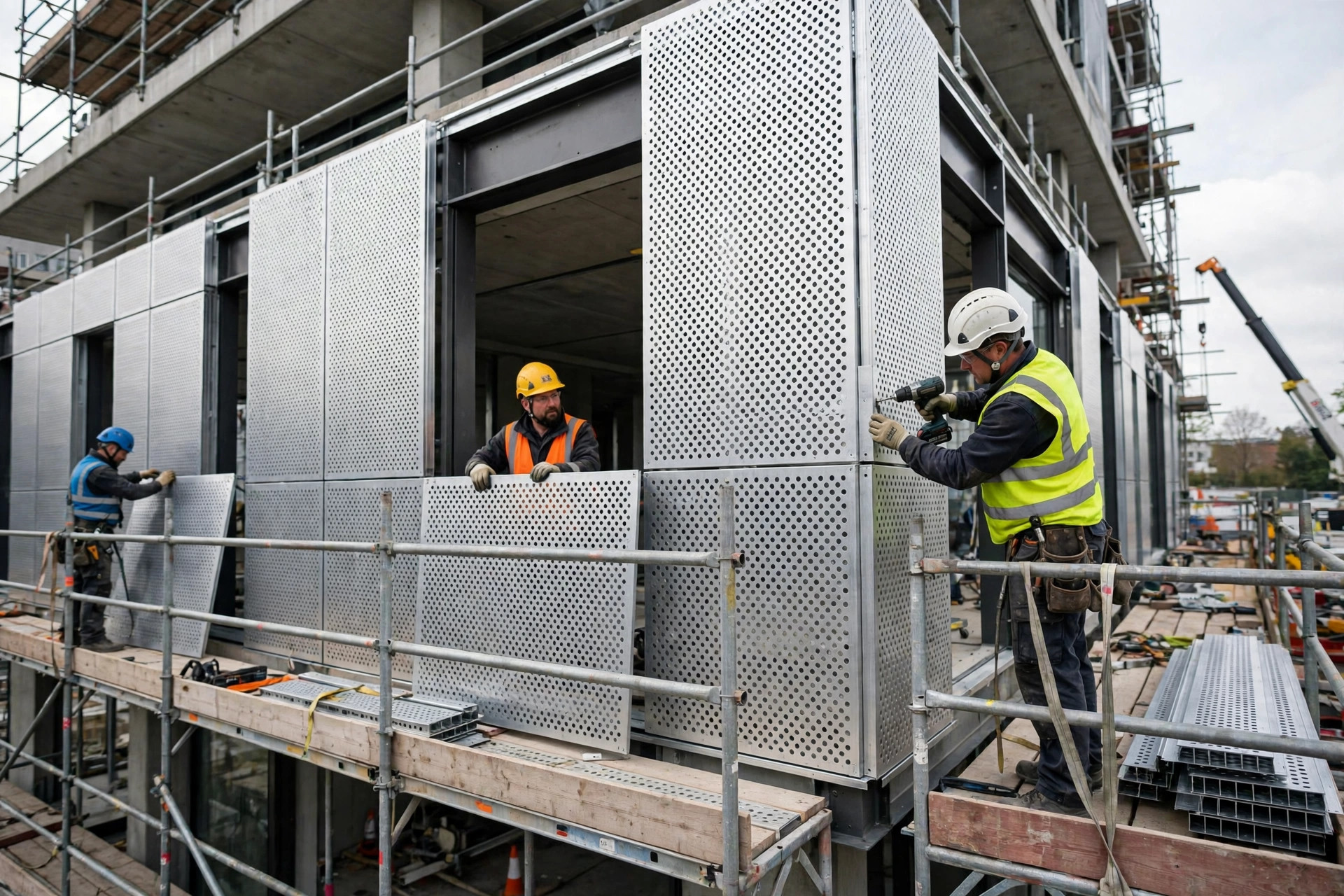
- Stiffening. Large, highly perforated panels often need rear stiffeners or return flanges to stay flat, adding fabrication steps.
For a public market reference: listings for carved and perforated aluminum panels on Alibaba and Accio cluster around $15–$65 per square meter, varying with thickness and pattern complexity. That is a market price band drawn from public listings, not a factory quotation — your project’s price will depend on the six factors above and on quantity. (For comparison, US residential metal siding installs at roughly $9–$17 per square foot according to 2026 Fixr/Angi data, though that figure covers installed residential siding, not commercial facade panels.)
The Performance Payoff: Sun Shading, Ventilation, and Daylight
The extra fabrication cost buys measurable performance. Perforated panels are specified for three jobs that solid panels cannot do:
- Sun shading. Panels at 30–50% open area cut solar heat gain on glazed facades while preserving outward views — a staple of energy-conscious commercial design in hot climates.
- Ventilation. Parking structures, equipment enclosures, and mechanical screens use perforated skins to move air freely while keeping a clean architectural face.
- Daylight control. Graduated perforation — dense at the sill, open at the head — can bounce daylight deep into interiors while blocking low-angle glare.
The trade-off runs both ways: higher open area admits more air and light but offers less weather resistance, less privacy, and lower impact strength. Specifying more openness than the application needs is paying twice — once in fabrication cost and again in lost performance.
Choosing the Right Open Area for Your Building Type
- 20–35% open area: decorative feature walls, column covers, and interior soffits. Moderate shading and privacy, with 2.0–2.5mm sheet usually rigid enough for typical spans.
- 35–50% open area: solar shading screens, parking garage facades, and equipment screening. Expect 2.5–3.0mm sheet for wind-load spans on exposed elevations.
- Above 50% open area: mostly decorative screens and interior partitions. Rarely specified for weather-exposed facades, where rigidity and weather-tightness matter more than openness.
One practical constraint: standard solid aluminum sheet tops out around 1300 × 4000mm, so large perforated panels with high open area may need rear stiffeners to meet flatness expectations. Alloys such as 1001 or 3003-H24 are the workhorses for these panels, with PVDF, powder-coat, or roll-coated finishes protecting every perforation edge.
Getting an Accurate, Comparable Quote
To receive quotes you can actually compare, send each supplier the same package: panel dimensions and quantities; open-area percentage with a pattern drawing (CAD or dimensioned PDF); hole diameter and pitch; sheet thickness; alloy and temper; finish type and color; and any stiffener or return-flange requirements. Without the pattern definition, two suppliers will assume two different hole counts — and you will get two different prices for what looks like the same panel.
Perforated aluminum panels reward precise specification: the right pattern density gives you the shading, airflow, and appearance the project needs without paying for punching time you do not. Browse perforated panel options at juchangalu.com, or send your drawings for a detailed quotation matched to your pattern and performance requirements.