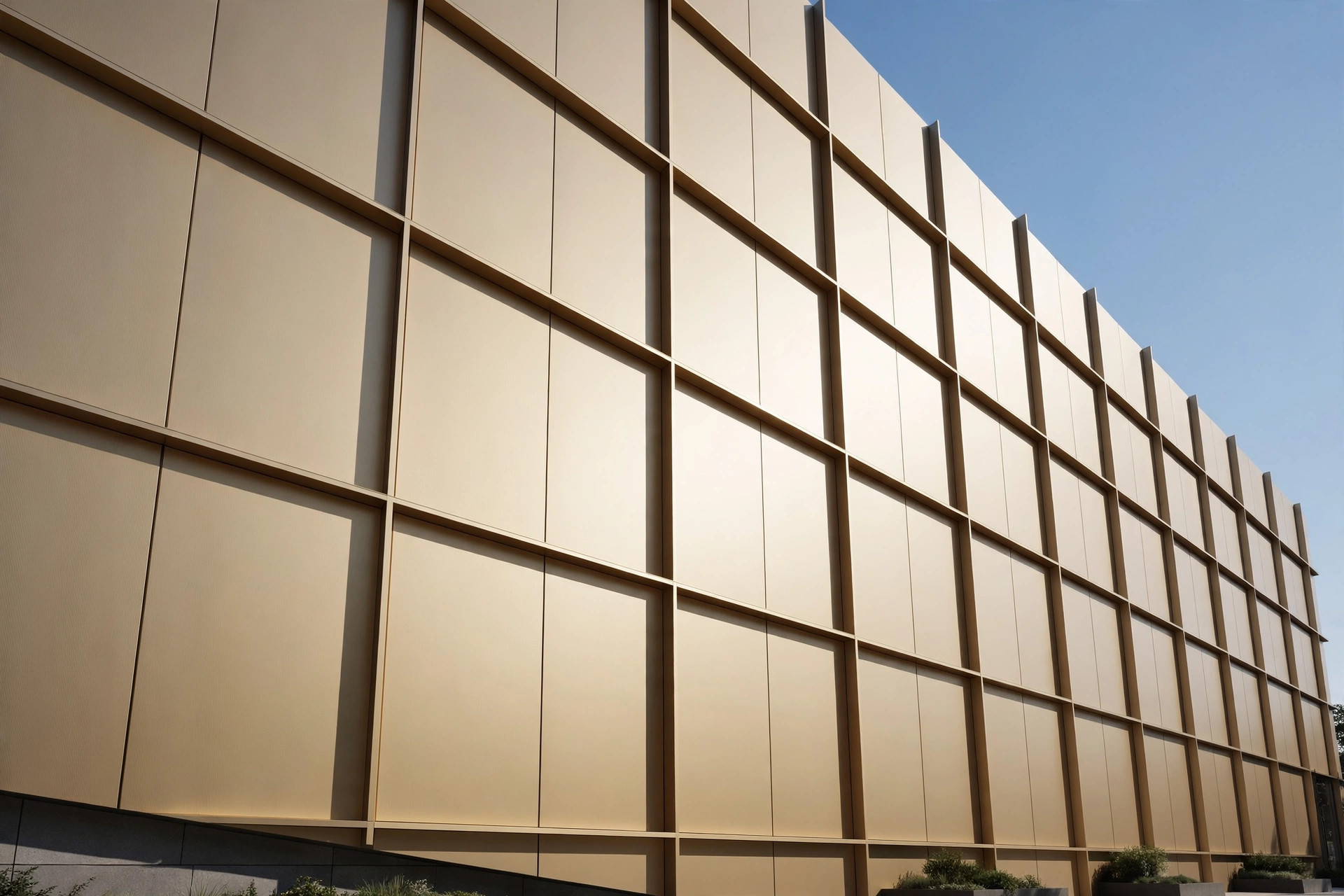
For US distributors and building-material wholesalers, solid aluminum facade panels have become one of the most attractive product lines to add in recent years. Demand is steady, project values are high, and a growing number of contractors actively look for reliable local suppliers instead of importing panel by panel. But there is a wide gap between reselling generic panels and building a profitable, defensible panel business. The distributors who do it best follow one strategy: sourcing solid aluminum panels factory-direct under their own brand.
This guide explains how private-label and OEM sourcing of aluminum facade panels works, what specifications your sales team needs to understand, and how to evaluate a factory partner before you commit your brand to their product.
Why Solid Aluminum Panels Are a Strong Product for US Distributors
Before talking about sourcing, it is worth understanding why this product category fits wholesale distribution so well:
- Non-combustible by nature. Solid aluminum panels contain no plastic core, so they sidestep the fire-performance concerns that have made aluminum composite panels (ACP) harder to specify on many US projects.
- Premium finish options. PVDF fluorocarbon coatings deliver the rich, consistent color that architects expect on high-end facades, while powder coating covers cost-sensitive segments.
- Project-driven repeat business. Once a contractor trusts your panels on one job, they come back for the next one — and bring their architect contacts with them.
- Customization creates stickiness. Sizes, colors, and perforation patterns differ per project, which makes your relationship with a flexible factory a real competitive moat.
What “Factory-Direct Sourcing” Actually Means
Factory-direct sourcing is not simply buying panels cheap and marking them up. A capable aluminum panel factory works more like your production partner: you provide the drawings, project schedule, and finish requirements, and the factory cuts, routes, welds, and finishes the panels to your specification. Depending on the arrangement, the factory can:
- Fabricate panels to exact project dimensions, including perforated, curved, and column-cover profiles.
- Apply the specified finish — PVDF, powder coating, or roller coating — in project-matched colors.
- Ship panels with neutral packaging and your own labels, cartons, and documentation, so the product arrives as your brand.
For the distributor, this means carrying a full custom-panel catalog without owning a fabrication plant. Your value-add is local stock of standard items, project engineering support, and on-time delivery — the factory handles the manufacturing.
Specification Basics Your Sales Team Must Know
You do not need an engineering degree to sell facade panels, but your team should speak the language confidently. The key parameters for solid aluminum panels:
- Thickness. Facade-grade solid aluminum panels are commonly produced in 2.0, 2.5, and 3.0 mm. Thicker panels span longer distances between fixings and resist oil-canning better; 2.0 mm suits small modules and interior use, while 3.0 mm is the workhorse for large exterior cassettes.
- Alloy and temper. Typical facade alloys are 1001 and 3003 in H24 temper — a good balance of formability and strength for routing and folding into cassette shapes.
- Maximum panel size. A typical factory line handles panels up to about 1300 × 4000 mm. Knowing this limit lets your estimators split elevations into realistic modules instead of promising unbuildable sizes.
- Finish. PVDF fluorocarbon coating is the premium choice for exterior facades with demanding color-retention requirements; powder coating suits budget-conscious projects and interior applications; roller coating is an efficient option for flat panels in standard colors.
When a contractor asks whether your panels “meet spec,” the fastest way to lose credibility is to guess. Train your team on these basics and keep a one-page spec sheet on hand for every product line you carry.
Branding and Packaging: Making the Factory’s Output Your Product
Private-label sourcing only works if the end customer experiences your brand, not the factory’s. Discuss these points with your factory partner up front:
- Neutral factory identification. Panels, protective film, and cartons should carry your brand marks — or none at all — rather than the manufacturer’s name.
- Consistent documentation. Packing lists, panel layout drawings, and installation references should arrive under your letterhead format so your installer customers file them as your product.
- Color batch control. Facade panels are often installed in large visible areas where even slight color variation between batches is noticeable. Agree on how the factory controls color consistency across production runs for a single project.
A Practical Quality Checklist for Auditing a Factory Partner
Your brand is on the box, so the factory’s quality is your reputation. Before committing to a supplier, verify — on site or through documented evidence — the following:
- Alloy and temper traceability on incoming coil or sheet material.
- Coating process control: pretreatment, primer, and topcoat application, with coating thickness measurement records.
- Flatness and dimensional tolerance checks after routing, folding, and welding.
- Protective film application that actually survives ocean freight and site handling without leaving residue.
- Export packing designed for containers: edge protection, moisture barriers, and palletization that prevent panel-to-panel abrasion.
Ask for finished-project references or sample panels you can bend, scratch, and weather-test yourself. A factory confident in its product will welcome that scrutiny.
Common Pitfalls First-Time Panel Distributors Should Avoid
- Comparing only the per-panel price. Fabrication details — stiffener layout, corner welding, cassette folding — differ between factories and change what “a panel” actually includes. Compare like for like, including forming and finishing.
- Ignoring the finish lead items. Custom colors and PVDF coatings are scheduled around coating-line runs; build finish production into your project timeline from day one.
- Skipping a sample approval loop. Always approve a physical finish sample before full production, and keep a retained sample to settle any later color disputes.
- Underestimating logistics damage. Panels are large, flat, and unforgiving. Poor container packing destroys more margin than any price negotiation saves — specify packing requirements explicitly.
How to Start: A Low-Risk Path into Panel Distribution
You do not need to sign a national exclusivity deal on day one. A sensible sequence looks like this:
- Step 1 — Get samples. Request finish samples in your target colors and a small fabricated panel to evaluate workmanship.
- Step 2 — Run a pilot project. Quote one real project through the factory, from drawings to delivery, and measure communication quality, accuracy, and packing as carefully as price.
- Step 3 — Stock the standards. Once the partnership proves itself, keep popular thicknesses, alloys, and standard colors in local stock for fast contractor turnaround, while project-specific panels flow factory-direct.
Each step builds the operational muscle — quoting, logistics, and after-sales support — that turns a product line into a business.
Final Thoughts
Solid aluminum facade panels reward distributors who combine manufacturing partnerships with local service. Choose a factory that treats you as a partner rather than an order number, learn the specification language your customers speak, and protect your brand with real quality control. Done right, private-label panels become the highest-margin line in your catalog.
To explore solid aluminum facade panel options for your distribution business, browse the product range at juchangalu.com — or send your project drawings for a detailed quotation tailored to your specifications.