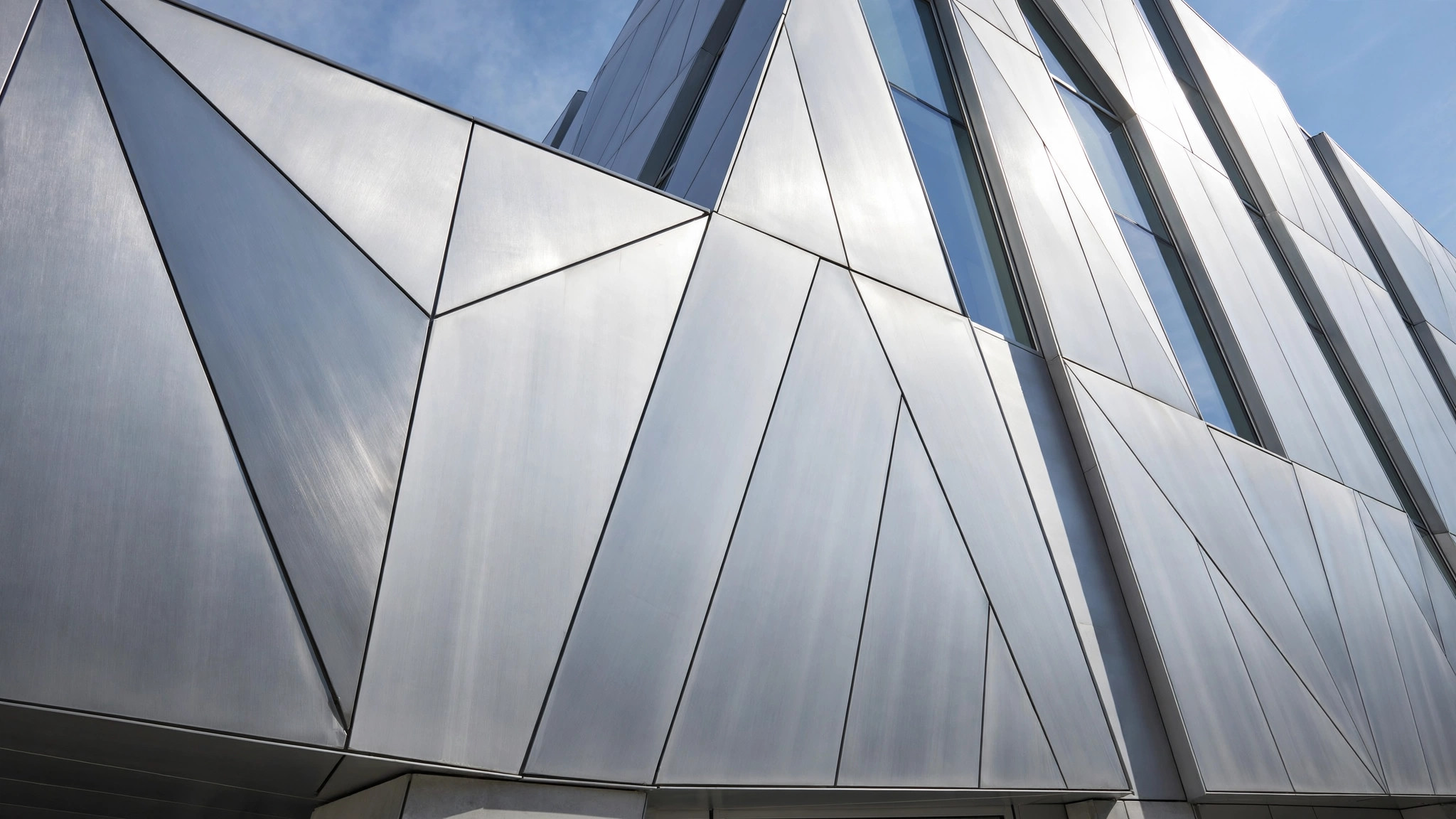
When architects and contractors compare aluminum facade panels, most of the conversation centers on thickness, alloy, and price. Yet the finish on the panel surface — the coating — is what the world actually sees and what determines how the building looks after ten, fifteen, or twenty years. Choosing the right coating is less about aesthetics on day one and more about how those aesthetics hold up over time.
For solid aluminum panels used in curtain wall and rainscreen applications, two coating technologies dominate the market: PVDF (polyvinylidene fluoride) coatings and polyester powder coating. Each has clear strengths. Understanding the differences will help you specify the right finish for each project and avoid costly repainting or premature fading.
What Is PVDF Coating?
PVDF, also known by the trade name Kynar, is a fluoropolymer-based coating applied as a liquid spray. A typical high-performance PVDF finish is a multi-layer system: a primer, a color coat, and a clear topcoat. The resin content in premium PVDF coatings is typically 70% Kynar resin, which is the key to their weathering performance.
PVDF is applied in a controlled factory line with baking at high temperature, which cross-links the polymer into an extremely durable film. The result is a coating with excellent resistance to UV radiation, chalking, fading, and chemical exposure. On aluminum veneer panels for building exteriors, PVDF is widely considered the premium option — particularly in harsh climates with intense sunlight, coastal salt spray, or industrial pollution.
What Is Powder Coating?
Powder coating is a dry finishing process: an electrostatically charged polyester powder is sprayed onto the aluminum panel and cured in an oven. The most common type for architectural use is polyester powder coating (TGIC or HAA polyester), sometimes specified as “architectural grade” powder.
Powder coating produces a thick, uniform, hard film with a wide range of colors and finishes — gloss, satin, matte, textured, and metallic effects. It is an efficient process with minimal waste, and it is excellent for projects where budget discipline matters and the environmental exposure is moderate.
Head-to-Head: PVDF vs Powder Coating
1. Color Retention and UV Resistance
This is where PVDF earns its reputation. Fluoropolymer coatings are exceptionally resistant to UV degradation. Dark colors — charcoal, bronze, deep blue, forest green — which fade fastest under sunlight, hold their color dramatically longer with PVDF than with polyester powder coating. If the design calls for rich, saturated colors on the facade, PVDF is the safer long-term choice.
Powder coating has improved over the years with “super-durable” polyester formulations, which close part of the gap. For lighter colors like white, silver, and champagne in mild climates, powder coating’s color retention is perfectly adequate.
2. Chalking and Erosion
Chalking — the powdery white residue that appears on the surface as the coating degrades — is the enemy of long facade life. PVDF coatings resist chalking far better than standard polyester powder. Under accelerated weathering tests, PVDF surfaces show minimal gloss loss and chalking after thousands of hours, while standard powder coatings show visibly more degradation. Less chalking means the panel keeps its depth of color and sheen year after year.
3. Corrosion and Chemical Resistance
Both coatings protect the aluminum substrate well when applied to properly pretreated panels (cleaning, chromate or chrome-free conversion coating, primer). PVDF offers stronger resistance to acids, alkalis, and industrial chemicals, which matters for buildings near factories, ports, or highways. Powder coating provides good general corrosion resistance for typical urban and suburban environments.
4. Color Range and Special Effects
Powder coating wins on variety. The process handles metallic effects, textures, pearls, and special finishes easily, and small-batch custom colors are economical. PVDF offers a broad standard color range and excellent color matching consistency, but exotic textures and some metallic effects are harder to achieve with liquid spray systems.
5. Touch-Up and Repairability
Both coatings are factory-applied finishes that are difficult to repair invisibly on site. Small scratches can be touched up with matching paint, but blending a factory PVDF finish in the field is challenging. The best strategy for either system is good detailing that minimizes damage risk, plus ordering a small quantity of spare panels with the initial order for future replacement if needed.
6. Cost
PVDF coating is the more expensive process: multi-layer spray application, controlled baking, and premium resin drive higher unit cost. Powder coating is more economical per square meter. The practical approach is to weigh the cost premium against the project context — a flagship headquarters in a tropical or coastal city justifies PVDF; a budget-conscious commercial building in a mild inland climate may be perfectly served by quality powder coating.
How to Specify the Right Coating for Your Project
Use this decision framework when working with your panel manufacturer:
- Harsh climate, strong sun, or coastal exposure: Specify PVDF. The color retention and chalking resistance pay for themselves.
- Dark or saturated facade colors: Specify PVDF. These fade fastest and benefit most from fluoropolymer protection.
- Mild climate, light colors, budget-sensitive project: Architectural-grade powder coating is a sound, economical choice.
- Special textures or metallic effects: Powder coating offers more finish variety at reasonable cost.
- Confirm the process details: Ask about pretreatment, primer, film thickness, and curing. A properly pretreated panel with good powder coating will outperform a poorly pretreated panel with PVDF.
The Panel Matters as Much as the Coating
Coating performance depends on the substrate it sits on. For exterior aluminum facade panels, the industry-standard base is solid aluminum sheet in 2.0mm, 2.5mm, or 3.0mm thickness, using alloys such as 1001 or 3003 (H24 temper). Panel size typically runs up to 1300×4000mm. Thicker panels and proper stiffening ribs keep the surface flat, and a flat surface is what lets any coating — PVDF or powder — look its best over decades.
Also confirm that your supplier applies the coating to the formed, bent panels rather than cutting from pre-coated sheet: edge cut from pre-coated stock exposes bare aluminum that needs separate treatment, while factory-coated finished panels keep edge protection consistent.
The Bottom Line
PVDF and powder coating are not a good-versus-bad choice; they are different tools for different jobs. PVDF is the premium finish for demanding environments, dark colors, and long-design-life projects. Powder coating is the efficient, versatile finish for moderate climates and budget-conscious builds. Specify based on the project’s real exposure, color palette, and design life — and apply either finish to a properly engineered panel.
Planning a facade project? Browse products at juchangalu.com, or send drawings for a detailed quotation tailored to your specifications.