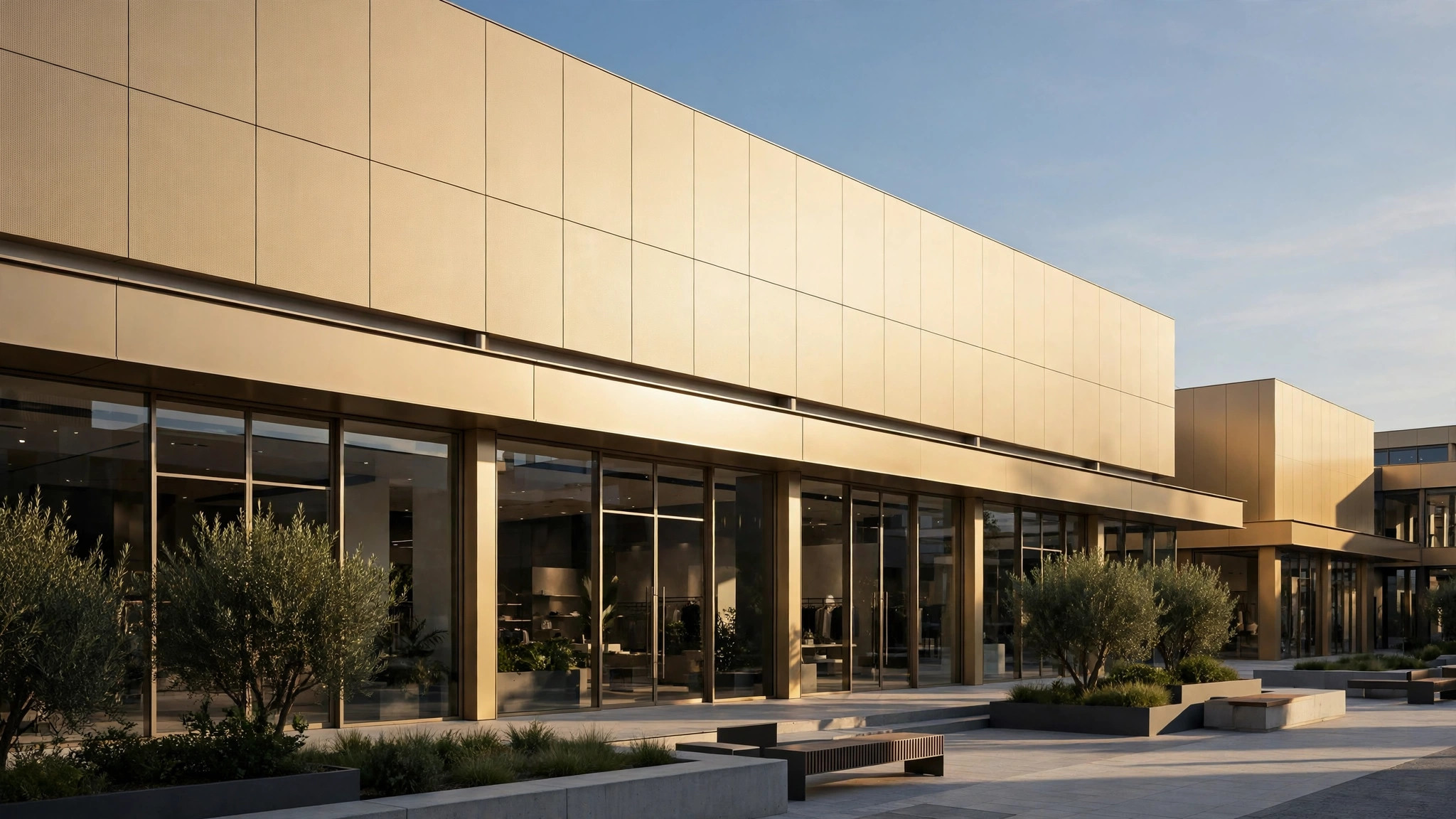
For a retail chain, the storefront is the brand. A customer should recognize a location from across the parking lot—same color, same fascia profile, same clean lines—whether the store is in Dallas, Denver, or Detroit. That consistency is easy to promise in a brand manual and hard to deliver across dozens or hundreds of construction sites, each with different contractors, climates, and schedules. Aluminum facade panels have become the go-to cladding for chain rollouts precisely because they solve the consistency problem: a factory-controlled finish, repeatable panel geometry, and a system that can be reproduced location after location.
This guide explains how retail chains use solid aluminum facade panels to roll out consistent storefronts, what to standardize in a storefront kit, and what to ask a supplier before the first location breaks ground.
Why Retail Chains Choose Aluminum Facade Panels for Storefronts
A storefront has to do three jobs at once: carry the brand identity, survive daily wear and weather, and install fast enough to keep a rollout schedule. Solid aluminum panels handle all three. The panels are formed from 2.0mm, 2.5mm, or 3.0mm aluminum sheet—alloys 1001 or 3003 H24 are the common choices for facade work—so they are rigid enough for large flat fascia areas yet light enough to mount on standard storefront framing without heavy structural upgrades.
Durability matters too. A storefront faces shopping carts, delivery trucks, pressure washing, and sun exposure year after year. A quality PVDF coating resists chalking and fading, and individual panels can be removed and replaced without disturbing the rest of the facade—useful when a single fascia panel is dented or a store rebrands a color accent.
Brand Consistency Across Hundreds of Locations
The biggest risk in a chain rollout is drift: the fifth store looks slightly different from the first, and by the twentieth the brand color has wandered. Aluminum panel systems fight drift in several ways. First, color is specified by a single code—typically a RAL or custom-matched reference—and every batch is coated to that standard, with color tolerance managed at the factory rather than on site. Second, panel dimensions are set by a standard module, so the fascia height, joint width, and corner details repeat from store to store.
The practical step is to lock a storefront kit before the rollout begins. The kit should define the panel thickness, the coating system, the exact color codes, the joint pattern, the fascia depth, and the corner and coping details. Once the kit is approved—ideally after a full-size mock-up at the first location—every subsequent store orders from the same specification. Changes after the first few stores are expensive, so experienced chains treat the first installation as a pilot and freeze the details before scaling.
Designing a Repeatable Storefront Kit: Panels, Colors, and Details
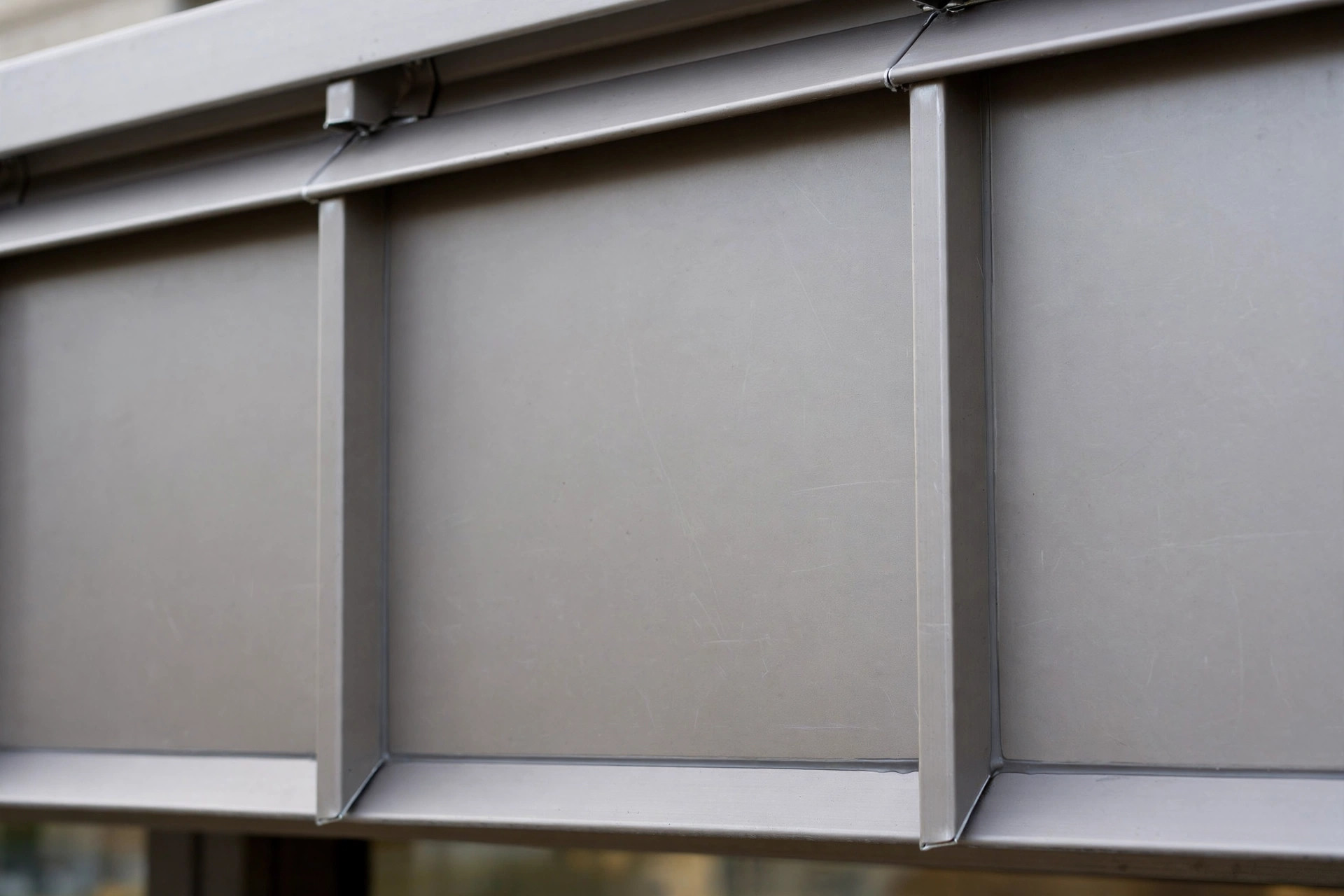
A good storefront kit balances brand identity with buildability. Flat fascia panels in the brand color form the main visual field, usually in 2.5mm or 3.0mm thickness for the crisp, flat appearance a fascia demands. Perforated or carved panels can add texture around entrances or signage zones without changing the base system. Column covers in matching aluminum wrap structural columns at the entry, and soffit panels finish the underside of canopies.
Panel size is a key decision. The conventional maximum single-panel size is around 1300 × 4000mm, but a rollout kit usually standardizes on smaller, repeatable modules that fit common storefront dimensions and ship efficiently. Fewer unique panel sizes mean fewer drawings, fewer chances of error, and faster fabrication for each new store.
Rollout Logistics: Manufacturing, Shipping, and Installation at Scale
A chain rollout is a logistics exercise as much as a design one. Panels are typically produced in batches per store or per group of stores, packed flat with protective film and edge protection, and shipped in containers. Because panels are light relative to their area, a single container can carry a substantial quantity of storefront cladding, which helps keep freight costs predictable across a multi-store program.
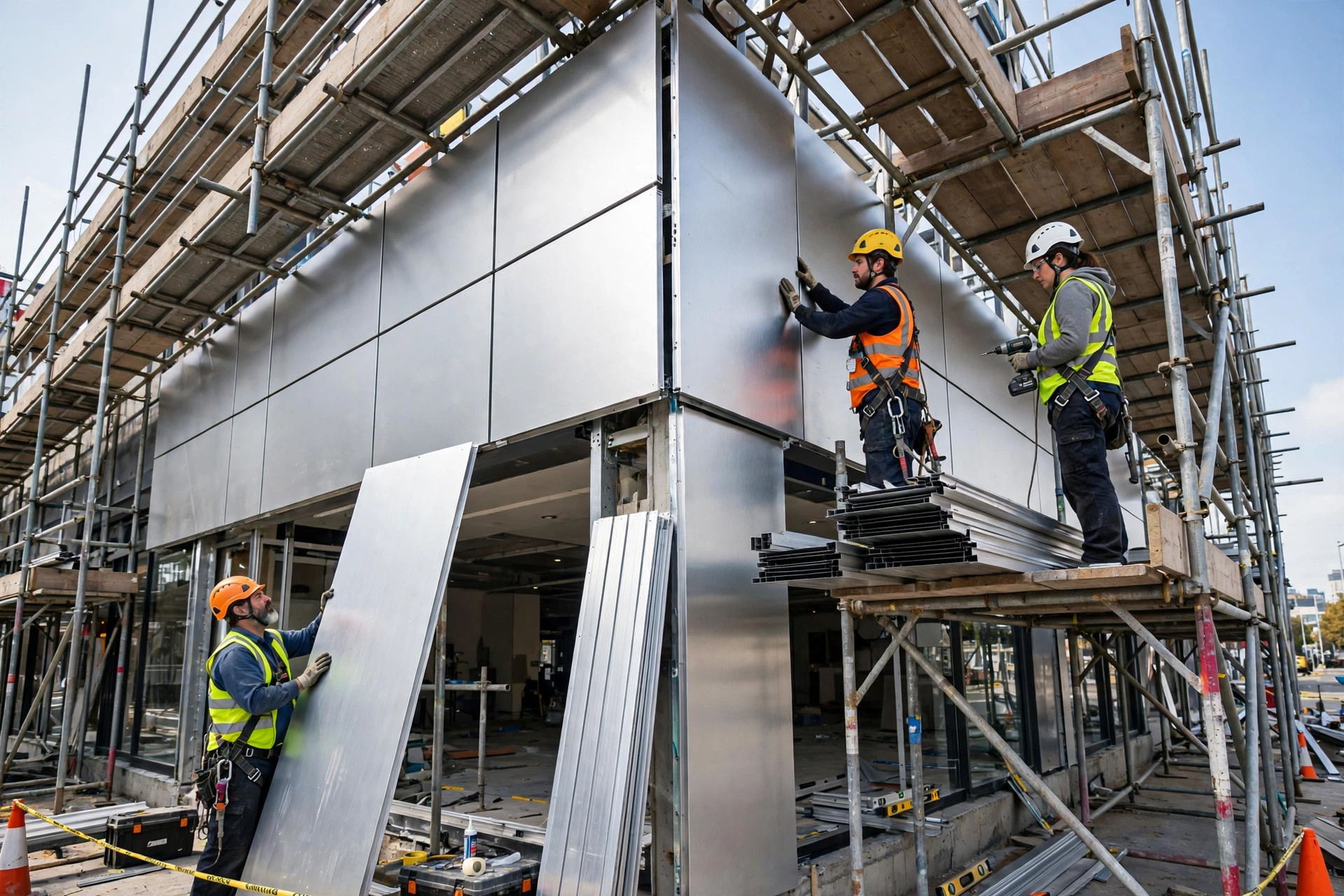
Installation should also be standardized. Cassette-style panel systems with a defined fixing method let different local installers achieve the same result, and a short installation guide with photographs from the pilot store is worth more than a thick specification document. For the first few stores, having the supplier review installation photos helps catch deviations early, before they are repeated twenty times.
Cost Control and Maintenance Over a Multi-Year Rollout
Consistency also pays off financially. A fixed kit means the per-store cladding cost becomes predictable: same panel sizes, same coating, same hardware. The main variables between locations are quantity and freight, not design. That predictability helps franchise owners and developers budget each new store with confidence.
Over a ten-year horizon, the total cost of an aluminum storefront compares favorably with materials that need repainting or frequent repair. The upfront investment buys a stable appearance, and the appearance is the asset: a storefront that still looks new in year eight protects the brand equity the chain spent years building.
What to Ask Your Panel Supplier Before a Chain Rollout
Before committing to a supplier for a multi-store program, buyers should confirm a few essentials. Can the factory hold a single color standard across many batches over several years, and can it supply a retained sample for reference? Can it produce the full kit—fascia panels, column covers, soffits, and coping—from one coating run so colors match across components? What quality checks are performed before shipment, and how are panels packed to survive container transport? And can the supplier support repeat orders of the same specification without re-engineering each time?
Retail storefront cladding is ultimately a brand decision made in metal. Chains that standardize early, lock a kit, and choose a supplier that can repeat it faithfully end up with the rarest thing in retail construction: a hundred stores that actually look like one brand. Browse the aluminum facade panel range at juchangalu.com, or send your storefront drawings for a detailed quotation.