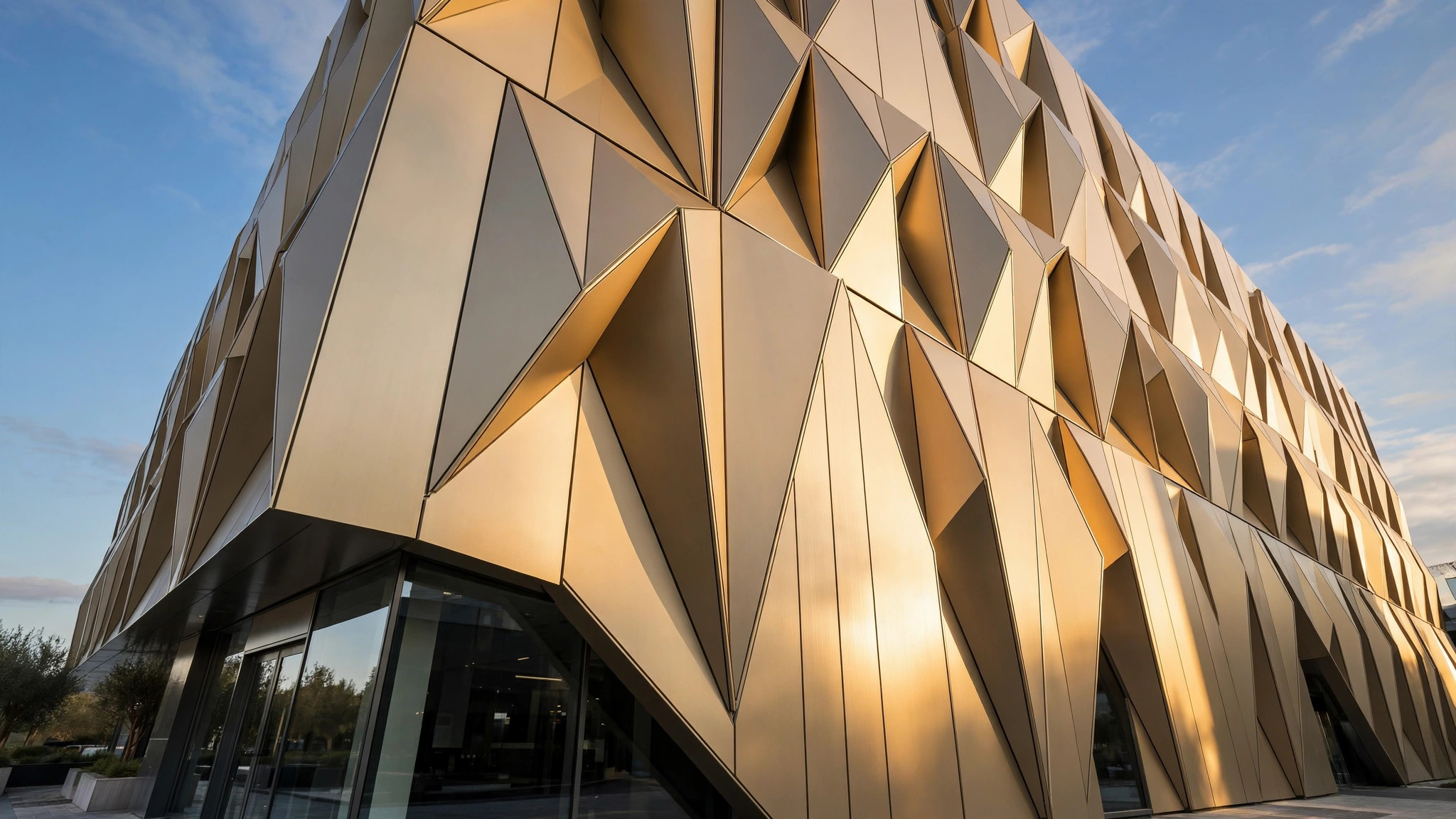
Selecting solid aluminum panels for a building facade is not just a procurement decision — it shapes the project’s appearance, durability, and maintenance costs for decades. Whether you are a contractor bidding on a curtain wall project, an architect specifying materials, or a distributor stocking panels for your dealers, a structured buying checklist helps you compare suppliers on facts rather than marketing claims. This guide walks through the key factors to evaluate before you place an order.
1. Start with the Right Thickness
Solid aluminum facade panels are typically available in 2.0mm, 2.5mm, and 3.0mm thicknesses. The choice depends on panel size, span between supports, and wind-load requirements:
- 2.0mm — suitable for smaller cassettes, soffits, fascia, and interior cladding where structural demands are modest.
- 2.5mm — the most common choice for standard exterior wall panels, balancing rigidity and weight.
- 3.0mm — recommended for oversized panels, high-wind zones, and projects with strict flatness requirements.
Ask the supplier to confirm which thickness they recommend for your largest panel size, and whether the panels are CNC-formed into cassettes with folded edges and stiffeners — proper forming matters as much as raw thickness.
2. Check the Alloy and Temper
For architectural cladding, the commonly specified alloys are 1001 and 3003 in H24 temper. 3003-H24 offers higher strength and better formability than pure aluminum, which makes it a reliable choice for folded cassette panels that must hold their shape over time. When comparing quotes, verify that the alloy and temper are stated on the mill certificate — not just in the marketing brochure. Panels made from recycled or unspecified alloy stock can vary in mechanical properties and may develop “oil canning” (visible waviness) after installation.
3. Compare Surface Finishes Honestly
The finish determines how the facade looks in year one — and in year fifteen. The three standard coating options for aluminum facade panels are:
- PVDF (fluorocarbon) coating — the premium option for exterior facades, prized for color retention, chalk resistance, and weathering performance in harsh sun, salt air, and urban pollution.
- Powder coating — a durable, cost-effective finish available in a wide color range; well suited to many commercial projects and interior applications.
- Roller coating — an efficient coil-coating process that delivers consistent film thickness for standard colors.
For a signature facade or a project with a long design life, PVDF is usually worth the premium. For budget-driven commercial work, powder coating often delivers the best value. Ask the supplier for coating thickness data and weathering test references rather than taking “premium quality” at face value.
4. Confirm Sizes and Fabrication Capability
A standard production ceiling for solid aluminum panels is around 1300 × 4000mm per panel. Beyond confirming the maximum size, evaluate the factory’s fabrication depth:
- Can they produce cassettes with folded edges, corner returns, and welded or mechanically fixed corners?
- Do they cut, punch, and drill for perforated or decorative patterns from your CAD drawings?
- Can they handle curved or tapered panels for non-rectangular facade designs?
A supplier that fabricates in-house from your shop drawings — rather than shipping flat sheets for a third party to form — gives you one point of responsibility and tighter quality control.
5. Evaluate Color and Batch Consistency
Color variation between batches is one of the most common complaints in facade projects. Before committing:
- Request physical color chips or a sample panel in your specified RAL or custom color.
- Ask whether panels for one elevation are coated in a single production run — this is the simplest way to avoid visible shade differences.
- For metallic and anodized-look finishes, confirm how the supplier controls directional consistency, since these finishes are more sensitive to viewing angle.
6. Look Past the Unit Price
The cheapest quote per square meter is rarely the cheapest project. Factor in:
- Yield and waste — does the supplier optimize cutting layouts for your panel schedule?
- Packaging and freight — are panels protected for sea freight (film, edge protection, seaworthy crating)?
- Documentation — mill certificates, coating test data, and installation drawings included with the shipment save time at customs and on site.
- Communication — a factory team that responds to technical questions quickly will save you more than a small price difference ever could.
Request a detailed, itemized quotation that breaks out panels, fabrication, finishing, packaging, and freight separately — this makes supplier comparison honest and straightforward.
7. Ask for Proof, Not Promises
A credible aluminum panel manufacturer should be able to show you:
- Photos or case references of completed facade projects using their panels.
- Sample panels or a mock-up for your review before mass production.
- Clear production and quality-control procedures, from incoming coil inspection to final packing.
If a supplier cannot provide samples or project references, treat that as a signal — not a dealbreaker, but a reason to dig deeper.
A Simple Buyer’s Checklist
Before you sign a purchase order for solid aluminum panels, confirm you have answers to these questions:
- Thickness, alloy, and temper specified and certified?
- Coating type and color matched to the project’s exposure and design life?
- Maximum panel size covers your largest cassette?
- Fabrication (folding, perforation, curving) done in-house from your drawings?
- One production batch per elevation for color consistency?
- Itemized quote separating panels, fabrication, finishing, packaging, and freight?
- Samples approved and project references reviewed?
Work through this list with two or three shortlisted suppliers, and the right partner will stand out quickly.
Planning a facade project? Browse the product range at juchangalu.com — or send your drawings for a detailed, itemized quotation.