作者: wpusername2200

  • Aluminum Ingot Daily — October 13, 2026: A00 Fell

    Aluminum Ingot Daily — October 13, 2026: A00 Fell

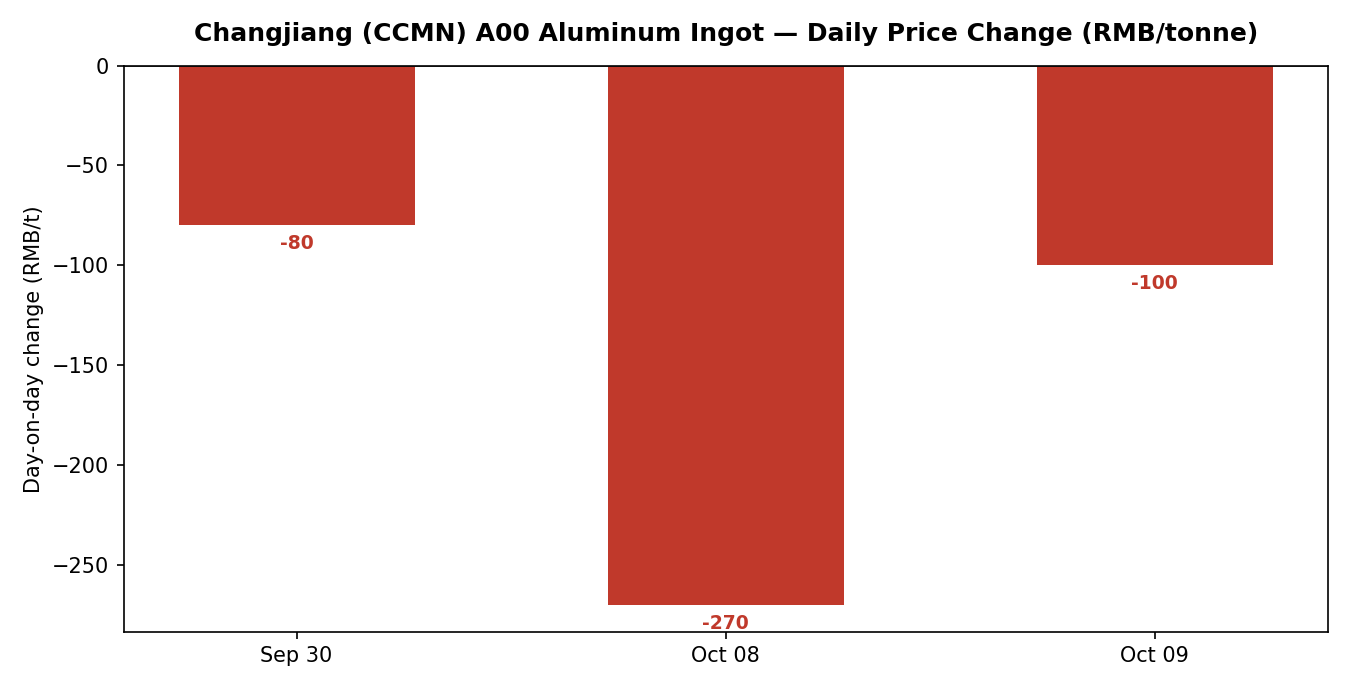
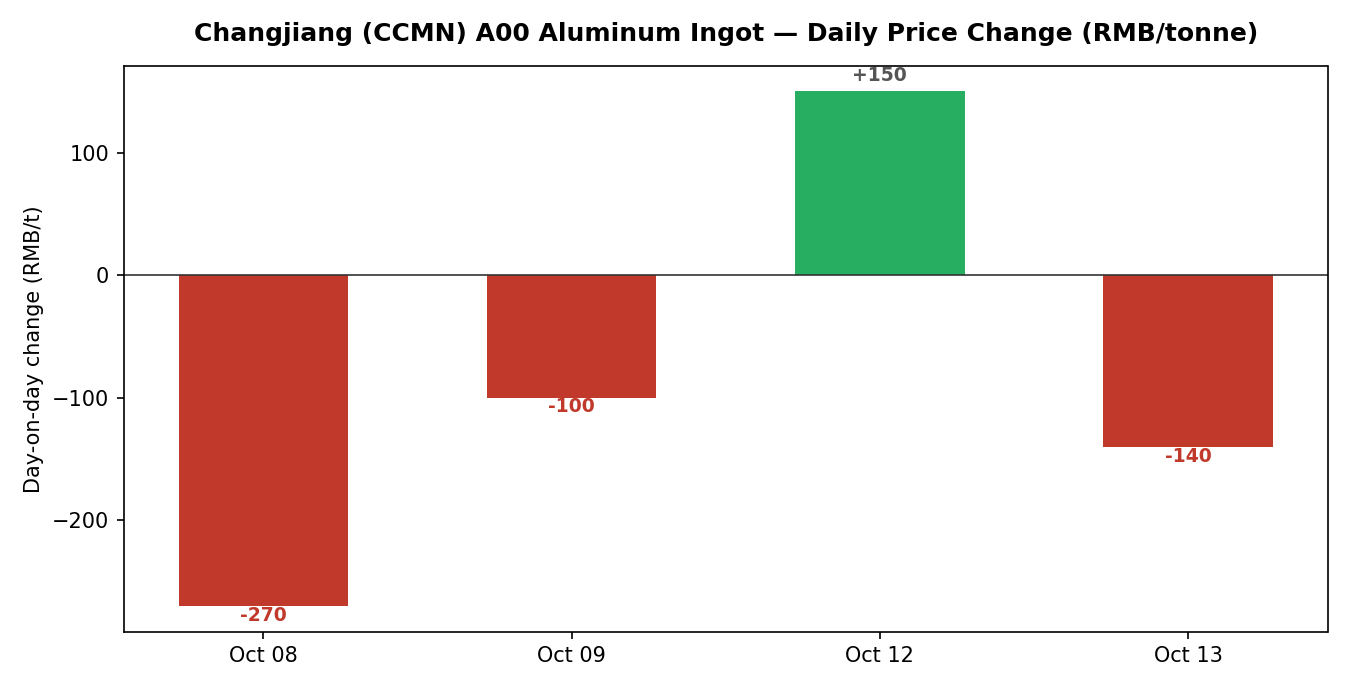
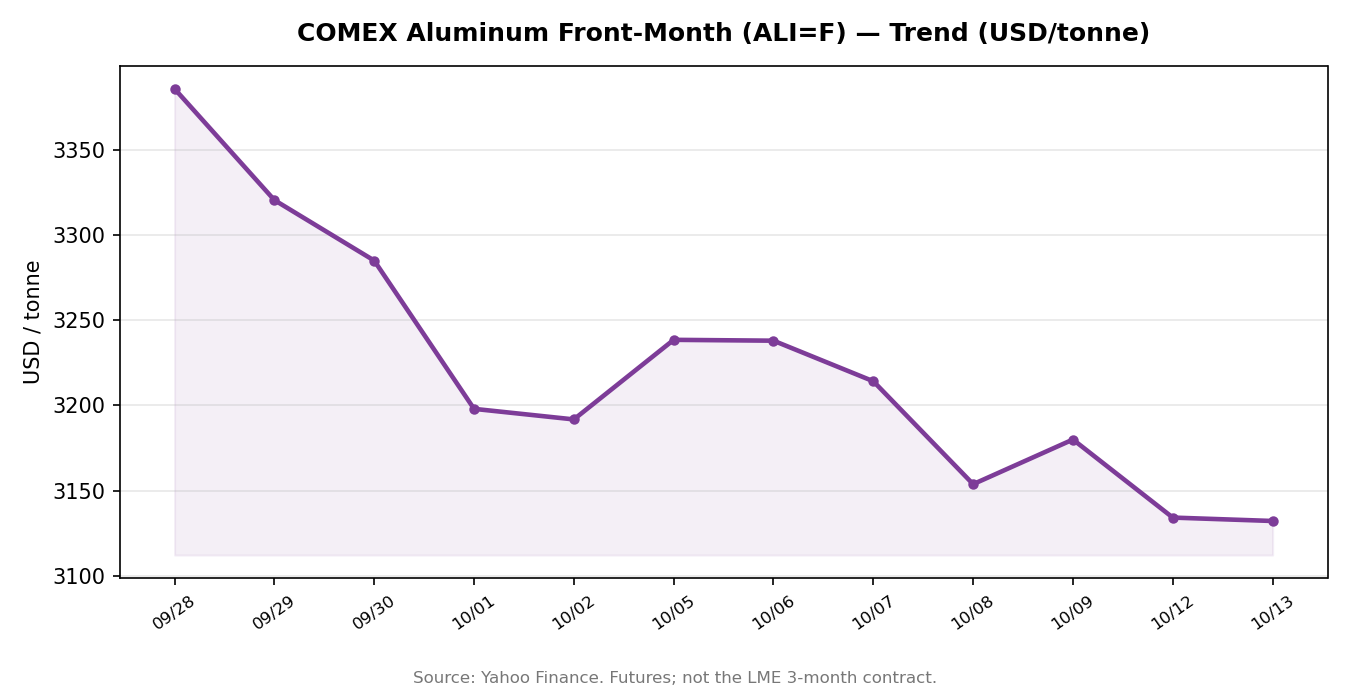
    October 13, 2026 — China’s domestic aluminum ingot market fell on the latest session. The Changjiang Nonferrous Metals Network (CCMN) A00 aluminum ingot benchmark moved -140 RMB/tonne day-on-day. Offshore, COMEX aluminum front-month futures closed at USD 3,132.2/t (-2.0, -0.06%).

    Cross-Platform Price Snapshot

    Benchmark Latest quote Day-on-day Source
    CCMN A00 aluminum ingot, spot (tax incl.) day change -140 RMB/t* -140 RMB/t Changjiang Nonferrous Metals Network
    COMEX aluminum, front month USD 3,132.2/t -2.0 USD/t (-0.06%) Yahoo Finance

    *CCMN’s absolute spot levels are member-only; day-on-day changes are public.

    CCMN A00: Recent Daily Changes

    Changjiang A00 aluminum ingot daily price changes

    Offshore: COMEX Trend

    COMEX aluminum front-month trend

    What It Means for Panel Buyers

    For buyers of aluminum façade panels and sheet, ingot is the single largest cost input. Sustained moves in the ingot benchmark typically feed through to mill and fabricator pricing within one to two quotation cycles. Buyers with Q4 project pipelines may want to request fresh quotes when the trend favors them — while remembering that surface treatment (PVDF, powder coating) and fabrication complexity still dominate the final panel price.

    Get this briefing every morning

    We publish a short aluminum ingot market update like this one every trading day — CCMN spot moves, offshore futures, and the charts that matter.

    Subscribe free by email →

    Data Notes

    • CCMN day-on-day changes are taken directly from CCMN’s daily A00 aluminum ingot reports (alu.ccmn.cn).
    • COMEX front-month prices via Yahoo Finance (futures contract, not LME 3-month).

    This briefing is for information only and does not constitute investment advice.

  • Perforated Aluminum Façade Panels: A Practical Specification Guide for Architects and Contractors

    Perforated Aluminum Façade Panels: A Practical Specification Guide for Architects and Contractors

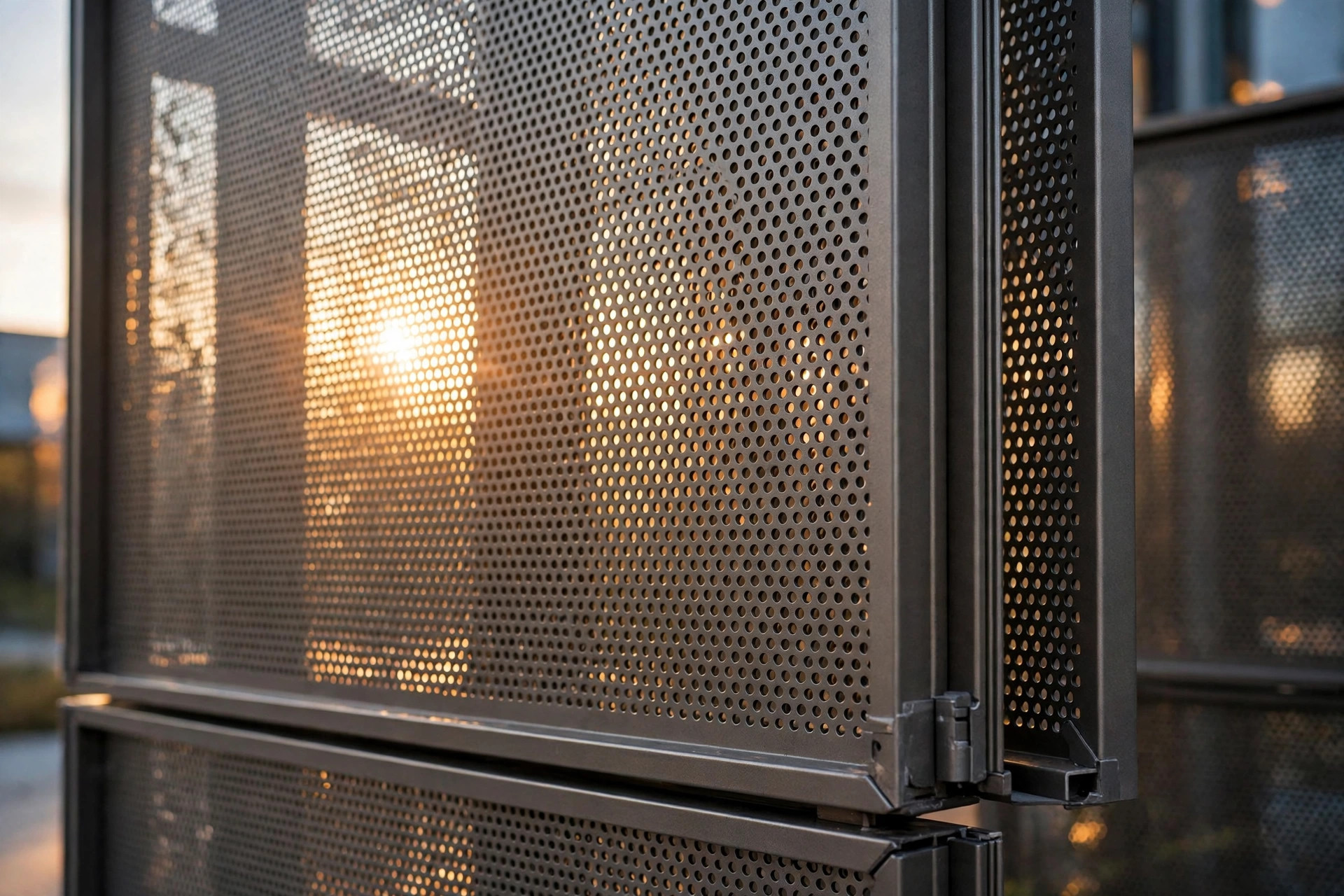
    Perforated aluminum façade panels are reshaping how American architects approach building envelopes. By punching controlled patterns of holes into solid aluminum panels, designers gain a material that shades, ventilates, and beautifies — all in a single skin. Whether you are specifying exterior sunshades, parking garage screens, or interior feature walls, understanding how perforation works with panel thickness, alloy, and finish will help you write cleaner specs and get better results from your fabricator.

    What Perforated Aluminum Panels Are

    A perforated aluminum façade panel starts as a standard solid aluminum panel — typically 2.0, 2.5, or 3.0 mm thick, formed from 1100 or 3003 (H24 temper) aluminum alloy — and is then punched or laser-cut with a repeating pattern of openings. Round holes, slots, triangles, and custom motifs are all possible. The percentage of open area, the hole size, and the pitch (spacing) determine how much light, air, and visibility passes through.

    Because the panel remains a rigid metal sheet after perforation, it keeps the structural behavior contractors already know: it can be folded into cassette trays, hooked onto sub-frames, and finished with the same durable coatings used on solid aluminum panels.

    Why Architects Choose Perforation

    Perforated aluminum panels solve several design problems at once:

    • Solar shading: A perforated screen in front of glazing cuts direct sun while preserving outward views and natural daylight, reducing cooling loads on south- and west-facing façades.
    • Ventilation and airflow: In parking structures, mechanical enclosures, and utility buildings, perforated panels let air move while keeping the envelope visually closed and secure.
    • Privacy and screening: Balcony railings, rooftop terraces, and ground-floor openings get daytime privacy without darkening the spaces behind them.
    • Acoustics: Backed with acoustic insulation, perforated panels act as sound-absorbing wall and ceiling systems — a popular choice for atriums, auditoriums, and transit halls.
    • Branding and identity: Custom perforation patterns can render logos, typography, or graphic motifs at building scale, often with backlighting effects at night.

    Thickness and Alloy: What Works Best

    Perforation removes material, so panel stiffness matters more than with solid panels. In practice, 2.5 mm and 3.0 mm panels are the most common choices for perforated exterior work, providing the rigidity needed for large cassettes without visible deflection. Thinner 2.0 mm stock is widely used for interior perforated panels, where spans are shorter and wind loads do not apply.

    Alloy choice follows the same logic as solid aluminum panels: 1100 aluminum offers excellent formability for complex folds, while 3003 in H24 temper delivers higher strength — useful when the perforation pattern leaves a high percentage of open area. Confirm with your fabricator which alloy suits your pattern; highly open designs may require the stronger option to keep panels flat.

    Hole Patterns and Open Area

    Three variables define every perforation pattern: hole shape, hole size, and open area percentage. Standard round holes on staggered centers are the most economical and the fastest to produce. Slotted patterns suit ventilation screens, while larger custom shapes serve graphic and branding designs.

    Open area is the single most important number to specify. Higher open area means more daylight, more airflow, and more see-through — but less stiffness and more visibility into the building at night when interior lights are on. A practical approach is to mock up two or three open-area options at full scale and view them from the distances occupants will actually see them. What looks opaque in a sample board can read as transparent across a plaza.

    Finishes: PVDF, Powder Coating, and Roller Coating

    Perforated aluminum panels accept the same coating systems as solid panels. For exterior work in the US, PVDF (fluoropolymer) coatings are the reference standard for color retention and chalk resistance over decades of sun exposure. Powder coating is a cost-effective alternative for projects where budget matters more than ultra-long-term color stability. Roller coating is common for large-format flat panels with solid colors.

    One detailing note: with backlit designs, consider the interior face of the panel. A reflective or light-colored inner finish improves the glow effect and helps bounce daylight deeper into the space.

    Installation and Detailing Essentials

    Most perforated aluminum façades are installed as cassette or tray systems hung on aluminum sub-frames — the same rain-screen logic as solid aluminum panels, with a ventilated cavity behind. Key detailing points:

    • Support behind openings: Because the panel is partially open, the cavity and everything behind it (insulation, waterproofing, structure) will be partly visible. Specify dark-colored backing materials so they recede visually.
    • Acoustic backing: For sound-absorbing walls, pair the panel with a black acoustic fleece and mineral-wool infill behind it; the perforations let sound reach the absorber.
    • Edge returns: Perforation patterns should stop before fold lines — punched holes too close to a bend can weaken the edge. Ask your fabricator for their minimum margin.
    • Panel size: Perforated panels follow the same fabrication limits as solid ones; standard stock reaches 1300 × 4000 mm, so coordinate pattern repeats with your module grid early.
    • Maintenance: Smooth coated surfaces clean the same way as solid panels. Avoid pressure washers aimed directly into deep perforations, which can drive grime behind the panel.

    Where Perforated Panels Fit in US Projects

    Common applications include parking garage façades (ventilation plus security screening), sunshade screens over curtain walls, mechanical penthouse cladding, transit station canopies, stadium and arena wraps, and interior feature walls and ceilings. Mixed-use developments increasingly use perforated aluminum on retail bases and residential amenity decks to give each level its own texture while keeping one material language.

    A Specifier’s Checklist

    When you send drawings out for quotation, including these items will get you accurate, comparable bids:

    • Alloy and temper (e.g., 3003-H24) and panel thickness (2.0 / 2.5 / 3.0 mm)
    • Perforation pattern drawing: hole shape, size, pitch, and target open area
    • Finish system (PVDF, powder coating, or roller coating) and color reference
    • Cassette dimensions and module grid, with pattern repeats aligned
    • Backing requirements: acoustic infill, dark backing, or open cavity
    • Whether panels are flat, folded, or curved — and the bend radii involved

    Perforated aluminum façade panels reward early coordination between architect, fabricator, and installer. Get the pattern, thickness, and finish decisions on paper during design development, and the result is a façade that performs as beautifully as it looks. Browse the product range at juchangalu.com or send your drawings for a detailed quotation.

  • Aluminum Ingot Daily — October 12, 2026: A00 Rose

    Aluminum Ingot Daily — October 12, 2026: A00 Rose

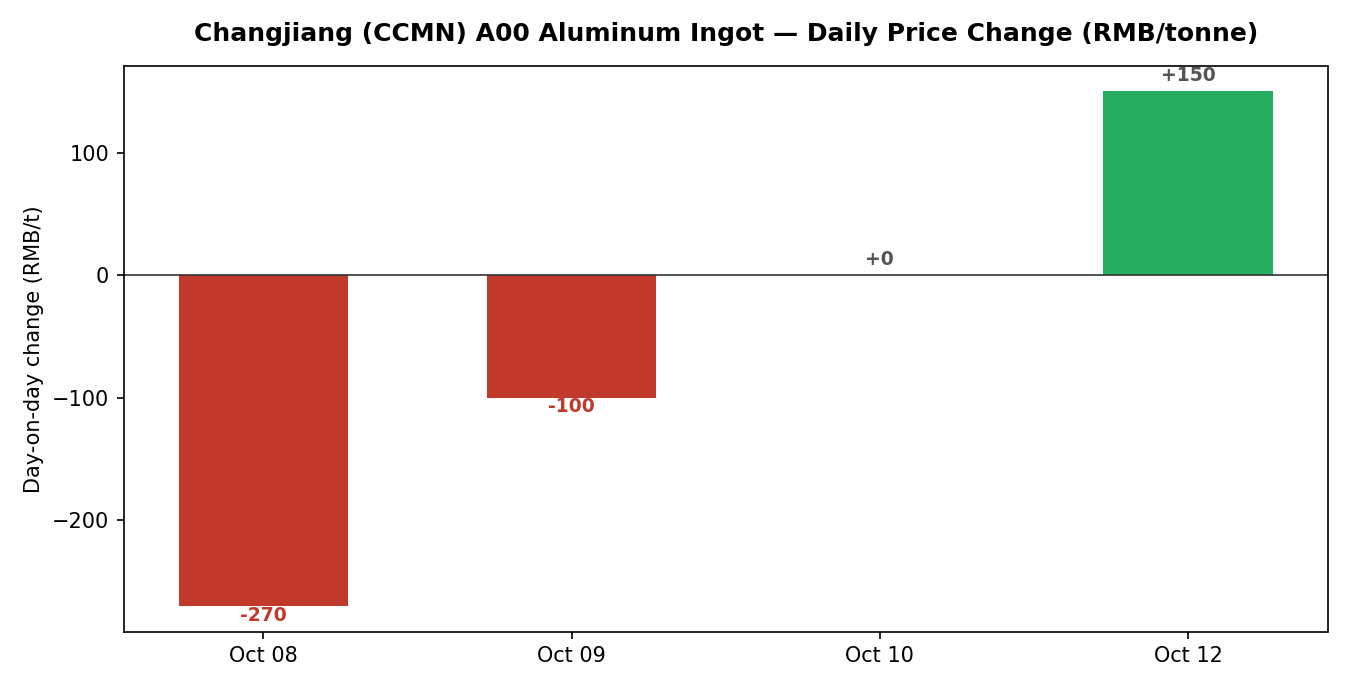
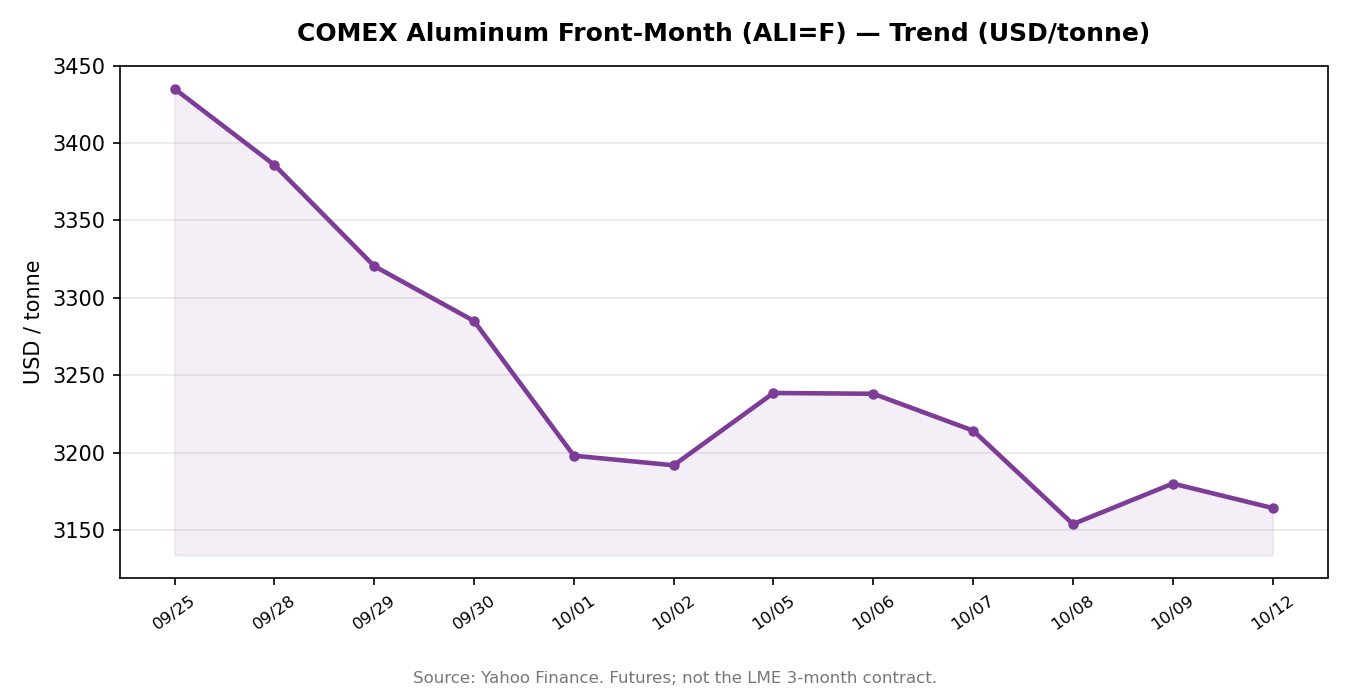
    October 12, 2026 — China’s domestic aluminum ingot market rose on the latest session. The Changjiang Nonferrous Metals Network (CCMN) A00 aluminum ingot benchmark moved +150 RMB/tonne day-on-day. Offshore, COMEX aluminum front-month futures closed at USD 3,164.2/t (-15.8, -0.50%).

    Cross-Platform Price Snapshot

    Benchmark Latest quote Day-on-day Source
    CCMN A00 aluminum ingot, spot (tax incl.) day change +150 RMB/t* +150 RMB/t Changjiang Nonferrous Metals Network
    COMEX aluminum, front month USD 3,164.2/t -15.8 USD/t (-0.50%) Yahoo Finance

    *CCMN’s absolute spot levels are member-only; day-on-day changes are public.

    CCMN A00: Recent Daily Changes

    Changjiang A00 aluminum ingot daily price changes

    Offshore: COMEX Trend

    COMEX aluminum front-month trend

    What It Means for Panel Buyers

    For buyers of aluminum façade panels and sheet, ingot is the single largest cost input. Sustained moves in the ingot benchmark typically feed through to mill and fabricator pricing within one to two quotation cycles. Buyers with Q4 project pipelines may want to request fresh quotes when the trend favors them — while remembering that surface treatment (PVDF, powder coating) and fabrication complexity still dominate the final panel price.

    Get this briefing every morning

    We publish a short aluminum ingot market update like this one every trading day — CCMN spot moves, offshore futures, and the charts that matter.

    Subscribe free by email →

    Data Notes

    • CCMN day-on-day changes are taken directly from CCMN’s daily A00 aluminum ingot reports (alu.ccmn.cn).
    • COMEX front-month prices via Yahoo Finance (futures contract, not LME 3-month).

    This briefing is for information only and does not constitute investment advice.

  • Aluminum Veneer Panels for Interior Applications: Walls, Ceilings, and Columns

    Aluminum Veneer Panels for Interior Applications: Walls, Ceilings, and Columns

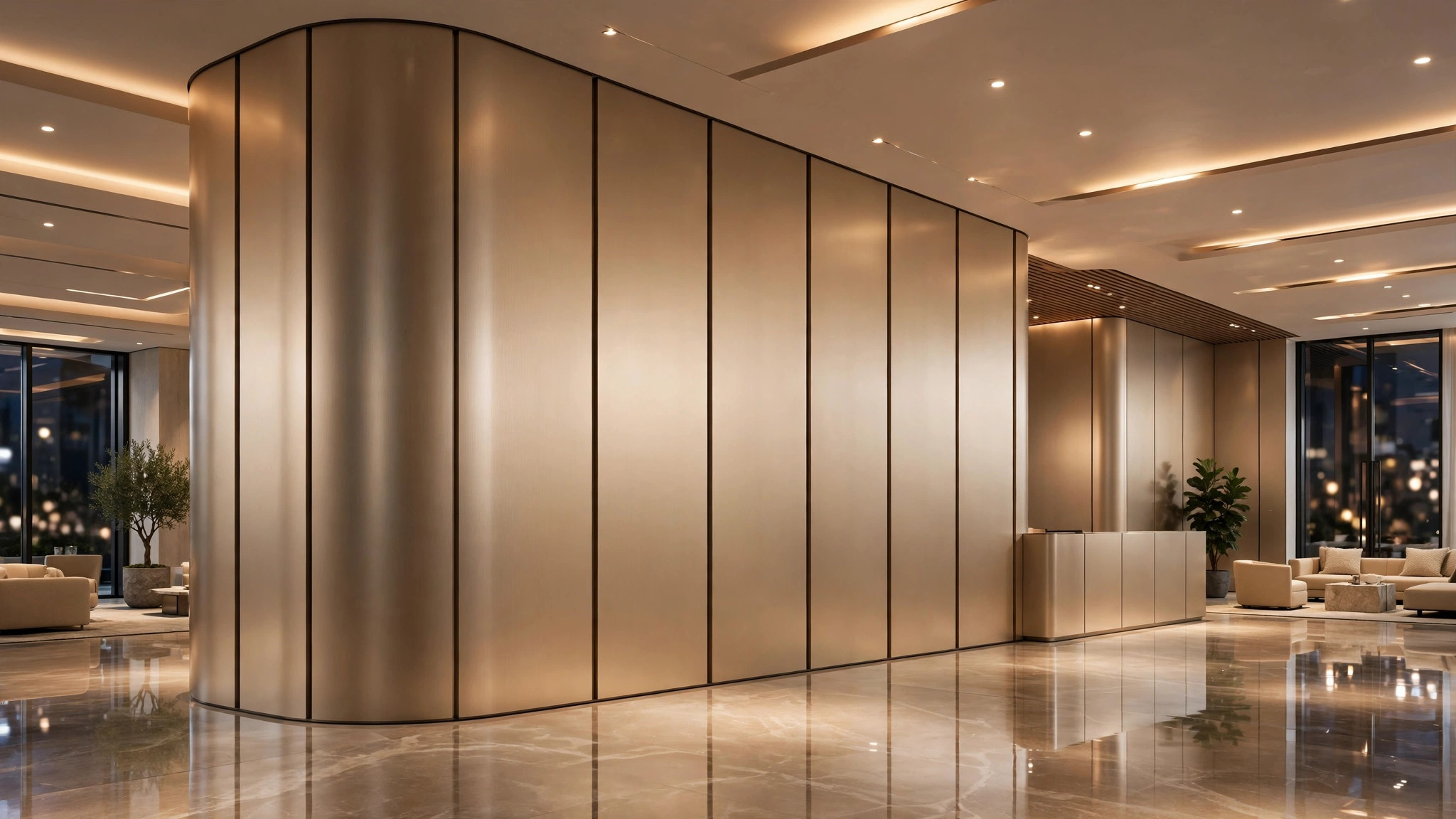
    Solid aluminum panels are best known as exterior cladding, but architects and contractors are increasingly specifying them for interiors too. From hotel lobbies and airport concourses to office atriums and retail flagships, aluminum veneer panels bring the same flatness, durability, and design freedom indoors that made them a facade favorite. This guide explains where solid aluminum panels work best inside a building, which finishes and panel formats suit interior use, and what US buyers should put in their specifications.

    Why Specify Solid Aluminum Panels Indoors?

    Interior designers often default to drywall, wood, or stone for walls and ceilings. Solid aluminum panels compete on several practical points that matter to building owners and facility managers:

    • Flatness and finish quality. Solid aluminum panels hold a flat, oil-canning-free surface across large formats, which is difficult to achieve with thin-gauge alternatives. The result is a clean, high-end look on feature walls and ceilings.
    • Durability in high-traffic areas. Lobby walls, corridor cladding, and column wraps take constant knocks from carts, luggage, and foot traffic. A 2.0mm or 2.5mm solid aluminum panel resists dents far better than painted drywall.
    • Non-combustible material. Solid aluminum panels are inherently non-combustible, an advantage in atriums, exit corridors, and other interior spaces where fire performance is scrutinized.
    • Low maintenance. Coated aluminum surfaces wipe clean and do not absorb stains, odors, or moisture — a real benefit in hospitality, healthcare, and food-service interiors.
    • Design flexibility. Panels can be flat, folded, perforated, or curved, and finished in solid colors, metallic effects, or wood and stone grains, giving designers a wide palette from a single material family.

    Interior Wall Cladding: Feature Walls and Wainscoting

    Feature walls are the most common interior application. A full-height aluminum panel wall behind a reception desk or in a hotel lobby creates a crisp, monolithic surface that paint or wallpaper cannot match. For these applications:

    • Thickness: 2.0mm panels are usually sufficient for interior walls; 2.5mm is specified where impact resistance matters.
    • Alloy: 3003-H24 offers the right balance of formability and strength for folded cassettes and flat panels.
    • Panel size: Standard sheets up to 1300 × 4000mm allow tall, joint-free elevations with minimal seams.

    Joint design sets the visual tone. Tight 10–15mm shadow gaps between cassettes read as modern and technical; wider expressed joints with reveal trims suit industrial-style interiors. Coordinate the fixing system — typically a cassette with folded returns hung on aluminum sub-framing — with your installer early, because interior substrates vary from concrete to steel stud to existing drywall.

    Ceilings and Soffits: Large Spans, Light Weight

    Aluminum panels are a strong choice for statement ceilings in lobbies, airport terminals, and retail atriums. Their low weight compared with stone or GRC keeps hanger loads down, which simplifies the support structure above the ceiling plane.

    Perforated Panels for Acoustics

    Where reverberation is a concern — restaurants, conference centers, transit halls — perforated solid aluminum panels backed with acoustic fleece or mineral wool absorb sound while keeping the metal aesthetic. Perforation patterns range from standard round holes to custom graphics, and the open area can be tuned to the acoustic target. Because the panel is solid aluminum rather than a composite, the perforations stay crisp and the panel keeps its rigidity.

    Curved and Sloped Ceilings

    Roll-formed or brake-pressed curved panels create wave ceilings and column-to-ceiling transitions that read as one continuous surface. Curved cassettes should be factory-formed to the specified radius; site bending of coated panels risks cracking the finish.

    Column Cladding and Decorative Shapes

    Structural columns wrapped in aluminum panels turn a necessity into a design element. Square and round column covers are fabricated as segmented cassettes that bolt together on site, with base and cap trims concealing the fixings. The same fabrication approach extends to:

    • Reception desk fronts and back bars
    • Elevator lobby surrounds
    • Retail display backdrops and signage bands
    • Decorative screens and room dividers with laser-cut or punched patterns

    For patterned screens, confirm the minimum web width between cutouts with the factory — delicate patterns look striking on drawings but need enough remaining material to stay flat after coating.

    Surface Finishes for Interior Use

    Finish selection indoors follows different logic than on a facade. UV exposure and weathering are minimal, so the decision centers on appearance, cleanability, and budget:

    • Powder coating is the workhorse for interiors. It delivers a tough, uniform film in virtually any RAL color, with matte, satin, or gloss levels, at a cost-effective price point.
    • PVDF (fluorocarbon) coating is specified indoors when color consistency with an exterior facade matters, or when maximum chemical and abrasion resistance is required — for example in airport or hospital environments.
    • Roll coating suits high-volume, flat-panel runs such as corridor wainscoting, giving an even, economical finish.
    • Wood-grain and stone-grain finishes applied over a powder-coat base reproduce natural materials with metal’s durability — popular for hospitality and retail interiors that want warmth without the maintenance of real timber.

    Always request physical color chips rather than relying on screen images. Metallic and special-effect finishes shift noticeably with viewing angle and lighting, and interior lighting (warm downlights versus daylight) changes how a color reads on the wall.

    What to Put in Your Specification

    A clear interior panel specification avoids RFQ confusion and apples-to-oranges quotes. At minimum, define:

    • Panel material: solid aluminum, alloy 3003-H24 (or 1100 series for simple flat panels)
    • Thickness: 2.0mm typical, 2.5mm for high-impact zones
    • Maximum panel size available: 1300 × 4000mm — plan your module grid around real sheet sizes
    • Finish system: powder coating, PVDF, or roll coating, with color reference and gloss level
    • Fabrication: folded cassette with returns, perforation pattern and open area if acoustic, radius for curved panels
    • Fixing system: concealed cassette hangers on aluminum sub-frame, with shop drawings required
    • Samples: full-size mockup panel or a minimum 600 × 600mm finish sample for approval before production

    Ask the factory for shop drawings and a material/finish schedule before production begins. Interior panels interface with millwork, glazing, lighting coves, and MEP penetrations — dimensional coordination at the drawing stage prevents expensive site rework.

    Care and Maintenance

    One of the quiet advantages of interior aluminum panels is how little they ask of facility teams. Routine cleaning is a wipe-down with a soft cloth and mild detergent; the coated surface resists fingerprints better than stainless steel and never needs repainting. For perforated acoustic ceilings, periodic vacuuming with a soft brush attachment keeps the holes clear. Damaged panels are individually replaceable because cassette systems unhook without disturbing neighbors — worth confirming with your supplier at the specification stage.

    From Drawings to Installed Panels

    Interior aluminum panel projects succeed on coordination: panel modules aligned with the lighting layout, finishes approved under the actual project lighting, and shop drawings signed off before metal is cut. A factory experienced in both facade and interior work can advise on panel formats, joint details, and finish selection from the schematic phase onward.

    If you are planning an interior fit-out with metal cladding, browse product options at juchangalu.com or send your drawings for a detailed quotation tailored to your panel sizes and finishes.

  • Aluminum Ingot Daily — October 11, 2026: Market Closed (Weekend/Holiday)

    Aluminum Ingot Daily — October 11, 2026: Market Closed (Weekend/Holiday)

    October 11, 2026 — Weekend/Holiday Market Update. China’s domestic aluminum spot market is closed today (weekend/public holiday). No fresh Changjiang (CCMN) A00 aluminum ingot quote was published. Below is the last available reference.

    Last Available Benchmarks

    Benchmark Last quote Status Source
    CCMN A00 aluminum ingot, spot see last trading-day briefing Market closed Changjiang Nonferrous Metals Network
    COMEX aluminum, front month USD 3,185.0/t Futures reference Yahoo Finance

    What It Means for Panel Buyers

    With Chinese spot markets closed, no new ingot price signal today. The next CCMN A00 quote will set the tone for the coming trading week. Buyers with pending project quotations can use the last trading-day benchmark as reference — while remembering that surface treatment (PVDF, powder coating) and fabrication complexity still dominate the final panel price.

    Get this briefing every morning

    We publish a short aluminum ingot market update every day — CCMN spot moves, offshore futures, and the charts that matter.

    Subscribe free by email →

    This briefing is for information only and does not constitute investment advice.

  • Private-Label Solid Aluminum Panels: A US Distributor’s Guide to Factory-Direct Sourcing

    Private-Label Solid Aluminum Panels: A US Distributor’s Guide to Factory-Direct Sourcing

    For US distributors and building-material wholesalers, solid aluminum facade panels have become one of the most attractive product lines to add in recent years. Demand is steady, project values are high, and a growing number of contractors actively look for reliable local suppliers instead of importing panel by panel. But there is a wide gap between reselling generic panels and building a profitable, defensible panel business. The distributors who do it best follow one strategy: sourcing solid aluminum panels factory-direct under their own brand.

    This guide explains how private-label and OEM sourcing of aluminum facade panels works, what specifications your sales team needs to understand, and how to evaluate a factory partner before you commit your brand to their product.

    Why Solid Aluminum Panels Are a Strong Product for US Distributors

    Before talking about sourcing, it is worth understanding why this product category fits wholesale distribution so well:

    • Non-combustible by nature. Solid aluminum panels contain no plastic core, so they sidestep the fire-performance concerns that have made aluminum composite panels (ACP) harder to specify on many US projects.
    • Premium finish options. PVDF fluorocarbon coatings deliver the rich, consistent color that architects expect on high-end facades, while powder coating covers cost-sensitive segments.
    • Project-driven repeat business. Once a contractor trusts your panels on one job, they come back for the next one — and bring their architect contacts with them.
    • Customization creates stickiness. Sizes, colors, and perforation patterns differ per project, which makes your relationship with a flexible factory a real competitive moat.

    What “Factory-Direct Sourcing” Actually Means

    Factory-direct sourcing is not simply buying panels cheap and marking them up. A capable aluminum panel factory works more like your production partner: you provide the drawings, project schedule, and finish requirements, and the factory cuts, routes, welds, and finishes the panels to your specification. Depending on the arrangement, the factory can:

    • Fabricate panels to exact project dimensions, including perforated, curved, and column-cover profiles.
    • Apply the specified finish — PVDF, powder coating, or roller coating — in project-matched colors.
    • Ship panels with neutral packaging and your own labels, cartons, and documentation, so the product arrives as your brand.

    For the distributor, this means carrying a full custom-panel catalog without owning a fabrication plant. Your value-add is local stock of standard items, project engineering support, and on-time delivery — the factory handles the manufacturing.

    Specification Basics Your Sales Team Must Know

    You do not need an engineering degree to sell facade panels, but your team should speak the language confidently. The key parameters for solid aluminum panels:

    • Thickness. Facade-grade solid aluminum panels are commonly produced in 2.0, 2.5, and 3.0 mm. Thicker panels span longer distances between fixings and resist oil-canning better; 2.0 mm suits small modules and interior use, while 3.0 mm is the workhorse for large exterior cassettes.
    • Alloy and temper. Typical facade alloys are 1001 and 3003 in H24 temper — a good balance of formability and strength for routing and folding into cassette shapes.
    • Maximum panel size. A typical factory line handles panels up to about 1300 × 4000 mm. Knowing this limit lets your estimators split elevations into realistic modules instead of promising unbuildable sizes.
    • Finish. PVDF fluorocarbon coating is the premium choice for exterior facades with demanding color-retention requirements; powder coating suits budget-conscious projects and interior applications; roller coating is an efficient option for flat panels in standard colors.

    When a contractor asks whether your panels “meet spec,” the fastest way to lose credibility is to guess. Train your team on these basics and keep a one-page spec sheet on hand for every product line you carry.

    Branding and Packaging: Making the Factory’s Output Your Product

    Private-label sourcing only works if the end customer experiences your brand, not the factory’s. Discuss these points with your factory partner up front:

    • Neutral factory identification. Panels, protective film, and cartons should carry your brand marks — or none at all — rather than the manufacturer’s name.
    • Consistent documentation. Packing lists, panel layout drawings, and installation references should arrive under your letterhead format so your installer customers file them as your product.
    • Color batch control. Facade panels are often installed in large visible areas where even slight color variation between batches is noticeable. Agree on how the factory controls color consistency across production runs for a single project.

    A Practical Quality Checklist for Auditing a Factory Partner

    Your brand is on the box, so the factory’s quality is your reputation. Before committing to a supplier, verify — on site or through documented evidence — the following:

    • Alloy and temper traceability on incoming coil or sheet material.
    • Coating process control: pretreatment, primer, and topcoat application, with coating thickness measurement records.
    • Flatness and dimensional tolerance checks after routing, folding, and welding.
    • Protective film application that actually survives ocean freight and site handling without leaving residue.
    • Export packing designed for containers: edge protection, moisture barriers, and palletization that prevent panel-to-panel abrasion.

    Ask for finished-project references or sample panels you can bend, scratch, and weather-test yourself. A factory confident in its product will welcome that scrutiny.

    Common Pitfalls First-Time Panel Distributors Should Avoid

    • Comparing only the per-panel price. Fabrication details — stiffener layout, corner welding, cassette folding — differ between factories and change what “a panel” actually includes. Compare like for like, including forming and finishing.
    • Ignoring the finish lead items. Custom colors and PVDF coatings are scheduled around coating-line runs; build finish production into your project timeline from day one.
    • Skipping a sample approval loop. Always approve a physical finish sample before full production, and keep a retained sample to settle any later color disputes.
    • Underestimating logistics damage. Panels are large, flat, and unforgiving. Poor container packing destroys more margin than any price negotiation saves — specify packing requirements explicitly.

    How to Start: A Low-Risk Path into Panel Distribution

    You do not need to sign a national exclusivity deal on day one. A sensible sequence looks like this:

    • Step 1 — Get samples. Request finish samples in your target colors and a small fabricated panel to evaluate workmanship.
    • Step 2 — Run a pilot project. Quote one real project through the factory, from drawings to delivery, and measure communication quality, accuracy, and packing as carefully as price.
    • Step 3 — Stock the standards. Once the partnership proves itself, keep popular thicknesses, alloys, and standard colors in local stock for fast contractor turnaround, while project-specific panels flow factory-direct.

    Each step builds the operational muscle — quoting, logistics, and after-sales support — that turns a product line into a business.

    Final Thoughts

    Solid aluminum facade panels reward distributors who combine manufacturing partnerships with local service. Choose a factory that treats you as a partner rather than an order number, learn the specification language your customers speak, and protect your brand with real quality control. Done right, private-label panels become the highest-margin line in your catalog.

    To explore solid aluminum facade panel options for your distribution business, browse the product range at juchangalu.com — or send your project drawings for a detailed quotation tailored to your specifications.

  • Maintaining Aluminum Facade Panels: A Building Owner’s Guide to Cleaning, Inspection, and Repairs

    Maintaining Aluminum Facade Panels: A Building Owner’s Guide to Cleaning, Inspection, and Repairs

    Solid aluminum facade panels are prized for their durability, but “low maintenance” does not mean “no maintenance.” A structured maintenance plan protects the finish, preserves the building’s appearance, and helps owners catch small problems — loose fasteners, clogged drainage channels, scratched coatings — before they become expensive repairs. This guide outlines a practical cleaning schedule, inspection checklist, and repair approach for PVDF-coated and powder-coated aluminum veneer panels.

    Why Aluminum Facade Panels Need Scheduled Maintenance

    PVDF fluorocarbon coatings are among the most weather-resistant finishes available for metal cladding, and solid aluminum panels themselves will not rust. Over years of exposure, however, panels accumulate airborne dirt, pollution film, algae, and bird droppings. In coastal or industrial zones, salt spray and chemical deposits can dull the finish if left unchecked. Regular cleaning also gives facility staff a reason to look closely at the facade — which is how early signs of sealant failure, panel movement, or impact damage get noticed in time.

    The good news: unlike many cladding materials, solid aluminum panels can be washed with simple methods and common cleaning agents, and individual panels can be replaced without disturbing the whole wall.

    Recommended Cleaning Schedule

    How often you wash depends on environment. A reasonable baseline, following general metal-facade industry practice, is:

    • Urban and suburban buildings: wash once a year.
    • Near highways, industrial areas, or dense construction: wash every 6 months.
    • Coastal locations: wash every 3 to 6 months to remove salt deposits before they can degrade the finish.
    • After major events: inspect and wash after sandstorms, wildfire smoke, or heavy pollution episodes.

    Keep a simple log of each cleaning — date, areas washed, products used, and anything unusual observed. This record is useful when discussing finish condition with the original panel supplier or a coating warranty claim.

    How to Wash Aluminum Facade Panels Safely

    Use the right products

    For routine washing, lukewarm water with a mild detergent is enough. A soft sponge or non-abrasive cloth removes most grime. Rinse from the top down so dirty water does not streak across clean areas below, and finish with a clean-water rinse to avoid detergent residue.

    • Safe: water, mild soap or detergent, isopropyl alcohol on a soft cloth for stubborn marks.
    • Avoid: abrasive pads, steel wool, and strong alkaline or acidic cleaners, which can scratch or chemically attack the coating.
    • Test first: always try any new cleaner on a hidden area, such as a panel behind rooftop equipment, before washing the visible facade.

    Mind the water pressure

    Pressure washers can be used on large flat areas, but keep the pressure moderate and the nozzle at a safe distance — aggressive blasting can force water into open joints or damage sealant edges. Never direct a jet into panel joints, weep holes, or the gaps around windows and flashings; these are designed to drain, not to be sealed against pressure.

    Inspection Checklist: What to Look For

    Combine cleaning visits with a walk-around inspection. Binoculars or a drone survey work well for upper floors. Check for:

    • Panel alignment: any panel sitting proud of its neighbors, or visible unevenness that was not there before, can indicate a loose fixing or thermal-movement issue.
    • Joint condition: look for cracked, pulled-away, or missing sealant in open or sealed joints. Sealant that has hardened and lost elasticity should be replaced.
    • Fasteners and clips: on accessible low-level areas, check that exposed screws and clips are tight and free of corrosion.
    • Drainage paths: cassette (tray) panel systems rely on ventilation and drainage behind the face. Make sure weep holes at the bottom of panels are not blocked by debris, nests, or hardened sealant.
    • Surface damage: note scratches, dents, graffiti, and coating chips — mark their locations on a facade elevation drawing for the repair list.
    • Staining below joints: rust-colored or dark streaks can point to water getting in where it should not, or to a dissimilar-metal reaction at a fixing point.

    Photograph anything suspicious and compare with previous years’ photos. A slow-developing issue is easy to miss year to year without a visual record.

    Repair Options: Touch-Up vs Panel Replacement

    Minor coating damage

    Small scratches that do not reach bare metal can often be touched up with manufacturer-matched touch-up paint. Clean the area first, apply thin coats, and feather the edges. Be aware that touch-up spots may weather at a slightly different rate than the factory finish, so they are best reserved for small, inconspicuous areas. For large scuffed zones or damage down to bare metal, panel replacement gives a far better result.

    Replacing a single panel

    One of the practical advantages of rainscreen cassette systems is that individual panels can be removed and replaced. The replacement should match the original in thickness (commonly 2.0, 2.5, or 3.0 mm for facade-grade solid aluminum panels), alloy, and coating color. Color matching deserves attention: order the replacement from the same coating batch if possible, or expect a subtle tone difference on older facades, since PVDF finishes weather gradually over years.

    If your building uses perforated, embossed, or custom-folded panels, share the original shop drawings with the fabricator — hole patterns and fold geometry must match for the replacement to sit flush.

    Special Situations

    Coastal and high-humidity environments

    Salt is the main enemy. Stick to the 3-to-6-month wash cycle, pay extra attention to the lower floors where spray is heaviest, and confirm that drainage channels behind panels stay clear so trapped saltwater cannot sit against the aluminum.

    Graffiti

    Remove graffiti promptly — the longer it sits, the harder it is to clean without affecting the finish. Test a mild solvent-based graffiti remover on a hidden panel first, and avoid aggressive scrubbing that could polish a matte finish into a glossy spot.

    Post-storm checks

    After severe wind or hail, inspect for dented panels, displaced trims, and debris lodged in joints. Dents in solid aluminum panels are cosmetic rather than structural, but large deformed panels can trap water and should be scheduled for replacement.

    Putting It on Paper: A Simple Maintenance Plan

    For building owners and facility managers, a one-page maintenance plan keeps everyone aligned. It should name the panel type and finish, the washing interval for the building’s environment, who performs the work, the products approved for use, and a calendar of inspection dates. Attach the facade elevation drawings with panel numbering — when a repair is needed, “panel A-214, third floor, south elevation” is far more useful than “somewhere on the south side.”

    Solid aluminum facade panels reward a little routine attention with decades of reliable service. A clean, inspected, and promptly repaired facade is not just about looks — it is how owners protect one of the building’s most visible and valuable assets.

    Planning a new aluminum facade project or refurbishing an existing one? Browse products at juchangalu.com or send your drawings for a detailed quotation.
  • Aluminum Ingot Daily — October 09, 2026: A00 Fell

    Aluminum Ingot Daily — October 09, 2026: A00 Fell

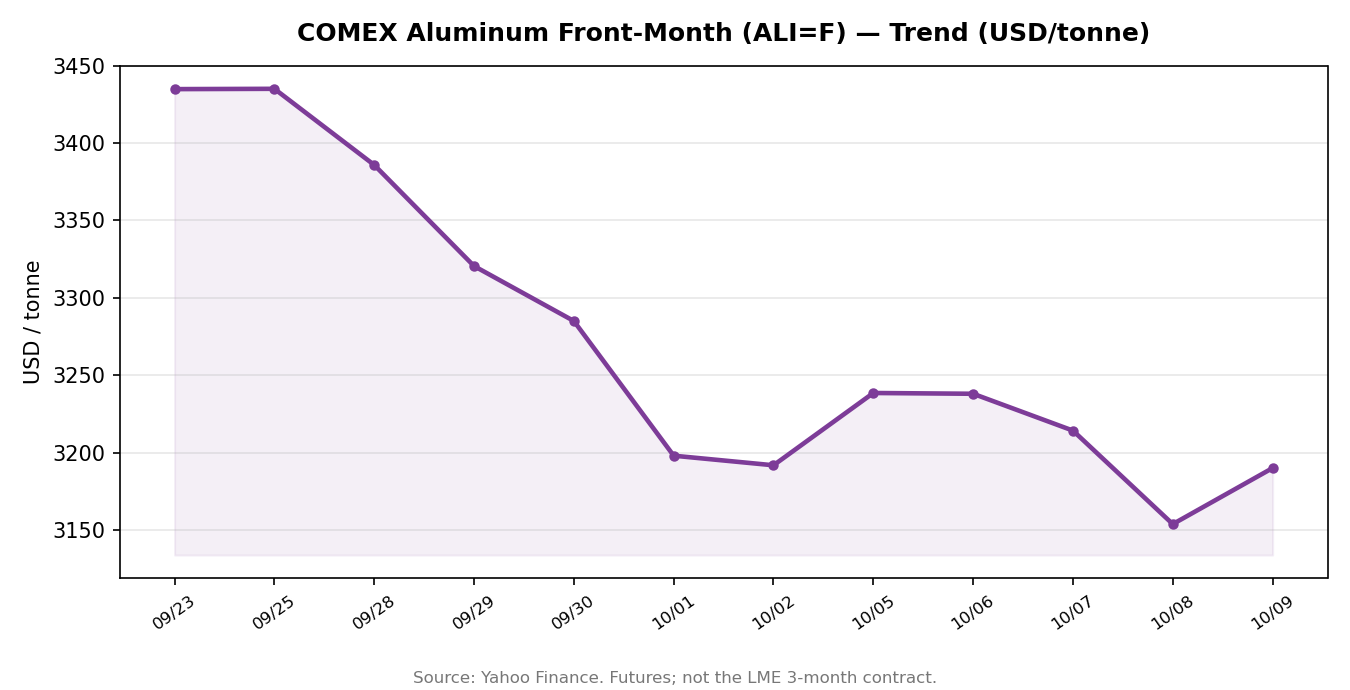
    October 09, 2026 — China’s domestic aluminum ingot market fell on the latest session. The Changjiang Nonferrous Metals Network (CCMN) A00 aluminum ingot benchmark moved -100 RMB/tonne day-on-day. Offshore, COMEX aluminum front-month futures closed at USD 3,190.0/t (+36.2, +1.15%).

    Cross-Platform Price Snapshot

    Benchmark Latest quote Day-on-day Source
    CCMN A00 aluminum ingot, spot (tax incl.) day change -100 RMB/t* -100 RMB/t Changjiang Nonferrous Metals Network
    COMEX aluminum, front month USD 3,190.0/t +36.2 USD/t (+1.15%) Yahoo Finance

    *CCMN’s absolute spot levels are member-only; day-on-day changes are public.

    CCMN A00: Recent Daily Changes

    Changjiang A00 aluminum ingot daily price changes

    Offshore: COMEX Trend

    COMEX aluminum front-month trend

    What It Means for Panel Buyers

    For buyers of aluminum façade panels and sheet, ingot is the single largest cost input. Sustained moves in the ingot benchmark typically feed through to mill and fabricator pricing within one to two quotation cycles. Buyers with Q4 project pipelines may want to request fresh quotes when the trend favors them — while remembering that surface treatment (PVDF, powder coating) and fabrication complexity still dominate the final panel price.

    Get this briefing every morning

    We publish a short aluminum ingot market update like this one every trading day — CCMN spot moves, offshore futures, and the charts that matter.

    Subscribe free by email →

    Data Notes

    • CCMN day-on-day changes are taken directly from CCMN’s daily A00 aluminum ingot reports (alu.ccmn.cn).
    • COMEX front-month prices via Yahoo Finance (futures contract, not LME 3-month).

    This briefing is for information only and does not constitute investment advice.

  • Solid Aluminum Panels vs Aluminum Composite Panels (ACP): A US Buyer’s Comparison Guide

    Solid Aluminum Panels vs Aluminum Composite Panels (ACP): A US Buyer’s Comparison Guide

    When specifying metal cladding for a new façade, US buyers usually narrow the field to two products: solid aluminum panels and aluminum composite panels (ACP). Both look like flat, crisp sheets of aluminum. Both are widely used on commercial buildings. But under the surface they are built very differently, and the wrong choice can mean callbacks, code problems, or a façade that fades long before its time.

    This guide explains the real differences — construction, fire behavior, finish durability, forming limits, and lifecycle cost — so architects, contractors, and distributors can choose with confidence.

    What Each Panel Actually Is

    Solid aluminum panels

    A solid aluminum panel is a single sheet of aluminum alloy — typically 2.0, 2.5, or 3.0 mm thick — cut, routed, folded into a cassette or tray shape, and factory-coated with PVDF, powder coating, or roller coating. There is nothing laminated, glued, or layered: the visible surface and the structure are one and the same material. Common alloys include 1001 and 3003-H24; standard sheet sizes reach up to 1300 × 4000 mm, which keeps joints clean on tall elevations.

    Aluminum composite panels (ACP)

    An ACP is a sandwich: two thin aluminum skins (usually 0.3–0.5 mm each) bonded to a core. The core can be standard polyethylene (PE), fire-retardant (FR) mineral-filled material, or fully non-combustible mineral board. Total thickness is commonly 3, 4, or 6 mm. The thin skins carry the same fluoropolymer coatings as solid panels, so a finished ACP can look identical to solid aluminum on day one.

    Fire Performance: The Decisive Difference

    This is where the comparison gets serious. A solid aluminum panel is inherently non-combustible — a single metal sheet has nothing to burn. ACP fire behavior depends entirely on the core. Standard PE-core ACP is combustible and has been restricted or banned on tall buildings in many jurisdictions after high-profile façade fires.

    FR-core and mineral-core ACPs are engineered to meet façade fire requirements, but they require careful specification: the right core classification, correct installation details, and compliance documentation for the project’s code regime. For US projects, specifiers increasingly reach for solid aluminum panels when the design calls for the simplest, most defensible fire story — one homogeneous, non-combustible sheet, no core to debate.

    Finish Durability: Both Can Last — If Specified Right

    Both panel types accept high-performance PVDF coatings, and both can carry powder coating for budget-sensitive scopes. On either product, a two- or three-coat PVDF system is the benchmark for color retention, chalk resistance, and gloss stability over long outdoor exposure.

    The difference is not the paint, it is what lies beneath. Because a solid panel is one continuous metal thickness, its edges, folds, and returns all receive the same coating as the face. On an ACP, folded or routed edges expose the core material along the return, and those cut edges need proper treatment to keep the finished assembly clean and weather-tight.

    Forming, Flatness, and Fabrication Limits

    • Flatness on large modules: ACP’s sandwich construction is exceptionally stiff per unit weight, which is why very large flat panels (1500 mm wide and beyond) are commonly done in ACP. Solid aluminum panels achieve comparable visual flatness with stiffener profiles bonded to the back of the cassette — a standard factory technique for wide modules.
    • Complex shapes: Solid aluminum panels excel at folded, curved, and faceted geometry. A single sheet can be CNC-routed and brake-pressed into deep trays, perforated screens, columns, and custom 3D forms. ACP is more limited: tight radii and deep folds can delaminate or crack the skins.
    • Repairability: A damaged solid panel can often be removed and replaced individually by cassette. Individual ACP panels can also be replaced, but matching an aged coating lot-for-lot can be tricky on both products — order spare panels with the original run.

    Weight and Structure

    On a per-square-meter basis, 4 mm ACP is lighter than 3.0 mm solid aluminum — that is its classic advantage. But the difference in the total façade budget is smaller than it looks: the substructure, anchors, and installation labor for both systems are comparable, and solid panels’ lighter-perception cost is often offset by simpler fire compliance and fewer engineering debates.

    Cost Over the Life of the Building

    Solid aluminum panels generally cost more per square meter at purchase than standard ACP. Look past the unit price and the picture changes:

    • Compliance risk: FR and mineral-core ACP cost premiums narrow the gap, and a non-combustible solid panel eliminates core-related review cycles entirely.
    • Maintenance: Both finishes clean the same way — mild detergent and water. PVDF on either substrate holds its appearance for decades with a regular wash cycle.
    • Salvage and sustainability: A solid aluminum panel is one alloy, fully recyclable at end of life. Separating ACP skins from core material for recycling is more complex and not always practical.

    A Practical Decision Matrix

    Choose solid aluminum panels when: fire classification must be simple and unquestionable; the design includes deep folds, curves, perforations, or custom geometry; long-term color consistency on three-dimensional shapes matters; or the project is a high-rise, hospital, school, or transit facility with strict façade scrutiny.

    Choose ACP when: the priority is maximum flatness on very large rectangular modules at the lowest unit cost; the core is specified to the correct fire classification with full documentation; and the geometry is essentially flat.

    Specifying Either Panel Correctly

    Whichever route you take, lock down the same checklist in the specification:

    • Alloy and temper (e.g., 3003-H24 for solid panels) and skin/core thicknesses
    • Coating system: PVDF coat count, or powder coating where acceptable
    • Panel dimensions, module layout, and joint widths
    • Backing stiffeners for wide solid-aluminum cassettes
    • Fire documentation matched to the applicable code for the building’s height and occupancy
    • Reference to recognized test standards (ASTM/AAMA) in the submittal package
    • Shop drawings reviewed and approved before production — not after delivery

    The Bottom Line

    Solid aluminum panels and ACP can look alike on a rendering, but they solve different problems. ACP buys you lightweight flatness at a competitive price — provided the core classification and documentation are handled rigorously. Solid aluminum buys you simplicity: one non-combustible sheet, unlimited forming freedom, and a façade that will still look intentional in twenty years.

    For many US buyers — especially on projects where code review is strict and design freedom matters — that simplicity is exactly why solid aluminum panels keep winning the specification. Send us your elevation drawings and we will help you compare both options for your specific project and return a detailed quotation.

  • Aluminum Ingot Daily — October 08, 2026: A00 Fell

    Aluminum Ingot Daily — October 08, 2026: A00 Fell

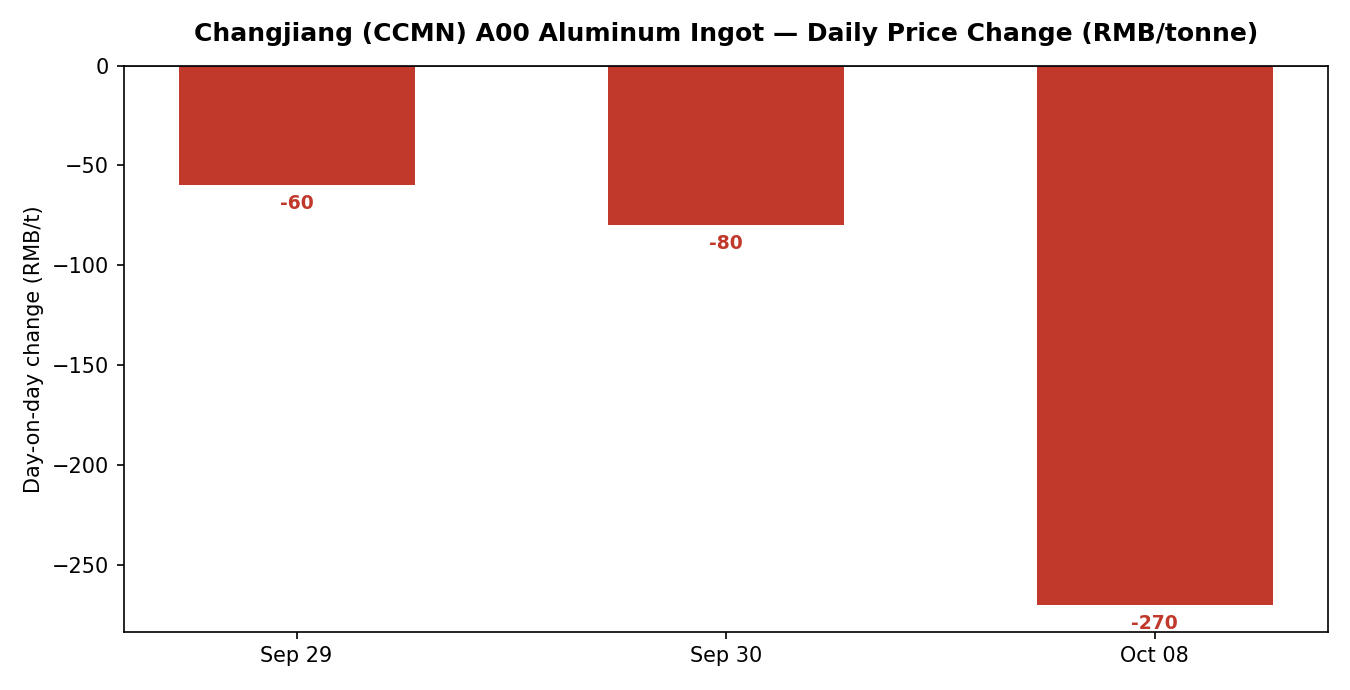
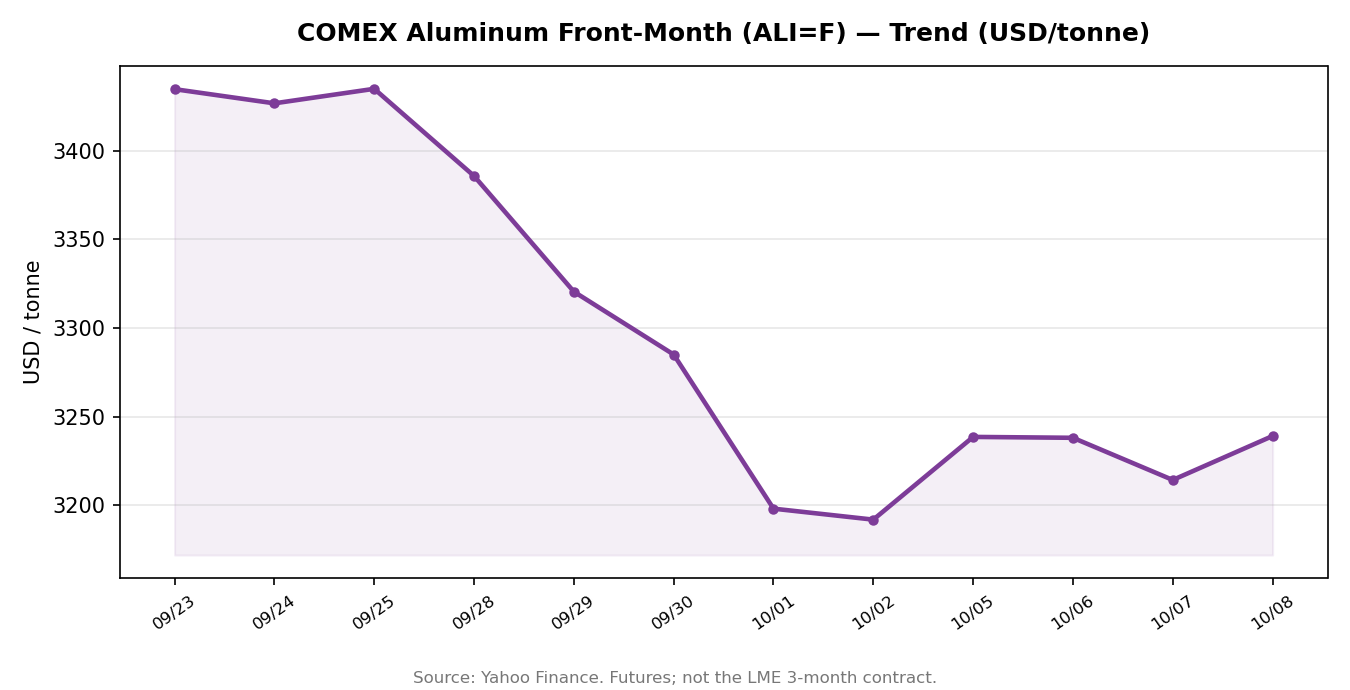
    October 08, 2026 — China’s domestic aluminum ingot market fell on the latest session. The Changjiang Nonferrous Metals Network (CCMN) A00 aluminum ingot benchmark moved -270 RMB/tonne day-on-day. Offshore, COMEX aluminum front-month futures closed at USD 3,239.0/t (+24.8, +0.77%).

    Cross-Platform Price Snapshot

    Benchmark Latest quote Day-on-day Source
    CCMN A00 aluminum ingot, spot (tax incl.) day change -270 RMB/t* -270 RMB/t Changjiang Nonferrous Metals Network
    COMEX aluminum, front month USD 3,239.0/t +24.8 USD/t (+0.77%) Yahoo Finance

    *CCMN’s absolute spot levels are member-only; day-on-day changes are public.

    CCMN A00: Recent Daily Changes

    Changjiang A00 aluminum ingot daily price changes

    Offshore: COMEX Trend

    COMEX aluminum front-month trend

    What It Means for Panel Buyers

    For buyers of aluminum façade panels and sheet, ingot is the single largest cost input. Sustained moves in the ingot benchmark typically feed through to mill and fabricator pricing within one to two quotation cycles. Buyers with Q4 project pipelines may want to request fresh quotes when the trend favors them — while remembering that surface treatment (PVDF, powder coating) and fabrication complexity still dominate the final panel price.

    Get this briefing every morning

    We publish a short aluminum ingot market update like this one every trading day — CCMN spot moves, offshore futures, and the charts that matter.

    Subscribe free by email →

    Data Notes

    • CCMN day-on-day changes are taken directly from CCMN’s daily A00 aluminum ingot reports (alu.ccmn.cn).
    • COMEX front-month prices via Yahoo Finance (futures contract, not LME 3-month).

    This briefing is for information only and does not constitute investment advice.