作者: wpusername2200

  • Understanding AAMA and ASTM Standards for Aluminum Facade Panels: A Specifier’s Guide

    Understanding AAMA and ASTM Standards for Aluminum Facade Panels: A Specifier’s Guide

    When an architect or contractor opens a specification for aluminum facade panels, the document often reads like alphabet soup: AAMA 2605, ASTM B209, E119, E84, C1376. Behind every one of those codes is a specific performance question that matters on site: will the finish hold its color after ten years of sun? Will the panel sit flat after installation? Will the assembly meet the local fire code?

    This guide explains the main North American standards behind solid aluminum panels and shows how a buyer or specifier can read a panel spec sheet with confidence. It is not a substitute for engineering review, but it will help you ask your supplier the right questions before a purchase order is signed.

    Why Standards Matter for Aluminum Facade Panels

    A facade lives a hard life. It faces UV radiation, rain, temperature swings, pollution, and mechanical wind loads for decades. Standards exist so that “durable” is not just a marketing claim — it is a measurable property, tested the same way no matter which factory made the panel.

    For solid aluminum veneer panels, three families of standards cover almost everything: coating performance (AAMA specifications), raw material quality (ASTM metal standards), and fire and structural behavior (ASTM and code-referenced tests). A complete spec sheet from a reputable supplier should let you trace the panel back to all three.

    Coating Standards: AAMA 2603, 2604, and 2605

    The American Architectural Manufacturers Association (AAMA) publishes the most widely referenced coating specifications for aluminum architectural products. They define three performance tiers:

    • AAMA 2603 — Basic performance. Standard spray-applied coatings for interior or low-exposure applications. The weathering requirement is modest, and gloss/color retention is limited.
    • AAMA 2604 — High performance. Requires ten years of outdoor exposure with defined limits on chalking, fading, and gloss loss. Many commercial projects specify 2604 as a practical baseline for exteriors with moderate sun exposure.
    • AAMA 2605 — Superior performance. The top tier, built around 70% PVDF (fluoropolymer) resin coatings. It demands ten-year outdoor weathering with tight limits on color change and chalk, plus humidity, chemical, and salt-spray resistance. For high-end facades — and for harsh climates — 2605 is the benchmark.

    Practical tip: when a supplier says “PVDF coating,” ask which AAMA tier the finish is formulated to meet. The resin name alone does not tell you the film thickness, the number of coats, or the tested weathering performance. A clear answer — “70% PVDF, 3-coat system, designed to AAMA 2605” — is what you want to see.

    Material Standards: ASTM B209 and Alloy Designations

    The metal itself is governed by ASTM B209, the standard specification for aluminum and aluminum-alloy sheet and plate. It defines chemical composition, mechanical properties, and tolerances for the alloys commonly used in facade work.

    Solid aluminum facade panels are typically formed from sheet in the 1100 or 3003 alloy families in H24 temper — a combination chosen for formability, corrosion resistance, and adequate strength for cassette and hook-on systems. Common face-panel thicknesses are 2.0 mm, 2.5 mm, and 3.0 mm, selected according to panel size, wind load, and visual flatness requirements. Panels can commonly be produced in large formats, with typical maximum sheet sizes around 1300 × 4000 mm, depending on the fabrication equipment.

    When comparing quotes, check that every bidder is pricing the same alloy, temper, and thickness. A price that looks low may simply be a thinner gauge or a softer temper than the specification requires.

    Fire and Structural Tests: E84, E119, and Wind Load

    Solid aluminum panels are a non-combustible material — the metal itself does not burn or contribute fuel to a fire. That is one of the core reasons the industry shifted toward solid panels on many project types. The relevant tests to understand:

    • ASTM E84 (surface burning characteristics) measures flame spread and smoke development on exposed surfaces. Aluminum sheet inherently performs well here.
    • ASTM E119 (fire endurance of assemblies) applies to full wall assemblies, not to the panel alone. Always remember: a panel is one layer of a system that includes the supporting structure, insulation, and fixings.
    • Structural and air/water testing — ASTM E330 (structural performance under wind load), E283 (air leakage), and E331 (water penetration) are typically run on the complete curtain-wall or panel assembly to prove it meets the project’s design pressures.

    For a buyer, the takeaway is simple: ask whether test evidence exists at the assembly level for fire and weather performance, and at the panel level for coating and metal quality. A supplier should be able to point you to both.

    Reading a Spec Sheet: Tolerances and Flatness

    Two numbers that often decide whether a facade looks crisp or wavy are thickness tolerance and flatness (oil-canning control). ASTM B209 gives the allowable thickness tolerance for each gauge; tighter in-house tolerances are a sign of a supplier that controls its process. Flatness depends on the alloy temper, the panel depth (cassette return height), the stiffener layout behind the face sheet, and the fixing design.

    Questions worth putting in your RFQ:

    • What alloy and temper is quoted, and what thickness tolerance is guaranteed?
    • How are stiffeners arranged behind the face sheet, and what is the maximum panel size before oil-canning risk increases?
    • What is the coating system (resin type, number of coats, dry film thickness) and which AAMA tier is it formulated to meet?
    • Can the supplier provide panel-level test summaries and assembly-level fire/weather references?
    • What are the fabrication tolerances for overall panel dimensions and joint alignment?

    Bringing It Together on Your Next Project

    A well-written specification for aluminum facade panels is not a list of brand names — it is a chain of performance requirements: alloy and thickness from ASTM B209, finish performance from AAMA 2605 or 2604, fire behavior from E84 and assembly-level E119 evidence, and structural soundness from E330-type assembly testing. When every link in that chain is documented, the risk moves off the buyer’s desk and onto the paper where it belongs.

    If you are preparing drawings for a facade project and would like to compare panel options, browse the range at juchangalu.com — or send your drawings and panel layout for a detailed, specification-matched quotation.
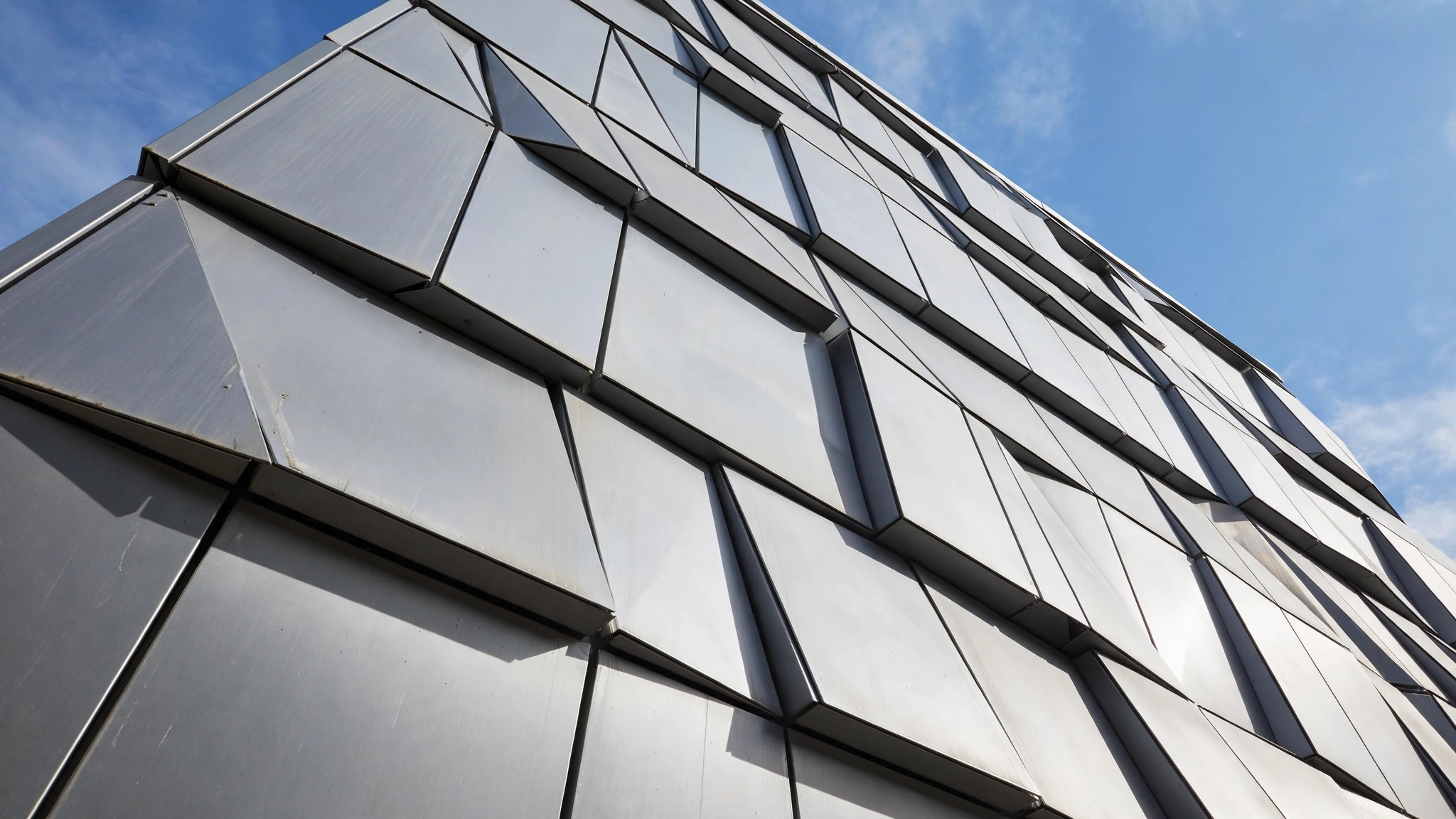
  • Aluminum Facade Panels: Choosing the Right Thickness (2.0 vs 2.5 vs 3.0mm) and Alloy for Your Project

    Aluminum Facade Panels: Choosing the Right Thickness (2.0 vs 2.5 vs 3.0mm) and Alloy for Your Project

    When architects and contractors specify aluminum facade panels, two decisions shape nearly everything else about the project: the panel thickness and the alloy underneath the finish. Choose wrong, and you get panels that oil-can in the wind, dent during maintenance, or flat-out fail the structural review. Choose right, and the façade stays flat, rigid, and quiet for decades. This guide breaks down how solid aluminum panels in 2.0mm, 2.5mm, and 3.0mm thicknesses — and common facade alloys — compare in real US commercial projects.

    Why Thickness Matters More Than It Looks

    A rainscreen aluminum facade panel is not just a decorative skin. Wind suction pulls on every cassette, thermal cycling expands and contracts the metal daily, and installers and window washers lean against the surface over the building’s life. Thickness is the single biggest factor in how a solid aluminum panel resists:

    • Oil-canning — the wavy, rippled look that appears in large flat panels under changing light.
    • Denting and impact damage — from ladders, maintenance equipment, and debris.
    • Deflection — how much a panel bows inward or outward under wind load.
    • Sound transmission — thinner panels transmit more rain noise and street noise.

    As a rule of thumb, every half-millimeter of added thickness makes a disproportionate difference in stiffness. A 3.0mm panel is dramatically stiffer than a 2.0mm panel of the same size — not just 50% stiffer, because stiffness scales with the cube of thickness.

    2.0mm vs 2.5mm vs 3.0mm: Where Each Thickness Fits

    2.0mm aluminum facade panels

    At 2.0mm, aluminum facade panels are the economical workhorse of the three. They are lighter, easier to handle on site, and a good match for:

    • Interior wall cladding, column covers, and soffits where wind load is minimal.
    • Low-rise facades (one to three stories) in sheltered locations.
    • Smaller cassettes — keeping panel width under roughly 1,000mm helps control oil-canning.

    The trade-off: at 2.0mm, large flat panels show oil-canning more readily, so fabricators often add stiffener ribs on the back of the cassette. That adds fabrication cost, which narrows the price gap with thicker panels.

    2.5mm aluminum facade panels

    The 2.5mm thickness is the most common specification for mid-rise commercial aluminum facade panels in the US. It is the sweet spot: noticeably stiffer than 2.0mm, yet still easy to route, fold, and install. Typical uses include:

    • Office buildings, retail facades, and hospitality exteriors up to about 10 stories.
    • Standard cassettes up to 1,250mm wide with good flatness.
    • Projects where the budget matters but the architect wants a clean, ripple-free elevation.

    For many US distributors and contractors, 2.5mm is the default stock thickness because it covers the widest range of projects without surprises.

    3.0mm aluminum facade panels

    The 3.0mm panel is the heavy-duty option. It delivers the flattest surface, the highest impact resistance, and the best performance in:

    • High-rise facades and buildings in high wind zones.
    • Oversized cassettes approaching the standard maximum panel size of 1300×4000mm, where thinner gauges would visibly deflect.
    • Ground-level zones, canopies, and transit facilities where panels take physical abuse.
    • Perforated panels, where the open area reduces stiffness and thicker material compensates.

    The cost per square meter is higher, but 3.0mm often eliminates the need for back stiffeners, simplifying fabrication and reducing the chance of telegraphing ribs through the face.

    Alloy Selection: 1001 vs 3003 H24

    Thickness is only half the equation — the alloy and temper determine the metal’s strength before it ever reaches the press brake.

    • 1001 aluminum — commercially pure aluminum. Excellent corrosion resistance and a very clean surface for coating, widely used for architectural aluminum veneer panels. It is softer than 3003, which makes it easier to form into complex shapes, but it benefits from a thicker gauge or shorter spans where rigidity matters.
    • 3003 H24 aluminum — an aluminum-manganese alloy supplied in the H24 temper (strain-hardened and partially annealed). The manganese addition gives it roughly 20–30% higher strength than 1001 at the same gauge. For facades exposed to wind load, 3003 H24 is the workhorse choice: the added strength lets you run slightly larger cassettes or hold the same span with confidence.

    The H24 temper matters because a dead-soft (O temper) sheet would be too soft for exterior service, while a fully hard (H18) temper can crack on tight folds. H24 is the balanced middle ground: strong enough for structural performance, formable enough for cassette fabrication.

    How Size, Finish, and Thickness Work Together

    The standard maximum panel size of 1300×4000mm is achievable in all three thicknesses, but the experience differs. A 2.0mm panel at full size will need stiffeners and careful handling; a 3.0mm panel at the same size behaves like a drum head by comparison — tight and flat.

    The finish layer also plays a role. PVDF coatings are the premium exterior finish for aluminum facade panels — fluoropolymer chemistry that resists chalking, fading, and UV degradation far longer than standard coatings. Powder coating offers excellent color range and value for moderate exposures, while roller coating gives consistent, economical coverage on flat sheets. None of these finishes adds meaningful structural strength, so do not rely on the coating to compensate for an undersized gauge.

    A Practical Specification Checklist

    When writing the spec or reviewing a supplier’s quote, confirm these five points:

    • Thickness with tolerance — the gauge should be stated as a nominal value (2.0/2.5/3.0mm) with an accepted tolerance, not a vague range.
    • Alloy and temper — 1001 or 3003 H24, stated explicitly on the mill certificate.
    • Maximum panel size — 1300×4000mm is the standard ceiling; larger panels require special handling and should be priced accordingly.
    • Finish type — PVDF, powder coating, or roller coating, with a film thickness that matches the exposure.
    • Flatness expectation — for premium elevations, state the acceptable deflection under specified wind loads so oil-canning is a measurable criterion, not a subjective argument.

    The Bottom Line

    For most US commercial facades, 2.5mm solid aluminum panels in 3003 H24 hit the best balance of flatness, strength, and cost. Step up to 3.0mm for high-rise, oversized cassettes, or impact-prone zones; 2.0mm earns its place in interiors and low-rise applications where budgets are tight. Match the alloy to the exposure, pick the finish for the climate, and keep panel sizes within what the gauge can honestly support — and the façade will look as good in year twenty as it did on day one.

    Browse our solid aluminum panel products at juchangalu.com, or send your drawings for a detailed quotation.

  • Fire Safety and Aluminum Facade Panels: Why Solid Aluminum Panels Are the Non-Combustible Choice

    Fire Safety and Aluminum Facade Panels: Why Solid Aluminum Panels Are the Non-Combustible Choice

    Fire safety has become one of the most scrutinized aspects of facade design in the United States. After several high-profile cladding fires around the world, architects, contractors, and building owners are asking harder questions about what is actually on the outside of their buildings. For buyers evaluating aluminum facade panels, understanding how solid aluminum panels behave in fire — and how that differs from composite alternatives — is essential to writing a safe, code-compliant specification.

    Why Cladding Combustibility Matters

    Modern rainscreen facades are layered assemblies: an outer skin, a ventilated cavity, insulation, and the structural wall behind. When the outer skin or core material can burn, flames can spread rapidly up the face of a building, outpacing interior suppression systems. This is exactly what happened in several well-documented tower fires, and it is why US building codes now treat exterior wall combustibility as a first-order design issue.

    The International Building Code (IBC) Chapter 14 sets out requirements for exterior walls, and for many building types and heights it effectively requires non-combustible exterior construction or tested assemblies. For specifiers, the practical takeaway is simple: the combustibility of your cladding material determines which code path you are on — and how much testing, documentation, and risk your project carries.

    Solid Aluminum Panels vs. Composite Cladding: The Material Difference

    Not all “aluminum panels” are the same, and the distinction matters enormously for fire performance:

    • Solid aluminum panels are formed from a single sheet of aluminum alloy — typically 2.0 mm, 2.5 mm, or 3.0 mm thick for facade use. There is no plastic or mineral core sandwiched inside. Aluminum sheet itself is a non-combustible material under standard tests such as ASTM E136, meaning it will not ignite, burn, or contribute fuel to a fire.
    • Aluminum composite panels (ACP/ACM) bond two thin aluminum skins to a core. That core can be polyethylene (combustible), fire-retardant mineral-filled, or fully non-combustible mineral — and the fire behavior of the panel is largely determined by the core, not the aluminum faces.

    This is why experienced facade consultants treat material selection as the first fire-safety decision. With solid aluminum facade panels, the combustibility question is answered by the material itself: metal sheet does not burn. With composite panels, the answer depends on the core grade and the manufacturer’s test data — all of which must be verified project by project.

    What “Non-Combustible” Means in Code Terms

    Several code concepts come up whenever aluminum facade panels are specified for fire-sensitive projects:

    • ASTM E136 (non-combustibility of materials): the baseline material test. Solid aluminum sheet passes this test — it does not ignite or support combustion under the specified furnace exposure.
    • IBC exterior wall requirements: depending on construction type and building height, the code may require non-combustible exterior walls outright. Solid aluminum panels fit naturally into these designs; combustible-core composites may be restricted or excluded.
    • NFPA 285: a full-scale assembly test for exterior wall systems containing combustible components. Because solid aluminum panels contain no combustible core, facades built with them often avoid triggering the NFPA 285 testing path altogether — though the complete assembly (insulation, WRB, cavity details) still needs review by the design team and the authority having jurisdiction.

    A word of caution: fire performance is always a property of the assembly, not just the panel. Insulation choice, cavity barriers, and joint detailing all play a role. But starting with a non-combustible skin removes the largest single variable from the equation.

    Specifying Fire-Safe Aluminum Facade Panels: A Practical Checklist

    When writing specifications for aluminum facade panels on projects where fire performance matters, consider these points:

    • Specify solid, not composite, where codes demand it. State “solid aluminum sheet panels” explicitly, and require mill certification of the alloy and temper — common facade grades include 1001 and 3003 (H24 temper), which offer the formability and strength needed for folded cassette panels.
    • Choose appropriate thickness. Facade panels are commonly produced in 2.0 mm, 2.5 mm, and 3.0 mm thicknesses. Thicker panels (2.5–3.0 mm) are typical for large-format cassettes on high-rise work, where wind load and flatness requirements are strictest.
    • Check panel size against fabrication limits. Standard production runs up to about 1300 × 4000 mm per sheet. Oversized cassettes may require stiffeners or segmented layouts — coordinate early with the fabricator so fire-rated joint details are not compromised by late design changes.
    • Review the coating system. PVDF (fluorocarbon), polyester powder coating, and roller coating are the standard finish options. While the thin coating layer is not the driver of fire behavior, confirm the coating’s flame-spread characteristics with the manufacturer for projects with strict submittal requirements.
    • Demand documentation. Ask the factory for material test reports, alloy certifications, and coating specifications. A professional manufacturer should provide these as standard submittal documents — vague or missing paperwork is a red flag regardless of price.

    Installation Details That Affect Fire Performance

    Even the best panel material can be undermined by poor detailing. Key installation practices for fire-safe aluminum facade panels include:

    • Cavity barriers and fire stops: the ventilated cavity behind a rainscreen can act as a chimney in a fire. Properly placed cavity barriers at floor lines and around openings are critical — coordinate these with the panel layout so barriers land on solid framing, not on open joints.
    • Joint design: open-joint cassette systems are popular for their crisp shadow lines, but the gaps expose the cavity. On fire-sensitive elevations, consider baffled joints or backing details that limit flame and ember ingress.
    • Sub-framing materials: use non-combustible aluminum or steel support framing. Avoid introducing combustible battens or shims into the cavity.
    • Penetrations: seal around windows, vents, and service penetrations with fire-rated materials per the approved details — common weak points in real facades.

    Common Questions from Buyers

    Do solid aluminum panels need a fire rating?

    Solid aluminum sheet is inherently non-combustible; it does not carry a “fire rating” the way a rated assembly does. What matters for code compliance is the complete wall assembly and the building’s construction type. Your architect or facade engineer should confirm the assembly against local code.

    Are thicker panels more fire-resistant?

    Thickness (2.0 vs. 3.0 mm) affects structural performance, flatness, and dent resistance — not combustibility. A 2.0 mm solid panel is just as non-combustible as a 3.0 mm one. Choose thickness based on panel size and wind load requirements.

    What about the coating — can it burn?

    PVDF and powder coatings are thin organic layers, but their contribution to fire spread on a metal substrate is minimal and they are widely accepted in facade applications. For projects with special requirements, request the coating’s flame-spread data from the supplier.

    The Bottom Line

    Fire safety in facade design comes down to removing fuel from the equation. Solid aluminum facade panels — single-skin aluminum sheet in proven alloys and thicknesses — give specifiers a cladding material that simply does not burn, simplifying code compliance and reducing project risk compared with combustible-core alternatives. Combined with disciplined cavity detailing and proper submittals, they are one of the most straightforward paths to a fire-safe building envelope.

    If you are specifying aluminum facade panels for a project with strict fire requirements, browse the product range at juchangalu.com — or send your drawings for a detailed quotation tailored to your panel sizes, finishes, and quantities.

  • Aluminum Facade Panels in Commercial Projects: Specifying Solid Aluminum Panels for Offices, Retail, and Transit Hubs

    Aluminum Facade Panels in Commercial Projects: Specifying Solid Aluminum Panels for Offices, Retail, and Transit Hubs

    Solid aluminum facade panels have become a fixture of modern commercial architecture. From office towers and shopping centers to airports and hospitals, architects specify aluminum facade panels when a project demands crisp lines, large flat surfaces, and a finish that survives years of sun, rain, and city pollution. This article looks at how solid aluminum panels are actually used across the most common commercial building types, and what experienced specifiers focus on when writing panel requirements.

    Why Commercial Projects Choose Aluminum Facade Panels

    Commercial facades have to perform on several levels at once: weather resistance, visual consistency across large areas, workable panel sizes for installers, and a maintenance profile that a building owner can live with for decades. Solid aluminum panels score well on all four:

    • Flatness and scale. With a standard maximum panel size of around 1300 x 4000 mm, solid aluminum panels cover large areas with fewer joints. Cassette-style fabrication with folded edges and stiffeners keeps panels flat even at large formats.
    • Weatherproof finish options. PVDF coating is the standard choice for commercial exteriors: it resists UV fading, chalking, and chemical exposure far better than ordinary powder coating. Powder coating and roll coating remain popular for interior soffits, column cladding, and projects on tighter budgets.
    • Light weight. At 2.0 to 3.0 mm thickness, solid aluminum panels are far lighter than stone or precast, which simplifies the subframe and reduces structural load on the building.
    • Design flexibility. Panels can be cut, folded, perforated, and curved. A single alloy and coating system can produce flat rainscreen cassettes, curved corner panels, perforated sunscreens, and column covers — all with consistent color.

    Office Towers: Large-Format Cassettes and Flatness Control

    For high-rise office buildings, the most visible risk is “oil canning” — waviness in the panel surface that shows up under raking sunlight. This is why 3.0 mm solid aluminum panels are the default specification for tower facades: the added stiffness, combined with concealed stiffeners on cassette backs, keeps large panels visually flat.

    Specifiers on office projects typically ask for:

    • Cassette (routed and folded) panel construction with returned edges, for clean shadow lines at joints
    • PVDF finish in solid RAL colors, most often light greys, off-whites, or champagne tones that age gracefully
    • Consistent batch control, because a tower facade may need several production batches to read as one surface

    On towers above 20 stories, wind load also enters the picture. Panel thickness, stiffener spacing, and anchor design should be checked together against the project’s wind pressure requirements — a factory with in-house engineering support can usually run these checks from the architect’s drawings.

    Retail and Hospitality: Color, Texture, and Brand Identity

    Shopping malls, retail flagships, and hotels use aluminum facade panels as a branding surface. Here the conversation shifts from structural performance to appearance: metallic finishes, brushed textures, wood-grain effects, and perforated patterns that double as signage backing or nighttime light boxes.

    Perforated aluminum panels are especially popular in retail: they ventilate equipment rooms, shade glass boxes, and create moiré patterns that read as high-end detailing rather than plain cladding. Because perforation removes material, these panels are usually specified at 2.5 or 3.0 mm to keep enough rigidity.

    One practical tip from retail projects: confirm the exact perforation pattern, hole diameter, and open area with a physical sample before production. Patterns look different at full scale than on screen, and a sample panel avoids expensive rework.

    Transit Hubs and Civic Buildings: Durability Under Heavy Use

    Airports, train stations, convention centers, and hospitals put facades and interior cladding through constant exposure: jet blast residue, de-icing chemicals, cleaning equipment, and public contact. Solid aluminum panels handle this environment well, provided the specification is honest about the demands:

    • Alloy choice. 3003-H24 aluminum-manganese alloy offers better strength and corrosion resistance than plain 1000-series for exterior use, which is why many civic projects call it out explicitly.
    • Finish choice. PVDF for exteriors and high-touch interior zones; powder coating is acceptable for ceilings, soffits, and protected interiors.
    • Interior column cladding and wall panels. 2.0 mm panels are usually sufficient indoors, where wind load is not a factor, and they keep material costs down on large interior surfaces.

    Maintenance on transit projects is another reason aluminum wins: panels can be washed with neutral detergents, and individual cassettes can be removed and replaced without disturbing neighboring panels — an important detail when a facade section gets damaged by service vehicles.

    How Architects Typically Specify Solid Aluminum Panels

    Across all three building types, the specification follows a familiar pattern. If you are preparing a spec or reviewing a factory’s offer against one, check that these five items are covered:

    1. Alloy and temper — e.g., 1001 or 3003-H24 aluminum, stated per application (exterior vs. interior).
    2. Thickness — 2.0 mm for interiors, 2.5 mm for mid-size exterior panels, 3.0 mm for large-format or high-wind exteriors.
    3. Panel size and system — maximum panel dimensions (up to 1300 x 4000 mm is a common factory limit) and the fixing system: cassette, hook-on, or flat panel on subframe.
    4. Finish — PVDF, powder coating, or roll coating, with color reference (RAL or project-specific) and gloss level.
    5. Samples and mockups — physical color samples and, for large projects, a full-size mockup panel before bulk production.

    Combining Panel Types in One Project

    Many commercial projects mix several panel applications under one facade contract: flat rainscreen cassettes on the tower, perforated screens on the podium, curved panels on the entrance canopy, and column cladding in the lobby. Using one alloy and coating family across all of them keeps color consistent and simplifies the supply chain — but it requires a factory that can fabricate all the forms, not just flat panels. When evaluating suppliers, ask to see examples of each panel type from a single project, not isolated samples.

    Working with the Factory on Commercial Projects

    The projects that go smoothly share one trait: the factory sees the drawings early. Shop drawings, panel optimization (nesting panels efficiently to control waste), and subframe coordination all benefit from an early technical review. A factory that offers drawing support and pre-production samples can catch dimension conflicts and finish mismatches before they become site problems. For architects and contractors sourcing aluminum facade panels for commercial projects, that engineering dialogue is often the difference between a facade that installs cleanly and one that generates change orders.

    Browse finished project applications and panel options at juchangalu.com, or send your facade drawings for a detailed technical review and quotation.

  • Partnering with an Aluminum Façade Panel Factory: A US Distributor’s Checklist

    Partnering with an Aluminum Façade Panel Factory: A US Distributor’s Checklist

    For US distributors, stocking and reselling aluminum façade panels can be a strong, margin-rich product line — but only if the factory behind the panels is a real manufacturing partner rather than a trading middleman. Solid aluminum panels (also marketed as aluminum veneer panels or solid aluminum façade panels) are custom-fabricated, finish-sensitive, and unforgiving of quality drift. Before you add a factory to your supply chain, run it through this checklist.

    1. Verify the Factory Actually Manufactures Panels

    Many “factories” listed online are trading companies subcontracting fabrication elsewhere. Ask for:

    • CNC cutting and punching lines — panels are cut, punched, and folded from solid sheet; subcontracted punching is the first place tolerances slip.
    • An in-house or tightly controlled coating line — PVDF, powder coating, or roller coating applied to the factory’s own schedule, not a third party’s queue.
    • Real fabrication photos or video — a willingness to show the shop floor is a fast, reliable filter.

    A true manufacturer can tell you exactly which thickness and alloy they run daily. A middleman usually has to “check with the factory” — every time.

    2. Confirm the Product Specs Match US Project Demands

    Commercial curtain-wall and façade projects in the US typically call for solid aluminum panels in 2.0 mm, 2.5 mm, or 3.0 mm thickness, in 1100-series or 3003 H24 alloy, with a standard maximum sheet size of 1300 × 4000 mm. Make sure the factory runs all three thicknesses as stock production — not as special runs — so your customers’ standard orders ship on a normal cycle.

    Ask the factory to confirm in writing:

    • The alloys and tempers it stocks (1100 and 3003 H24 are the common façade workhorses)
    • The maximum single-panel dimensions it can fabricate (1300 × 4000 mm is a widely specified upper limit)
    • How perforations, returns, stiffener ribs, and custom folds are handled in its standard fabrication flow

    Panels that can only be made “on special request” create lead-time and quality surprises you will own when the contractor is on site.

    3. Understand the Finish Options — and Their Trade-offs

    Finishes make or break distributor reputations, because a fading or chalking façade shows up five years later with your name on it. The three mainstream finishes are PVDF (fluorocarbon) coating, powder coating, and roller coating. PVDF is the premium specification for exterior façades thanks to its UV resistance and color retention; powder coating is a solid cost-effective choice for less demanding exposures; roller coating suits flat-panel applications with tight color-consistency requirements.

    Your checklist for finishes:

    • Which finishes are applied in-house vs. outsourced?
    • Can the factory supply color panels or color swatches for your sales kit?
    • How does it control batch-to-batch color consistency (Delta E targets)?
    • Is the factory able to match an architect-specified color system such as RAL or Pantone references?

    4. Test the Engineering Support, Not Just the Price Sheet

    Distributors rarely win US façade work on price alone — they win it by solving the architect’s detailing problem. A good factory partner provides:

    • Shop drawings derived from your customer’s architectural drawings, showing panel layout, joint widths, and fixing details.
    • Fixing-system advice — cassette systems, exposed fasteners, or rainscreen support framing — matched to the project’s wind-load and waterproofing requirements.
    • Sample turnaround — folded corner samples and full-size color chips, shipped quickly, so your customer can get spec approval moving.

    Factories that treat drawings as a value-added service almost always fabricate more accurately than factories that “just cut to size.”

    5. Clarify Packaging, Shipping, and Damage Protocols

    Aluminum façade panels travel far and scratch easily. Before committing volume:

    • Confirm panels are interleaved or film-protected and packed in export-grade crates or A-frame stillages.
    • Agree on who inspects and how damage claims are filed — panels installed damaged are a site-day disaster.
    • Clarify whether the factory consolidates mixed orders (different thicknesses, finishes, and sizes in one container) without schedule penalties.

    6. Start with a Trial Order Before a Volume Commitment

    Even the most polished factory presentation is no substitute for a real order. Place a small trial — a handful of panels in the three standard thicknesses, at least two finishes — and evaluate:

    • Dimensional accuracy (corner squareness, folded-edge straightness)
    • Finish quality under raking light (orange peel, runs, and color match against the approved swatch)
    • Flatness of large panels (1300 × 4000 mm sheets must not oil-can visibly)
    • Communication discipline: does the factory confirm every revision in writing and hit its promised dates?

    A factory that treats a trial order with the same rigor as a container order is the one you want behind your brand.

    7. Align on How the Partnership Grows

    Good distributor-factory relationships are built around predictability. Agree up front on the operating basics: how quotations are requested (drawings, panel schedules, finish specs), how revisions are confirmed, what documentation ships with each order, and who handles claims. A factory that documents its own process in writing will also document yours.

    Distributors who ask these seven questions before signing on typically discover the answers they need within two weeks — and avoid the two-year learning curve of a bad factory partnership.

    Looking for a factory partner that answers these questions with shop drawings, in-house PVDF and powder coating, and standard 2.0 / 2.5 / 3.0 mm solid aluminum panels? Browse our products at juchangalu.com or send your drawings for a detailed quotation.

  • Installing Aluminum Façade Panels: Cassette Systems, Joint Details, and On-Site Best Practices

    Installing Aluminum Façade Panels: Cassette Systems, Joint Details, and On-Site Best Practices

    A beautiful façade design is only as good as its installation. Even the highest-quality aluminum façade panels will underperform if the mounting system, joint details, or on-site tolerances are mishandled. Whether you are an architect reviewing submittals, a contractor planning the crew’s work, or a distributor advising customers, understanding how solid aluminum panels go onto a building helps you specify the right product, avoid callbacks, and keep the project on schedule.

    This guide walks through the two most common fixing systems for aluminum veneer panels, the joint details that make or break the finished look, and the on-site practices that protect both the panels and the project timeline.

    1. Understanding the Two Main Fixing Systems

    Most commercial installations of solid aluminum façade panels use one of two systems: the cassette (tray) system or the wet-seal system. The choice affects panel geometry, lead times, and long-term maintenance — so it should be settled early, ideally before shop drawings are finalized.

    Cassette (Tray) Panels

    In a cassette system, each panel is folded at the edges (typically a 20–30 mm return) and stiffened with aluminum extrusions or flat-bar stiffeners riveted to the back. The panels hang on an aluminum subframe with hooks or screws, leaving an open shadow gap of 10–20 mm between adjacent panels.

    Cassette systems dominate modern commercial work because they are clean to install, individual panels can be removed and replaced without disturbing their neighbors, and the shadow gaps create the crisp, monolithic look most architects want. They also accommodate thermal movement well, since each panel is fixed at discrete points with slotted holes.

    Wet-Seal Panels

    In a wet-seal system, flat or folded panels are fixed to the subframe with the joints filled with backer rod and weather-sealant. The sealant creates a continuous weatherproof skin and can visually slim down the joints — a look some designers prefer for smooth, flush façades.

    The trade-off is maintenance: sealant joints have a service life shorter than the panel itself and must be inspected and renewed over time. Specifying a cassette system instead eliminates this maintenance item, which is one reason many contractors recommend it to owners planning for low lifecycle cost.

    2. Sizing and Tolerances: Where Projects Go Wrong

    Aluminum is easy to fabricate and easy to get wrong. The most common installation problems trace back to dimensions, not material quality.

    • Panel size limits: Typical solid aluminum panels are supplied in thicknesses of 2.0, 2.5, or 3.0 mm, with a standard maximum sheet size of 1300 × 4000 mm (aluminum alloys such as 1001 or 3003-H24). Larger panels look impressive but flex more in wind and require heavier stiffening — discuss oversized modules with your fabricator before the design is locked in.
    • Tolerance stacking: A 3 mm fabrication tolerance per panel sounds small until twenty panels in a row accumulate into a 60 mm misalignment at the corner. Insist on shop drawings that show cumulative tolerances, and require the fabricator to confirm overall bay dimensions before cutting.
    • Flatness: Oil-canning (a visible waviness in the panel face) is usually a design issue, not a defect. Keeping panel widths within the fabricator’s recommendations, specifying adequate stiffeners, and choosing a slightly heavier gauge (2.5 mm instead of 2.0 mm for large modules) are the practical fixes.

    3. Joint Details and Weatherproofing

    The joints between panels are where the façade’s waterproofing, aesthetics, and durability meet. Three details deserve attention in every submittal review:

    • Drainage and ventilation: Cassette systems are designed as drained and back-ventilated rainscreens. The subframe cavity must drain freely to the outside and ventilate upward. Never let installers block the cavity with insulation, sealant, or debris — trapped moisture behind panels is a slow-motion failure.
    • Horizontal vs. vertical joints: Water sheds naturally off horizontal joints but is driven into vertical ones by wind. Many experienced installers lap horizontal overlaps downward and add a secondary drip detail, while keeping vertical joints as simple open gaps. Mirror this logic when reviewing shop drawings.
    • Dissimilar metals: Aluminum panels must not sit in direct contact with galvanized steel or copper flashing without isolation, or galvanic corrosion will eat the panel edge. A simple neoprene or EPDM separator pad at every contact point is cheap insurance.

    4. On-Site Best Practices During Installation

    The factory finish — whether PVDF fluorocarbon coating, powder coating, or roller coating — is the panel’s armor, and most damage happens on site, not in transit. A few habits separate clean jobs from callback jobs:

    • Keep the protective film on as long as possible. Remove it panel by panel only after each panel is fixed and aligned. Film left on for months in strong sun can become hard to strip, so agree on a removal window with the crew.
    • Handle with clean gloves and soft slings. PVDF coatings are tough, but metal tools, chains, and dirty gloves leave marks that show in raking light. Lift panels by their stiffened edges, never by the folded returns alone.
    • Cut on site as little as possible. Field cutting generates metal dust that embeds in adjacent finishes and voids most factory warranties on the cut edge. Route every non-standard size through the factory — it is cheaper than a re-make crew visit.
    • Sequence from the bottom up. Like roofing, installing from the lowest row upward means each new panel overlaps and protects the finished work below, and scaffolding movements disturb finished panels less.
    • Clean at handover, not later. Wash the façade with mild detergent and plenty of water before handing over, and document the condition. Construction dust, cement splatter, and welding spatter become exponentially harder to remove once they have weathered for months.

    5. A Short Maintenance Routine That Pays Off

    Solid aluminum façade panels are famously low-maintenance, but “low” is not “none”. A light routine extends the life of the finish and catches small issues before they grow:

    • Annual visual check: walk the façade (or use a drone) looking for sealant failure at windows and penetrations, impact damage from landscaping or window-washing rigs, and any panel that has worked loose.
    • Wash once or twice a year in polluted or coastal environments — mild detergent, soft brush, rinse thoroughly. Aggressive alkaline cleaners and pressure washers at close range are the two most common ways owners damage their own finish.
    • Keep a few spare panels. Asking the factory for a small quantity of attic stock in the exact color batch is the cheapest way to guarantee that a future replacement matches. Coating batches drift slightly over time, and a panel ordered three years later may not be an invisible match.

    Key Takeaways

    Successful aluminum façade panel installation comes down to a handful of decisions: choose the cassette or wet-seal system early, respect size and tolerance limits in the shop drawings, detail the joints for drainage and metal isolation, protect the finish during installation, and plan for a light maintenance routine. Get these right and the façade will look sharp on handover day — and stay that way for decades.

    Planning a façade project? Browse the aluminum panel range at juchangalu.com, or send your drawings for a detailed quotation tailored to your panel sizes, finishes, and fixing system.

  • PVDF vs Powder Coating for Aluminum Facade Panels: Which Finish Lasts Longer?

    PVDF vs Powder Coating for Aluminum Facade Panels: Which Finish Lasts Longer?

    When architects and contractors compare aluminum facade panels, most of the conversation centers on thickness, alloy, and price. Yet the finish on the panel surface — the coating — is what the world actually sees and what determines how the building looks after ten, fifteen, or twenty years. Choosing the right coating is less about aesthetics on day one and more about how those aesthetics hold up over time.

    For solid aluminum panels used in curtain wall and rainscreen applications, two coating technologies dominate the market: PVDF (polyvinylidene fluoride) coatings and polyester powder coating. Each has clear strengths. Understanding the differences will help you specify the right finish for each project and avoid costly repainting or premature fading.

    What Is PVDF Coating?

    PVDF, also known by the trade name Kynar, is a fluoropolymer-based coating applied as a liquid spray. A typical high-performance PVDF finish is a multi-layer system: a primer, a color coat, and a clear topcoat. The resin content in premium PVDF coatings is typically 70% Kynar resin, which is the key to their weathering performance.

    PVDF is applied in a controlled factory line with baking at high temperature, which cross-links the polymer into an extremely durable film. The result is a coating with excellent resistance to UV radiation, chalking, fading, and chemical exposure. On aluminum veneer panels for building exteriors, PVDF is widely considered the premium option — particularly in harsh climates with intense sunlight, coastal salt spray, or industrial pollution.

    What Is Powder Coating?

    Powder coating is a dry finishing process: an electrostatically charged polyester powder is sprayed onto the aluminum panel and cured in an oven. The most common type for architectural use is polyester powder coating (TGIC or HAA polyester), sometimes specified as “architectural grade” powder.

    Powder coating produces a thick, uniform, hard film with a wide range of colors and finishes — gloss, satin, matte, textured, and metallic effects. It is an efficient process with minimal waste, and it is excellent for projects where budget discipline matters and the environmental exposure is moderate.

    Head-to-Head: PVDF vs Powder Coating

    1. Color Retention and UV Resistance

    This is where PVDF earns its reputation. Fluoropolymer coatings are exceptionally resistant to UV degradation. Dark colors — charcoal, bronze, deep blue, forest green — which fade fastest under sunlight, hold their color dramatically longer with PVDF than with polyester powder coating. If the design calls for rich, saturated colors on the facade, PVDF is the safer long-term choice.

    Powder coating has improved over the years with “super-durable” polyester formulations, which close part of the gap. For lighter colors like white, silver, and champagne in mild climates, powder coating’s color retention is perfectly adequate.

    2. Chalking and Erosion

    Chalking — the powdery white residue that appears on the surface as the coating degrades — is the enemy of long facade life. PVDF coatings resist chalking far better than standard polyester powder. Under accelerated weathering tests, PVDF surfaces show minimal gloss loss and chalking after thousands of hours, while standard powder coatings show visibly more degradation. Less chalking means the panel keeps its depth of color and sheen year after year.

    3. Corrosion and Chemical Resistance

    Both coatings protect the aluminum substrate well when applied to properly pretreated panels (cleaning, chromate or chrome-free conversion coating, primer). PVDF offers stronger resistance to acids, alkalis, and industrial chemicals, which matters for buildings near factories, ports, or highways. Powder coating provides good general corrosion resistance for typical urban and suburban environments.

    4. Color Range and Special Effects

    Powder coating wins on variety. The process handles metallic effects, textures, pearls, and special finishes easily, and small-batch custom colors are economical. PVDF offers a broad standard color range and excellent color matching consistency, but exotic textures and some metallic effects are harder to achieve with liquid spray systems.

    5. Touch-Up and Repairability

    Both coatings are factory-applied finishes that are difficult to repair invisibly on site. Small scratches can be touched up with matching paint, but blending a factory PVDF finish in the field is challenging. The best strategy for either system is good detailing that minimizes damage risk, plus ordering a small quantity of spare panels with the initial order for future replacement if needed.

    6. Cost

    PVDF coating is the more expensive process: multi-layer spray application, controlled baking, and premium resin drive higher unit cost. Powder coating is more economical per square meter. The practical approach is to weigh the cost premium against the project context — a flagship headquarters in a tropical or coastal city justifies PVDF; a budget-conscious commercial building in a mild inland climate may be perfectly served by quality powder coating.

    How to Specify the Right Coating for Your Project

    Use this decision framework when working with your panel manufacturer:

    • Harsh climate, strong sun, or coastal exposure: Specify PVDF. The color retention and chalking resistance pay for themselves.
    • Dark or saturated facade colors: Specify PVDF. These fade fastest and benefit most from fluoropolymer protection.
    • Mild climate, light colors, budget-sensitive project: Architectural-grade powder coating is a sound, economical choice.
    • Special textures or metallic effects: Powder coating offers more finish variety at reasonable cost.
    • Confirm the process details: Ask about pretreatment, primer, film thickness, and curing. A properly pretreated panel with good powder coating will outperform a poorly pretreated panel with PVDF.

    The Panel Matters as Much as the Coating

    Coating performance depends on the substrate it sits on. For exterior aluminum facade panels, the industry-standard base is solid aluminum sheet in 2.0mm, 2.5mm, or 3.0mm thickness, using alloys such as 1001 or 3003 (H24 temper). Panel size typically runs up to 1300×4000mm. Thicker panels and proper stiffening ribs keep the surface flat, and a flat surface is what lets any coating — PVDF or powder — look its best over decades.

    Also confirm that your supplier applies the coating to the formed, bent panels rather than cutting from pre-coated sheet: edge cut from pre-coated stock exposes bare aluminum that needs separate treatment, while factory-coated finished panels keep edge protection consistent.

    The Bottom Line

    PVDF and powder coating are not a good-versus-bad choice; they are different tools for different jobs. PVDF is the premium finish for demanding environments, dark colors, and long-design-life projects. Powder coating is the efficient, versatile finish for moderate climates and budget-conscious builds. Specify based on the project’s real exposure, color palette, and design life — and apply either finish to a properly engineered panel.

    Planning a facade project? Browse products at juchangalu.com, or send drawings for a detailed quotation tailored to your specifications.

  • Aluminum Ingot Daily — September 29, 2026: A00 Fell

    Aluminum Ingot Daily — September 29, 2026: A00 Fell

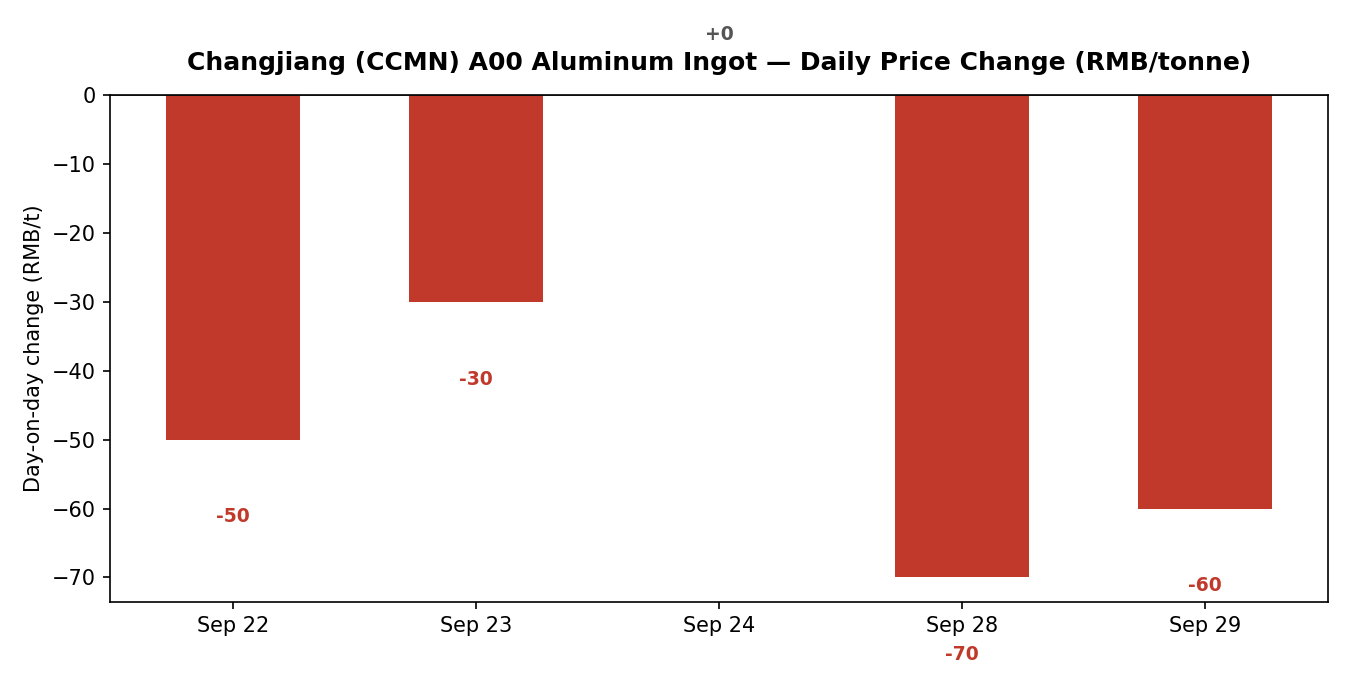
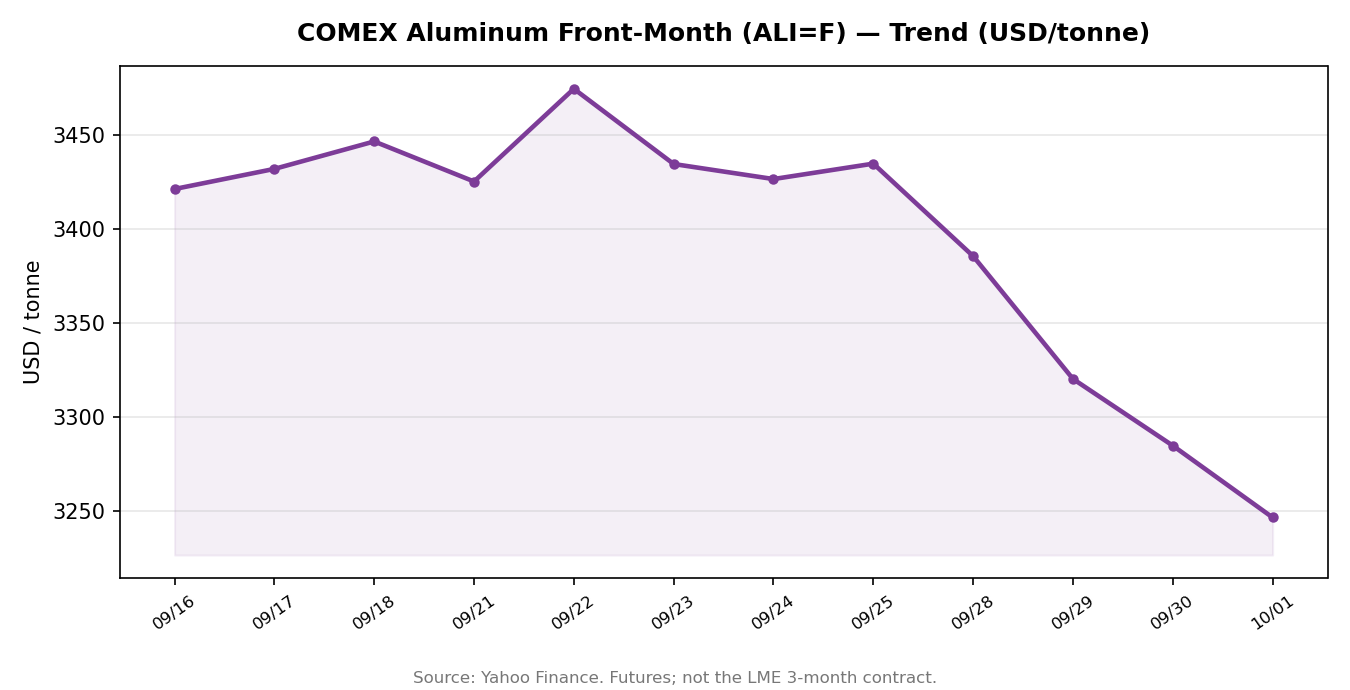
    September 29, 2026 — China’s domestic aluminum ingot market fell on the latest session. The Changjiang Nonferrous Metals Network (CCMN) A00 aluminum ingot benchmark moved -60 RMB/tonne day-on-day. Offshore, COMEX aluminum front-month futures closed at USD 3,246.8/t (-38.2, -1.16%).

    Cross-Platform Price Snapshot

    Benchmark Latest quote Day-on-day Source
    CCMN A00 aluminum ingot, spot (tax incl.) day change -60 RMB/t* -60 RMB/t Changjiang Nonferrous Metals Network
    COMEX aluminum, front month USD 3,246.8/t -38.2 USD/t (-1.16%) Yahoo Finance

    *CCMN’s absolute spot levels are member-only; day-on-day changes are public.

    CCMN A00: Recent Daily Changes

    Changjiang A00 aluminum ingot daily price changes

    Offshore: COMEX Trend

    COMEX aluminum front-month trend

    What It Means for Panel Buyers

    For buyers of aluminum façade panels and sheet, ingot is the single largest cost input. Sustained moves in the ingot benchmark typically feed through to mill and fabricator pricing within one to two quotation cycles. Buyers with Q4 project pipelines may want to request fresh quotes when the trend favors them — while remembering that surface treatment (PVDF, powder coating) and fabrication complexity still dominate the final panel price.

    Get this briefing every morning

    We publish a short aluminum ingot market update like this one every trading day — CCMN spot moves, offshore futures, and the charts that matter.

    Subscribe free by email →

    Data Notes

    • CCMN day-on-day changes are taken directly from CCMN’s daily A00 aluminum ingot reports (alu.ccmn.cn).
    • COMEX front-month prices via Yahoo Finance (futures contract, not LME 3-month).

    This briefing is for information only and does not constitute investment advice.

  • Solid Aluminum Panels Buying Guide: How to Choose the Right Facade Panels

    Solid Aluminum Panels Buying Guide: How to Choose the Right Facade Panels

    Selecting solid aluminum panels for a building facade is not just a procurement decision — it shapes the project’s appearance, durability, and maintenance costs for decades. Whether you are a contractor bidding on a curtain wall project, an architect specifying materials, or a distributor stocking panels for your dealers, a structured buying checklist helps you compare suppliers on facts rather than marketing claims. This guide walks through the key factors to evaluate before you place an order.

    1. Start with the Right Thickness

    Solid aluminum facade panels are typically available in 2.0mm, 2.5mm, and 3.0mm thicknesses. The choice depends on panel size, span between supports, and wind-load requirements:

    • 2.0mm — suitable for smaller cassettes, soffits, fascia, and interior cladding where structural demands are modest.
    • 2.5mm — the most common choice for standard exterior wall panels, balancing rigidity and weight.
    • 3.0mm — recommended for oversized panels, high-wind zones, and projects with strict flatness requirements.

    Ask the supplier to confirm which thickness they recommend for your largest panel size, and whether the panels are CNC-formed into cassettes with folded edges and stiffeners — proper forming matters as much as raw thickness.

    2. Check the Alloy and Temper

    For architectural cladding, the commonly specified alloys are 1001 and 3003 in H24 temper. 3003-H24 offers higher strength and better formability than pure aluminum, which makes it a reliable choice for folded cassette panels that must hold their shape over time. When comparing quotes, verify that the alloy and temper are stated on the mill certificate — not just in the marketing brochure. Panels made from recycled or unspecified alloy stock can vary in mechanical properties and may develop “oil canning” (visible waviness) after installation.

    3. Compare Surface Finishes Honestly

    The finish determines how the facade looks in year one — and in year fifteen. The three standard coating options for aluminum facade panels are:

    • PVDF (fluorocarbon) coating — the premium option for exterior facades, prized for color retention, chalk resistance, and weathering performance in harsh sun, salt air, and urban pollution.
    • Powder coating — a durable, cost-effective finish available in a wide color range; well suited to many commercial projects and interior applications.
    • Roller coating — an efficient coil-coating process that delivers consistent film thickness for standard colors.

    For a signature facade or a project with a long design life, PVDF is usually worth the premium. For budget-driven commercial work, powder coating often delivers the best value. Ask the supplier for coating thickness data and weathering test references rather than taking “premium quality” at face value.

    4. Confirm Sizes and Fabrication Capability

    A standard production ceiling for solid aluminum panels is around 1300 × 4000mm per panel. Beyond confirming the maximum size, evaluate the factory’s fabrication depth:

    • Can they produce cassettes with folded edges, corner returns, and welded or mechanically fixed corners?
    • Do they cut, punch, and drill for perforated or decorative patterns from your CAD drawings?
    • Can they handle curved or tapered panels for non-rectangular facade designs?

    A supplier that fabricates in-house from your shop drawings — rather than shipping flat sheets for a third party to form — gives you one point of responsibility and tighter quality control.

    5. Evaluate Color and Batch Consistency

    Color variation between batches is one of the most common complaints in facade projects. Before committing:

    • Request physical color chips or a sample panel in your specified RAL or custom color.
    • Ask whether panels for one elevation are coated in a single production run — this is the simplest way to avoid visible shade differences.
    • For metallic and anodized-look finishes, confirm how the supplier controls directional consistency, since these finishes are more sensitive to viewing angle.

    6. Look Past the Unit Price

    The cheapest quote per square meter is rarely the cheapest project. Factor in:

    • Yield and waste — does the supplier optimize cutting layouts for your panel schedule?
    • Packaging and freight — are panels protected for sea freight (film, edge protection, seaworthy crating)?
    • Documentation — mill certificates, coating test data, and installation drawings included with the shipment save time at customs and on site.
    • Communication — a factory team that responds to technical questions quickly will save you more than a small price difference ever could.

    Request a detailed, itemized quotation that breaks out panels, fabrication, finishing, packaging, and freight separately — this makes supplier comparison honest and straightforward.

    7. Ask for Proof, Not Promises

    A credible aluminum panel manufacturer should be able to show you:

    • Photos or case references of completed facade projects using their panels.
    • Sample panels or a mock-up for your review before mass production.
    • Clear production and quality-control procedures, from incoming coil inspection to final packing.

    If a supplier cannot provide samples or project references, treat that as a signal — not a dealbreaker, but a reason to dig deeper.

    A Simple Buyer’s Checklist

    Before you sign a purchase order for solid aluminum panels, confirm you have answers to these questions:

    • Thickness, alloy, and temper specified and certified?
    • Coating type and color matched to the project’s exposure and design life?
    • Maximum panel size covers your largest cassette?
    • Fabrication (folding, perforation, curving) done in-house from your drawings?
    • One production batch per elevation for color consistency?
    • Itemized quote separating panels, fabrication, finishing, packaging, and freight?
    • Samples approved and project references reviewed?

    Work through this list with two or three shortlisted suppliers, and the right partner will stand out quickly.

    Planning a facade project? Browse the product range at juchangalu.com — or send your drawings for a detailed, itemized quotation.

  • Aluminum Ingot Daily — September 30, 2026: A00 Extends Its Slide

    Aluminum Ingot Daily — September 30, 2026: A00 Extends Its Slide

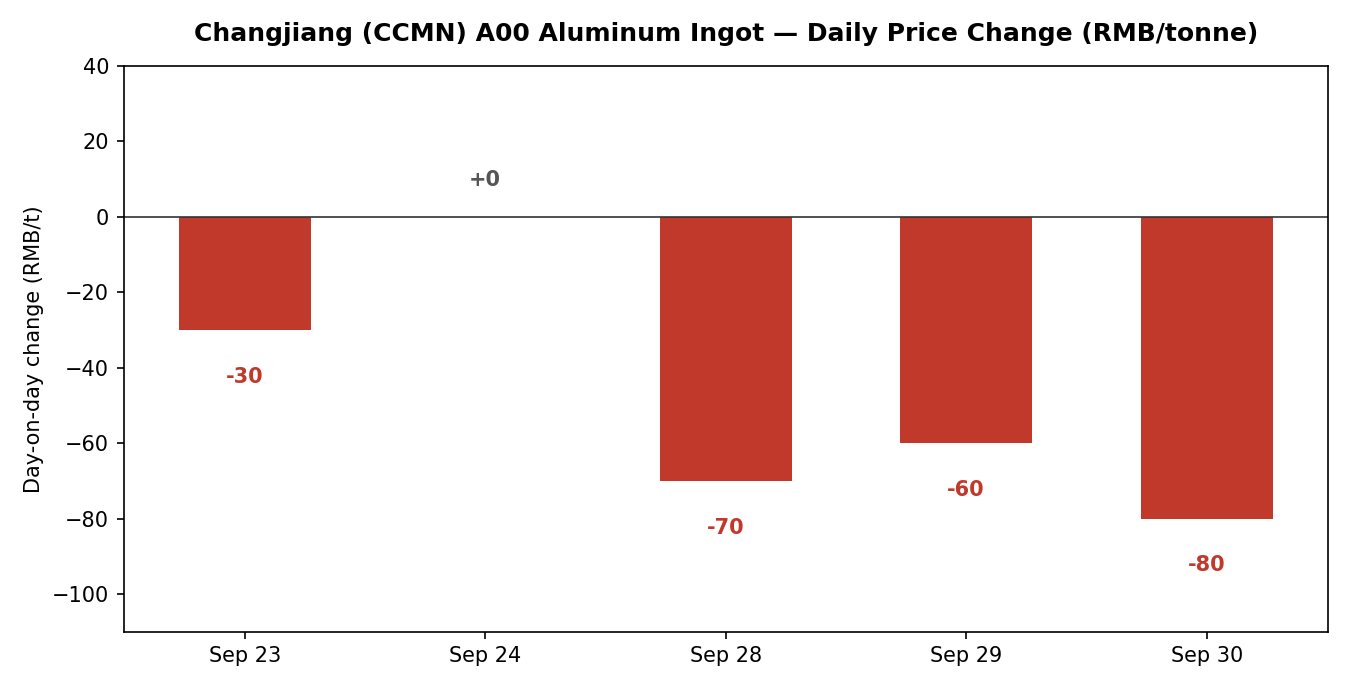
    September 30, 2026 — China’s domestic aluminum ingot market closed lower for the fourth time in five sessions. The Changjiang Nonferrous Metals Network (CCMN) A00 aluminum ingot benchmark fell RMB 80/tonne on the day — its steepest single-day drop of the week. Offshore, COMEX aluminum futures also retreated, pointing to a broad-based pullback rather than a purely domestic move.

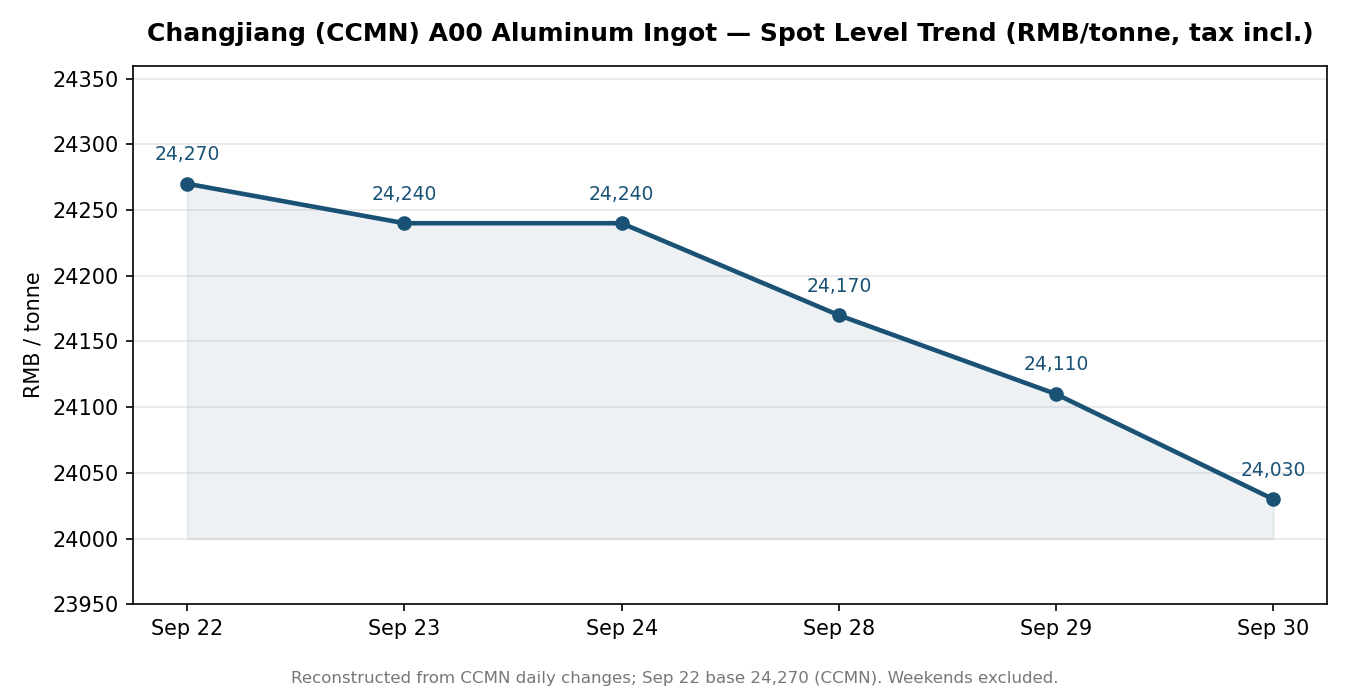
    Based on CCMN’s published daily changes, the estimated tax-included spot level now sits near RMB 24,030/tonne, down from RMB 24,270/tonne on September 22 — a decline of about 1.0% in six sessions.

    Cross-Platform Price Snapshot

    Benchmark Latest quote Day-on-day Source
    CCMN A00 aluminum ingot, spot (tax incl.) ≈ RMB 24,030/t* -80 RMB/t Changjiang Nonferrous Metals Network
    COMEX aluminum, front month USD 3,291/t -29 USD/t (-0.88%) Yahoo Finance

    *Estimated from CCMN’s published daily changes against the September 22 average of RMB 24,270/t. CCMN’s absolute spot levels are member-only; day-on-day changes are public.

    CCMN A00: Daily Changes

    Changjiang A00 aluminum ingot daily price change, September 23-30 2026

    After a flat session on September 24, selling pressure returned with three consecutive declines of RMB 70, 60 and 80/tonne into month-end.

    CCMN Spot Level Trend

    Changjiang A00 aluminum ingot spot level trend, September 22-30 2026

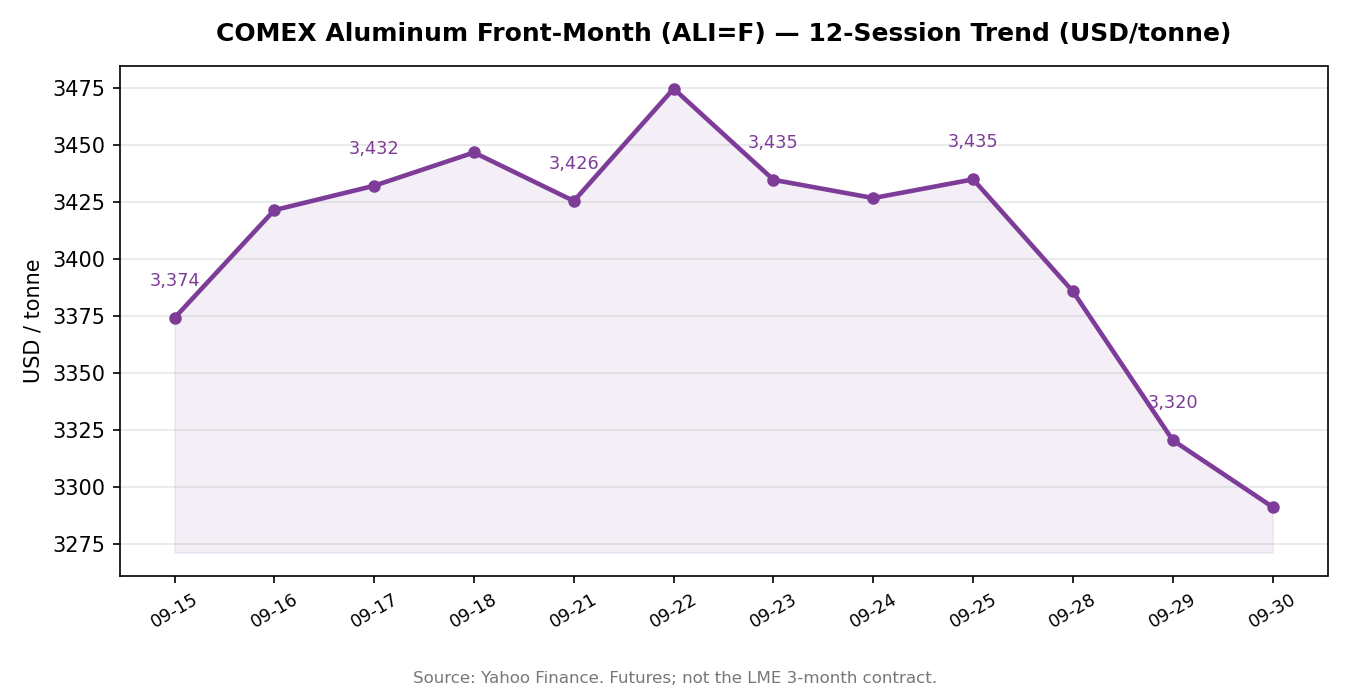
    Offshore: COMEX Also Lower

    COMEX aluminum front-month 12-session trend, September 2026

    COMEX aluminum front-month futures have fallen for five straight sessions, from USD 3,474.8/t on September 22 to USD 3,291.2/t — a 5.3% retreat from the recent high. The parallel weakness at home and abroad suggests month-end position squaring and pre-holiday caution are weighing on both markets, rather than a China-specific repricing.

    What It Means for Panel Buyers

    For buyers of aluminum façade panels and sheet, ingot is the single largest cost input. A sustained RMB 200+/tonne retreat in the ingot benchmark typically feeds through to mill and fabricator pricing within one to two quotation cycles. Buyers with Q4 project pipelines may find this a constructive window to request fresh quotes — while remembering that surface treatment (PVDF, powder coating) and fabrication complexity still dominate the final panel price.

    Get this briefing every morning

    We publish a short aluminum ingot market update like this one every trading day — CCMN spot moves, offshore futures, and the charts that matter.

    Subscribe free by email →

    Data Notes

    • CCMN day-on-day changes are taken directly from CCMN’s daily A00 aluminum ingot reports (alu.ccmn.cn).
    • CCMN spot levels are reconstructed estimates, not CCMN-published figures.
    • COMEX front-month prices via Yahoo Finance (futures contract, not LME 3-month).

    This briefing is for information only and does not constitute investment advice.