作者: wpusername2200

  • Carved Aluminum Façade Panels: Pattern Design Options and Specification Tips

    Carved Aluminum Façade Panels: Pattern Design Options and Specification Tips

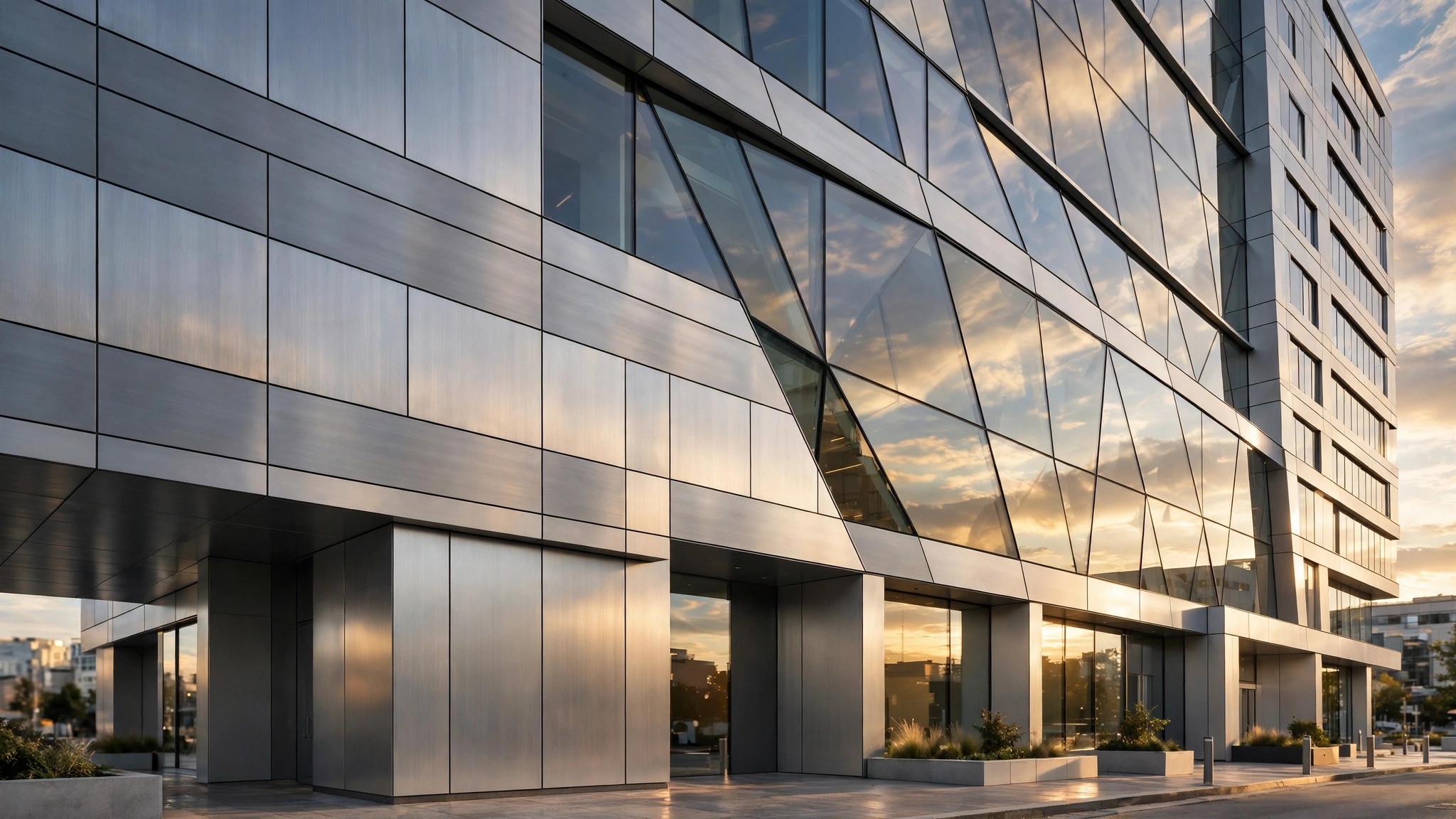
    Most aluminum facade panels look the same at first glance: flat, smooth, and predictably metallic. But for architects who need a facade that carries a building’s identity — a hotel that wants a signature pattern, or a cultural center that references local motifs — carved aluminum facade panels offer something flat panels cannot: depth, shadow, and a truly custom surface.

    What Are Carved Aluminum Panels?

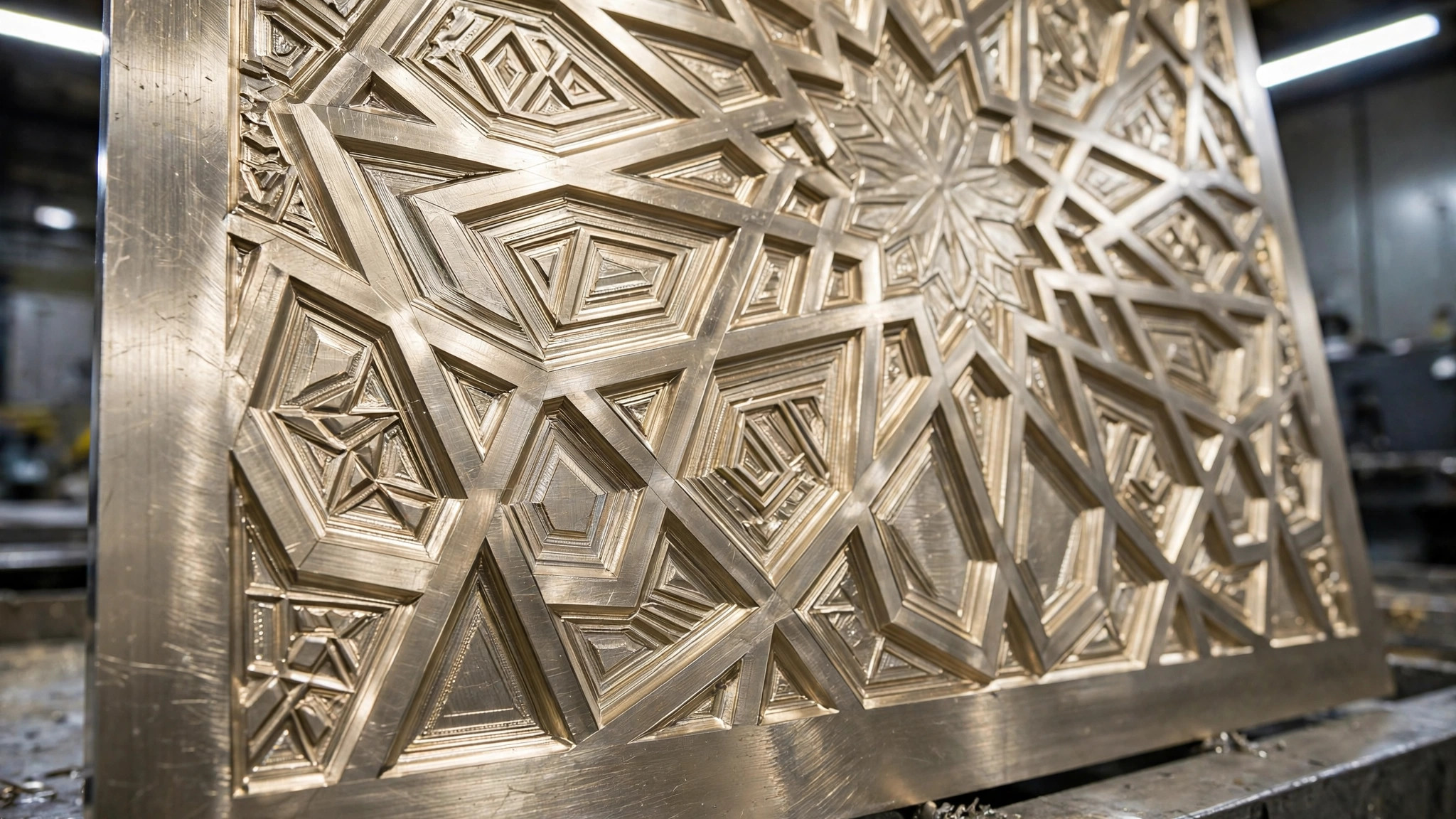
    Carved aluminum panels — also called engraved or CNC-carved panels — are solid aluminum panels whose surface is cut with relief patterns using computer-controlled carving equipment. Unlike perforated panels, where material is cut through to create holes, carving removes only part of the panel thickness, leaving a three-dimensional relief that plays with light and shadow throughout the day.

    The base material is the same as standard solid aluminum facade panels: 1001 or 3003 series aluminum alloy in the H24 temper, in thicknesses of 2.0, 2.5, or 3.0 mm, with a conventional maximum panel size of 1300 × 4000 mm. Because the pattern lives in the metal itself rather than in a printed or applied layer, it will not fade, peel, or delaminate.
    Close-up of a CNC-carved geometric relief pattern on a solid aluminum facade panel
    Close-up of a carved geometric relief pattern on a solid aluminum panel; deeper carving is paired with 2.5 or 3.0 mm stock to preserve panel strength.

    Pattern Design Options for Carved Aluminum Facade Panels

    Almost any vector-based artwork can be translated into a carved pattern, but in practice, architectural patterns fall into a few families:

    • Geometric patterns — repeating triangles, hexagons, diamonds, and lattice grids. The most popular choice for commercial facades: crisp, scalable, and forgiving at large sizes.
    • Floral and botanical motifs — stylized leaves, waves, and organic curves. Common in hospitality and cultural projects where the facade should feel warmer.
    • Regional and cultural motifs — patterns referencing local architecture, textiles, or symbols. These give civic buildings and airport terminals a sense of place.
    • Custom brand geometry — abstract forms derived from a company or institution’s visual identity, sized to read clearly from the street.
    Decorative carved aluminum wall panels in a warmly lit commercial lobby
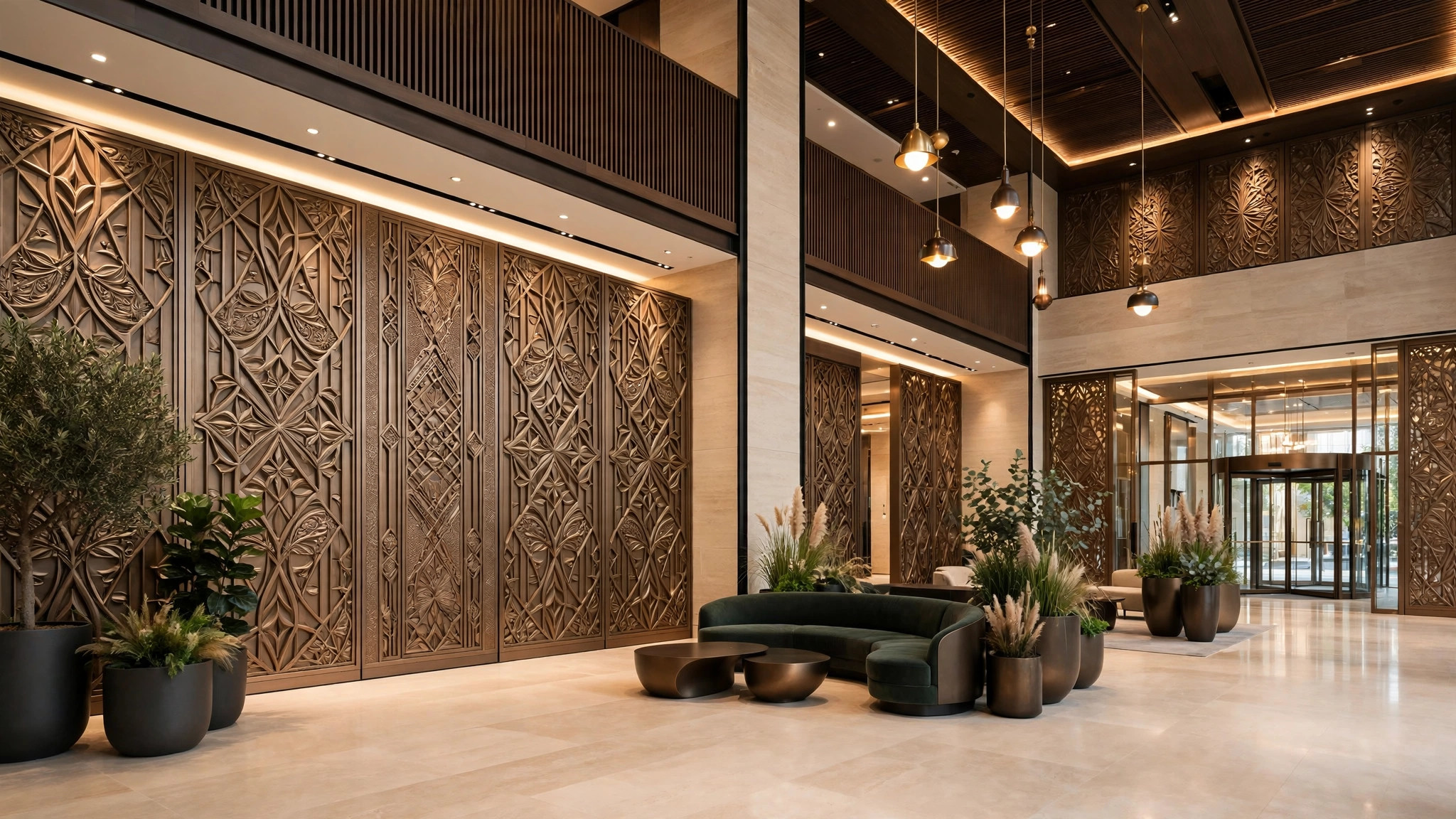
    Carved aluminum panels in bronze tones used as a signature wall surface in a commercial lobby interior.

    How Carved Patterns Are Fabricated

    Once the pattern drawing is finalized, the workflow in the factory is straightforward:

    • Panel folding: the flat aluminum sheet is cut, folded, and reinforced into a cassette (tray) panel with stiffening ribs, the same as a standard solid aluminum panel.
    • CNC carving: the cassette face is fixed on the carving bed and the machine traces the pattern at the specified depth. Each panel is numbered so the pattern continues seamlessly across the facade.
    • Surface finishing: the panel is cleaned and finished with PVDF fluorocarbon coating, powder coating, or roll coating, depending on the project specification. The finish flows into the carved recesses, protecting every exposed surface.
    • Inspection and numbering: panels are checked against the approved pattern drawing and labeled by elevation and sequence so the installer can hang them in the right order.

    Design Rules: Pattern Scale, Thickness, and Panel Size

    Carving changes the panel’s cross-section, so a few design rules shape the work:

    • Thickness selection: for carved panels, 2.5 mm or 3.0 mm is the standard recommendation. The extra thickness leaves sufficient material beneath the deepest part of the relief. 2.0 mm panels are generally reserved for shallow, decorative patterns on interior applications.
    • Panel size limits: the conventional maximum remains 1300 × 4000 mm. Large-scale patterns are designed to span multiple panels, with the artwork split along panel joints so the seams fall on natural breaks in the motif.
    • Relief depth vs. weathering: exterior patterns with moderate depth (a fraction of the panel thickness) shed rain naturally. Very deep, narrow grooves on a facade can trap dust over time; exterior patterns are usually designed with slightly wider channels for this reason.
    • Wind and structural behavior: carving does not change how a panel is fixed — cassettes still hang on the same subframe systems — but the factory should review the pattern against the panel’s structural role, especially for large exterior cassettes in high-wind zones.

    Finishes That Make Carved Panels Last

    • PVDF (fluorocarbon) coating: the premium choice for exterior carved panels. It keeps color stable under UV exposure and resists chalking, which matters because a carved surface catches light from many angles and any uneven fading would be visible.
    • Powder coating: a practical option for interior carved panels and sheltered exterior areas, available in a wide color range with good mechanical protection.
    • Roll coating: factory-applied coil coating that gives a uniform finish before the sheet is formed; a solid choice for projects that prioritize consistent color across hundreds of panels.

    Metallic tones — champagne, bronze, copper — are the most requested colors for carved panels because the relief’s highlights and shadows exaggerate the metallic effect. Whatever the color, request that carved samples be coated with the same process as the production run, so the sample shows how light will actually behave on the finished surface.

    Where Carved Aluminum Facade Panels Work Best

    Carved aluminum panels earn their premium where the facade is a brand statement:

    • Hotel and hospitality entrances: a carved feature wall at the drop-off or lobby turns the arrival experience into a photo moment.
    • Cultural and civic buildings: museums, theaters, and terminals use carved motifs to connect the building to its context.
    • Corporate headquarters: subtle geometric reliefs give glass-and-metal towers a distinctive texture without changing the overall massing.
    • High-end interiors: lobbies, elevator lobbies, and atrium walls are the most common use — the carved pattern becomes the interior’s signature surface.

    For facades, carved panels are often combined with flat panels of the same color: the carved panels form a focal band or entrance zone while flat panels cover the field. This mix controls cost while concentrating visual impact where people actually look.

    Specifying Carved Panels: What the Factory Needs From You

    A carved-panel inquiry moves fastest when it arrives with these items:

    • Vector artwork — the pattern in CAD or vector format (DWG, DXF, or AI), drawn at real scale or with a defined repeat unit.
    • Elevation drawings — showing where carved panels go, panel module sizes, and which areas use flat panels.
    • Color reference — a RAL or project-specific color chip, so the finish can be matched before carving begins.
    • Interior or exterior — this decides the finish system and the recommended thickness.
    • Desired relief depth — deep sculptural relief or shallow decorative texture; the factory will confirm what the panel thickness allows.

    Before full production, a full-size carved sample panel is strongly recommended. It is the only reliable way to judge how the pattern reads at distance, how shadows fall across the relief, and whether the pattern scale needs adjustment. A sample also lets the architect confirm the coating color in the exact finish specified for the project.

    Carved aluminum facade panels turn a standard curtain wall material into a custom architectural surface — with the same alloy, the same fixation systems, and the same weatherproof performance as the flat panels around them. If your project calls for a facade with a signature, browse the panel range at juchangalu.com or send your drawings for a detailed quotation.
  • Shipping Solid Aluminum Panels from China to the US: A Buyer’s Guide to Packaging, Freight, and Damage Prevention

    Shipping Solid Aluminum Panels from China to the US: A Buyer’s Guide to Packaging, Freight, and Damage Prevention

    Ordering solid aluminum facade panels from a Chinese factory is often the most cost-effective way to supply a curtain wall project in the United States. But the journey those panels take — from factory floor to your job site or warehouse — is where many buyers lose money, time, or both. Scratched PVDF coatings, dented edges, bent panels, and customs delays are all preventable problems when you understand how aluminum panels should be packaged, shipped, and received. This guide walks through the practical logistics of importing solid aluminum facade panels, so your shipment arrives in the condition you paid for.

    Why Aluminum Facade Panels Need Special Attention in Transit

    Solid aluminum facade panels are thin by design — typically 2.0mm, 2.5mm, or 3.0mm thick — yet they can span up to 1300mm × 4000mm in a single sheet. That combination of large surface area and light weight makes them vulnerable in ways that bulkier building materials are not. The most common transit damage falls into three categories:

    • Surface scratches and abrasion. PVDF, powder-coated, or roll-coated finishes look flawless leaving the factory but can be dulled or scored when panels rub against each other or against crate surfaces during weeks of vibration at sea.
    • Edge and corner dents. Panel edges are the thinnest points of the folded cassette. A sharp impact — from a forklift tine, a shifting crate, or a dropped bundle — can deform them beyond what installation tolerances allow.
    • Bending and oil-canning marks. Long panels flex. If they are stacked flat without support or lashed unevenly, the flex can leave visible waviness that catches light on a finished facade.

    None of these are manufacturing defects; they are logistics failures. The good news is that experienced factories have standardized packaging systems specifically designed to eliminate them.

    Factory Packaging: What Good Protection Actually Looks Like

    When you are evaluating a supplier, ask for photos or a video of their export packaging before you place an order. Professional export-grade packaging for solid aluminum panels should include:

    • Individual protective film. Every visible panel face should leave the factory with a peelable protective film. The film should stay on through installation and only be removed during final cleaning.
    • Foam or paper interlayers. Panels should never touch face-to-face. Foam sheets, kraft paper, or bubble interlayers between panels prevent abrasion when the stack vibrates in a container.
    • Edge protectors and corner guards. Rigid plastic or cardboard edge protectors absorb the impacts that panels inevitably take during loading and unloading.
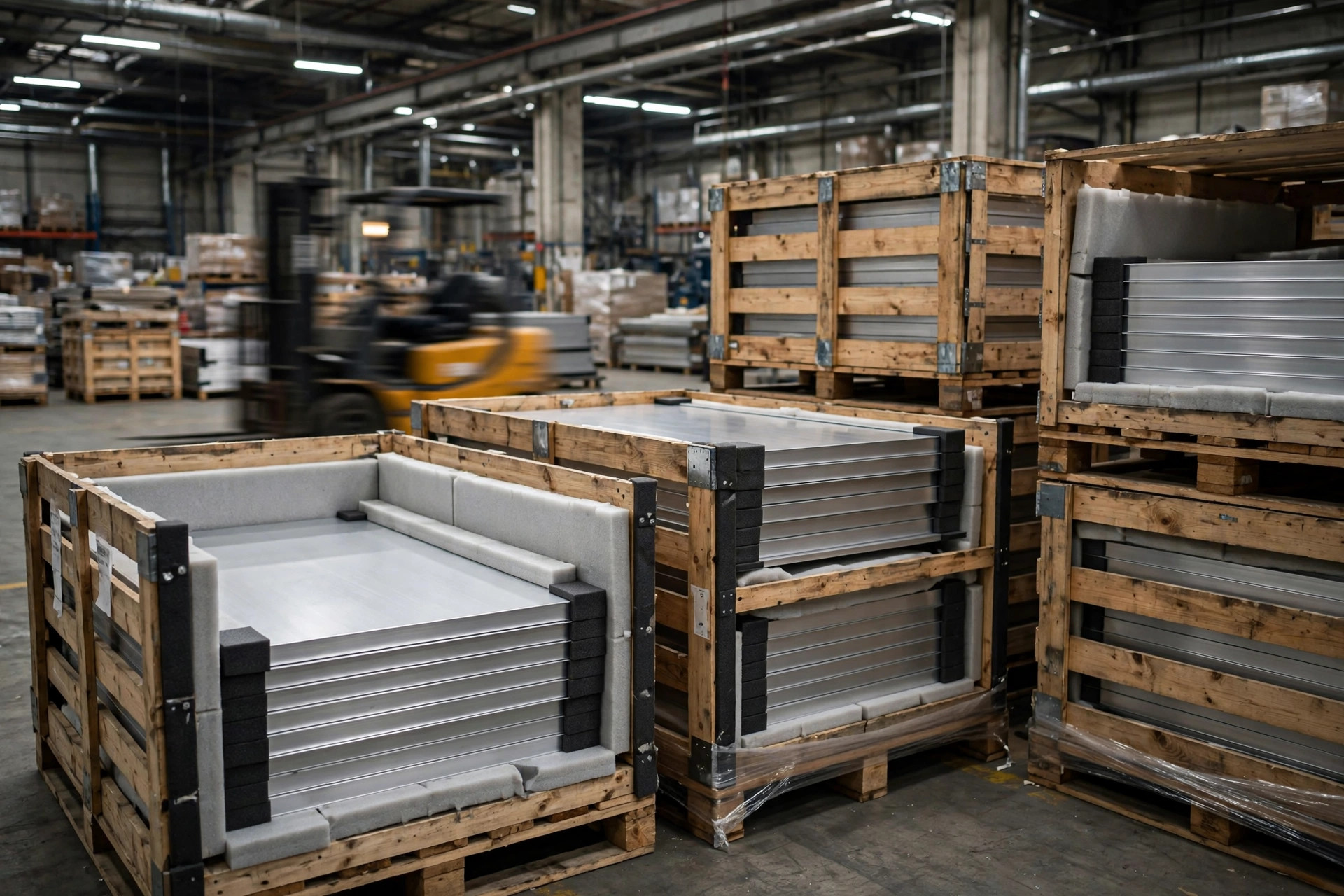
    • Seaworthy wooden crates or A-frame racks. For sea freight, panels are typically fixed into fumigated wooden crates or strapped to steel A-frame racks. The crate must be sized so panels cannot shift — movement inside the crate is what causes most damage.
    • Vertical vs. flat stacking. Large cassette panels are often shipped vertically on A-frames to reduce pressure marks; flat sheets in crates should be fully supported across their length.

    If a factory cannot show you its export packaging, or ships panels wrapped in nothing but plastic film, treat that as a red flag — no matter how competitive the quotation looks.

    Export crates of solid aluminum facade panels with protective film, foam interlayers, and edge guards in a factory warehouse
    Export-grade packaging: protective film on every panel face, foam interlayers between panels, and rigid edge guards inside seaworthy wooden crates.

    FCL vs LCL: Choosing the Right Freight Option

    Most US buyers import aluminum panels by sea. The two main options are full container load (FCL) and less-than-container load (LCL), and the choice affects both cost and damage risk:

    • FCL (20ft or 40ft container). Your panels fill their own container. With a maximum panel length of 4000mm, a standard 40ft container accommodates full-size panels without cutting them down. FCL is the safer option: your goods are loaded once at the factory, sealed, and unloaded once at destination, with minimal handling in between. For facade projects, this is almost always the right choice.
    • LCL (shared container). Your crates share a container with other shippers’ cargo. It costs less per shipment for small quantities, but every additional touch point — consolidation warehouse, deconsolidation at the port — adds handling risk. Reserve LCL for sample shipments or small replacement orders, never for a full facade’s worth of panels.

    Door-to-door services (factory to your warehouse) are convenient and shift more responsibility to the forwarder, while port-to-port (FOB) gives you control over the US-side carrier. Whichever you choose, confirm who is responsible for insurance: marine cargo insurance is inexpensive relative to a full container of finished panels, and you want it in writing before the vessel sails.

    Documentation and US Customs: Getting It Right the First Time

    Customs clearance delays are among the most expensive avoidable problems in importing aluminum panels — port storage fees accumulate daily. Prepare these documents in advance with your supplier and freight forwarder:

    • Commercial invoice and packing list. Must match the actual goods: panel dimensions, quantities, alloy (1100/3003 H24), and finish type (PVDF, powder coating, or roll coating). Inconsistencies between documents and cargo trigger inspections.
    • Bill of lading. Confirms the consignee and delivery terms (FOB, CIF, DDP, etc.). Understand your Incoterms: DDP means the seller handles everything through US delivery, while FOB leaves the ocean freight and US-side logistics to you.
    • Certificate of origin. Many buyers and some trade programs require proof of where the panels were manufactured.
    • Duty and tariff planning. US import duty rates for aluminum products have changed over time, so confirm the current classification and duty rate with your customs broker before you budget — do not rely on a supplier’s informal estimate.

    A reputable factory should provide export documentation routinely; if paperwork feels like a struggle during the quoting stage, it will not get easier after production.

    Crated aluminum facade panels secured on steel A-frame racks being loaded into a shipping container
    Full-container loading: panels fixed on steel A-frame racks make the most of 40ft container capacity and minimize handling between factory and job site.

    Receiving Inspection: Catching Damage Before You Sign

    The moment of delivery is your last chance to document problems with evidence that a freight claim requires. Build this into your site or warehouse routine:

    • Photograph everything before unloading. Take wide shots of the container interior or truck, close-ups of each crate, and the seal number. If a crate is visibly damaged, photograph it from multiple angles before opening it.
    • Open crates and inspect a sample on the spot. Peel back the protective film on a few panels from different crates — edge dents and scratches are what you are looking for. Do not sign a clean receipt if you find damage; note the exceptions on the delivery paperwork.
    • Count and measure. Verify quantities against the packing list and spot-check panel dimensions. Shortages discovered weeks later are nearly impossible to claim.
    • Store panels correctly. Keep crates in a dry, covered area. Do not leave unopened crates in standing water — moisture wicking into packaging is a common cause of finish staining. Store crated panels on level ground, supported evenly.

    Report any damage to the supplier and your freight forwarder within the claim window stated in your freight documents, with your photos attached. Prompt, documented reporting is the difference between a resolved claim and an argument.

    A Pre-Shipment Checklist for Your Next Order

    Before production begins, align on these logistics points with your factory so nothing is improvised at the loading dock:

    • Confirm export packaging method in writing (crate or A-frame, interlayers, edge protectors, protective film).
    • Agree on FCL vs LCL and Incoterms, with marine insurance confirmed.
    • Set the panel size plan against container capacity — panels up to 1300mm × 4000mm fit a 40ft container without length compromises.
    • Require pre-loading photos or video from the factory.
    • Have your customs broker review the invoice, packing list, and classification before the vessel departs.

    Panels that travel well are panels that install well. A supplier who is disciplined about export logistics is usually disciplined about everything else too — treat the packaging conversation as an early test of the partnership, not an afterthought.

    Browse the range of solid aluminum facade panels at juchangalu.com, or send your drawings for a detailed quotation and export packaging plan.

  • Wind Load and Impact Resistance of Solid Aluminum Facade Panels: A US Specifier’s Guide

    Wind Load and Impact Resistance of Solid Aluminum Facade Panels: A US Specifier’s Guide

    When American architects and contractors specify metal cladding for a commercial facade, two questions come up before almost anything else: will it hold up in high winds, and will it survive impact? For projects in Florida, the Gulf Coast, Texas, and other wind-prone regions, these are not academic concerns — they determine which products pass plan review and which get rejected at the submittal stage. This guide explains how solid aluminum facade panels perform under wind load and impact, what actually drives that performance, and how US buyers can specify it correctly.

    Why Wind Load Performance Matters for Aluminum Facade Panels

    Unlike a painted wall, a facade panel system is a collection of individual elements exposed to aerodynamic forces. Wind flowing around a building creates positive pressure on the windward face and suction on the leeward and side faces — and suction, not pressure, is usually the controlling force on lightweight cladding. Edge zones and corners can see design pressures several times higher than the middle of a wall, which is why codes require buildings to be divided into wind zones.

    In the United States, wind design follows ASCE 7, which gives the wind speed map and pressure coefficients, while project specifications typically reference ASTM E330 (structural performance of exterior windows, doors, and curtain walls by uniform static air pressure difference) as the test method for cladding components. A solid aluminum panel system is generally evaluated in the same way as other metal cladding: the complete assembly — panel, fixings, and subframe — is what gets tested, not the aluminum sheet alone.

    For the buyer, the practical takeaway is simple: wind performance is a system property. Panel thickness, panel size, stiffening, cassette depth, and the fixing pattern all contribute. Asking only about the aluminum alloy tells you very little about whether the facade will pass a structural review.

    How Panel Thickness and Geometry Resist Wind Pressure

    Wind pressure bends a panel between its support points, much like a load on a beam. Three geometric factors dominate the result:

    • Panel thickness. Solid aluminum facade panels are most commonly produced in 2.0mm, 2.5mm, and 3.0mm thicknesses. Thicker material resists deflection and bending stress significantly better — all else equal, a 3.0mm panel can span a noticeably larger module than a 2.0mm panel under the same wind load. For high-wind regions, moving up one thickness grade is often the most straightforward way to meet deflection limits without shrinking the panel module.
    • Panel module size. Deflection grows quickly as the unsupported span increases. Large-format panels — standard production commonly reaches up to 1300 × 4000mm — look impressive but demand careful engineering on windy elevations. On corner and parapet zones, designers often reduce module size or add intermediate fixing points to keep deflections within acceptable limits.
    • Stiffening and cassette form. Factory-folded cassette (tray) panels with stiffener ribs on the back face behave very differently from a flat sheet. The folded edges add rigidity around the perimeter, and welded or glued stiffeners reduce mid-span deflection. When comparing quotations from different factories, ask how each supplier stiffens large modules — the answers reveal a lot about engineering depth.

    Alloy choice plays a supporting role: 3003-H24 aluminum-manganese alloy offers higher strength than 1100-series pure aluminum, making it the common choice for exterior facade work. But geometry and system design, not alloy alone, decide wind performance.

    Back face of a solid aluminum cassette facade panel showing stiffener ribs and fixing points
    The back face of a cassette panel: folded edges and stiffener ribs add rigidity that controls deflection under wind load.

    Impact Resistance: Hail, Debris, and Hurricane-Borne Missiles

    Impact is the second half of the storm story, and it is where solid aluminum panels show a clear advantage over composite alternatives. A solid aluminum panel is a single, homogeneous sheet of metal — there is no core layer to delaminate, no bond line that can fail after repeated strikes. Hail impact that might crack a brittle surface or deform a thin skin typically leaves a solid aluminum panel with, at worst, a local dent that does not compromise weather integrity.

    In hurricane-prone regions such as South Florida, building codes add a specific requirement: the building envelope must resist wind-borne debris impact. Test protocols commonly referenced in US specifications include ASTM E1886 and E1996 for missile impact and cyclic pressure loading, and products used in the Miami-Dade High Velocity Hurricane Zone carry a Notice of Acceptance (NOA). Buyers should understand what these programs mean in practice: they evaluate complete tested assemblies, and passing them requires the exact panel thickness, size, and fixing configuration that was tested. Substituting a thinner panel or a wider module after approval can void the basis of the evaluation.

    For projects outside the HVHZ, impact resistance still matters — hailstorms across the Midwest and Texas routinely damage roofs and cladding. When reviewing a supplier, ask whether they can point to impact test data for their standard cassette system, and confirm which assembly the data covers. A factory that can document its tested configuration is worth more than one that speaks only in generalities.

    Designing the Fixing System for Wind Performance

    The panel never works alone: it hangs on a fixing system that must transfer wind loads to the building structure without failing, fatiguing, or allowing excessive movement. Several details deserve buyer attention:

    • Fixing density and layout. More fixing points mean shorter spans and lower stress per fastener — but also more penetrations and more labor. The layout should reflect the wind zones: corners and edges get tighter fixing patterns than field areas.
    • Movement accommodation. Aluminum expands and contracts with temperature. Fixings must allow in-plane movement while remaining firmly engaged against suction loads. Slotted holes, sliding clips, or cassette hook systems are typical solutions; rigid point fixings that fight thermal movement invite fatigue cracking over time.
    • Subframe stiffness. The aluminum or steel subframe behind the panels must be stiff enough that it does not deflect excessively under load and overload individual panels. System design — not just panel selection — determines long-term reliability.
    • Fastener quality. Stainless steel fasteners are the standard choice for exterior aluminum systems to avoid galvanic corrosion between dissimilar metals. This is a small line item with outsized consequences when it is value-engineered away.
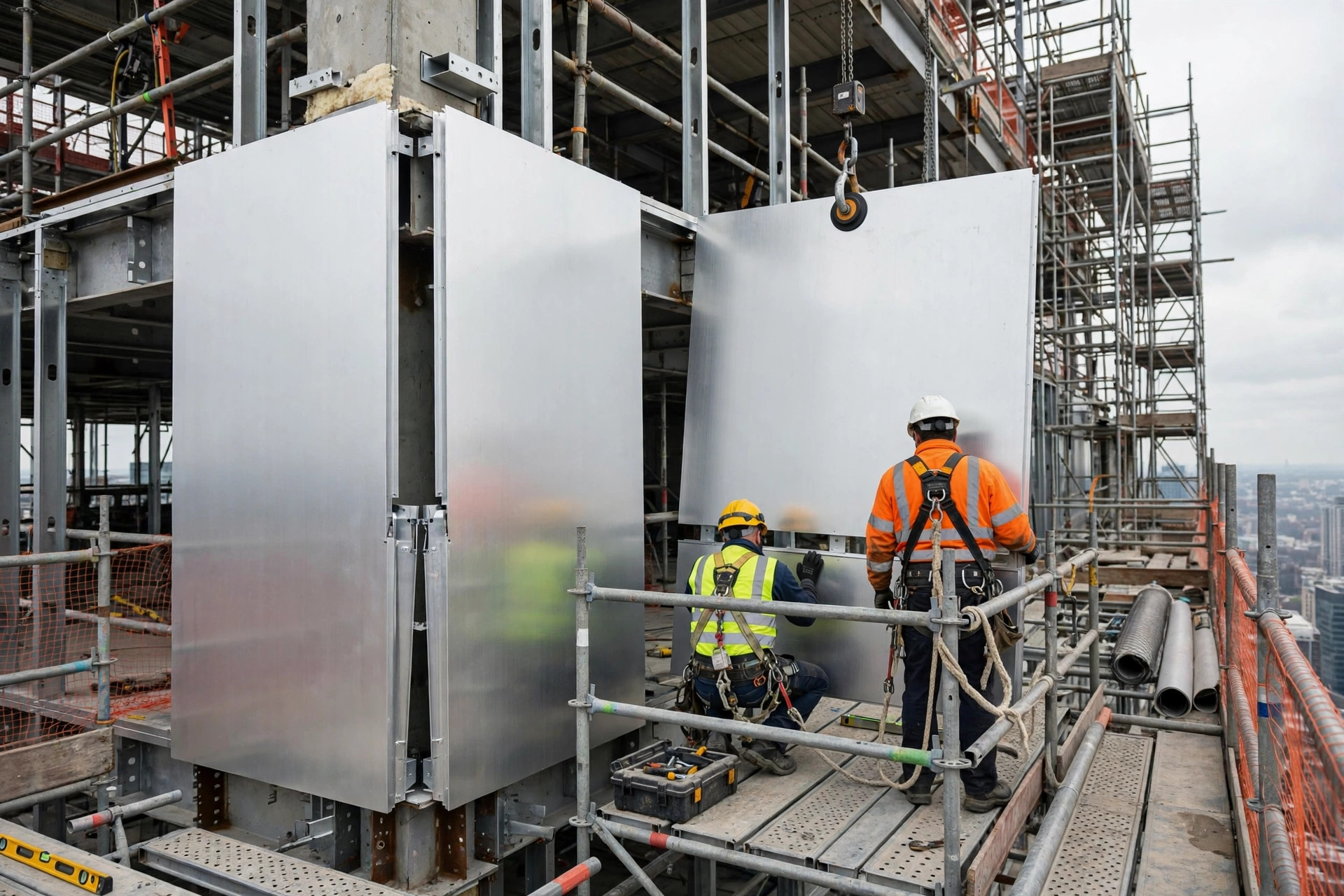
    Installation crew mounting large aluminum facade panels on a commercial building exterior
    Installation matters as much as material: fixing density and subframe stiffness transfer wind loads safely to the building structure.

    A Specifier’s Checklist: What to Ask Your Panel Factory

    When you request quotations for solid aluminum facade panels, wind and impact performance should appear in the technical discussion, not just the price comparison. A practical checklist:

    • What is the maximum standard panel size (for example, up to 1300 × 4000mm), and how does recommended module size change for high-wind elevations?
    • Which thicknesses (2.0 / 2.5 / 3.0mm) and alloys (such as 3003-H24) are offered, and what does the factory recommend for the project’s wind zone?
    • How are large modules stiffened — welded ribs, adhesive-bonded stiffeners, or deeper cassette folds?
    • Can the supplier provide structural test data (e.g., ASTM E330-type uniform load testing) for their standard cassette assembly, and exactly which configuration was tested?
    • What impact test data exists for the system, and does it cover the missile-impact protocols relevant to the project location?
    • What surface finishes are available (PVDF, powder coating, or roll coating), and how is finish warranty documented for coastal or high-UV exposure?
    • Are shop drawings and a fixing layout part of the supply package, so the installer and the structural reviewer work from the same geometry?

    Factories that answer these questions precisely — with test reports, drawings, and configuration-specific data — are the ones whose facades perform as specified. Those that answer vaguely tend to leave the engineering to the installer, which is exactly where wind-related failures begin.

    Solid aluminum panels earn their place on US facades through a straightforward combination: homogeneous metal construction, sensible thickness selection, engineered stiffening, and a fixing system designed for both suction loads and thermal movement. Specify the system, verify the data, and the facade will handle what the weather brings. Browse product options at juchangalu.com, or send your drawings for a detailed quotation tailored to your project’s wind zone.

  • Aluminum Ingot Daily — October 19, 2026: A00 Rose

    Aluminum Ingot Daily — October 19, 2026: A00 Rose

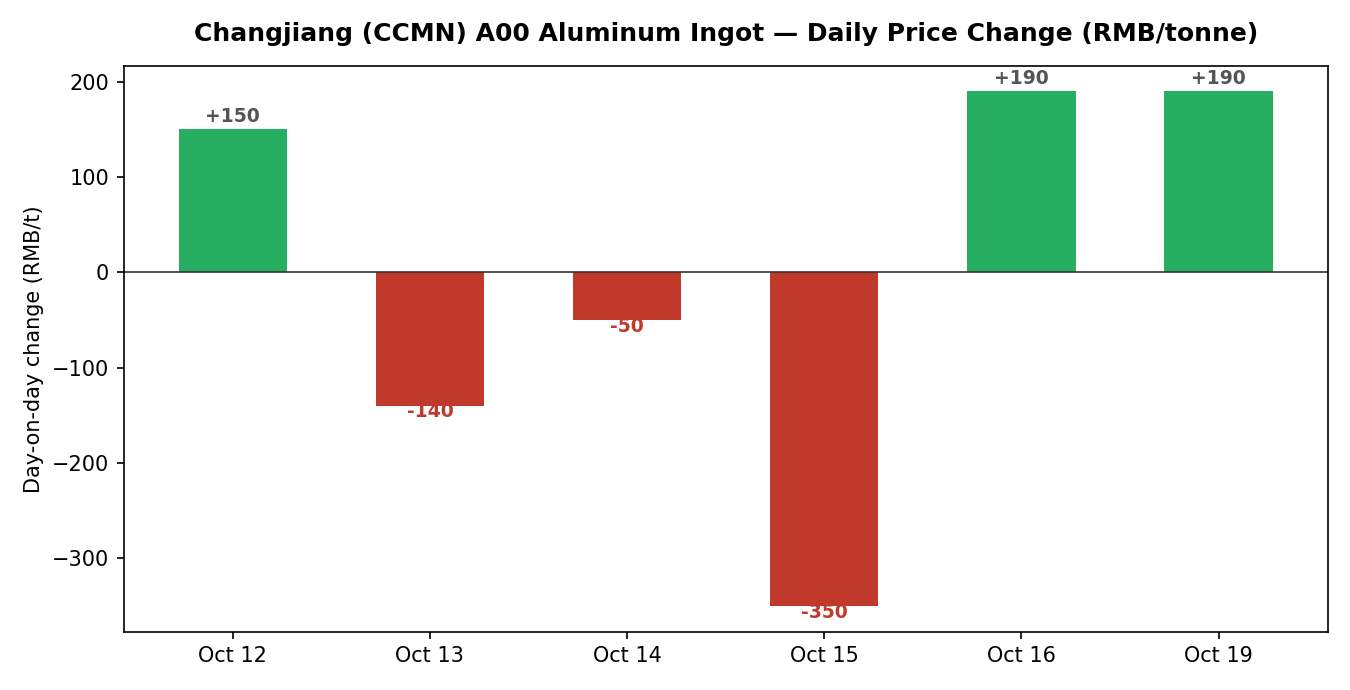
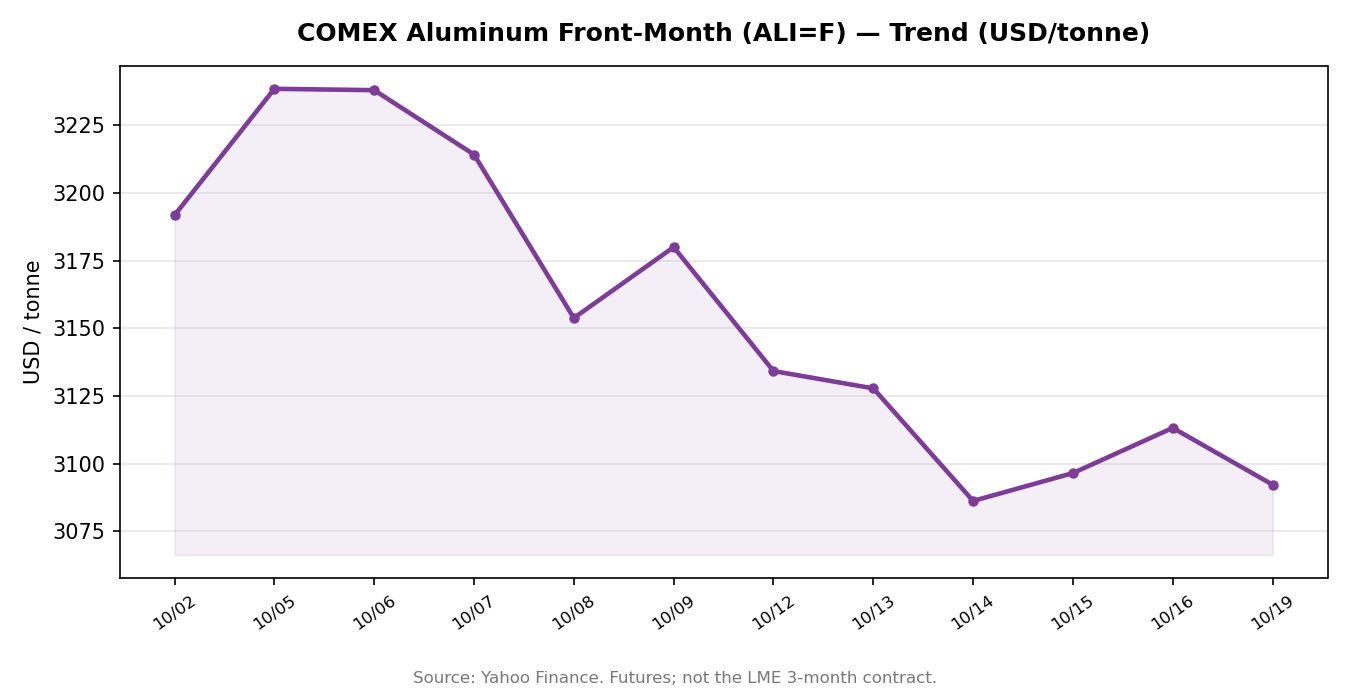
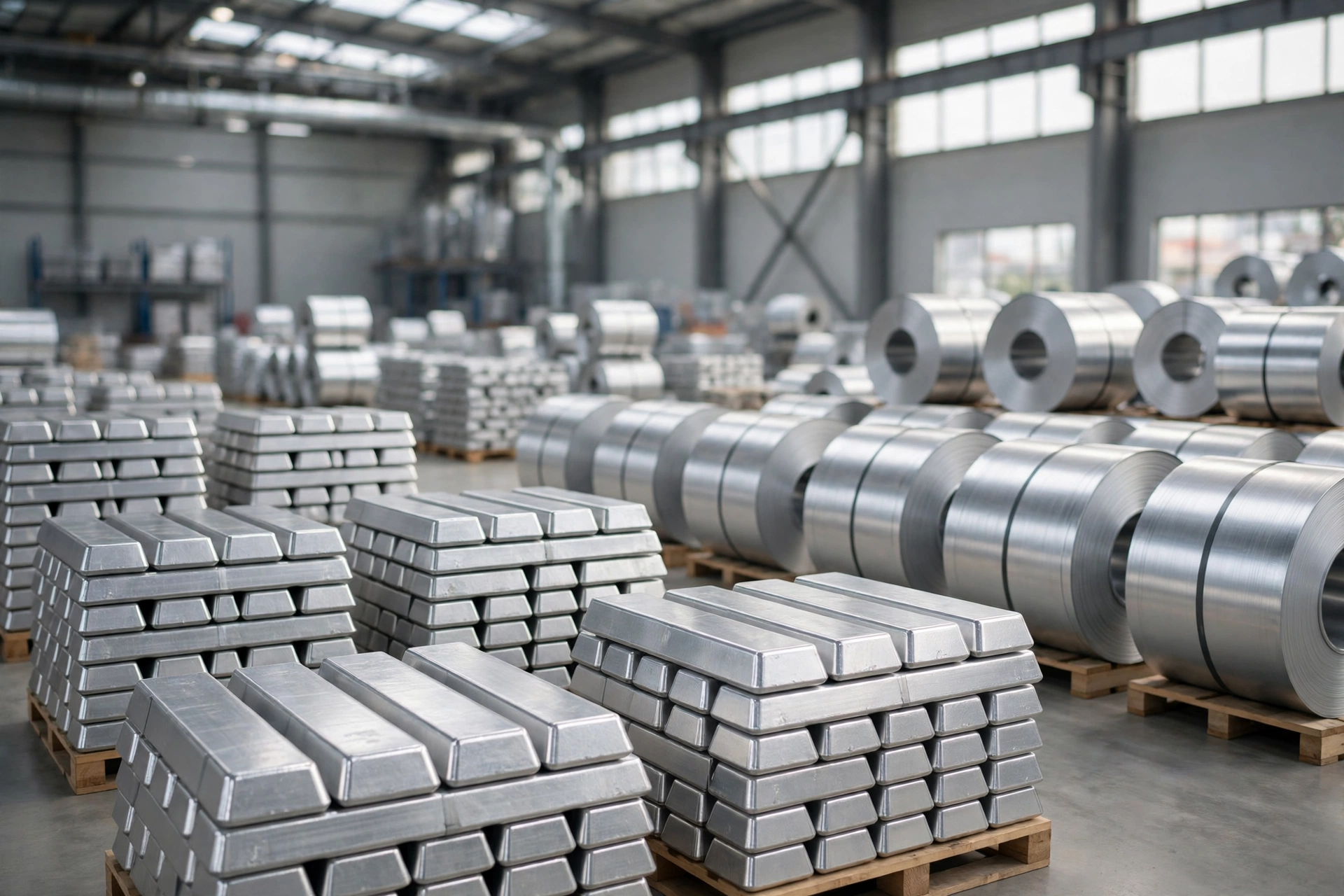
    October 19, 2026 — China’s domestic aluminum ingot market rose on the latest session. The Changjiang Nonferrous Metals Network (CCMN) A00 aluminum ingot benchmark moved +190 RMB/tonne day-on-day. Offshore, COMEX aluminum front-month futures closed at USD 3,092.2/t (-21.0, -0.67%).

    Cross-Platform Price Snapshot

    Benchmark Latest quote Day-on-day Source
    CCMN A00 aluminum ingot, spot (tax incl.) day change +190 RMB/t* +190 RMB/t Changjiang Nonferrous Metals Network
    COMEX aluminum, front month USD 3,092.2/t -21.0 USD/t (-0.67%) Yahoo Finance

    *CCMN’s absolute spot levels are member-only; day-on-day changes are public.

    CCMN A00: Recent Daily Changes

    Changjiang A00 aluminum ingot daily price changes

    Offshore: COMEX Trend

    COMEX aluminum front-month trend

    What It Means for Panel Buyers

    For buyers of aluminum façade panels and sheet, ingot is the single largest cost input. Sustained moves in the ingot benchmark typically feed through to mill and fabricator pricing within one to two quotation cycles. Buyers with Q4 project pipelines may want to request fresh quotes when the trend favors them — while remembering that surface treatment (PVDF, powder coating) and fabrication complexity still dominate the final panel price.

    Get this briefing every morning

    We publish a short aluminum ingot market update like this one every trading day — CCMN spot moves, offshore futures, and the charts that matter.

    Subscribe free by email →

    Data Notes

    • CCMN day-on-day changes are taken directly from CCMN’s daily A00 aluminum ingot reports (alu.ccmn.cn).
    • COMEX front-month prices via Yahoo Finance (futures contract, not LME 3-month).

    This briefing is for information only and does not constitute investment advice.

  • Aluminum Facade Panels for Airport and Transportation Projects: A Specification Guide

    Aluminum Facade Panels for Airport and Transportation Projects: A Specification Guide

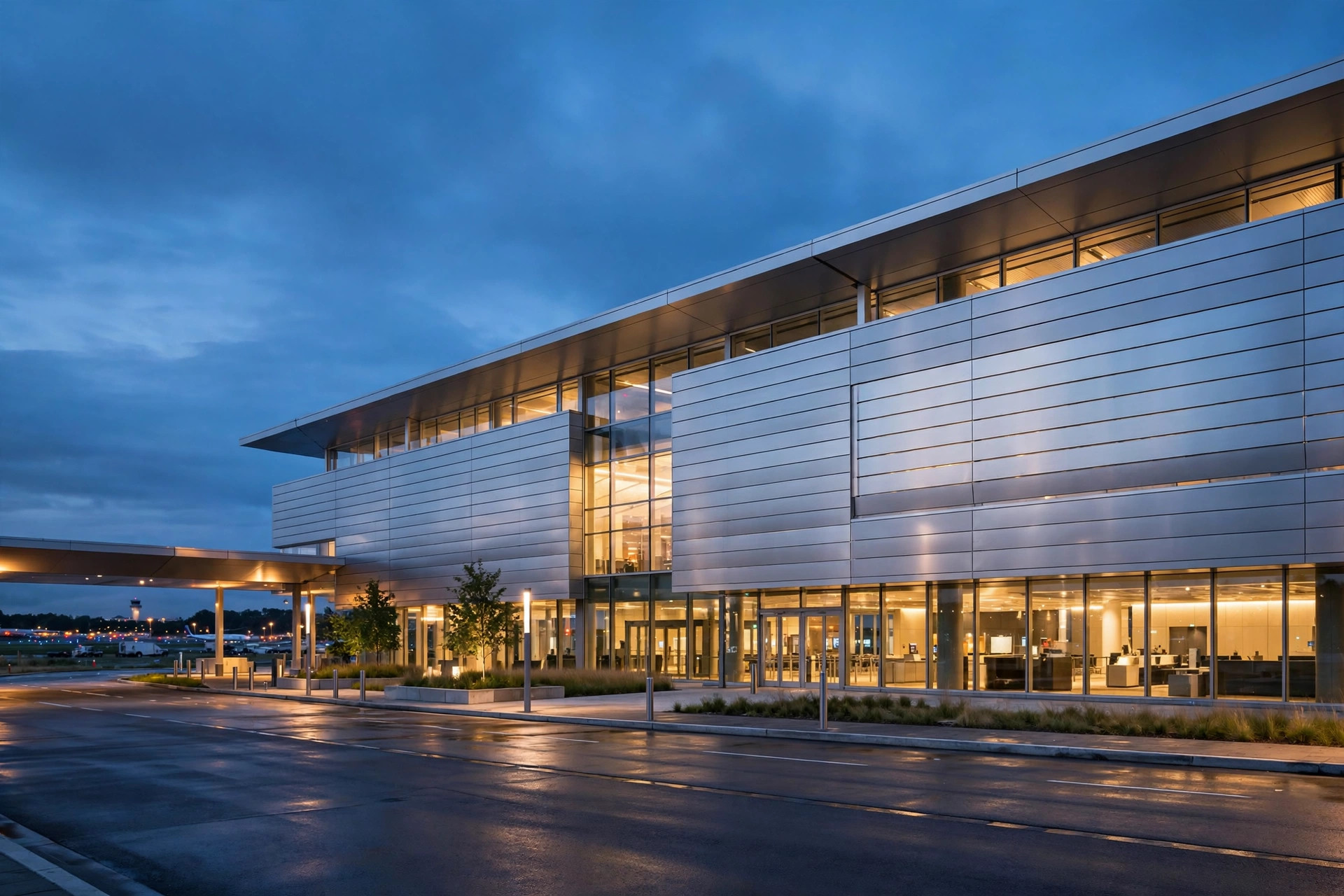
    Airport terminals never get a second chance to make a first impression. Every year, hundreds of millions of passengers judge a city the moment they step off the jet bridge — and the terminal facade is the first and last thing they see. For architects and contractors working on airport and transportation projects, the exterior cladding material has to satisfy an unusually demanding brief: monumental scale, round-the-clock operation, constant passenger traffic, harsh weather exposure, and a construction schedule that cannot slip. This is exactly why solid aluminum facade panels have become a go-to specification for modern terminals, concourses, and transit hubs across the United States.

    Why Airports Keep Choosing Solid Aluminum Facade Panels

    Terminal buildings combine several of the toughest conditions any facade material can face. The envelope wraps enormous spans, sits exposed to jet blast, de-icing chemicals, and urban pollution, and must look pristine year after year with minimal maintenance windows — an airport cannot simply close a concourse for facade repairs. Solid aluminum facade panels answer all of these requirements at once. Unlike stone, which is heavy and limits design freedom, or aluminum composite panels, which raise well-documented fire-performance questions, solid aluminum panels deliver a non-combustible single-skin metal solution that is light enough for large spans and durable enough for decades of service. For specifiers, that combination of safety, lightness, and design flexibility makes aluminum facade panels a rational default for transportation architecture.

    Large-Format Panels for Terminals and Concourses

    Airport architecture is about scale. A single terminal elevation can run hundreds of meters, and architects want that scale expressed in clean, continuous surfaces rather than a patchwork of small tiles. This is where the dimensional capability of the panel factory matters. Solid aluminum facade panels are commonly produced in thicknesses of 2.0, 2.5, and 3.0mm, with sheet sizes up to 1300×4000mm — large enough to cover generous bays in a single panel and create the calm, monumental rhythm that airport design demands. The 3003 H24 alloy typically specified for exterior cladding provides the strength and formability needed for such large-format cassettes, while 2.5mm and 3.0mm gauges give the flatness and wind-load resistance that long terminal elevations require. When evaluating a supplier, always confirm the maximum sheet size and the flatness control on large panels — visible waviness on a terminal facade is a defect that passengers will notice from the curb.

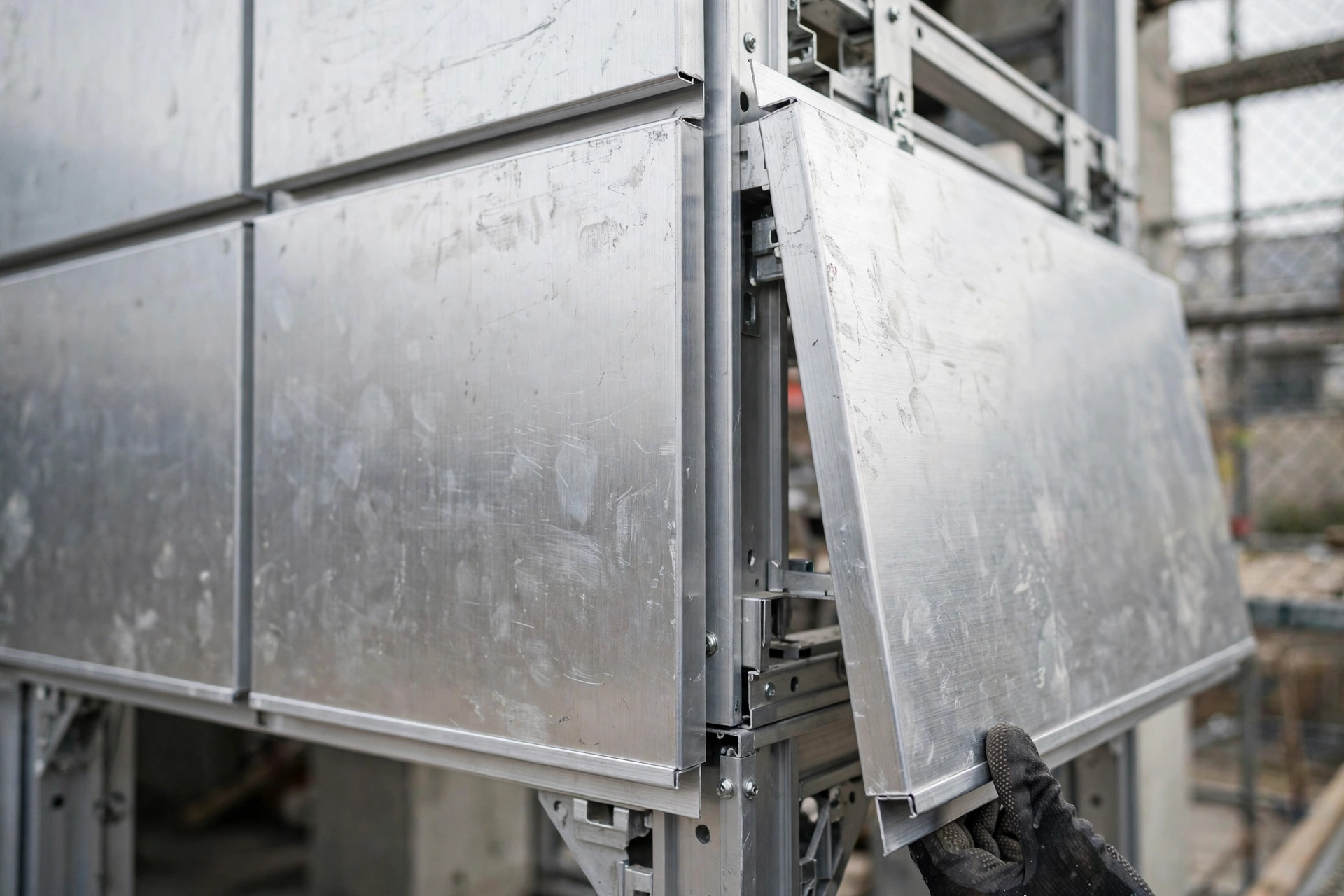
    Close-up of aluminum facade panel cassettes with folded edges being installed on a terminal exterior wall
    Solid aluminum panel cassettes offer clean folded edges and crisp joints, ideal for the large-format elevations of airport terminals.

    Durability Where Crowds and Weather Meet

    A transportation terminal is a working building, not a monument. Baggage carts, maintenance vehicles, and constant foot traffic put real mechanical stress on the lower facade zones, while the upper zones take the full force of sun, rain, and air pollution. Solid aluminum panels handle this double duty because the metal skin is homogeneous: scratches and impacts do not expose a different core material, and the surface can be specified to match the exposure. For the most demanding exterior zones, PVDF fluorocarbon coatings — applied by spray for cassette panels or by continuous coil coating for flat applications — offer the best long-term color retention and resistance to UV, salt air, and chemical fallout. Powder coating provides a cost-effective alternative for sheltered or interior-transit applications, and both systems bond to a full-metal substrate that will not delaminate. A simple rule of thumb for specifiers: put the highest-grade finish where passengers and weather meet the building, and you can safely value-engineer the finish on protected soffits and service areas.

    Curved and Signature Forms Without Compromise

    Modern airports are often designed as signature structures — flowing rooflines, curved entry canopies, and sculptural concourse forms that announce a city’s identity. Solid aluminum is one of the few facade materials that can follow those geometries without switching to an entirely different cladding system. Sheet aluminum in the 3003 H24 temper bends, folds, and curves cleanly, so the same material specified for flat terminal walls can be shaped into curved fascia panels, column covers, and flowing canopy soffits. This continuity matters: a single cladding material across flat and curved zones keeps color matching manageable and simplifies the contractor’s scope. The practical limit is the fabrication shop, not the material — confirm with the factory what minimum bending radii it can hold at each thickness, and request a curved sample panel before finalizing the shop drawings.

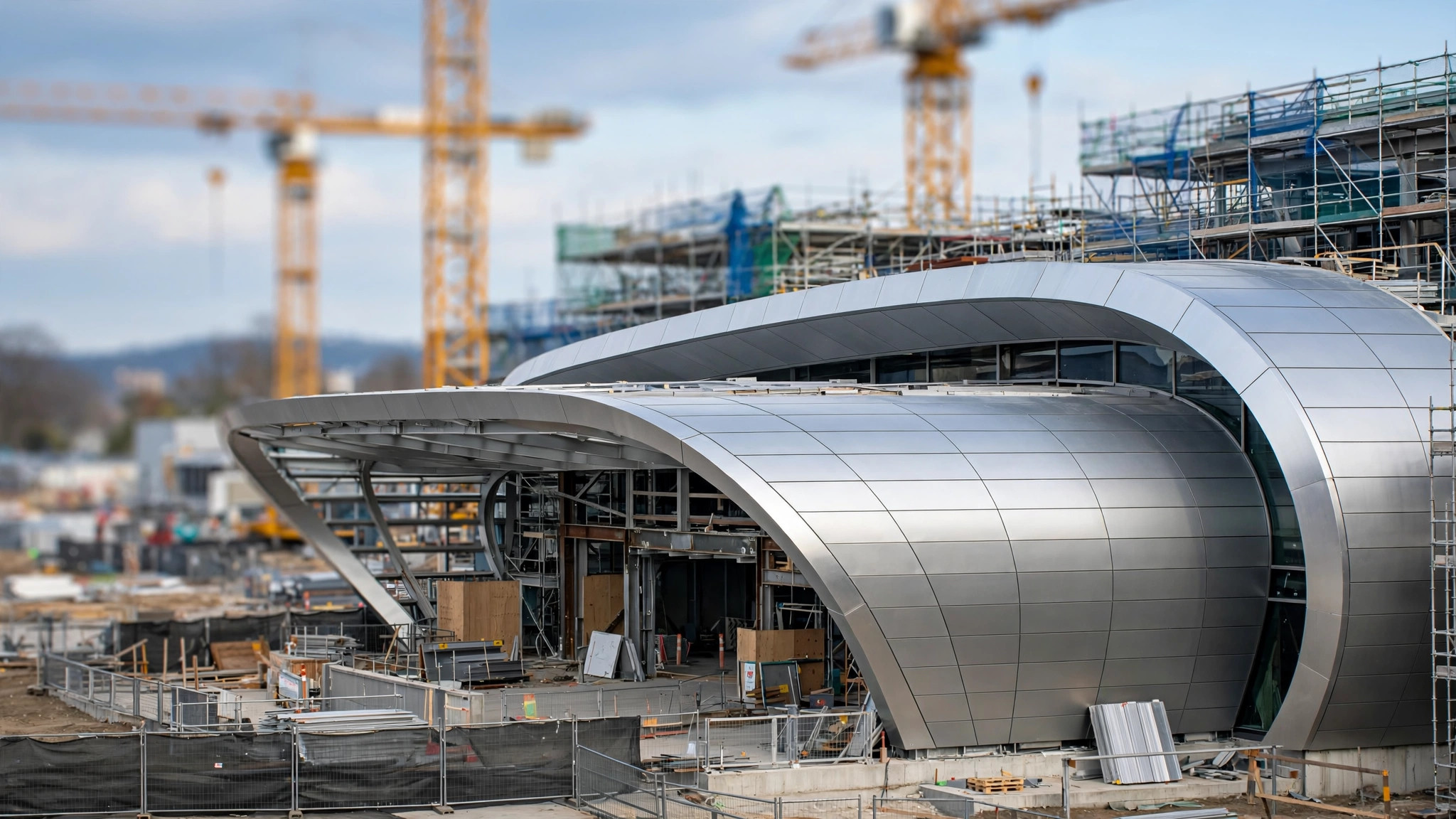
    Curved aluminum facade panels wrapping a sweeping airport terminal canopy under construction
    Solid aluminum panels can be curved and shaped to follow the signature geometries of modern airport architecture.

    Maintenance Realities for 24/7 Transportation Facilities

    Here is the question every airport facilities manager asks: what happens in year ten? Transportation buildings run around the clock, so maintenance access is always a negotiation. The good news is that cassette-style aluminum facade panels are inherently serviceable. Individual cassettes can be unhooked and replaced without disturbing adjacent panels, which means a damaged panel at a baggage-hall entrance can be swapped during an overnight shift rather than triggering a facade-wide intervention. Routine cleaning is equally straightforward: solid aluminum panels with quality PVDF or powder coatings wash down with water and mild detergent, and the coatings resist the graffiti and grime that transit facilities inevitably attract. For owners, the lifecycle argument is compelling — a facade that can be cleaned, touched up, and selectively repaired panel by panel protects the terminal’s appearance without disrupting operations.

    Specifying Panels for Phased Terminal Construction

    Airport projects are rarely built in one continuous campaign. Terminals expand in phases, concourses get extended a decade later, and renovation work must match existing cladding. This phased reality makes color and finish consistency a procurement issue, not just an aesthetic one. When specifying aluminum facade panels for a transportation project, lock down the coating system and color reference early, and structure the purchase so future phases can reorder the identical finish from the same factory. Experienced buyers also build a small attic stock of spare cassettes into the original order — a handful of extra panels, stored on site, eliminates the risk of a batch mismatch when a panel needs replacing five years later. Finally, because airport construction involves multiple trades working in tight sequence, confirm the factory’s shop-drawing and numbering process: each cassette should arrive on site pre-labeled for its exact position, so the installation crew can work from the drawings without field-cutting a single panel.

    Airport and transportation projects reward materials that combine scale, durability, and design freedom — and punish materials that don’t. Solid aluminum facade panels, in the right thickness, alloy, and finish, give architects the large-format, curved, and color-consistent surfaces these buildings demand, while giving contractors a light, serviceable system that installs cleanly and maintains easily. If you are specifying cladding for a terminal, concourse, or transit hub, browse the aluminum facade panel options at juchangalu.com or send your drawings for a detailed quotation tailored to your project’s panel schedule.

  • Roll-Coated Aluminum Facade Panels: Pre-Painted Coil Coating Explained for US Buyers and Specifiers

    Roll-Coated Aluminum Facade Panels: Pre-Painted Coil Coating Explained for US Buyers and Specifiers

    When architects and contractors specify aluminum facade panels, most of the conversation focuses on thickness, alloy, and coating type. But there is another variable that quietly shapes appearance quality and production efficiency: how the paint gets onto the panel. Roll-coated aluminum facade panels — also known as coil-coated or pre-painted panels — arrive at the building already finished, with color and coating applied to the aluminum coil before the sheet is ever cut to size. This article explains how the process works, how it compares with post-painted finishes, and where pre-coated panels fit in a U.S. project specification.

    What Roll Coating Is and How It Differs from Post-Painted Panels

    Most solid aluminum panels are post-painted: the sheet is cut, folded, and formed into a cassette first, and then the finished cassette is sent through a spray line for powder coating or PVDF liquid paint. Roll coating reverses the order. The coating is applied to a continuous aluminum coil on a high-speed coil-coating line, the painted coil is then uncoiled, flattened, cut into sheets, and fabricated into panels.

    The practical result is a coating that is applied in a tightly controlled, continuous industrial process — uniform film thickness, consistent gloss, and identical color from one end of a coil to the other. Because the panel is fabricated after coating, the shop must protect the finished surface during cutting and folding: protective film is applied before fabrication and removed after installation, and bend radii are designed so the coating does not crack at the fold line.

    The Roll-Coating Process: From Aluminum Coil to Finished Panel

    A roll-coating line typically runs through these stages: chemical pre-treatment of the aluminum coil (degreasing, etching, and a conversion layer for adhesion), a primer coat applied by reverse-roller, the color topcoat — most commonly PVDF or high-performance polyester — applied by precision rollers, and an oven cure that locks the coating onto the metal. Film build is monitored continuously across the full width of the coil.

    Because the process never stops, quality is remarkably consistent: the first meter and the last meter of a coil carry the same color and gloss. For facade projects that require a uniform field appearance — large, flat expanses of panel in a solid color — this consistency is the single biggest argument for specifying roll-coated panels. Panel fabrication follows the standard route: leveling, cutting to size, CNC punching if needed, folding into cassettes, and adding stiffeners and fixing brackets.

    Roll coating production line with painted aluminum coils
    Pre-painted aluminum coils on a roll-coating line: color and gloss are applied continuously across the full coil width before fabrication.

    Roll Coating vs. PVDF Spray vs. Powder Coating

    Buyers often ask which finish is “best.” The honest answer is that each fits a different situation:

    • Roll coating (coil coating) — Best color and gloss consistency across large quantities; efficient production for standard panel sizes. Topcoats are commonly PVDF or high-performance polyester systems.
    • PVDF spray on fabricated cassettes — Handles complex geometries, perforations, and deep-folded shapes; the industry benchmark for custom architectural finishes.
    • Powder coating — Durable and economical for standard colors; an excellent choice for interior applications, soffits, and projects where extreme weather exposure is limited.

    The deciding factors are panel geometry, color uniformity requirements, and project scale. A facade of flat rectangular cassettes in a single corporate color is the ideal roll-coating project. A facade with deep-faceted, perforated, or double-curved panels belongs on a spray line.

    Why Panel Size and Thickness Matter in Coil-Coated Production

    Coil coating imposes its own production logic. The coil has a fixed width, so sheet widths are derived from that width; our standard panels run up to 1300 × 4000 mm. Thicknesses follow the factory’s verified program — 2.0, 2.5, and 3.0 mm in 1100 and 3003 (H24) alloys. Thicker sheets and more complex folds demand more care at the bend line, which is why the bend radius and protective filming are engineered into the fabrication drawing before production begins.

    Specifiers should note one constraint: field modifications are more limited with pre-coated panels. Touch-up paint on a roll-coated surface rarely matches the coil-applied finish perfectly, so cutting schedules are finalized in the shop, and any on-site trimming is planned for concealed edges. This is standard practice on well-run projects, but it deserves a line in the specification so expectations are clear.

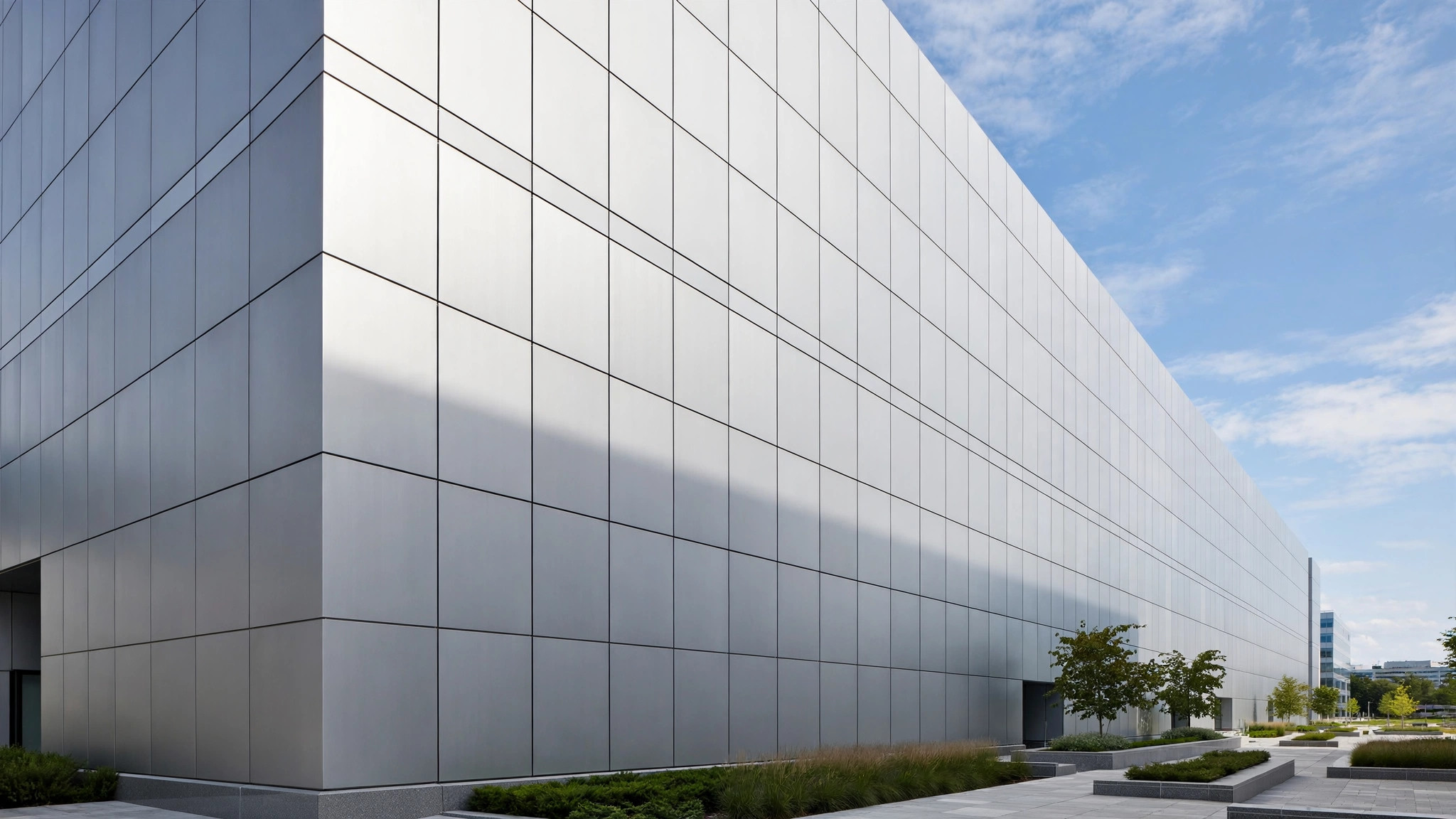
    Close-up of uniform roll-coated aluminum facade panels in daylight
    A facade of roll-coated aluminum panels showing uniform color and gloss across every panel in raking daylight.

    Color Consistency: The Real Strength of Coil Coating

    On large facades, the most visible quality defect is not a scratch — it is panel-to-panel color variation. Panels sprayed in different batches, on different days, can drift slightly in hue or gloss, and that drift becomes obvious in raking light. Roll coating largely eliminates this problem: because hundreds of panels can be cut from a single coil lot, the entire elevation shares one continuous coating run.

    For projects where this matters, the specification should require that all visible panels for one elevation come from the same coil lot, and that the factory records the coil number on its shop drawings. Reputable factories track this as a matter of routine. When future replacement panels are needed, keeping the coil lot record also makes it possible to order a new production run that matches the original as closely as possible.

    Where Roll-Coated Aluminum Facade Panels Fit Best

    Roll-coated solid aluminum panels are at their best in these applications:

    • Large commercial facades — office buildings, retail centers, and transit facilities with broad, flat panel fields in solid colors.
    • Rainscreen systems — ventilated facade cassettes where the panel face is the visual surface and the system behind handles drainage and ventilation.
    • Interior feature walls and ceilings — where gloss consistency under artificial lighting is especially demanding.
    • Roller shutters and screening elements — flat or gently curved panels produced in high volumes.

    They are less suitable for highly sculptural work — deep-folded or double-curved geometries, extensive perforation, or multi-color artistic patterns — where post-painted custom fabrication remains the better choice.

    What to Specify When Ordering Roll-Coated Panels

    If you are writing the specification or sending drawings for quotation, include these items so the factory can price accurately and deliver the right product:

    • Coating system: PVDF or high-performance polyester topcoat, with the desired gloss level and color reference (RAL, Pantone, or a project-specific sample).
    • Panel thickness and alloy: 2.0, 2.5, or 3.0 mm in 1100 or 3003 (H24), chosen for wind load and span.
    • Coil-lot consistency: all visible panels per elevation from the same coil lot, with the lot recorded on shop drawings.
    • Bend and fabrication details: fold geometry, stiffener layout, and fixing system — rain-screen cassette, hook-on, or bolted.
    • Surface protection: protective film applied before fabrication and removed after installation; handling and storage instructions for the site.

    Roll-coated aluminum facade panels are not a compromise — they are a deliberate choice for projects where uniform appearance and production efficiency matter most. For flat, repetitive facades in solid colors, pre-painted coil coating delivers the most consistent surface a factory can produce. If you are planning such a project, browse the panel systems at juchangalu.com or send your drawings for a detailed quotation tailored to your elevation layout.

  • Adding Solid Aluminum Panels to Your Distribution Lineup: A Stocking and Value-Added Services Guide

    Adding Solid Aluminum Panels to Your Distribution Lineup: A Stocking and Value-Added Services Guide

    Distributors who serve the commercial cladding and architectural metals trade know that the right product line can turn one-off orders into repeat business. Solid aluminum panels have earned their place in that line: architects specify them for rainscreens, contractors trust them on recladding projects, and building owners appreciate a non-combustible facade that holds its finish for years. For US distributors, adding solid aluminum panels is less about chasing a trend and more about filling a structural gap between raw sheet stock and finished curtain wall systems. Done well, it creates a high-value product family that contractors return to project after project.

    Why Solid Aluminum Panels Belong in a US Distributor’s Catalog

    The demand case is straightforward. Ventilated rainscreen construction continues to grow in the US commercial market because it manages moisture and thermal performance better than barrier walls. Solid aluminum panels are one of the most practical cladding choices for these systems: they are non-combustible, dimensionally stable, and compatible with standard cassette and hook-on attachment methods. Recladding is another steady driver. As mid-century office buildings, retail centers, and transit facilities come up for facade renewal, contractors need a lightweight, code-friendly reskin material that installs quickly over existing structures.

    For a distributor, the strategic benefit is positioning. Contractors already call you for sheet, fasteners, and accessories. When you can also supply finished facade panels — cut, folded, and coated to specification — you become the single source for the cladding package instead of one line item on a purchase order. That consolidation is what keeps accounts sticky.

    Build a Core Stocking Range Around Proven Specifications

    You do not need to stock every possible configuration to serve this market well. A tight, well-chosen core range covers the large majority of US project inquiries. The proven workhorses are solid aluminum panels in 2.0, 2.5, and 3.0 mm thicknesses, in 1100 or 3003 (H24) alloy, with standard sheet sizes up to 1300 × 4000 mm. Keep the thickest option for projects that demand extra rigidity and the thinner gauges for soffits, fascias, and interior work.

    Finish is the other half of the stocking decision. PVDF coatings remain the specifier’s default for exterior facades because of their weathering performance; powder coating and roller coating offer cost-effective alternatives for interior or less exposed applications. On color, a conservative neutral palette — whites, grays, charcoals, champagne, and bronze — will satisfy most baseline demand, with project-specific colors handled through your factory partner’s make-to-order program.

    Close-up of a folded solid aluminum facade panel showing the precision-folded cassette flange
    A precision-folded cassette panel edge — clean folds with no coating cracks are the quality marker contractors check first.

    Cut-to-Size and Folding Services: The Value-Added Margin Multiplier

    Panels sold as flat stock are a commodity; panels delivered as ready-to-install cassettes are a service. The margin difference between the two is exactly where a distributor can win. Most US contractors do not have the brake presses or folding equipment to turn flat sheet into folded cassette panels themselves — and many prefer not to. If your operation can offer cut-to-size, CNC routing, and precision folding, you capture the fabrication value that would otherwise go elsewhere.

    Consistency is the key to making this work. Folded panels must arrive with clean, uniform edges and dimensions that match the approved shop drawings. Work with a factory partner that fabricates to tight tolerances and whose coating process does not crack or craze at the fold lines — a tell-tale sign of quality that contractors notice immediately on the scaffold. Document your tolerance standards in writing so installers know what to expect before the first bundle lands.

    Help Contractors Win Bids with Samples and Submittals

    On commercial projects, the contractor who controls the submittal package often controls the win. Distributors who keep a sample library — color chips, finish samples, and small folded cassette mock-ups — let estimators and architects confirm selections fast, without waiting weeks for factory samples from overseas. When a spec calls for a custom color, having a stocked chip book and a reliable recolor path shortens the approval cycle and keeps your bid in the running.

    Pair samples with documentation. Product data sheets, finish specifications, and straightforward installation references make an estimator’s job easier and reduce the back-and-forth that delays orders. The distributors who grow fastest in this segment treat submittal support as a service line, not an afterthought.

    Flat aluminum facade panels stored horizontally on warehouse racks with protective interleaving
    Flat panels racked horizontally with interleaving protection — careful storage is how distributors deliver pristine panels to the jobsite.

    Store and Handle Panels Without Costly Damage

    Aluminum panels arrive ready to be the visible face of a building, so every scratch, dent, or edge ding is a cost. Store flat panels horizontally on a clean, flat rack, stacked with interleaving protection between sheets, and never place heavy loads on top of a finished stack. Folded cassettes ship best in upright cradles or separated with foam protection so the folded flanges do not rub against neighboring panels.

    • Keep panels under cover — prolonged standing water and trapped moisture are the enemy of coated surfaces.
    • Handle coated faces with clean gloves; fingerprints etched into a PVDF or powder finish are difficult to remove.
    • Inspect every incoming bundle against the packing list before signing, and photograph any transit damage immediately.
    • Rotate stock so first-in bundles ship first, keeping finishes consistent within a single project.

    A distributor known for delivering pristine panels earns a reputation that travels between contractors faster than any sales pitch.

    Choosing the Right Factory Partner

    None of the above works without dependable supply. Look for a factory that offers consistent panel quality across production runs, reliable packaging, and an engineering team that can work from your customers’ drawings. Ask how they verify thickness and coating uniformity, and whether they can support both stocked gauges and custom fabrication from the same production line. Clear communication — in English, with drawing review as standard — is the practical difference between a vendor and a partner.

    Adding solid aluminum panels to your lineup is a deliberate move, not a gamble: stock the proven gauges and finishes, invest in cutting and folding capacity, and back it up with samples and submittal support. If you are evaluating suppliers, browse the products at juchangalu.com or send your drawings for a detailed quotation.

  • Aluminum Ingot Daily — October 18, 2026: Market Closed (Weekend/Holiday)

    Aluminum Ingot Daily — October 18, 2026: Market Closed (Weekend/Holiday)

    October 18, 2026 — Weekend/Holiday Market Update. China’s domestic aluminum spot market is closed today (weekend/public holiday). No fresh Changjiang (CCMN) A00 aluminum ingot quote was published. Below is the last available reference.

    Last Available Benchmarks

    Benchmark Last quote Status Source
    CCMN A00 aluminum ingot, spot see last trading-day briefing Market closed Changjiang Nonferrous Metals Network
    COMEX aluminum, front month USD 3,113.2/t Futures reference Yahoo Finance

    What It Means for Panel Buyers

    With Chinese spot markets closed, no new ingot price signal today. The next CCMN A00 quote will set the tone for the coming trading week. Buyers with pending project quotations can use the last trading-day benchmark as reference — while remembering that surface treatment (PVDF, powder coating) and fabrication complexity still dominate the final panel price.

    Get this briefing every morning

    We publish a short aluminum ingot market update every day — CCMN spot moves, offshore futures, and the charts that matter.

    Subscribe free by email →

    This briefing is for information only and does not constitute investment advice.

  • Thermal Expansion in Solid Aluminum Facade Panels: Designing Expansion Joints and Movement-Ready Fixings

    Thermal Expansion in Solid Aluminum Facade Panels: Designing Expansion Joints and Movement-Ready Fixings

    Aluminum moves. More than most architects and contractors expect, solid aluminum panels expand and contract with every daily temperature swing, and on a large curtain-wall elevation that movement adds up to millimeters that the fixing system must absorb. Get the details right and a solid aluminum facade is quiet, flat, and stable for decades. Get them wrong and you will see oil-canning, noisy pops on sunny afternoons, and fasteners slowly working loose.

    This guide explains how thermal movement works in solid aluminum facade panels, how to design expansion joints and movement-ready fixings, and what to check on site. The rules below apply to solid aluminum panels in 2.0, 2.5, and 3.0 mm thickness—the standard gauges for architectural facades.

    How Much Do Aluminum Facade Panels Actually Move?

    Aluminum’s coefficient of thermal expansion is roughly 23 × 10⁻⁶ per °C. In plain language: every meter of aluminum panel grows by about 1.15 mm across a 50 °C temperature swing. A 4-meter panel—close to the practical maximum panel length of 1300 × 4000 mm—can therefore move nearly 5 mm end to end between a cold winter morning and a sun-baked summer afternoon.

    Several factors determine how much movement a specific elevation experiences:

    • Panel length: movement scales directly with the dimension being measured. Long horizontal rails and tall vertical panels are the critical cases.
    • Panel color and finish: dark PVDF finishes can reach surface temperatures far above ambient air temperature in direct sun, widening the effective temperature range.
    • Orientation: south- and west-facing elevations cycle through the largest temperature swings; shaded elevations move less.
    • Climate zone: desert and continental climates combine cold nights with hot days, producing the most aggressive cycling.

    Because movement is linear with length, large-format panels demand the most careful detailing. This is one reason many designers split very tall elevations into stacked panel zones rather than running single full-height panels.

    Expansion Joints: Where to Put Them and How Wide

    Every facade needs deliberate places for movement to go. In solid aluminum panel systems, that means two things: open joints between adjacent panels, and movement breaks in the continuous support framing.

    A practical rule of thumb: allow at least 3–4 mm of open joint for every 4 meters of continuous panel run, and more in hot climates or with dark finishes. Cassette-style panels with folded edges typically arrive on site with the joint widths already built into the panel geometry—8 to 15 mm shadow gaps are common and look intentional—but the structural support behind them still needs matching movement breaks.

    Watch for these detailing mistakes:

    • Continuous rails with no breaks: long aluminum rails fixed hard at every bracket will fight the panels instead of moving with them. Introduce slip connections or rail splices with elongated holes at regular intervals.
    • Panels butted tight at corners: corners and parapets are where accumulated movement shows up first. Keep the specified joint width around every corner return.
    • Sealant used as the movement solution: sealant accommodates small joint cycling but is not a substitute for proper expansion joints on large elevations.

    For projects in extreme climates, ask the panel manufacturer to review the elevation drawings and confirm the proposed joint layout. A quick review at the shop-drawing stage is far cheaper than a field fix.

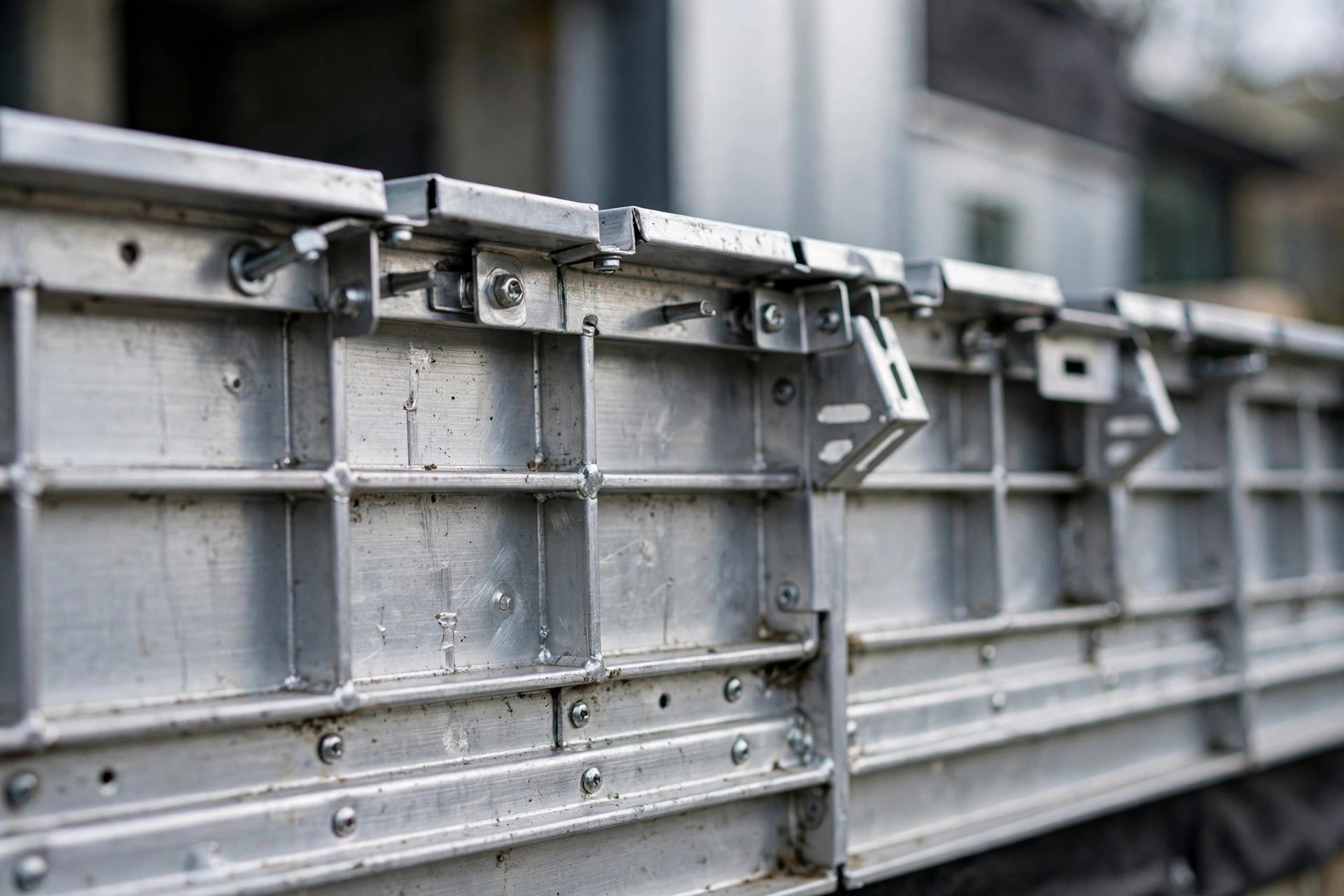
    Close-up of folded aluminum panel edges, fixing brackets and slotted holes
    Close-up detail of folded aluminum facade panel edges with stainless steel fixing brackets — slotted holes allow the panel to expand and contract without stress.

    Movement-Ready Fixings: Fixed Points, Sliding Points, and Why They Matter

    Individual panels must be held securely while remaining free to grow and shrink. The standard solution is a two-part fixing strategy on each panel: one fixed point that anchors the panel’s position, and sliding points everywhere else.

    Fixed points are typically located near the center of the panel or along its centerline. The panel is bolted or riveted through a standard round hole here, establishing a known reference so all movement radiates outward in a controlled, symmetrical pattern.

    Sliding points use elongated (slotted) holes in the panel’s folded returns or in the fixing brackets. As the panel expands, the fastener stays put while the panel slides over it. The slot must be long enough for the expected movement in both directions—too short, and the fastener binds at the slot end and transfers stress into the panel face, causing visible distortion.

    Three rules for reliable sliding fixings:

    • Do not overtighten: the most common site error. A crushed fastener locks the slot shut and turns a sliding point into an accidental fixed point. Use torque-limited tools or compressible washers where the manufacturer specifies them.
    • Keep the slots clean: debris, dried sealant, or corrosion products in a slot defeat its purpose. Inspect before final tightening.
    • Use compatible metals: fasteners and brackets in contact with aluminum panels should be stainless steel or aluminum to avoid galvanic corrosion, which can seize a sliding point solid over time.

    On ventilated rainscreen assemblies—where a cavity separates the panels from the wall behind—the support framing sees smaller temperature swings than the panels themselves, so differential movement between panel and framing deserves special attention in the bracket design.

    Designing Against Oil-Canning and Noise

    Oil-canning—the visible waviness or dimpling of a flat metal panel—is not a material defect. It is almost always a consequence of restrained thermal movement or uneven fixing. When an expanding panel has nowhere to go, it buckles slightly out of plane; when it cools, it snaps back, sometimes with an audible pop that tenants notice.

    Design measures that keep panels flat and quiet:

    • Stiffen the panel: folded returns, stiffener ribs bonded to the panel back, or a slightly heavier gauge (3.0 mm instead of 2.0 mm) all raise the panel’s resistance to buckling. Perforated panels are more flexible and need extra attention.
    • Respect maximum panel sizes: larger flat areas are harder to keep flat. Breaking up large expanses with shadow-gap joints improves both appearance and movement performance.
    • Fix evenly: asymmetric or unevenly spaced fixings create stress concentrations. Follow the manufacturer’s fixing layout rather than improvising on site.
    • Allow the back-ventilation to work: in rainscreen systems, the ventilated cavity equalizes pressure and moderates temperature behind the panels, reducing the thermal shock that drives noise.

    If a mock-up panel shows oil-canning during the sample approval stage, take it as a design warning, not a production problem to be polished away.

    Site installation of aluminum facade panels with expansion joint gap
    On-site installation of large-format aluminum facade panels, with the specified expansion joint gap maintained between adjacent panels.

    Site Checklist: Verifying Thermal Movement Details Before Sign-Off

    Most thermal-movement failures are installation failures, not design failures. Add these checks to the facade inspection routine:

    • Confirm joint widths match the shop drawings at panels, corners, parapets, and around openings—measure, don’t eyeball.
    • Verify that sliding fixings can actually slide: spot-check a sample of fasteners for overtightening before the scaffolding comes down.
    • Check that rail splices and movement breaks in the support framing were installed, not skipped to save time.
    • Look for sealant bridging joints that were meant to stay open; bridged joints transfer load instead of absorbing movement.
    • Schedule one inspection on a hot afternoon if the project timeline allows—movement problems are easiest to spot when the facade is fully expanded.

    A facade that is detailed for movement and installed with discipline will stay flat, quiet, and weathertight through decades of temperature cycling. Send your elevation drawings to the factory for a joint-layout and fixing review before production—browse our solid aluminum panel systems at juchangalu.com, or send drawings for a detailed quotation.
  • From Color Chips to Full-Size Mock-Ups: How US Buyers Approve Solid Aluminum Panel Samples Before Production

    From Color Chips to Full-Size Mock-Ups: How US Buyers Approve Solid Aluminum Panel Samples Before Production

    On a facade project, the most expensive mistake is rarely the panel price — it is the panel that arrives in a color, finish, or flatness that nobody approved. For US architects, contractors, and distributors sourcing solid aluminum panels, a disciplined sample approval process is the cheapest insurance a project can buy. This guide walks through how experienced buyers move from color chips to full-size mock-ups before production begins.

    Why Sample Approval Matters More for Aluminum Panels Than for Most Cladding

    Solid aluminum panels are fabricated, not extruded to a fixed profile. Every panel is cut, folded, welded, polished, and coated to order, so every batch carries small variations: color shifts between coating runs, perforation patterns rendered from drawings, and the hand of the fabricator all leave their mark on the finished panel.

    That is why paper or screen-based approvals fail. A RAL code states the intended color; only a physical sample shows how it looks under real light, next to glass and stone, and across the factory’s full 1300 x 4000 mm maximum panel size. Once approved, the sample becomes the standard for inspections, punch lists, and closeout documentation — protecting both buyer and factory.

    The Four Levels of Aluminum Facade Panel Samples

    A professional approval process moves through progressively more representative samples. Not every project needs all four levels, but knowing what each one proves helps you request exactly what your project requires.

    Level 1: Color chips and finish swatches

    Small coated chips are the starting point for color and finish selection. Compare candidates side by side in natural daylight, not only under office lighting — solid colors, metallics, and wood-look or stone-look finishes all read differently outdoors. Keep the rejected chips too; they document the decision trail.

    Level 2: Flat panel samples

    A small flat panel in the exact coating system specified for the project — PVDF, powder coating, or roller coating — proves finish texture, gloss level, and coating uniformity far better than a chip. Check it from arm’s length and from a few meters away; facades are viewed from both.

    Level 3: Formed samples with folded edges

    A formed sample includes the folded edges and stiffener details of a real panel, cut from 2.0, 2.5, or 3.0 mm sheet in the specified 1100 or 3003-H24 alloy. This is where fabrication quality shows: fold crispness, smoothness of welded corners, and coating evenness across edges and faces. For perforated designs, it should carry the actual hole pattern from the drawings.

    Level 4: Full-size panel and visual mock-up

    For large or design-critical projects, nothing replaces a full-size panel in its cassette configuration. A visual mock-up — several panels assembled into a representative wall section — shows joint widths, panel flatness at full width, and how the system reads as a wall rather than a swatch.

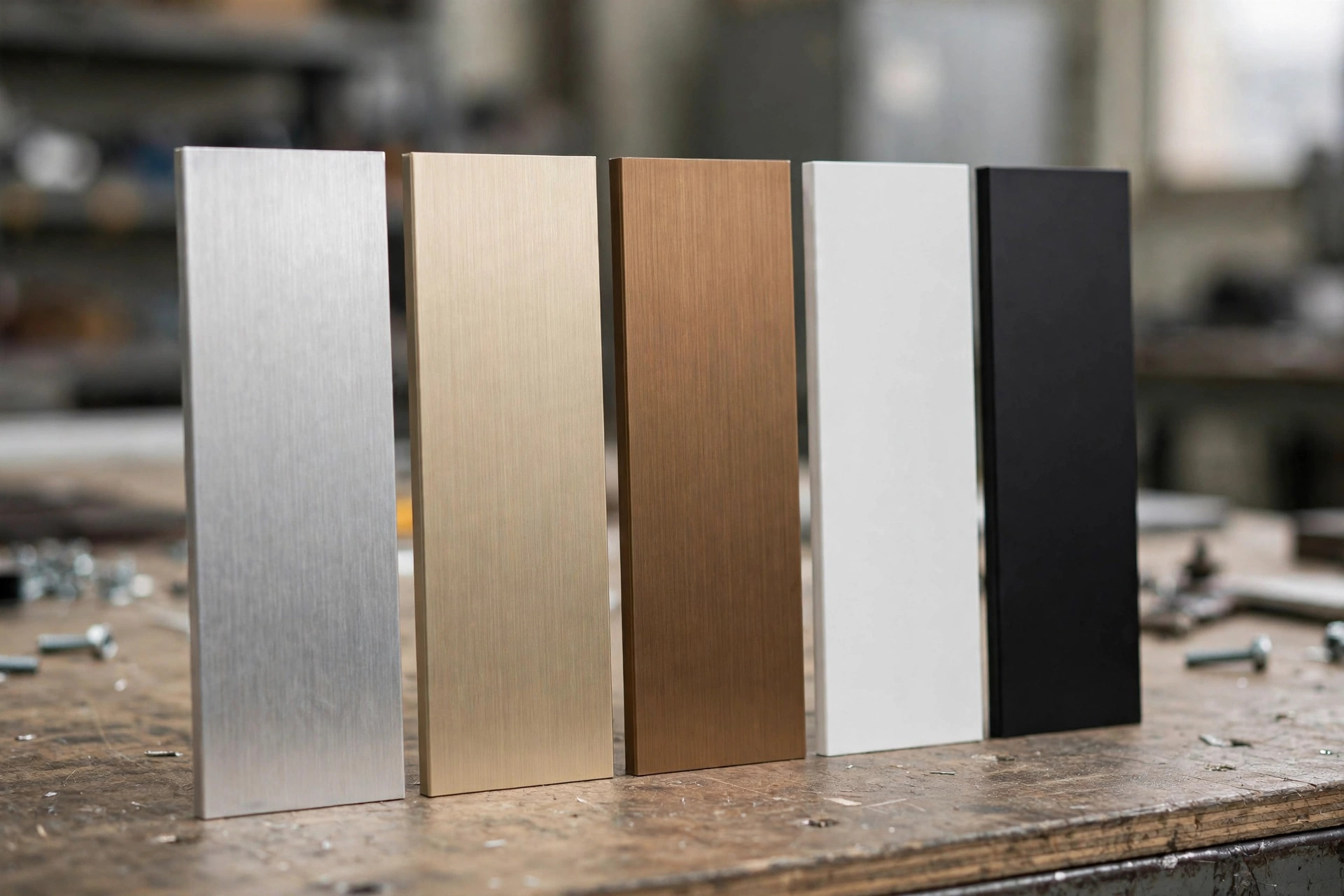
    Aluminum panel color sample swatches in silver, champagne, bronze, white and black on a workbench
    Approved color swatches become the physical reference standard for the production run.

    What to Check on Every Sample: Color, Finish, and Workmanship

    Review samples methodically instead of relying on first impressions. A simple checklist keeps the review consistent across team members and revision rounds.

    • Color match: Compare against the specified standard under daylight. Confirm solid colors show no mottling or uneven tone.
    • Finish and gloss: Matte, satin, and high gloss reflect the sky differently — confirm the gloss level matches the design intent, especially for metallics.
    • Coating uniformity: View the surface at a shallow angle. It should be continuous, with no thin spots or color pooling near folded edges.
    • Fabrication quality: Edges should fold cleanly without cracking the coating; welded corners should be ground smooth; brackets should sit square.
    • Perforation accuracy: Verify hole size, pitch, and pattern alignment against the shop drawings — small deviations are visible at facade scale.
    • Panel flatness: Check for oil canning, the visible waviness that appears on wide panels under changing light. Correct thickness (2.5 or 3.0 mm for large panels) and a sound stiffener layout keep it under control.

    Photograph every sample under consistent lighting and keep dated notes per round. If a sample is rejected, record exactly why, so the revision targets the real problem.

    When a Full-Size Mock-Up Is Worth It

    Mock-ups add cost and time, but they earn their place where the facade is the building’s identity: signature towers, cultural buildings, corporate headquarters, and any project with custom perforation, folded geometry, or mixed finishes.

    A useful mock-up includes at least a 3 x 3 panel grid with real joint widths, one representative corner condition, and the actual fixing system. Review it at the distance the public will see it — from across the street, not just from the scaffold. Watch joint alignment, coating continuity, and how shadows fall across folded or perforated areas at different times of day.

    On remote projects, a mock-up review can be done with high-resolution photos and a video walkthrough. Ask the factory to photograph it in morning, midday, and late-afternoon light. That effort is small compared with re-fabricating a full elevation.

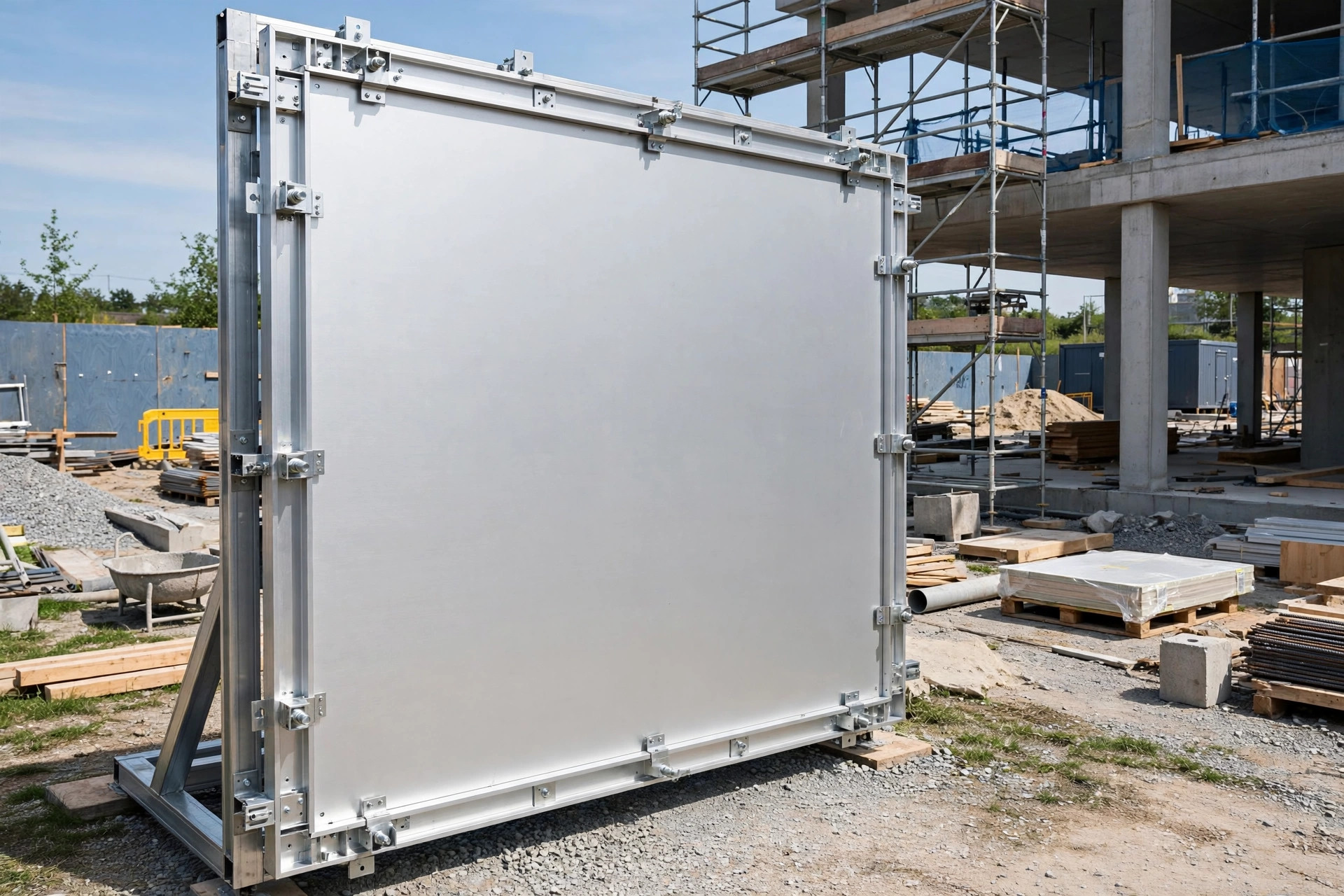
    Full-size aluminum facade panel on a mock-up test wall at a construction site
    A full-size mock-up lets buyers verify joint alignment, flatness, and coating before production.

    Approving and Freezing the Standard: Reference Samples Done Right

    Once the final sample is accepted, it becomes the reference standard for the whole production run. Treat it accordingly:

    • Sign and date it. Buyer and factory each keep a signed copy. Mark the display face and note the viewing conditions.
    • Record the production context. Note the alloy, thickness, coating system, and color code behind the sample, so the factory can reproduce the exact combination.
    • Protect it. Store reference samples flat, face up, away from sunlight and moisture. A faded or scratched reference is worse than none.
    • Use it at receiving. When panels arrive on site, the reference sample is the first thing the inspection compares against.

    For multi-phase projects, order extra reference panels from the first approved batch. Coating color can drift slightly between runs over months or years; the original reference lets you quantify any drift and decide whether the next phase needs a new approval round.

    Red Flags That Tell You to Stop and Revisit

    Most sample problems are fixable, but some patterns signal deeper trouble. If the factory cannot produce a formed sample whose folded edges match the drawing, the fabrication process needs review. If color varies noticeably across a single sample, coating quality control is inconsistent. If a supplier resists providing a full-size panel for a large project, that resistance is itself information.

    Also watch the revision loop: one or two rounds of refinement are normal; five rounds of the same unresolved defect are not. A factory that documents each revision and explains what changed will document production the same way.

    Conclusion: Samples Are Where Facade Risk Gets Cheap

    Every hour spent on sample approval is worth many hours avoided in site disputes and re-fabrication. For aluminum facade panels — custom-fabricated, coated to order, and viewed at building scale — the sample is the contract made physical.

    Start with chips, prove the finish on flat and formed samples, mock up what matters, and freeze a standard you can defend on site. To see the colors, finishes, and perforated options available, browse the products at juchangalu.com — or send your drawings for a detailed quotation tailored to your project’s panel schedule.