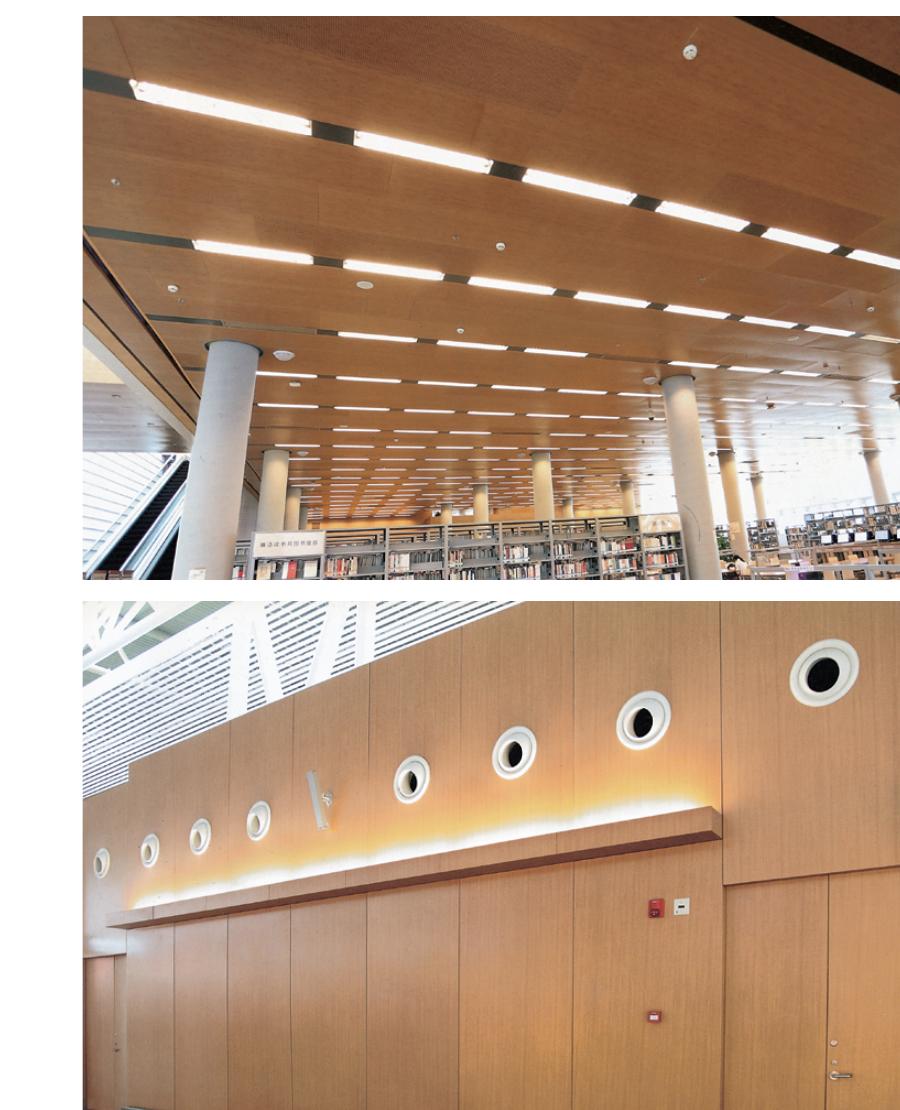
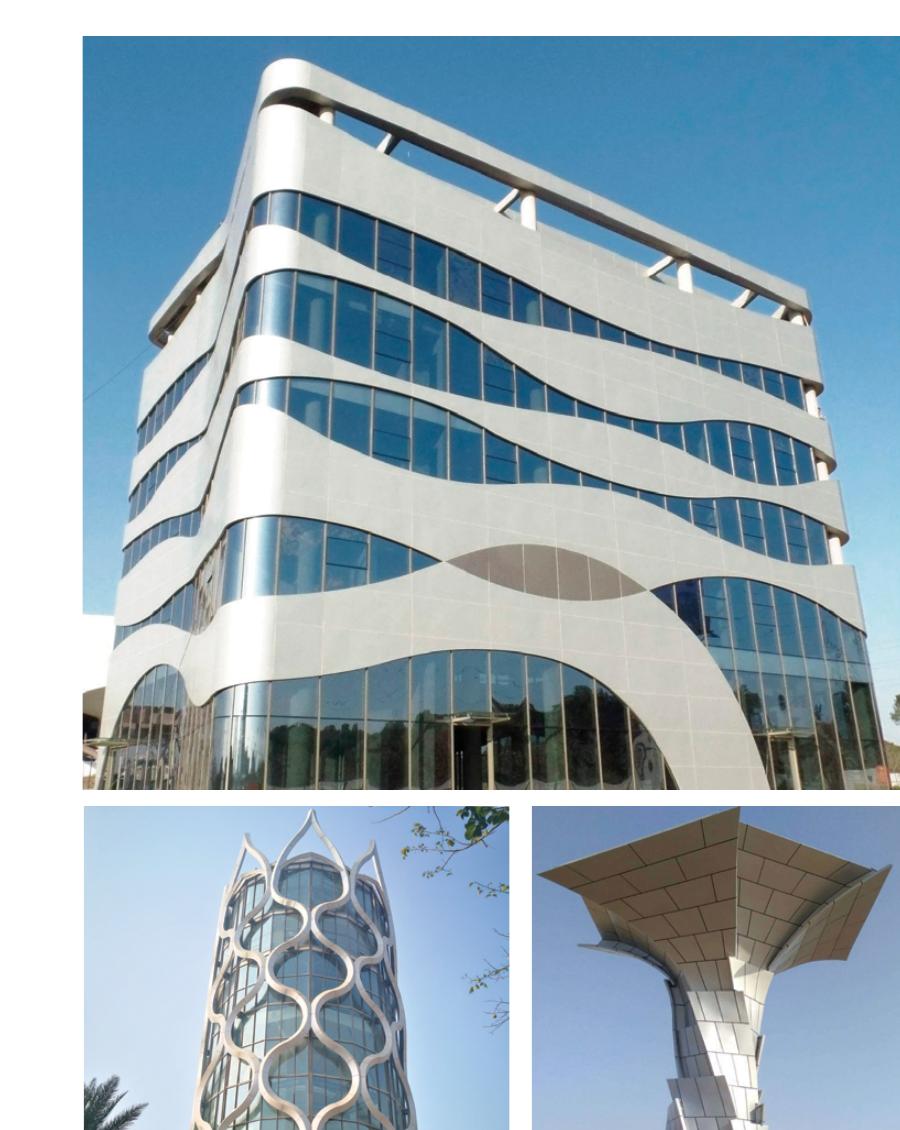
Lightweight, rigid panels for large interior surfaces.
Standard range: 2.0 / 2.5 / 3.0 mm thickness, 1100 / 3003 H24 alloy, panels up to 1300 × 4000 mm, PVDF / powder / roll coating finishes. Final alloy, thickness, dimensions, reinforcement, coating and tolerances are confirmed from project requirements.
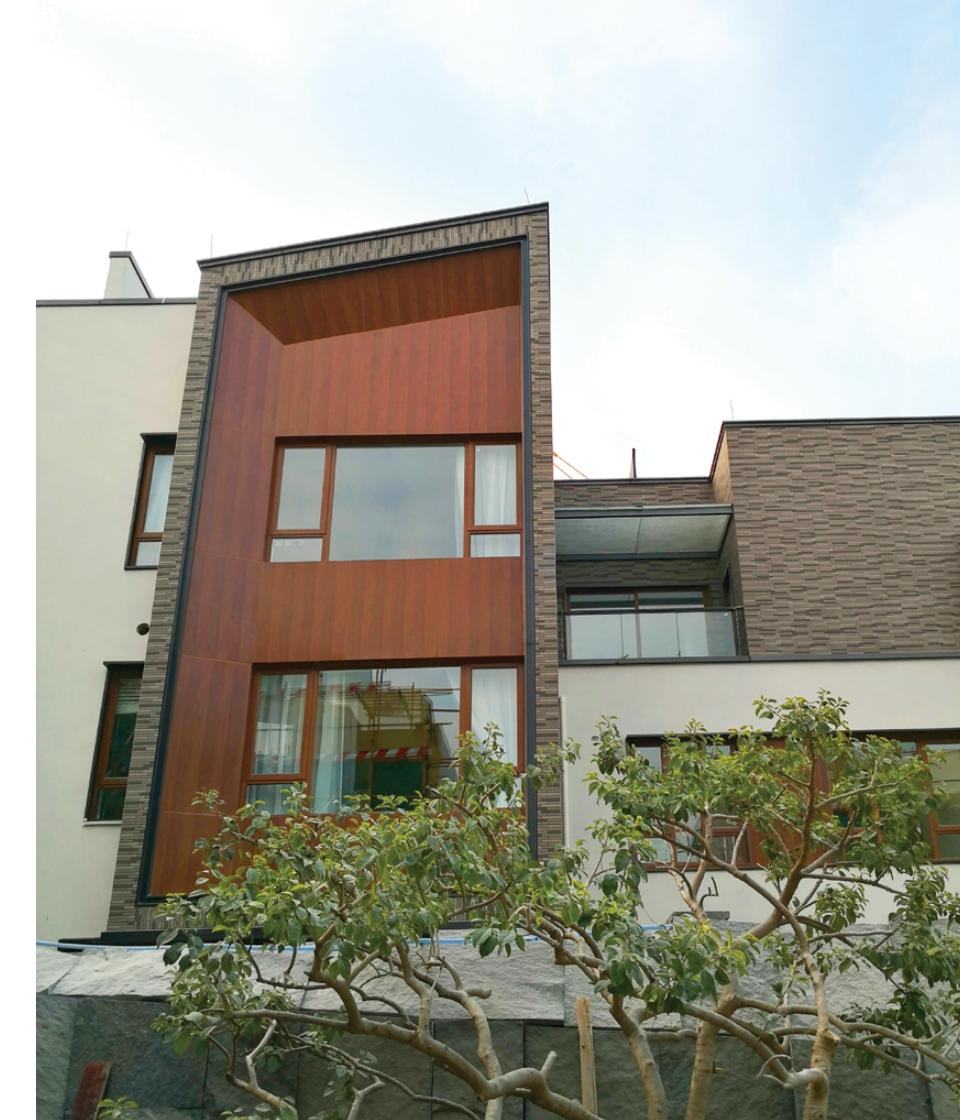
Natural visual language with aluminum formability and maintenance.
Standard range: 2.0 / 2.5 / 3.0 mm thickness, 1100 / 3003 H24 alloy, panels up to 1300 × 4000 mm, PVDF / powder / roll coating finishes. Final alloy, thickness, dimensions, reinforcement, coating and tolerances are confirmed from project requirements.
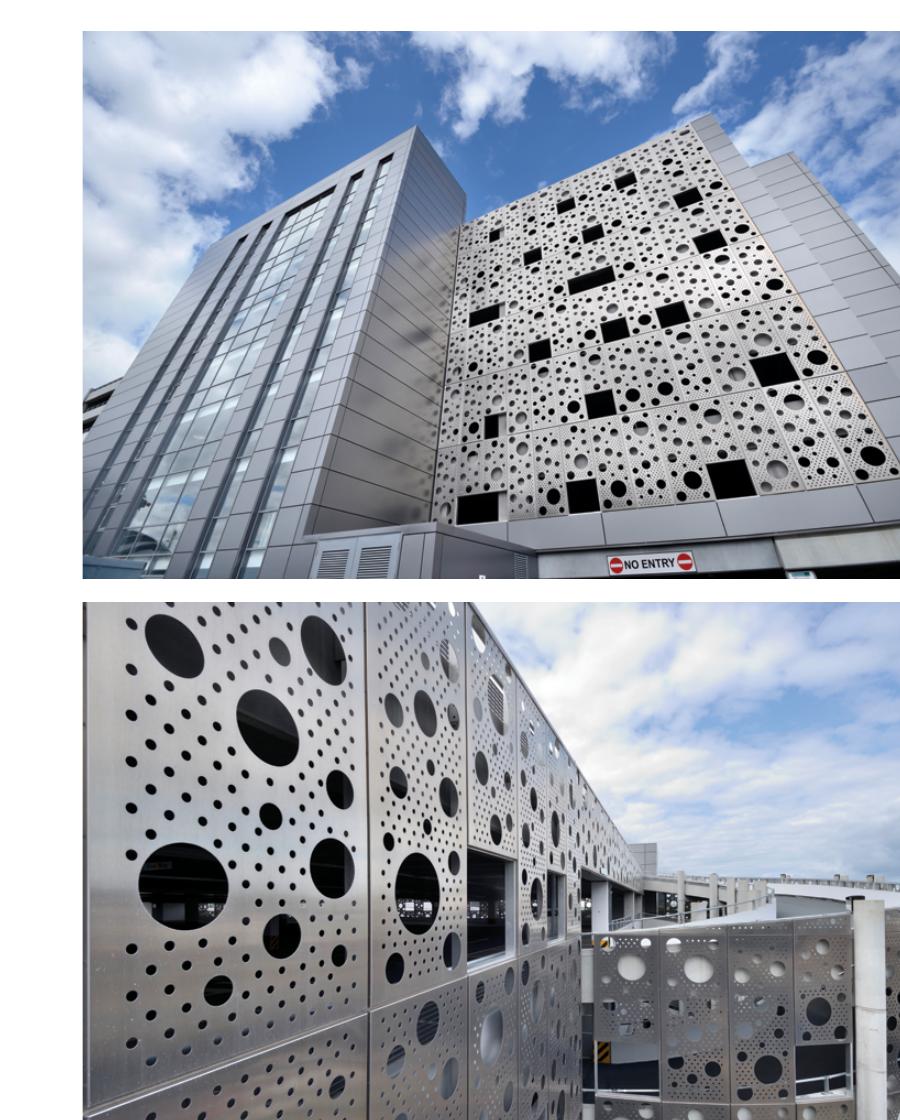
Ventilation, acoustic and decorative applications.
Standard range: 2.0 / 2.5 / 3.0 mm thickness, 1100 / 3003 H24 alloy, panels up to 1300 × 4000 mm, PVDF / powder / roll coating finishes. Final alloy, thickness, dimensions, reinforcement, coating and tolerances are confirmed from project requirements.
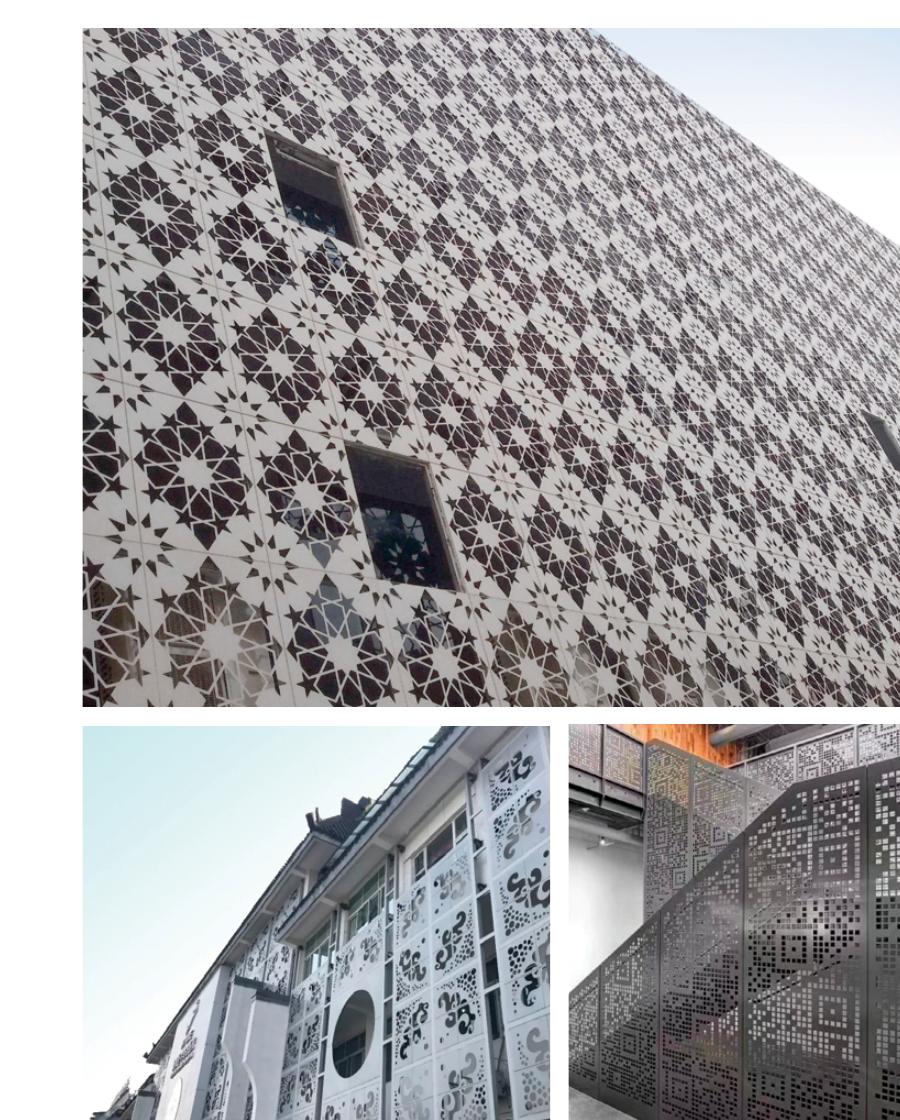
Custom CNC patterns for identity, light and shade.
Standard range: 2.0 / 2.5 / 3.0 mm thickness, 1100 / 3003 H24 alloy, panels up to 1300 × 4000 mm, PVDF / powder / roll coating finishes. Final alloy, thickness, dimensions, reinforcement, coating and tolerances are confirmed from project requirements.
Flowing façades, columns and signature architectural forms.
Standard range: 2.0 / 2.5 / 3.0 mm thickness, 1100 / 3003 H24 alloy, panels up to 1300 × 4000 mm, PVDF / powder / roll coating finishes. Final alloy, thickness, dimensions, reinforcement, coating and tolerances are confirmed from project requirements.
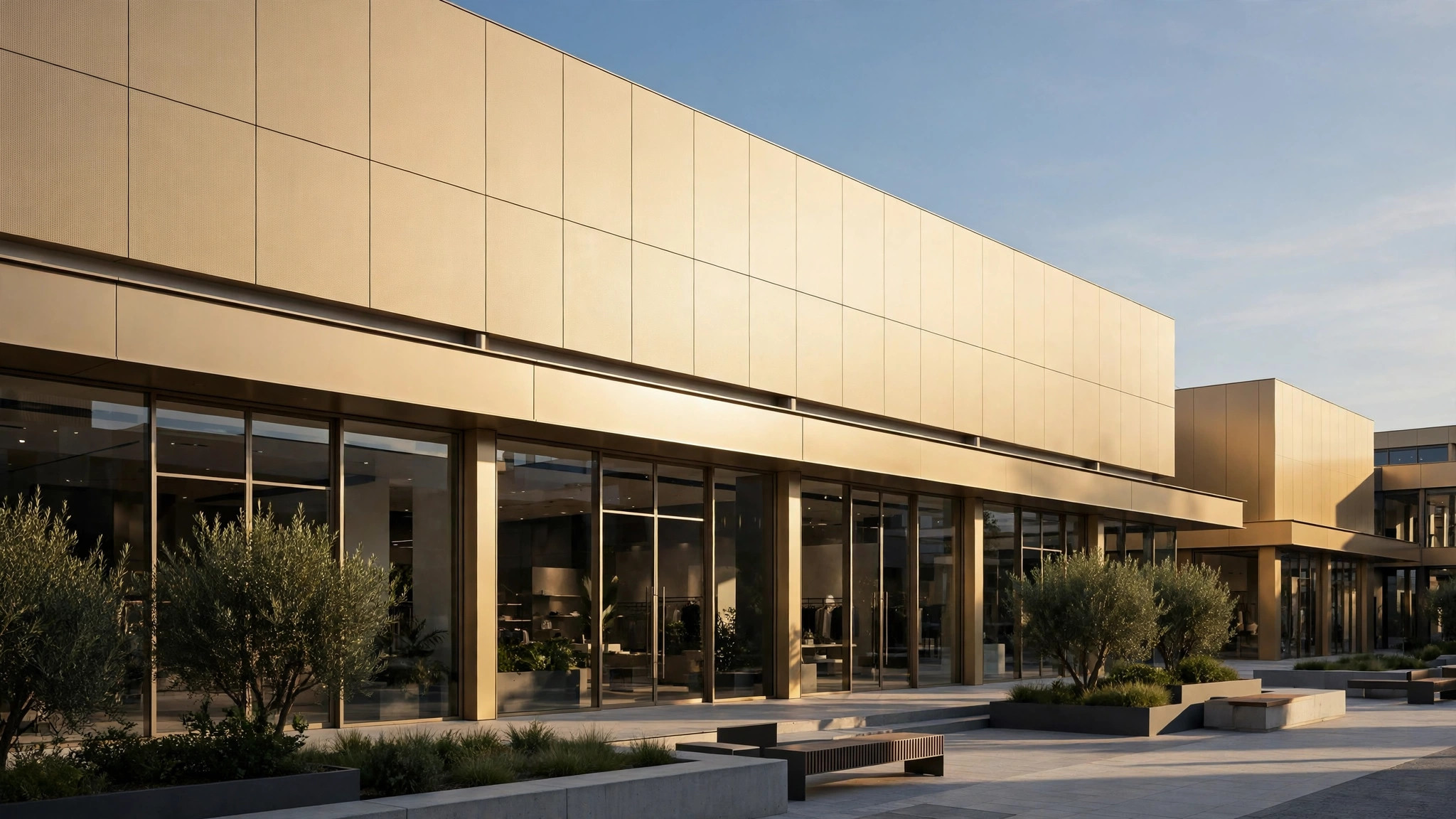
For a retail chain, the storefront is the brand. A customer should recognize a location from across the parking lot—same color, same fascia profile, same clean lines—whether the store is in Dallas, Denver, or Detroit. That consistency is easy to promise in a brand manual and hard to deliver across dozens or hundreds of construction sites, each with different contractors, climates, and schedules. Aluminum facade panels have become the go-to cladding for chain rollouts precisely because they solve the consistency problem: a factory-controlled finish, repeatable panel geometry, and a system that can be reproduced location after location.
This guide explains how retail chains use solid aluminum facade panels to roll out consistent storefronts, what to standardize in a storefront kit, and what to ask a supplier before the first location breaks ground.
Why Retail Chains Choose Aluminum Facade Panels for Storefronts
A storefront has to do three jobs at once: carry the brand identity, survive daily wear and weather, and install fast enough to keep a rollout schedule. Solid aluminum panels handle all three. The panels are formed from 2.0mm, 2.5mm, or 3.0mm aluminum sheet—alloys 1001 or 3003 H24 are the common choices for facade work—so they are rigid enough for large flat fascia areas yet light enough to mount on standard storefront framing without heavy structural upgrades.
Durability matters too. A storefront faces shopping carts, delivery trucks, pressure washing, and sun exposure year after year. A quality PVDF coating resists chalking and fading, and individual panels can be removed and replaced without disturbing the rest of the facade—useful when a single fascia panel is dented or a store rebrands a color accent.
Brand Consistency Across Hundreds of Locations
The biggest risk in a chain rollout is drift: the fifth store looks slightly different from the first, and by the twentieth the brand color has wandered. Aluminum panel systems fight drift in several ways. First, color is specified by a single code—typically a RAL or custom-matched reference—and every batch is coated to that standard, with color tolerance managed at the factory rather than on site. Second, panel dimensions are set by a standard module, so the fascia height, joint width, and corner details repeat from store to store.
The practical step is to lock a storefront kit before the rollout begins. The kit should define the panel thickness, the coating system, the exact color codes, the joint pattern, the fascia depth, and the corner and coping details. Once the kit is approved—ideally after a full-size mock-up at the first location—every subsequent store orders from the same specification. Changes after the first few stores are expensive, so experienced chains treat the first installation as a pilot and freeze the details before scaling.
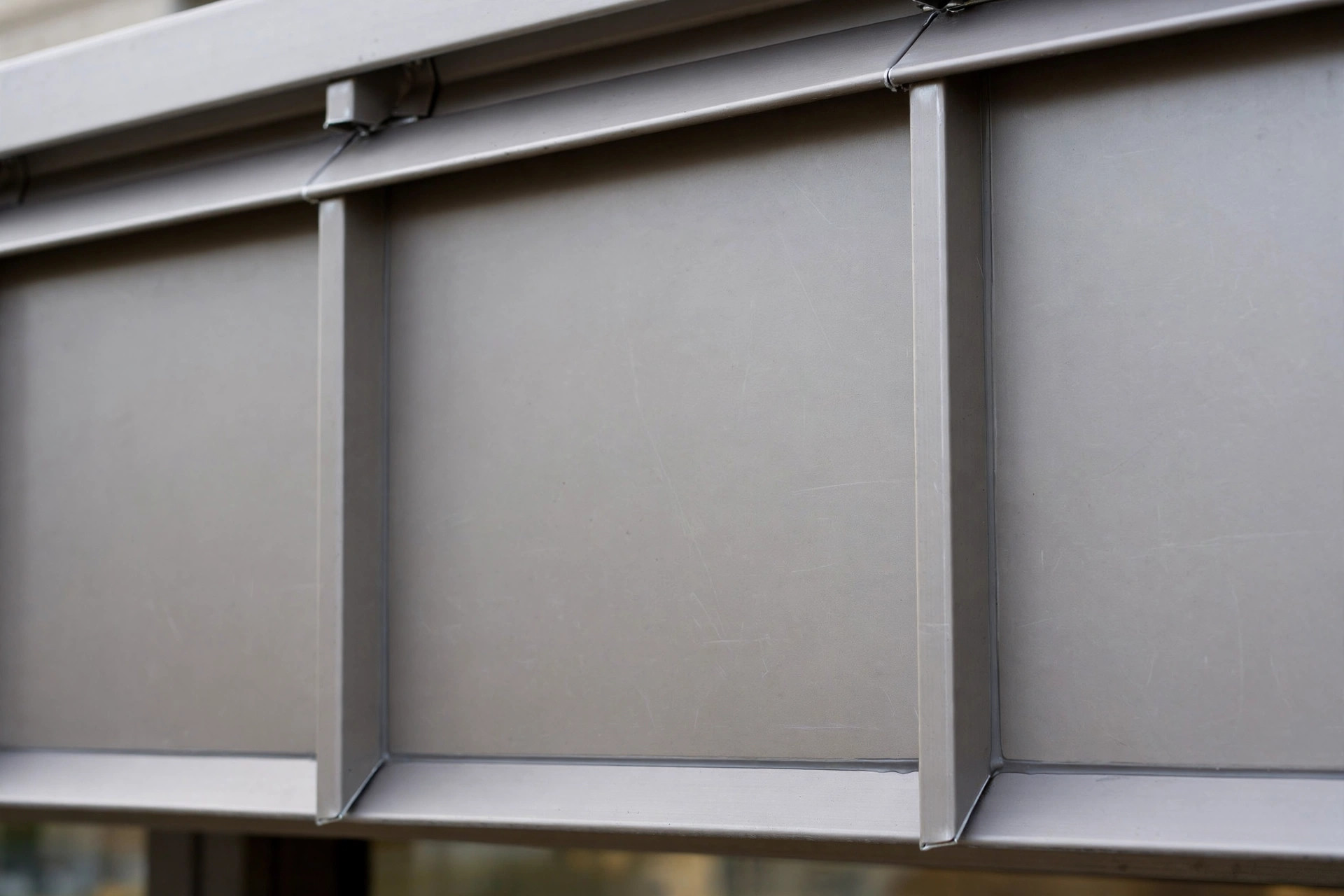
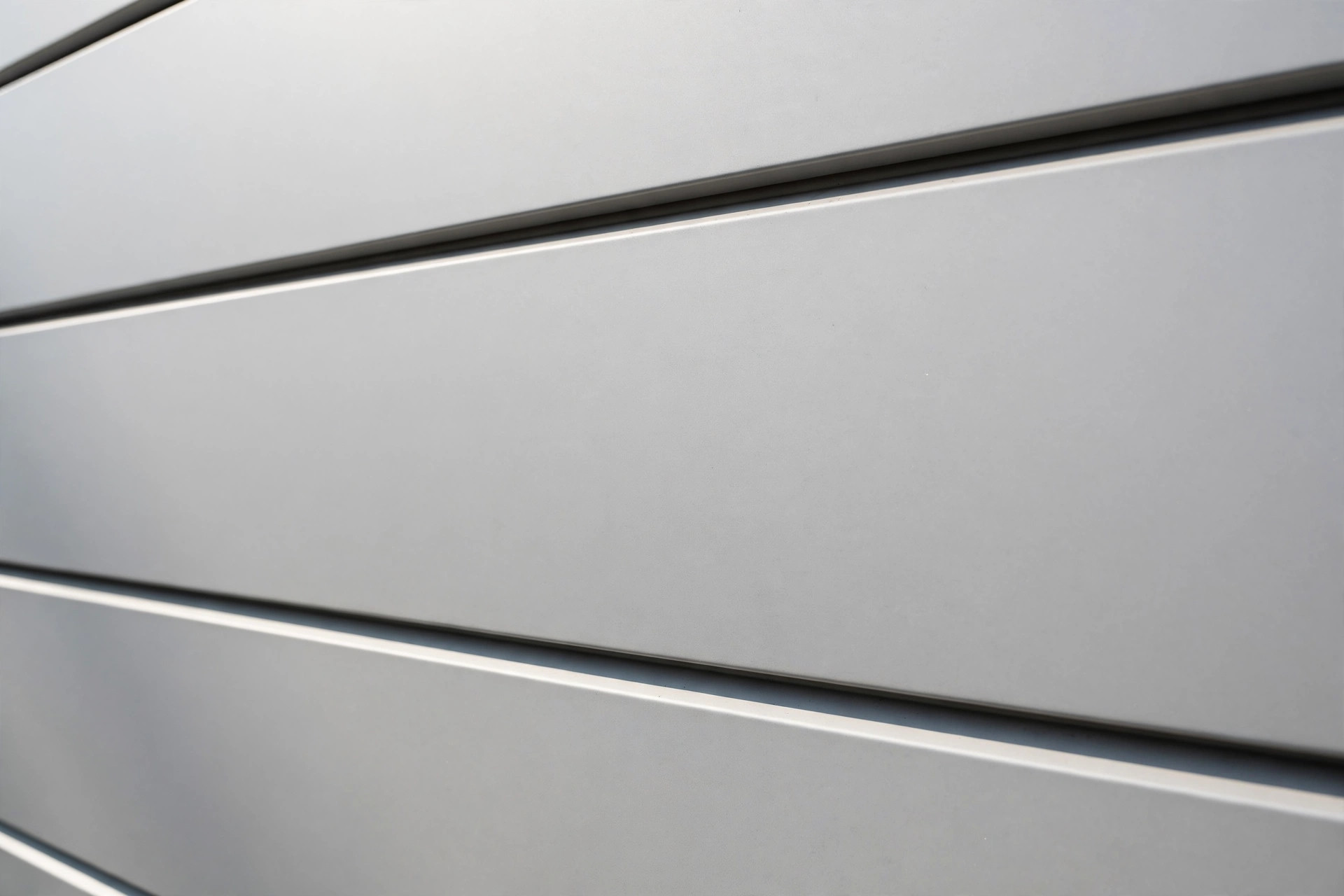
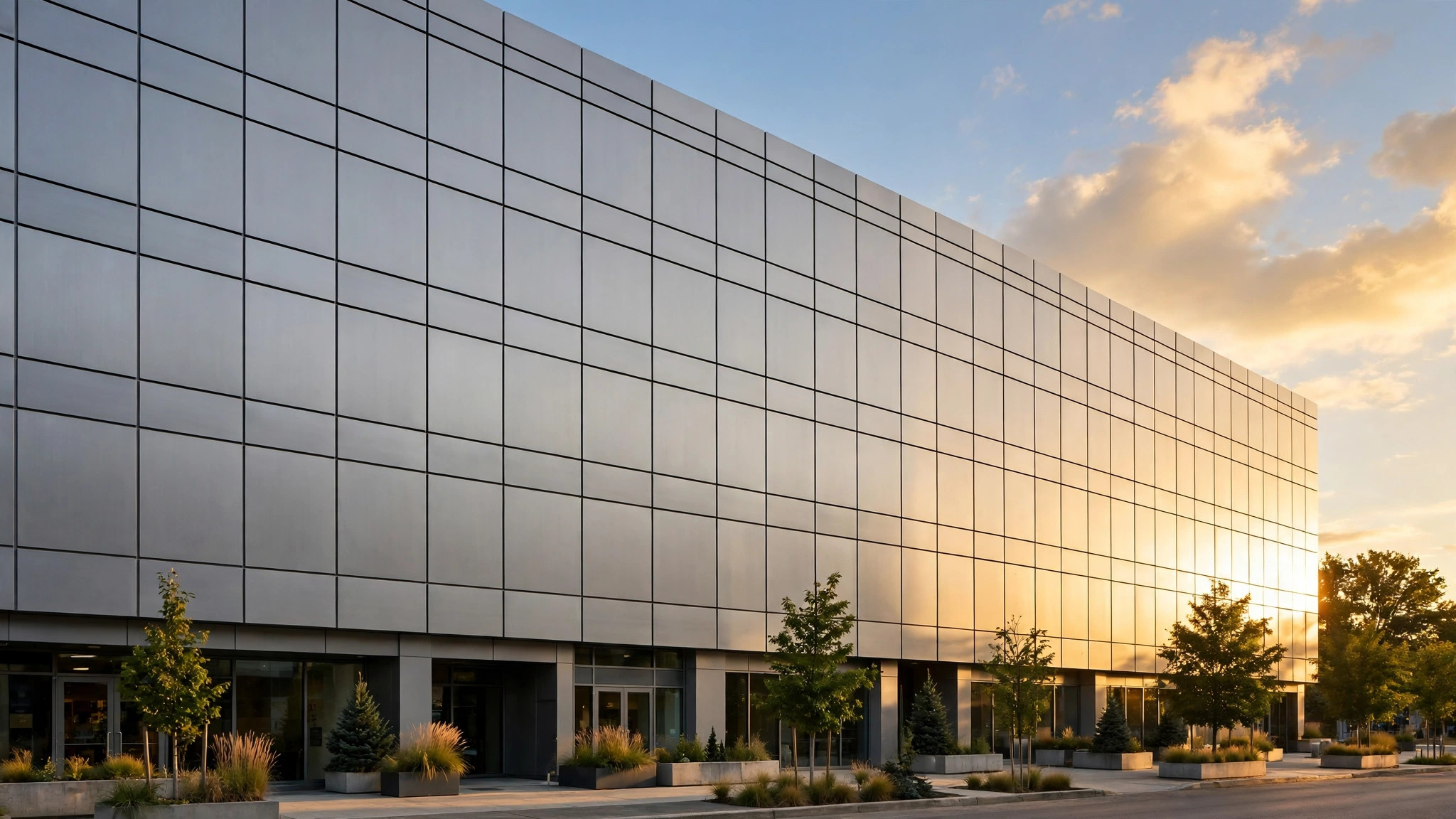
Precise panel joints and folded edges give a retail fascia its crisp, uniform appearance.
Designing a Repeatable Storefront Kit: Panels, Colors, and Details
A good storefront kit balances brand identity with buildability. Flat fascia panels in the brand color form the main visual field, usually in 2.5mm or 3.0mm thickness for the crisp, flat appearance a fascia demands. Perforated or carved panels can add texture around entrances or signage zones without changing the base system. Column covers in matching aluminum wrap structural columns at the entry, and soffit panels finish the underside of canopies.
Panel size is a key decision. The conventional maximum single-panel size is around 1300 × 4000mm, but a rollout kit usually standardizes on smaller, repeatable modules that fit common storefront dimensions and ship efficiently. Fewer unique panel sizes mean fewer drawings, fewer chances of error, and faster fabrication for each new store.
Rollout Logistics: Manufacturing, Shipping, and Installation at Scale
A chain rollout is a logistics exercise as much as a design one. Panels are typically produced in batches per store or per group of stores, packed flat with protective film and edge protection, and shipped in containers. Because panels are light relative to their area, a single container can carry a substantial quantity of storefront cladding, which helps keep freight costs predictable across a multi-store program.
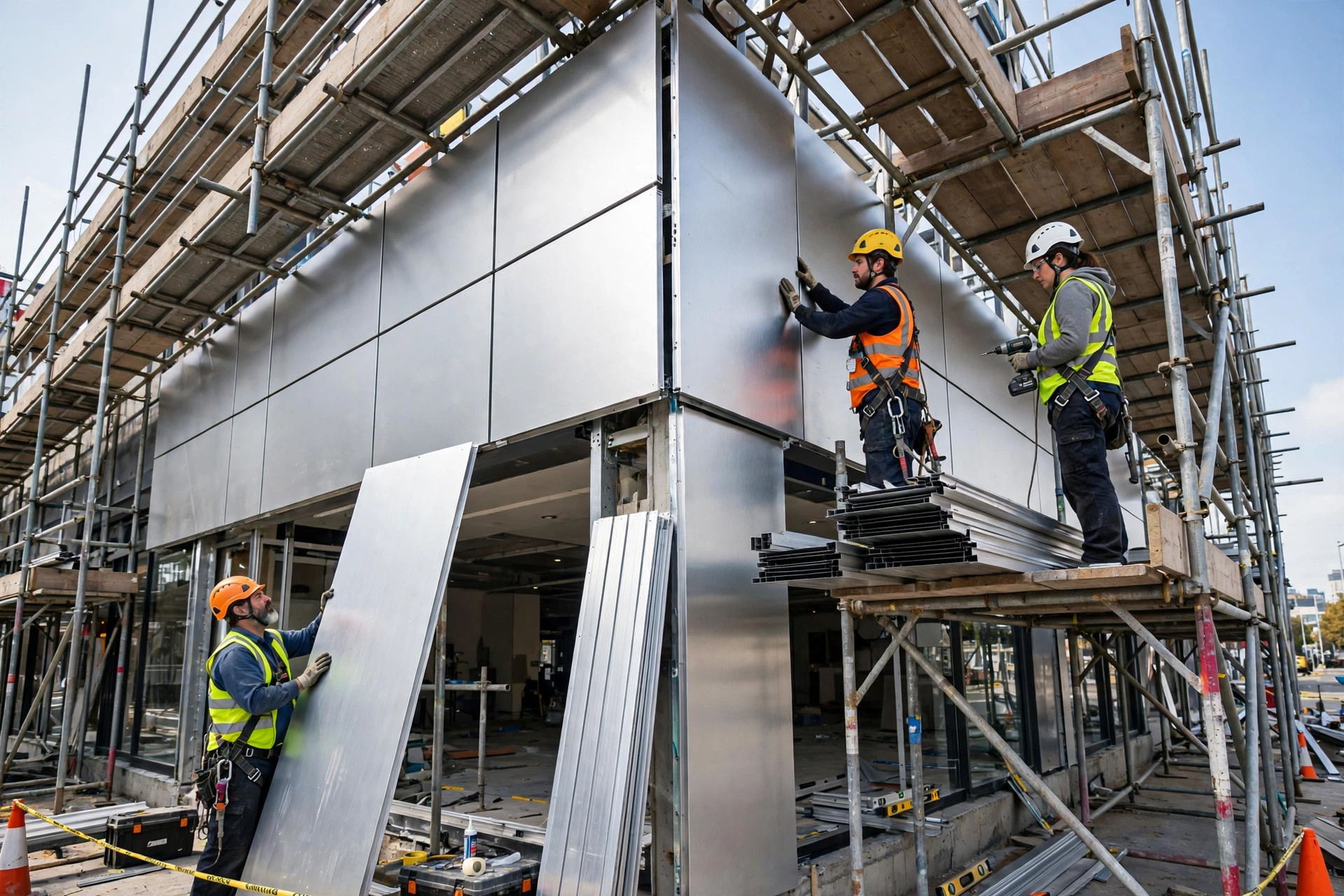
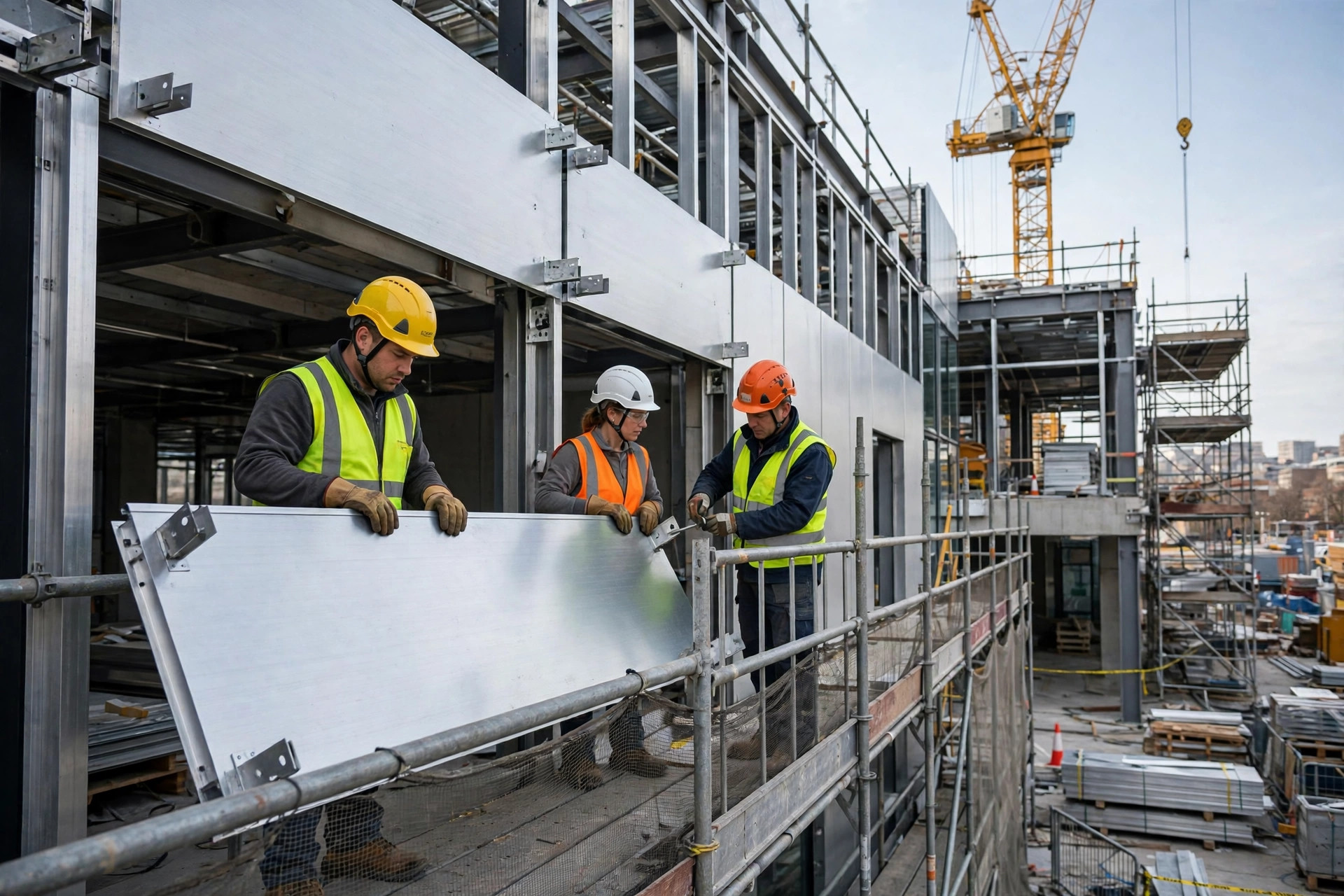
Installation should also be standardized. Cassette-style panel systems with a defined fixing method let different local installers achieve the same result, and a short installation guide with photographs from the pilot store is worth more than a thick specification document. For the first few stores, having the supplier review installation photos helps catch deviations early, before they are repeated twenty times.
Standardized cassette panel systems let different installers achieve the same result at every location.
Cost Control and Maintenance Over a Multi-Year Rollout
Consistency also pays off financially. A fixed kit means the per-store cladding cost becomes predictable: same panel sizes, same coating, same hardware. The main variables between locations are quantity and freight, not design. That predictability helps franchise owners and developers budget each new store with confidence.
Over a ten-year horizon, the total cost of an aluminum storefront compares favorably with materials that need repainting or frequent repair. The upfront investment buys a stable appearance, and the appearance is the asset: a storefront that still looks new in year eight protects the brand equity the chain spent years building.
What to Ask Your Panel Supplier Before a Chain Rollout
Before committing to a supplier for a multi-store program, buyers should confirm a few essentials. Can the factory hold a single color standard across many batches over several years, and can it supply a retained sample for reference? Can it produce the full kit—fascia panels, column covers, soffits, and coping—from one coating run so colors match across components? What quality checks are performed before shipment, and how are panels packed to survive container transport? And can the supplier support repeat orders of the same specification without re-engineering each time?
Retail storefront cladding is ultimately a brand decision made in metal. Chains that standardize early, lock a kit, and choose a supplier that can repeat it faithfully end up with the rarest thing in retail construction: a hundred stores that actually look like one brand. Browse the aluminum facade panel range at juchangalu.com, or send your storefront drawings for a detailed quotation.
Hospitals are among the most demanding buildings a facade can serve. Occupants cannot evacuate quickly, the building never closes, and the exterior must perform for decades with minimal disruption. When architects specify cladding for a healthcare project, they are choosing a system that must protect vulnerable people, stay clean, resist damage, and still look calm and welcoming twenty years later.
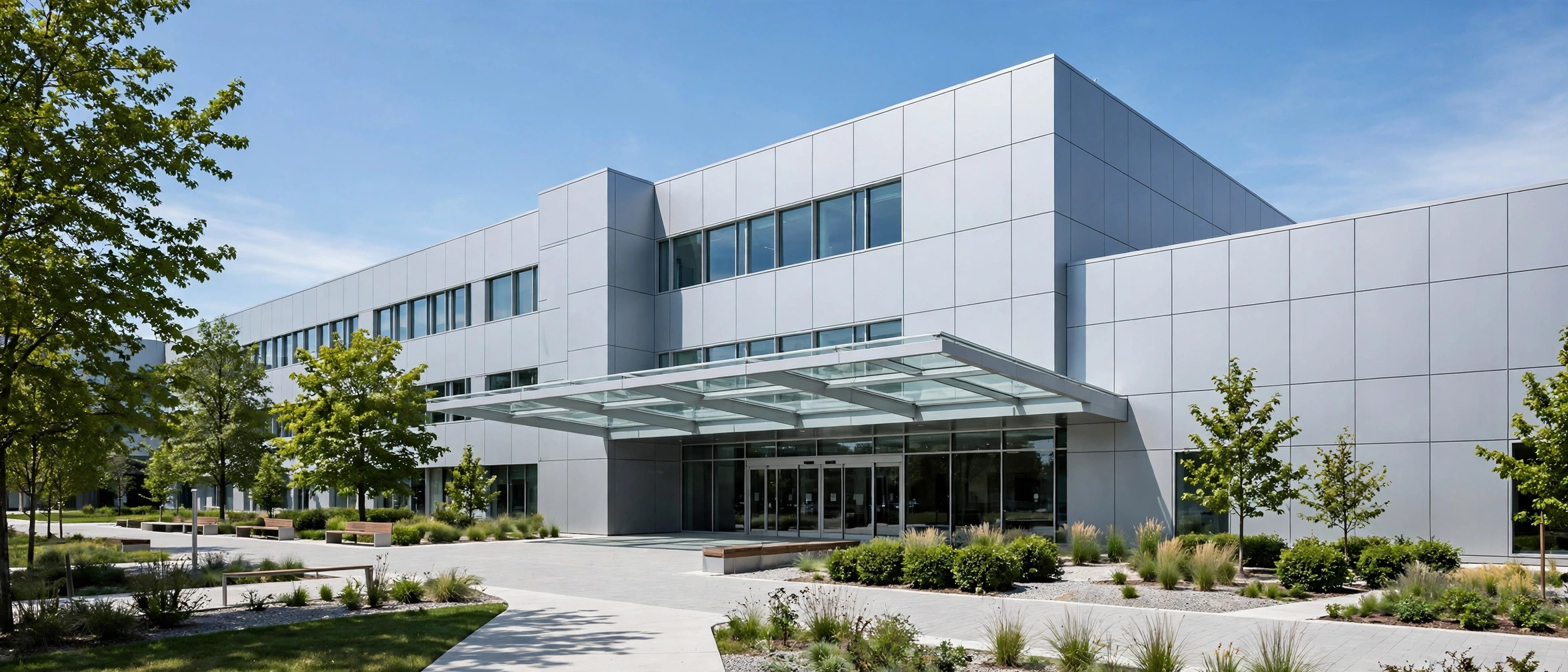
That is why solid aluminum facade panels appear so often on US hospital projects. They combine a non-combustible base material, a smooth and cleanable surface, long-term color stability, and the design freedom to support wayfinding and brand identity. This guide explains what healthcare specifiers look for — and how to write a specification that holds up in practice.
What Makes a Hospital Facade Different from Any Other Commercial Building
A hospital facade works under conditions most commercial buildings never face. Patients may be bedridden, in surgery, or on life support, so evacuation is slow and complex. Many areas operate around the clock, so facade work must happen without shutting the building down. And campuses grow in phases, so a panel installed today may need an exact visual match five or ten years from now when the next wing is added.
These realities shape every cladding decision. Specifiers weigh fire performance first, but they also ask how the surface will be cleaned, how it will stand up to carts and deliveries at entrances and loading docks, and whether the color and finish can be reproduced for future phases. A material that answers all of those questions earns its place on the specification.
Non-Combustible Performance: The First Question on Every Healthcare Spec
Fire performance is the starting point for hospital facades, and it is where solid aluminum panels have a clear advantage. Solid aluminum is a non-combustible material: it does not burn, and it does not contribute fuel to a fire. That distinction matters in healthcare, where building codes set strict requirements for exterior wall assemblies on hospitals and other high-occupancy buildings.
A non-combustible panel is only one part of the story: the complete wall assembly — insulation, air and water barriers, fixings — is what gets tested and approved. US specifiers typically look for assembly test data such as NFPA 285 and check the locally adopted International Building Code (IBC) with the authority having jurisdiction. Before specifying, ask the manufacturer for test reports on the proposed assembly and confirm the details with a licensed fire protection consultant. A responsible supplier shares documentation and points you to the right questions; it does not offer a blanket compliance guarantee.
Compared with composite panels with a combustible core, solid aluminum removes a common source of concern in facade fire discussions — a meaningful difference for a building full of people who cannot move quickly.
Smooth, sealed aluminum panel surfaces resist staining and are easy to clean — a practical advantage on healthcare campuses.
Hygiene and Cleanability: Surfaces That Support Infection Control
Healthcare design pays close attention to surfaces, and the facade faces a related set of demands: it should not harbor dirt, organic growth, or standing water, and it should be easy to wash down during routine maintenance.
Solid aluminum panels finished with PVDF, powder coating, or roll coating present a smooth, sealed surface that resists staining and can be cleaned with standard facade-washing methods. There is no porous substrate for mold to take hold in, and a ventilated rainscreen arrangement — with drained and ventilated joints behind the panels — helps the wall dry out after rain rather than trapping moisture. Panel joints can be detailed to shed water, and flat, well-drained surfaces give dirt and debris fewer places to collect.
A facade that stays clean with ordinary maintenance supports the hygiene culture of a healthcare campus and keeps the building looking cared for.
Durability for Buildings That Never Close
A hospital has no quiet season. Entrances take constant foot and cart traffic, vehicles brush against loading docks, and crews work around the building every week. Cladding that dents or fades becomes a recurring repair job — and every repair means scaffolding, noise, and disruption near patient areas.
Solid aluminum panels suit this environment. Available in 2.0, 2.5, and 3.0 mm thicknesses, in alloys such as 3003 H24, they let the specifier match gauge to span, wind load, and exposure — heavier gauges where impact resistance matters most, such as ground-floor zones and service areas. The material resists corrosion, and a PVDF finish retains color and gloss over long exterior exposure.
Service life also depends on what happens after handover. Ask the supplier to keep the exact color reference, finish batch, and panel drawings on file, and consider holding spare panels. When a panel is damaged years later, that archive is what makes an invisible repair possible.
Panel thickness is matched to each zone — 2.0, 2.5, or 3.0 mm — based on span, wind load, and impact exposure.
Design Flexibility: Wayfinding, Identity, and a Calmer Patient Experience
A hospital is a stressful place to navigate, and the building itself can help. Color and material are powerful wayfinding tools: a distinct entrance canopy, a warm accent wall at the main lobby, or a consistent palette across a campus helps visitors orient themselves before they read a sign. Solid aluminum panels support this with a wide range of solid colors, metallic finishes, and wood-look or stone-look surfaces, formed into flat, curved, or folded shapes.
Large panel formats — conventional maximum sizes around 1300 × 4000 mm — allow clean, calm elevations with fewer joints. Perforated panels can screen parking structures and service areas, shade glazing, and add texture without visual noise.
What to Specify: A Practical Checklist for Healthcare Facade Projects
Before issuing a specification for hospital facade panels, work through this checklist with the design team and the manufacturer:
Fire performance: confirm the panel material is non-combustible, request assembly test data for the proposed wall build-up, and verify local code requirements with the authority having jurisdiction.
Panel thickness and alloy: select 2.0, 2.5, or 3.0 mm and the appropriate alloy for each zone, based on span, wind load, and impact exposure — not a single gauge for the whole building.
Finish: specify PVDF coating for the most demanding exposures and confirm the color reference, gloss level, and sample approval process in writing.
Panel layout: agree on panel sizes, joint widths, and fixing details early, and check that large formats are compatible with transport and site handling.
Mock-up: require a full-size mock-up or sample panel for approval before production, including color, finish, and joint details.
Maintenance and spares: obtain cleaning guidance, keep the color and finish records on file, and hold spare panels for future repairs and phased expansions.
Documentation: request shop drawings, material certificates, and finish data sheets as part of the submittal package.
Hospitals ask more of a facade than almost any other building type: non-combustible performance, cleanable surfaces, durability under constant use, and a design that helps people find their way. Solid aluminum facade panels answer those demands as a system — which is why they continue to be specified for healthcare projects across the US. Browse the product range at juchangalu.com, or send your drawings for a detailed quotation tailored to your project.
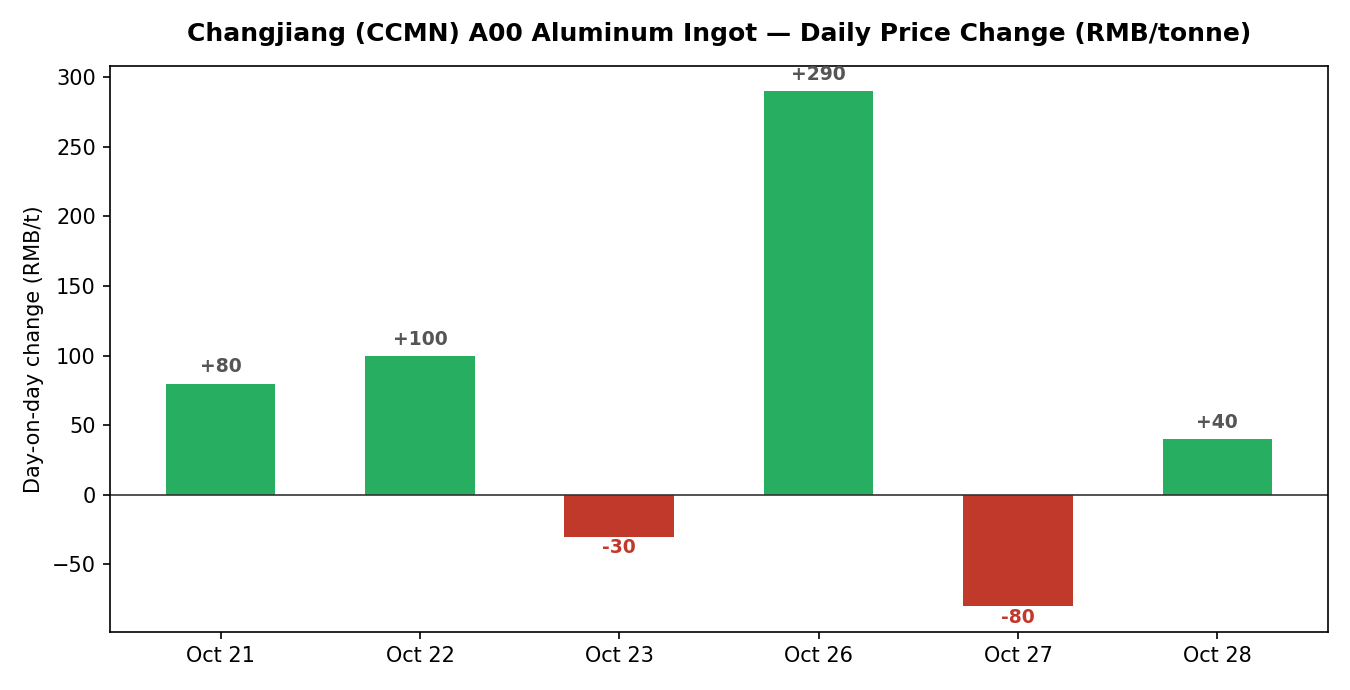
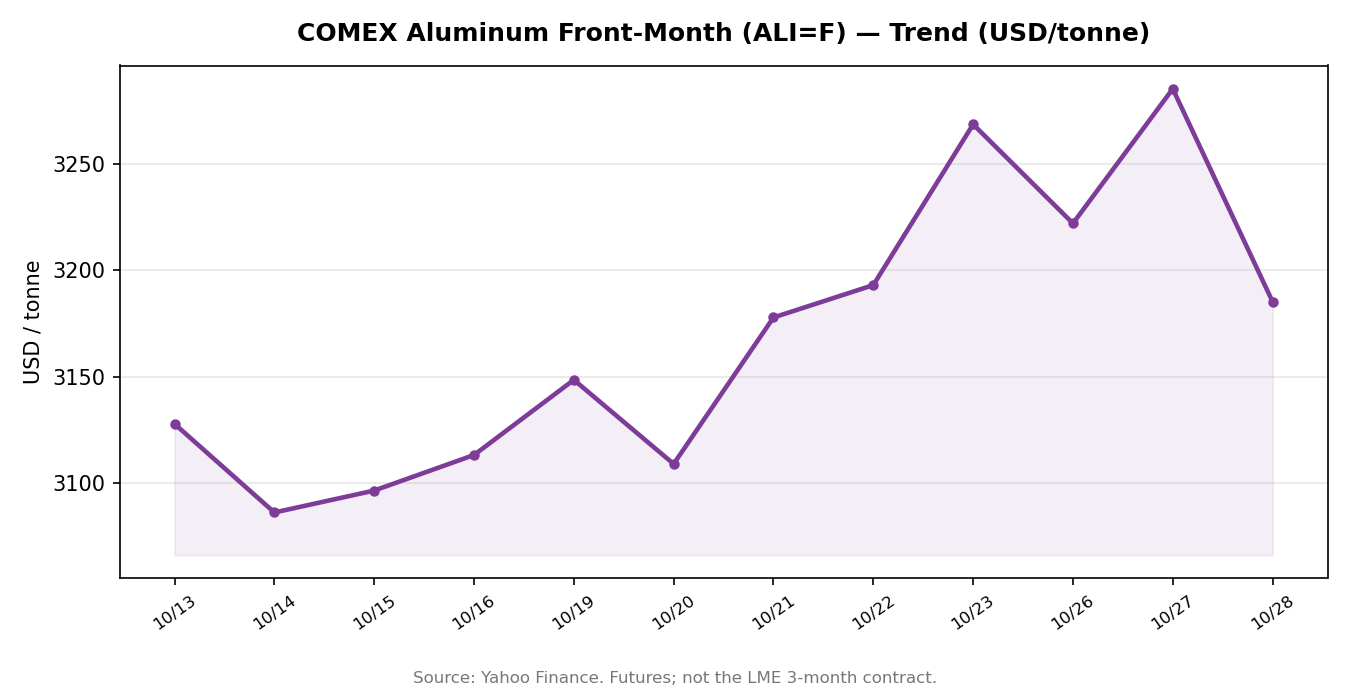
October 28, 2026 — China’s domestic aluminum ingot market rose on the latest session. The Changjiang Nonferrous Metals Network (CCMN) A00 aluminum ingot benchmark moved +40 RMB/tonne day-on-day. Offshore, COMEX aluminum front-month futures closed at USD 3,185.2/t (-100.0, -3.04%).
Cross-Platform Price Snapshot
Benchmark
Latest quote
Day-on-day
Source
CCMN A00 aluminum ingot, spot (tax incl.)
day change +40 RMB/t*
+40 RMB/t
Changjiang Nonferrous Metals Network
COMEX aluminum, front month
USD 3,185.2/t
-100.0 USD/t (-3.04%)
Yahoo Finance
*CCMN’s absolute spot levels are member-only; day-on-day changes are public.
CCMN A00: Recent Daily Changes
Offshore: COMEX Trend
What It Means for Panel Buyers
For buyers of aluminum façade panels and sheet, ingot is the single largest cost input. Sustained moves in the ingot benchmark typically feed through to mill and fabricator pricing within one to two quotation cycles. Buyers with Q4 project pipelines may want to request fresh quotes when the trend favors them — while remembering that surface treatment (PVDF, powder coating) and fabrication complexity still dominate the final panel price.
Get this briefing every morning
We publish a short aluminum ingot market update like this one every trading day — CCMN spot moves, offshore futures, and the charts that matter.
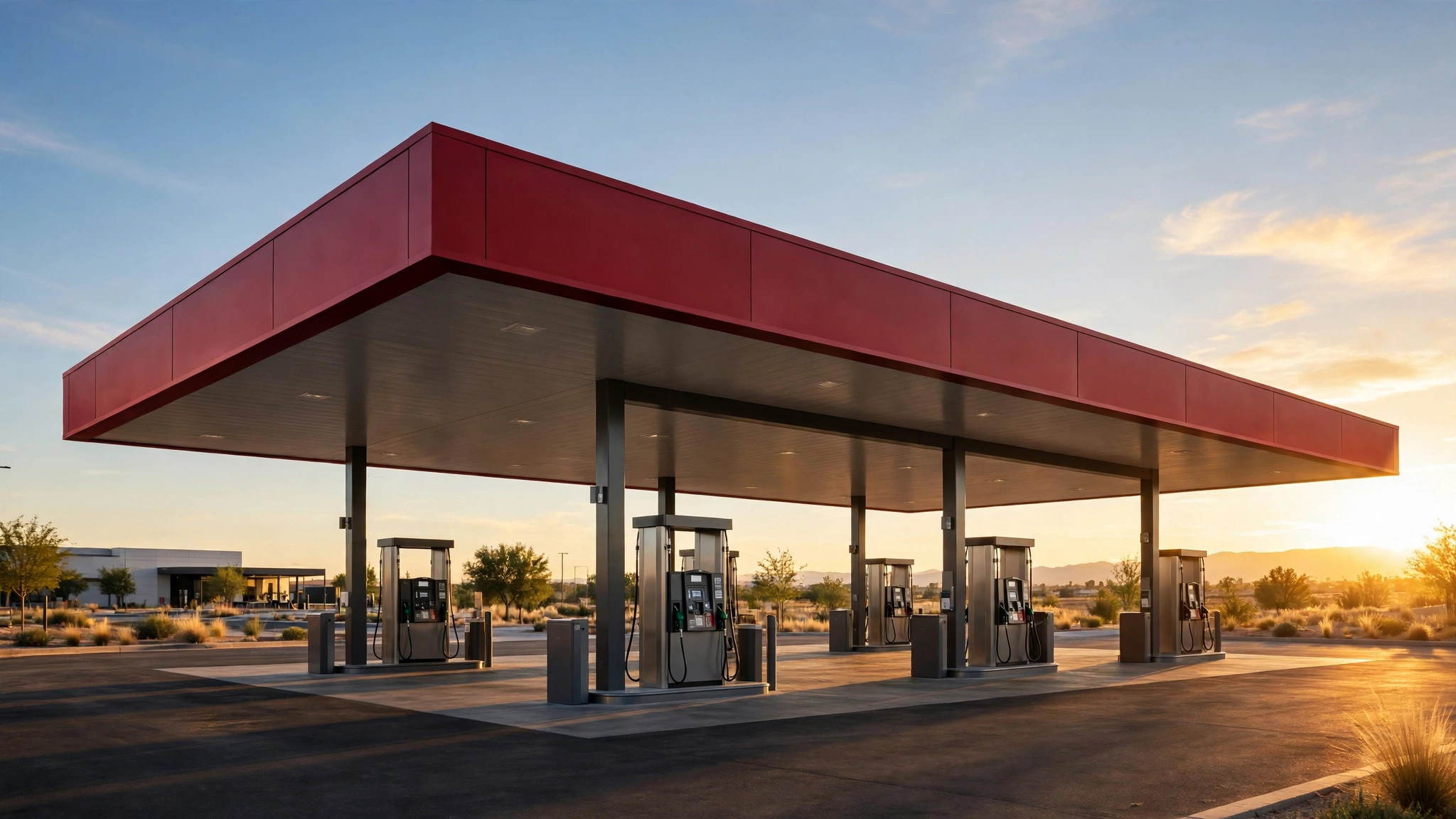
A gas station is one of the hardest-working facades in commercial construction. The canopy fascia carries the brand identity drivers recognize from half a mile away, the soffit sits inches above idling engines and fuel vapor, and the whole structure has to look freshly painted year after year — through sun, rain, road salt, and the occasional bump from a delivery truck. That is why more fuel retailers and petroleum brands are specifying solid aluminum facade panels for canopy cladding, fascia bands, and convenience-store exteriors.
This guide explains where aluminum panels make sense on a gas station project, how to specify them for brand-color consistency across multiple sites, and what to put in your request for quotation so the panels you receive match the panels you approved.
Why Gas Stations Specify Solid Aluminum Panels
A gas station canopy is a small building with an outsized visual job. Its fascia band — often only 600 to 900 mm tall — is the single most visible brand surface on the site. It must hold a flat, crisp face in wind, resist fading under direct sun, and survive the chemical environment of a forecourt without staining or corrosion.
Solid aluminum panels meet those demands for several practical reasons. Aluminum does not rust, and a properly coated panel shrugs off fuel splash, exhaust deposits, and de-icing salt far better than painted steel or cement board. The panels are light enough to hang from a canopy steel frame without heavy secondary structure, yet rigid enough — at 2.5 mm or 3.0 mm thickness — to span between fixings without visible deflection. And because the color is applied as a factory coating rather than site-applied paint, the finish is uniform across every panel on the canopy and every site in a rollout.
For the convenience store and car wash buildings on the same lot, the same panel system creates a consistent visual language: canopy fascia, storefront fascia, and column covers in one material, one coating system, and one brand color.
Canopy Fascia and Soffit: The High-Visibility Zone
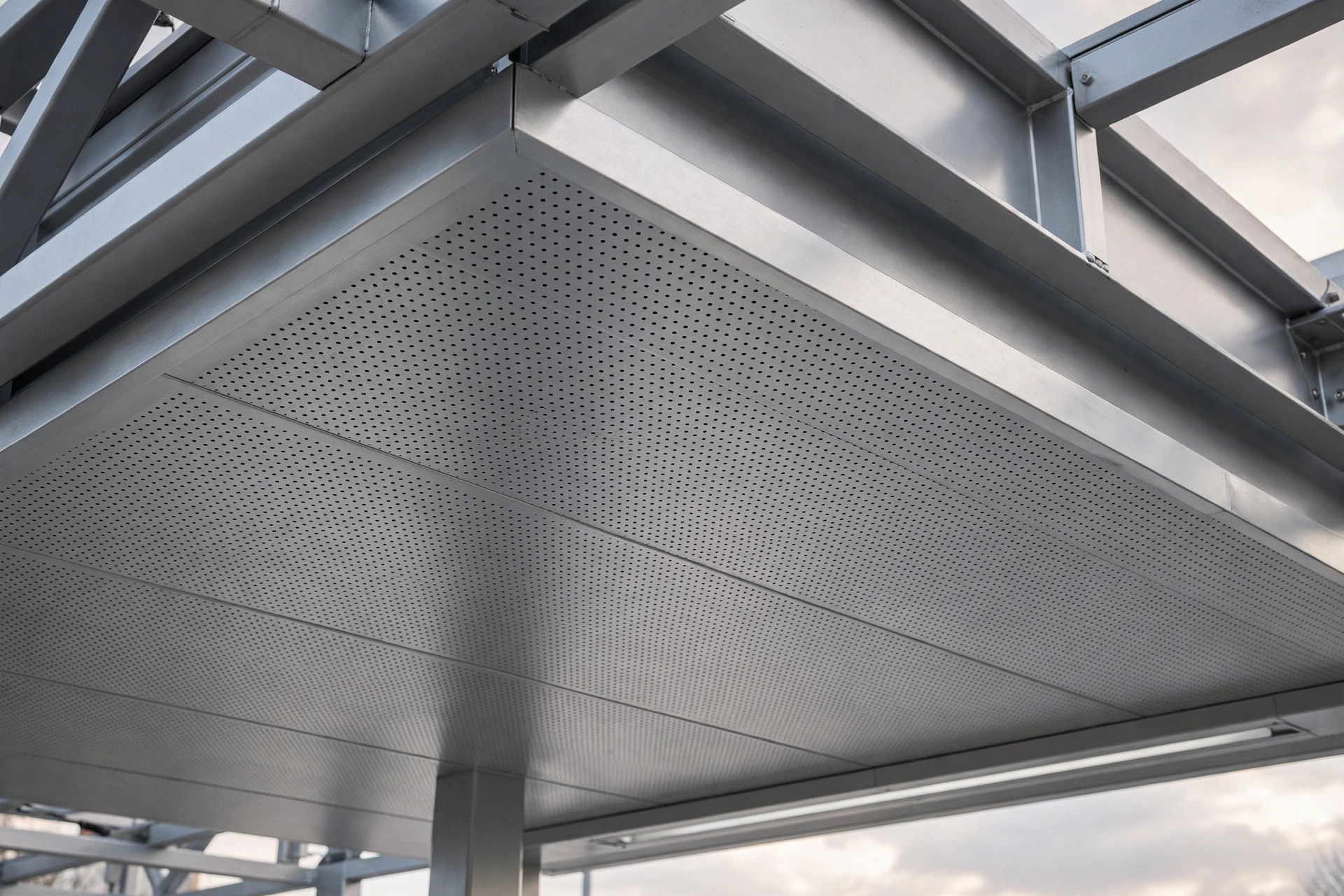
The canopy fascia is the branding surface, but the soffit underneath does the quiet work. Drivers look up at it while fueling, and it is the surface most exposed to heat and vapor rising from the forecourt. Perforated aluminum panels are a common choice here: the perforation pattern allows air movement and heat dissipation above the canopy while keeping the underside clean and uniform in appearance.
When specifying the canopy, treat fascia and soffit as one system. Use the same alloy and coating family on both, and confirm that the fascia panels and the soffit panels are produced from the same coating batch where color matching matters — the eye will compare them at the canopy edge. Standard panel sizes up to 1300 × 4000 mm suit most canopy fascia runs with minimal joints, and cassette-style fixing with concealed fasteners gives the fascia band the flat, uninterrupted face a brand fascia needs.
Pay attention to the fascia-to-soffit corner detail. A folded or extruded corner trim in matching coating hides the joint, protects the panel edge, and gives installers a clean line to work to. Ask your supplier how the corner detail is fabricated — it is the detail most likely to be improvised on site if it is not resolved in the shop drawings.
Perforated aluminum soffit panels under a gas station canopy allow air movement and heat dissipation while keeping the underside clean and uniform.
Brand-Color Matching Across Hundreds of Sites
For a fuel brand, color is not decoration; it is the asset. A driver should recognize the same red, green, or yellow at a station in Texas and a station in Florida, and the canopy fascia is where that recognition happens. That makes color consistency the single most important specification on a gas station panel order.
Start with a controlled color reference, not a screen image. Supply a physical color chip or a RAL or Pantone reference, and ask the factory to produce a sample panel in that color for approval before production. For multi-site rollouts, keep an approved sample panel on file as the master reference, and require each production batch to be checked against it.
PVDF fluorocarbon coating is the usual choice for brand fascia because it holds color and gloss far longer than standard powder coating under constant sun exposure. Specify the coating type in writing, and ask how the factory controls batch-to-batch color variation — a reputable supplier checks each batch against the approved sample and records the result. If your rollout will add stations over several years, ask the supplier to keep the color formula and the approved sample on file, so a canopy built in year three matches the one built in year one.
Durability in a Fuel-Vapor Environment
A forecourt is a harsher environment than a typical retail facade. Panels face UV exposure from above, fuel vapor and exhaust from below, and regular pressure washing. The specification should reflect that.
Alloy choice matters here. 3003 H24 aluminum is widely used for facade panels because it balances formability and strength, and it takes a coating well. Thickness selection follows the same logic as any facade: 2.0 mm suits smaller fascia panels and column covers, while 2.5 mm or 3.0 mm is the safer choice for large canopy fascia panels exposed to wind load, where flatness is critical to the brand image.
Ask about the coating’s resistance to common forecourt chemicals and about recommended cleaning. Most coated aluminum panels can be cleaned with mild detergent and water; aggressive solvents and abrasive pads should be avoided because they damage the coating and void the finish performance. Put the cleaning guidance in the handover documents for the station operator — it costs nothing to write down and prevents most long-term finish complaints.
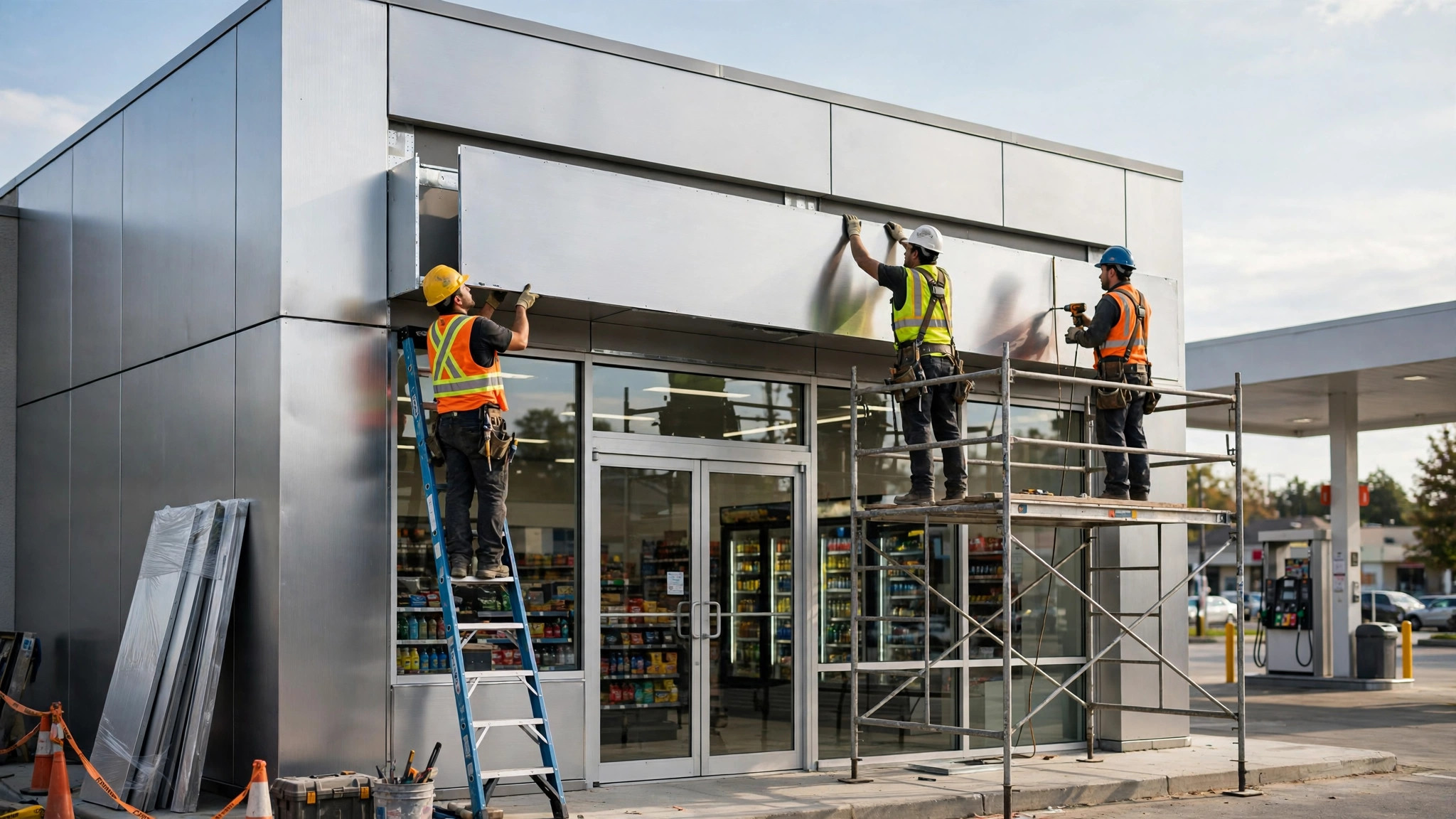
Installing aluminum facade panels on a gas station convenience store exterior keeps the canopy, storefront, and column covers in one consistent material and brand color.
Specifying Panels for a Multi-Site Rollout
Gas station work is rarely a single canopy. Brands roll out dozens of sites, often with several contractors, and the specification has to survive that fragmentation. Three practices help.
First, standardize the panel system, not just the color. Fix the alloy, thickness range, coating type, fixing system, and joint detail in a brand standard document, and reference it on every project rather than re-specifying from scratch. That keeps the installed result consistent even when the installer changes.
Second, standardize the drawing package. Require shop drawings for the canopy fascia and soffit on every site, with panel sizes, joint positions, and corner details shown. Variations in canopy dimensions are inevitable; the drawing package is where they get resolved before fabrication, not on the scaffold.
Third, plan for replacement panels. Canopies get hit. Keep a small stock of spare panels in the brand color — or, at minimum, keep the color formula and panel dimensions on file with the supplier — so a damaged fascia panel can be replaced without a visible color mismatch against panels that have weathered for years.
What to Include in Your RFQ
To get a comparable, accurate quotation for gas station panels, send the supplier the following: canopy and building elevations with dimensions, the fascia height and soffit layout, the brand color reference (physical chip or RAL/Pantone code), the coating type you require, the alloy and thickness, the fixing system preference, and the number of sites in the rollout with their delivery locations. Photos of an existing station in the same brand are helpful — they show the supplier exactly what “matching” means.
Also state the delivery format: panels cut to size and folded to the shop drawings, flat-packed with protective film, and labeled by elevation and position. For multi-site orders, labeled packaging is what keeps the right panel on the right canopy.
Aluminum facade panels will not make a gas station design on their own, but specified well, they do the job the brand needs: a flat, color-true fascia that reads clearly from the road, a soffit that stays clean above the forecourt, and a finish that still looks new when the next site in the rollout opens. Browse our gas station and canopy panel options at juchangalu.com, or send your canopy drawings for a detailed quotation.
A hailstorm dents three panels on the south elevation. A delivery truck clips a ground-floor cassette. A sealant failure lets water behind one corner of the facade. The damage itself is usually straightforward to fix — order a replacement panel, swap it in, move on. The hard part is what comes next: making the new panel look like it belongs next to panels that have been weathering in the sun for five, eight, or twelve years.
Color and finish matching is one of the most common — and most underestimated — challenges in facade maintenance. This guide explains why an exact match is difficult, what information gives you the best shot at a close one, and what to do when a perfect match simply isn’t achievable.
Why Matching a Panel Years Later Is Harder Than It Looks
Two panels that left the factory as an identical color can look noticeably different after several years on a building. The difference is rarely the fault of the replacement panel. It comes from three separate changes that accumulate over time.
First, the coating weathers. PVDF and powder coatings are engineered for long-term color retention, but years of ultraviolet exposure, rain, and airborne pollutants still shift the surface slightly — usually toward a lighter, flatter version of the original color. South- and west-facing elevations age faster than shaded north faces, so even panels on the same building weather unevenly.
Second, the original production conditions no longer exist. Coating formulations, pigment suppliers, and application lines evolve. A color mixed on one coil-coating line in one year may not be reproducible to the same recipe years later, even by the same manufacturer.
Third, the panels themselves may have come from different production batches in the first place. On large projects, panels are often produced in several runs. If the damaged panel came from batch A and the replacement comes from a new run, small batch-to-batch variation adds to the weathering gap.
None of this means a good match is impossible. It means the match has to be managed as a process, starting long before you place the order.
Start with the Original Records
The single most valuable thing you can have when ordering a replacement is the original project documentation. Before contacting any supplier, gather everything you can find:
Color code and coating type. The RAL number, the manufacturer’s color reference, and whether the finish is PVDF, powder coating, or roll coating. A color name alone — “silver grey” or “champagne” — is not enough; the same name can cover several different formulations.
Panel specification. Alloy, thickness (commonly 2.0, 2.5, or 3.0 mm for solid aluminum facade panels), and the panel’s finished dimensions, including the return depth of the cassette edges.
Batch or production information. Any delivery notes, packing lists, or project files that record the production batch. This helps the factory check whether any retained material or color records survive.
Retained samples. Many well-run projects keep one or two spare panels in storage, or a flat color chip from the original production run. A physical sample is worth more than any written description, because it can be measured and compared directly.
If the original supplier is still in business, send them this information first. A factory that produced the original panels can check its own archives for the color formulation and, in some cases, for retained color chips from the same production run. That is almost always a better starting point than asking a new supplier to reverse-engineer a color from a photograph.
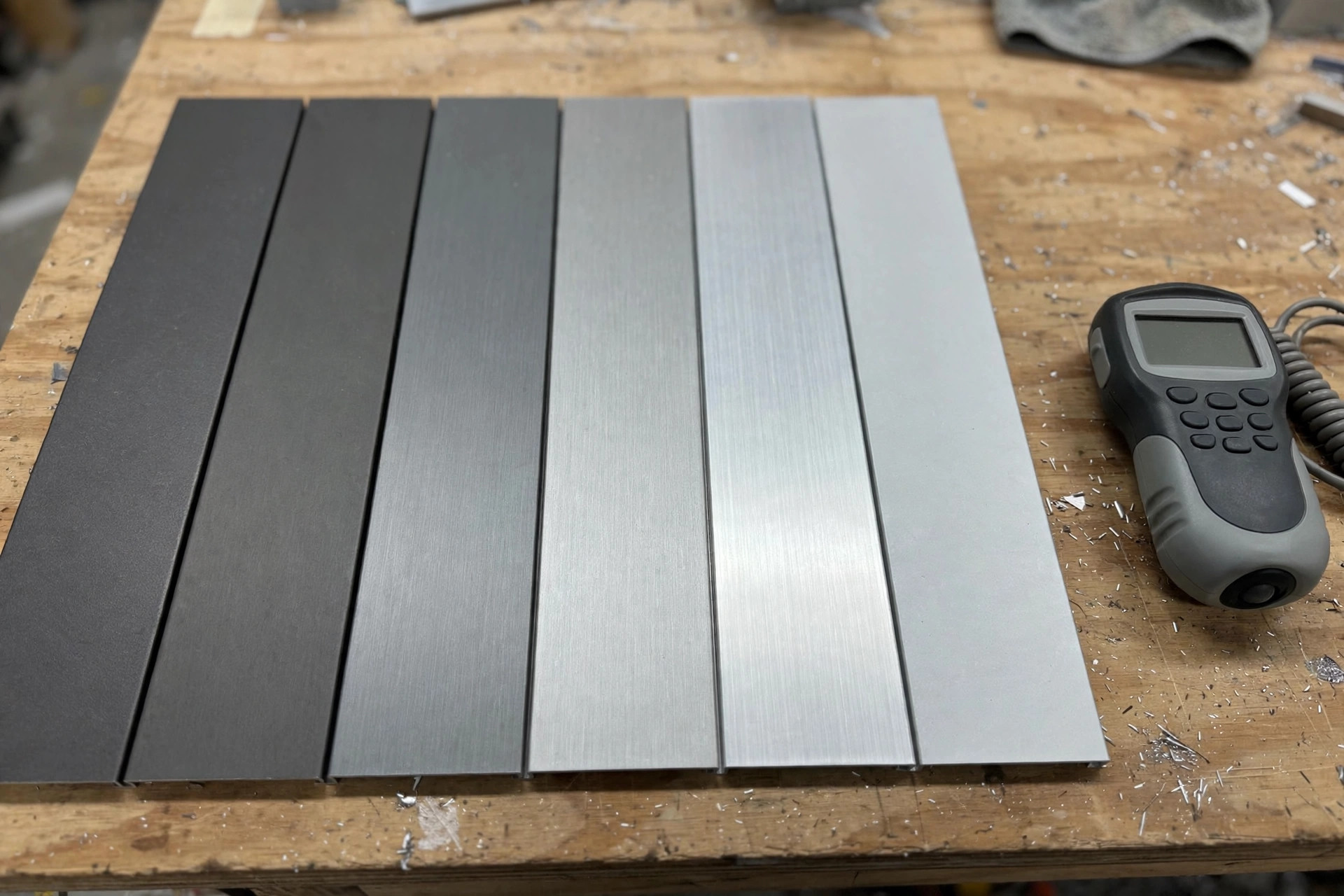
Color samples from the original production run, compared side by side with a handheld colorimeter reading.
Measure What You Actually Have
A common mistake is ordering a replacement matched to the original color code, then being surprised when it stands out against the weathered facade. The replacement should be matched to the panels as they look today, not as they looked on installation day.
The practical way to do this is to measure the existing panels. A handheld colorimeter or spectrophotometer can record the color of an undamaged panel adjacent to the damaged one, expressed as L*a*b* values and a ΔE figure that quantifies the difference between two colors. Ask the factory whether they can work from a measured color reading rather than only from a color code — many can, and it materially improves the result.
Also consider where on the building you measure. Measure a panel in the same elevation and orientation as the damaged one, and measure more than one spot: weathering is rarely uniform even across a single elevation. If the undamaged panels on the south face measure noticeably lighter than those on the north face, the replacement should be matched to its actual neighbors.
Photographs help for communication, but they are not a substitute for measurement. Phone cameras adjust white balance automatically, and the same panel can look different in morning and afternoon light. Send photos as supporting material, never as the only reference.
Ordering Replacement Panels: What to Send the Factory
When you request a quotation for replacement panels, the more complete your package, the better the outcome. A good replacement order includes:
The measured color data (L*a*b* values and ΔE target) from the adjacent existing panels, plus the original color code if you have it.
A physical sample when possible — either a retained color chip or a small cut piece from an undamaged panel in a hidden location, such as behind a parapet or inside a soffit return.
Exact panel dimensions, including the cassette return depth, fixing hole positions, and any stiffener layout. Do not assume the replacement will be made to the same shop drawings as the original; confirm the dimensions against the opening on site.
The finish specification — PVDF, powder, or roll coating — matched to the original, since different coating types age differently and a mixed finish will diverge further over time.
Photos of the surrounding facade in daylight, showing the damaged area and its neighbors, so the factory can see the weathering context.
Ask the factory to produce a color sample for approval before full production. A flat sample panel, roughly the size of a sheet of paper or larger, lets you hold the proposed color next to the existing facade in daylight and judge the match with your own eyes before committing to the full order. This step costs a little time; skipping it costs far more if the delivered panels don’t blend.
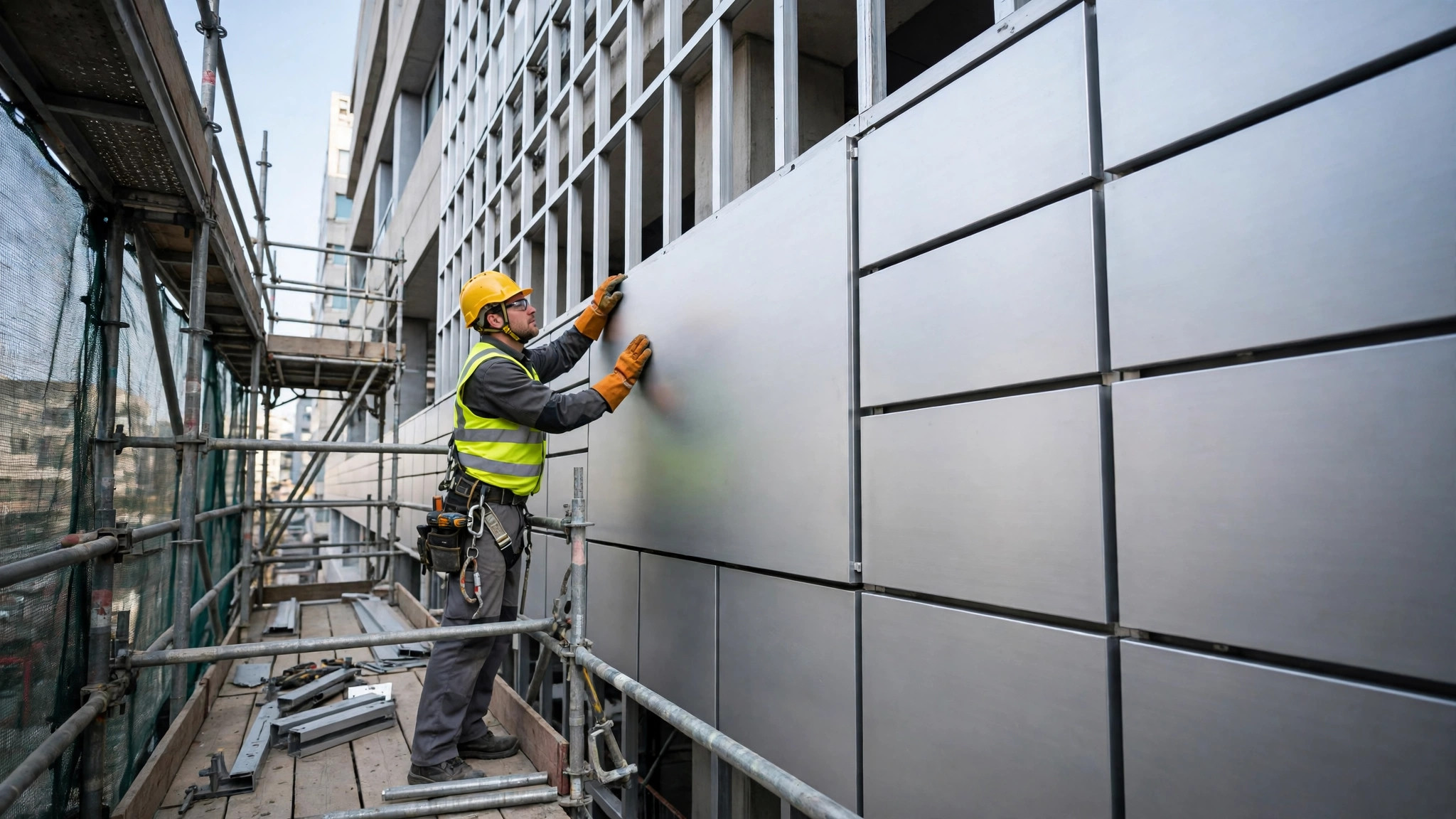
A replacement aluminum facade panel being installed on a commercial building exterior.
Blending New Panels into an Existing Facade
Even with a well-matched color, a brand-new panel can catch the eye because its surface is cleaner and its gloss slightly higher than its neighbors. A few installation strategies reduce that contrast:
Replace in a logical group. If several adjacent panels are damaged, replacing the whole group reads as one intentional repair rather than a patch. Where the damage is limited to one panel, consider whether the adjacent panel is also due for replacement.
Clean the surrounding panels first. Years of grime can account for a surprising share of the visible difference. Wash the neighboring panels before judging the match, and judge it again after the new panel is installed.
Choose a discreet location for the first inspection. View the match from the normal viewing distance — usually street level — rather than from a ladder a meter away. A difference that is obvious up close is often invisible from where people actually look at the building.
Allow a short settling period. A new coating will lose a little of its initial gloss in the first months outdoors, which usually brings it closer to the weathered panels around it.
When a Perfect Match Isn’t Possible
Sometimes, despite the best preparation, an invisible match is not realistic — the original color is discontinued, the weathering gap is too wide, or the remaining panels have faded unevenly. In that case, the goal shifts from hiding the repair to making it look deliberate:
Break the elevation at a natural joint. Re-clad a full bay, a full floor band, or the area between two expansion joints, so the new panels form a coherent block rather than a single odd panel.
Use a close-but-deliberately-different finish. A slightly darker shade of the same color family, used across a defined area, can read as a design accent rather than a failed match.
Plan a phased re-clad. If the facade is nearing the end of its service life, replacing the damaged section now and scheduling the remaining elevations over the next year or two spreads the cost while keeping the building looking intentional.
Discuss these options openly with the factory and the building owner before ordering. A frank conversation at the start avoids a dispute about a “mismatched” panel later.
Planning Ahead: Make the Next Replacement Easier
If you are specifying panels for a new project today, a few decisions now will make any future replacement far simpler:
Order spare panels with the original run. Two or three extra panels, stored flat and indoors, cost little at the time of the project and are the most reliable source of a matching replacement later.
Keep a color archive. File the color code, coating type, batch numbers, and a retained flat sample with the building’s maintenance records — and make sure the facilities team knows where the file is.
Record the specification in the O&M manual. Alloy, thickness, finish, panel dimensions, and the factory’s contact details should all be written down where the next maintenance manager can find them, not left in one person’s email.
Specify the same finish family across the facade. Mixing PVDF and powder coating on one elevation guarantees the two will age at different rates and complicate any future match.
Replacing a facade panel years after installation will never be as simple as swapping a tile. But with the original records in hand, a measured color reference, an approved sample, and realistic expectations about weathering, most replacements can blend in well enough that nobody notices — which is exactly the point. And the cheapest insurance of all is a few spare panels ordered on day one.
Browse our aluminum facade panel range at juchangalu.com, or send your drawings and color references for a detailed quotation on replacement panels.