作者: wpusername2200

  • Aluminum Panel Warranties Explained: What Finish Warranties Actually Cover

    Aluminum Panel Warranties Explained: What Finish Warranties Actually Cover

    When a US buyer compares aluminum facade panel suppliers, the conversation usually starts with thickness, alloy, and price per square meter. Yet the document that quietly protects the project for decades after installation is the finish warranty — a written statement of what the coating manufacturer and the panel fabricator will stand behind, for how long, and under which conditions. Understanding that framework before you specify or order helps you compare suppliers on equal terms.

    This guide describes common industry practice, not the terms of any single supplier. Every manufacturer writes its own warranty document, and the exact coverage always comes from the document issued with your order.

    Why Finish Warranties Matter More Than the Panel Itself

    Solid aluminum panels are inherently durable. The substrate — commonly 3003-H24 alloy in 2.0, 2.5, or 3.0 mm thickness — does not rust, and with proper detailing it can serve for decades. What changes over time is the surface: the PVDF, powder coating, or anodized layer that gives the panel its color and protects it from weather.

    That is why the finish warranty, rather than a warranty on the bare metal, is the document buyers should read first. A coating failure shows up as chalking, fading, peeling, or corrosion creeping in from an exposed edge. On a large facade, recoating or replacing affected panels costs far more than the original price difference between a standard finish and a premium one.

    Many project specifications also require the coating to meet a recognized standard, such as AAMA 2605 for PVDF, and require a written finish warranty — without it, a bid may be technically non-compliant even if the price looks attractive.

    What a Typical PVDF Finish Warranty Covers

    PVDF (polyvinylidene fluoride) coatings are the most common premium finish for architectural aluminum panels, and their warranties follow a fairly consistent industry pattern. A typical PVDF finish warranty addresses four performance areas: color retention (the coating will not fade beyond a defined limit, usually measured in Delta E units — dark and vivid colors are more vulnerable than light neutrals), chalk resistance (no powdery, faded surface film beyond a specified rating), adhesion (no peeling, cracking, or flaking from the substrate), and film integrity (no checking, cracking, or blistering under normal weathering).

    Coverage is usually stated as a period of years, commonly 10 to 20 years for PVDF finishes. The number alone tells you little: two warranties of the same length can differ sharply in fade thresholds, exclusions, and claim procedures. Compare the performance limits, not just the headline years. Ask who the warrantor is — coating manufacturer, fabricator, or both — and confirm the warranty will be issued in the project owner’s name.
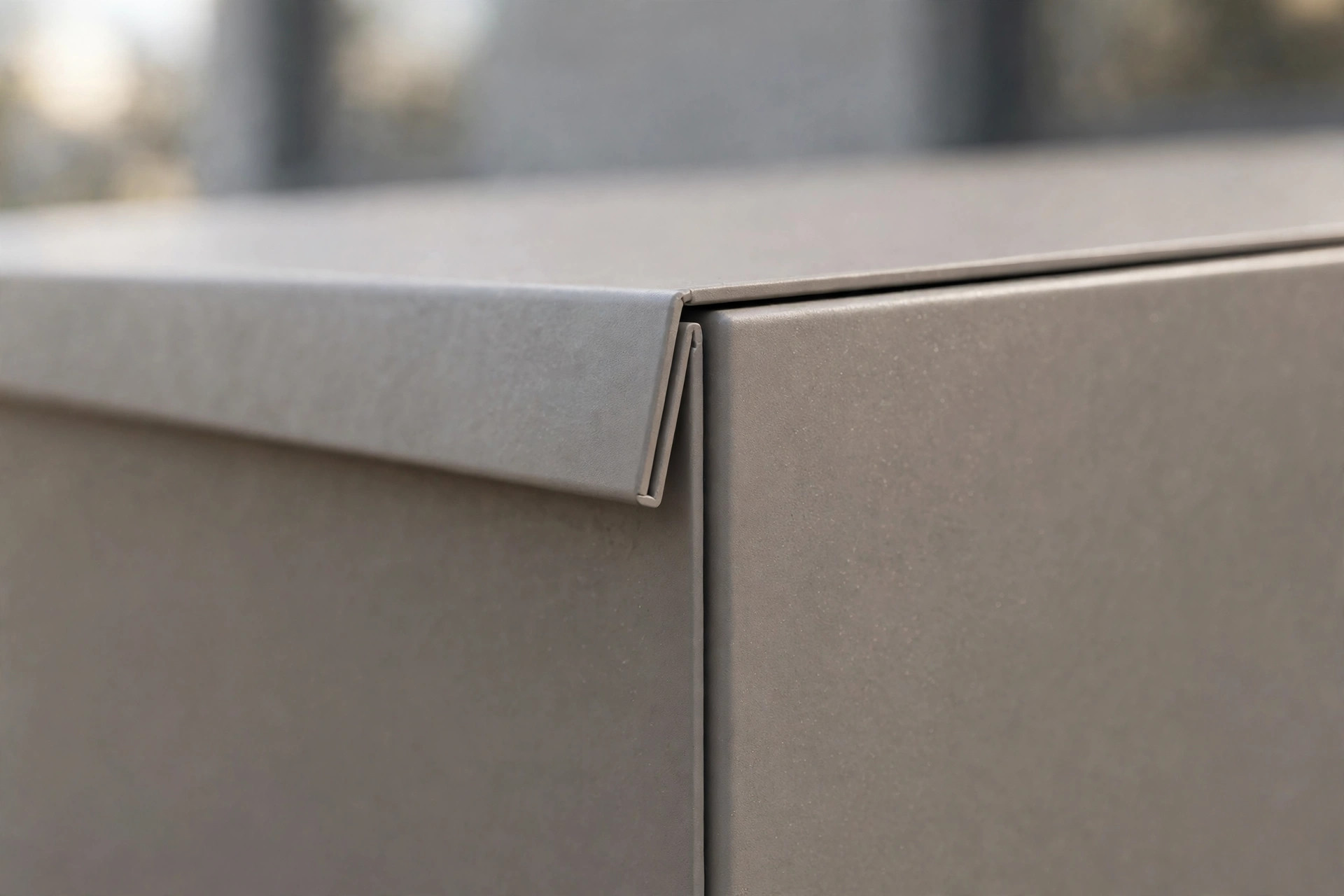
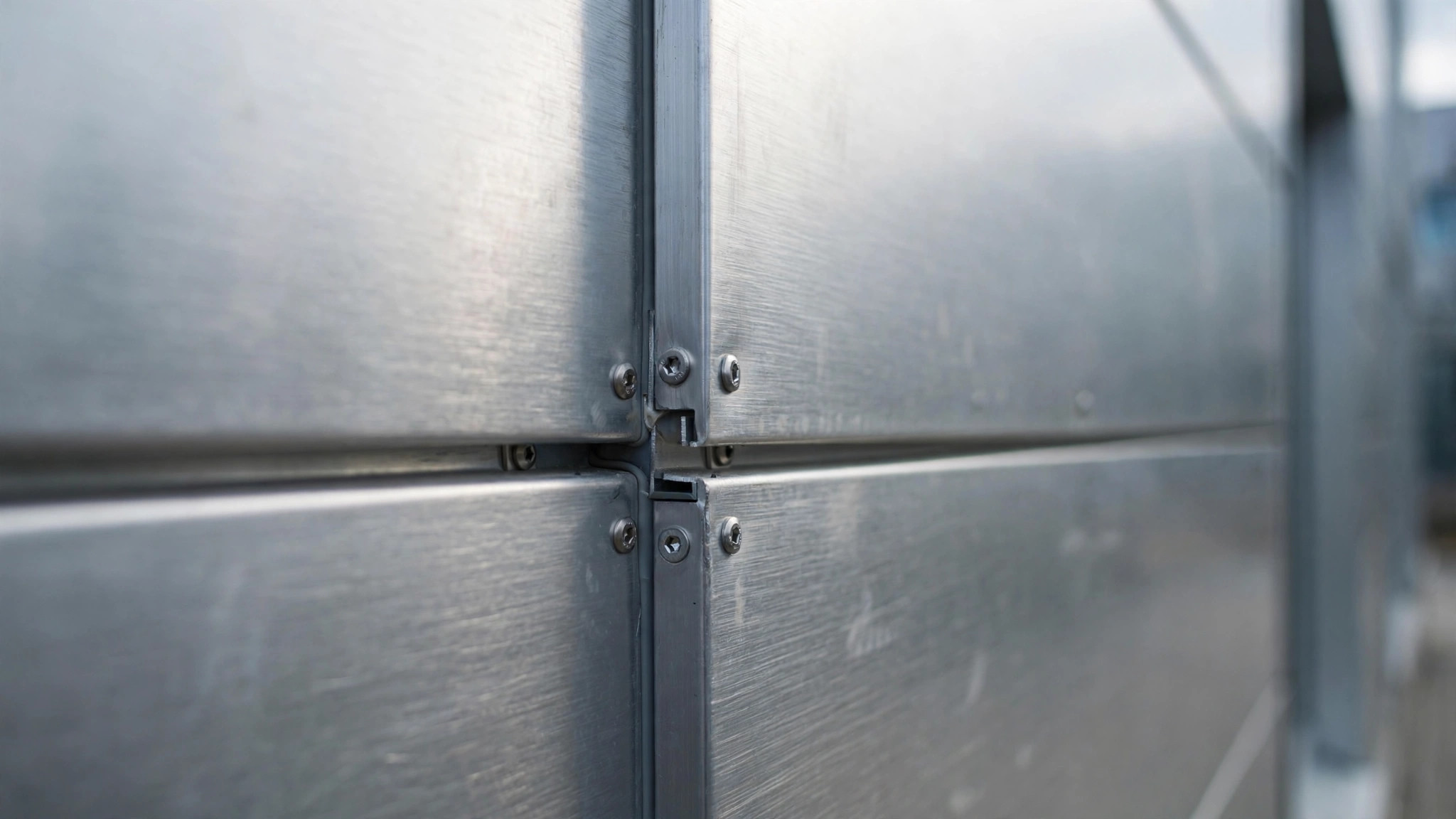
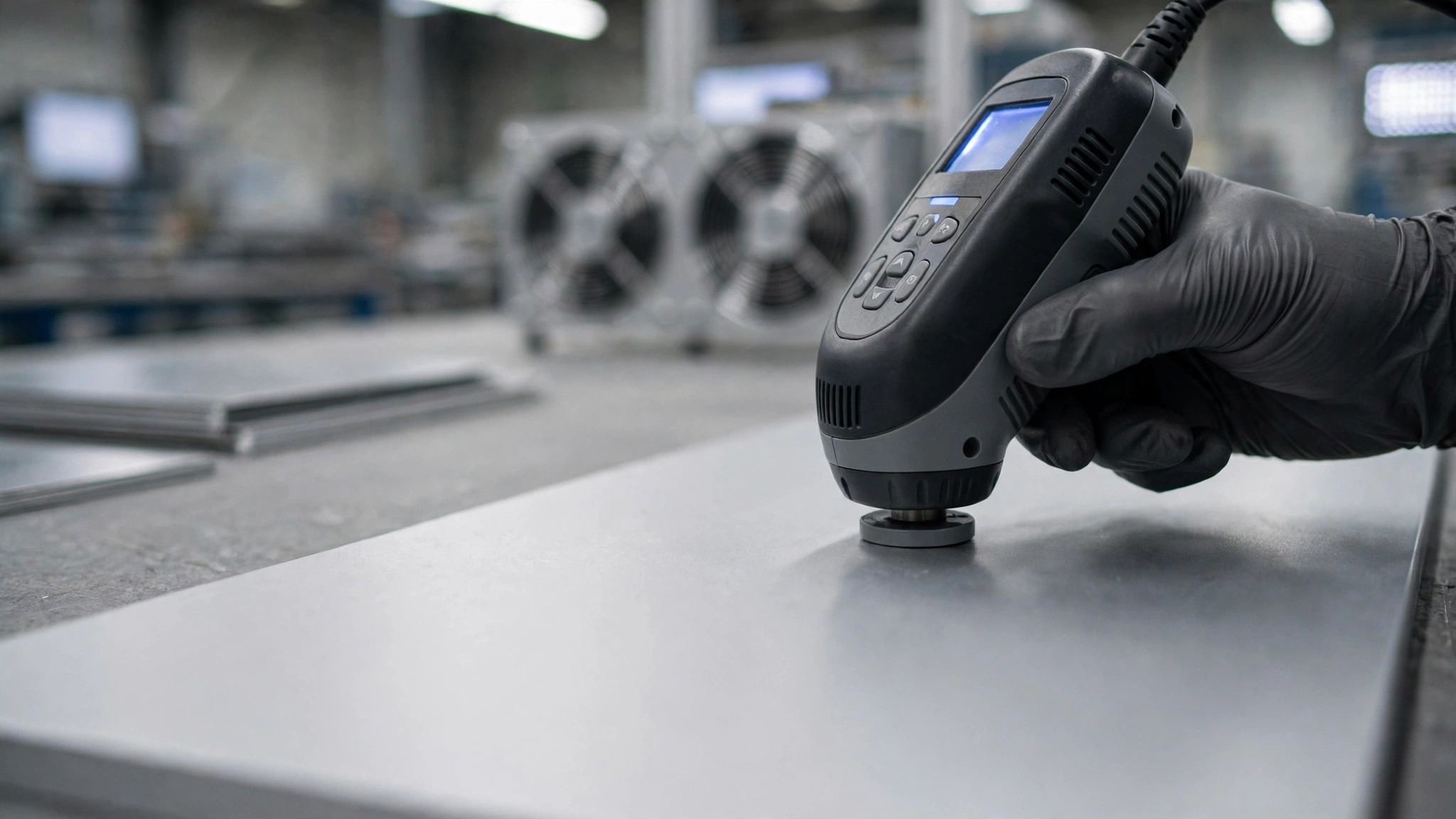
    Close-up of a solid aluminum facade panel with a smooth PVDF coating and a precisely folded corner joint
    A close-up of a PVDF-coated solid aluminum panel: the finish layer is what the warranty actually protects.

    What Finish Warranties Usually Exclude

    Every finish warranty has exclusions, and knowing them prevents the most common disappointment: assuming a problem is covered when it is not. Common exclusions include damage during handling, transport, or installation — scratches and dents after the panels leave the factory; improper cleaning — abrasive cleaners, strong chemicals, and close-range pressure washing, so warranties typically require cleaning per the coating manufacturer’s maintenance guide; corrosive or unusual environments — salt spray or industrial fumes may fall outside standard coverage or require a specially rated system, so coastal projects deserve a specific conversation; damage from other trades or the building itself — mortar, sealant smears, welding spatter, or water leaking from the wall cavity are not coating failures, even though the symptom appears on the panel surface; and normal weathering — minor changes that do not cross the defined fade or chalk thresholds are considered normal aging, not a warranty event.

    Powder Coating and Anodized Finishes: How Coverage Differs

    Not every project needs PVDF, and the warranty framework changes with the finish type. Powder coating warranties generally cover adhesion, color retention, and chalking, but the stated performance limits and timeframes are typically more modest than those for PVDF. Powder coatings perform well in many commercial applications, especially interior panels and moderate exterior exposure. For harsh climates, coastal sites, or dark colors, compare the powder coating warranty’s fade and chalk limits against the PVDF alternative and weigh the price difference against the risk.

    Anodized finishes are a different case. Anodizing thickens the aluminum’s natural oxide layer electrochemically rather than applying a paint film. Its warranties typically address color stability and corrosion of the anodic layer, using different measurement methods than paint warranties. Because anodized surfaces show color variation more readily between batches, the warranty and specification should address batch-to-batch color consistency explicitly.

    Check that the warranty document matches the finish named in the specification: a project that specifies PVDF but receives a powder-coated panel with a powder-coating warranty is not receiving the same product.
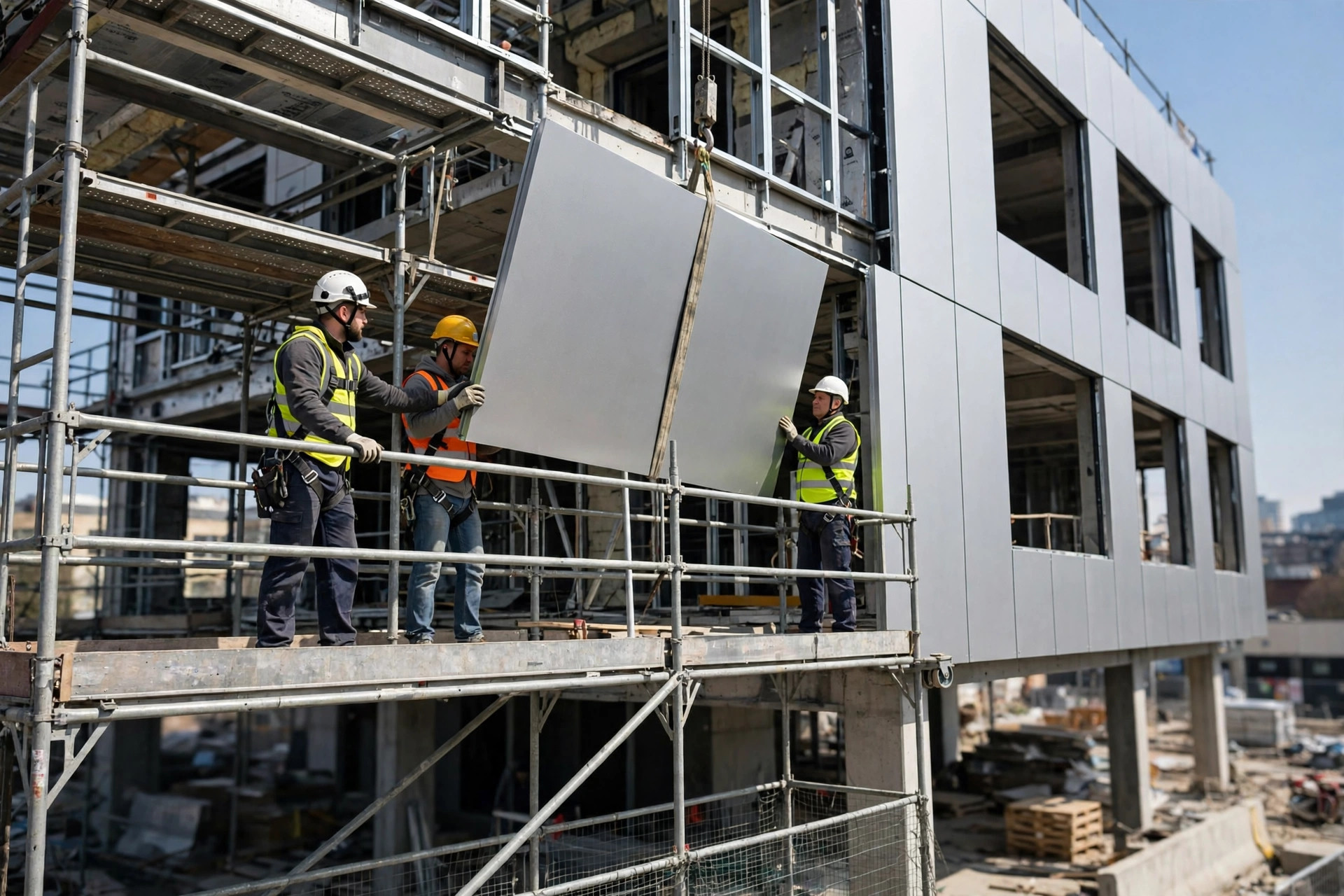
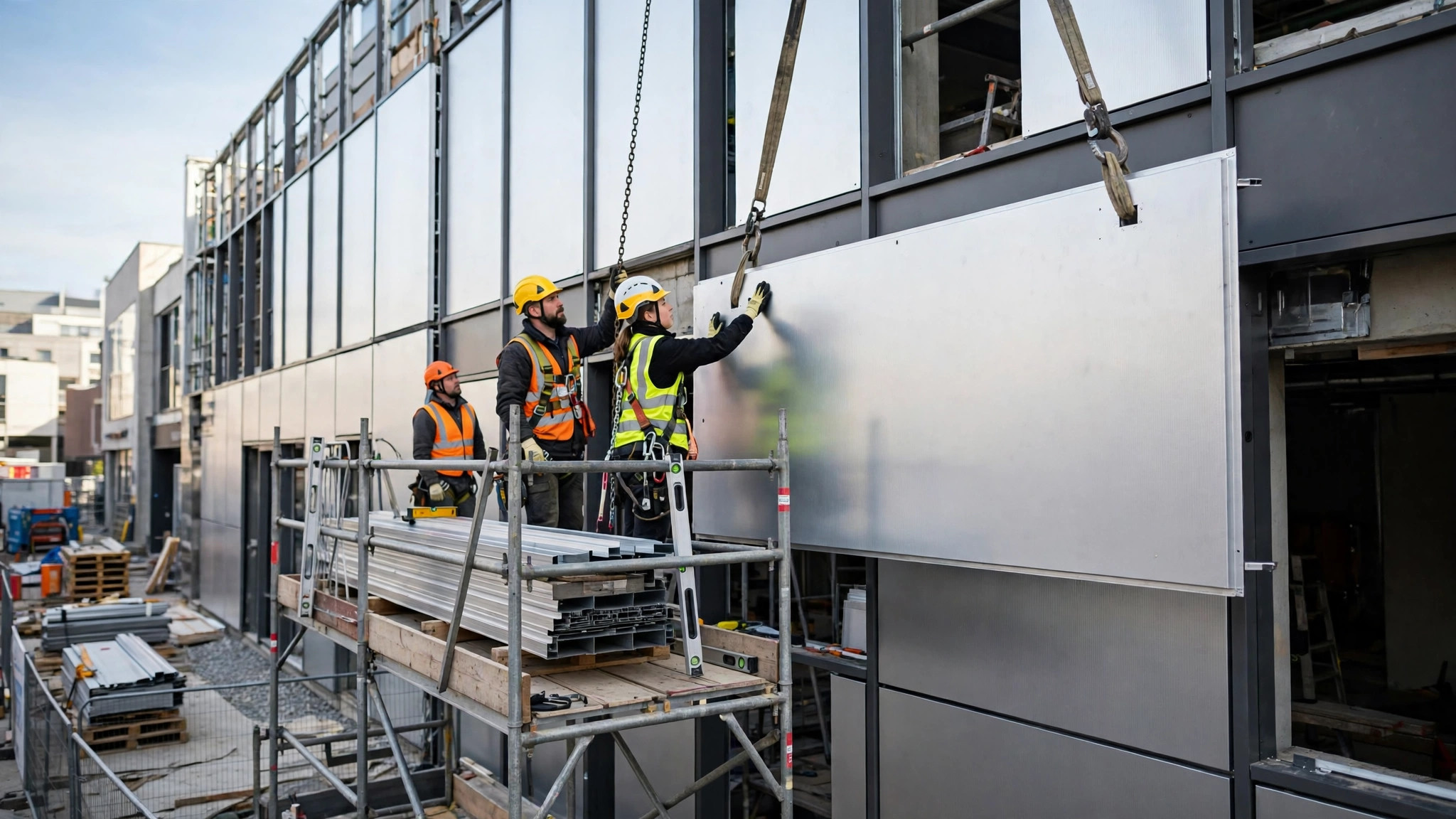
    Workers installing large aluminum facade panels on a commercial building exterior from a scaffold
    Careful handling and installation keep the finish intact — damage after delivery is typically outside warranty coverage.

    The Fine Print: Conditions That Can Void Coverage

    Most finish warranties are conditional, and the most common conditions are worth checking before installation begins: approved cleaning and maintenance — follow the coating manufacturer’s cleaning schedule and keep a maintenance log as evidence if a claim is disputed; compatible materials — sealants, gaskets, and fixings in contact with the panel must be compatible with the coating, since an incompatible sealant is a common cause of denied claims; timely notification — claims usually must be reported within a defined window after the defect is discovered; inspection access — the warrantor typically reserves the right to inspect the panels before approving a remedy; and remedy limits — many warranties limit the remedy to repair, recoating, or replacement of the affected panels, not consequential costs such as scaffolding or reinstallation labor.

    What to Ask Before You Specify or Buy

    Before you place an order or finalize a specification, use the warranty document as a comparison tool. Ask every candidate supplier the same questions and compare the answers side by side: Who issues the finish warranty, and in whose name? What are the exact performance limits for fading, chalking, and adhesion, and how are they measured? What is excluded, and are there special conditions for coastal or industrial environments? What maintenance is required, and which cleaning products are prohibited? What is the remedy if a claim is accepted — repair, replacement panels, recoating, or a cash settlement — and who bears the labor and access costs? How and when must a claim be reported? Can the supplier provide a sample warranty document before the order, not after delivery?

    A supplier who answers these questions and provides a sample warranty document offers something more valuable than a low price: a predictable outcome.

    Finish warranties do not make a facade maintenance-free, and they do not replace good detailing, careful installation, and regular cleaning. What they do is set a clear, written expectation for how the most visible part of your building will age — and give you a defined path if it does not age as promised. Read the document before you buy and keep it with the project records.

    Browse the range of solid aluminum facade panels at juchangalu.com, or send your drawings and finish requirements for a detailed quotation.
  • Aluminum Ingot Daily — October 27, 2026: A00 Fell

    Aluminum Ingot Daily — October 27, 2026: A00 Fell

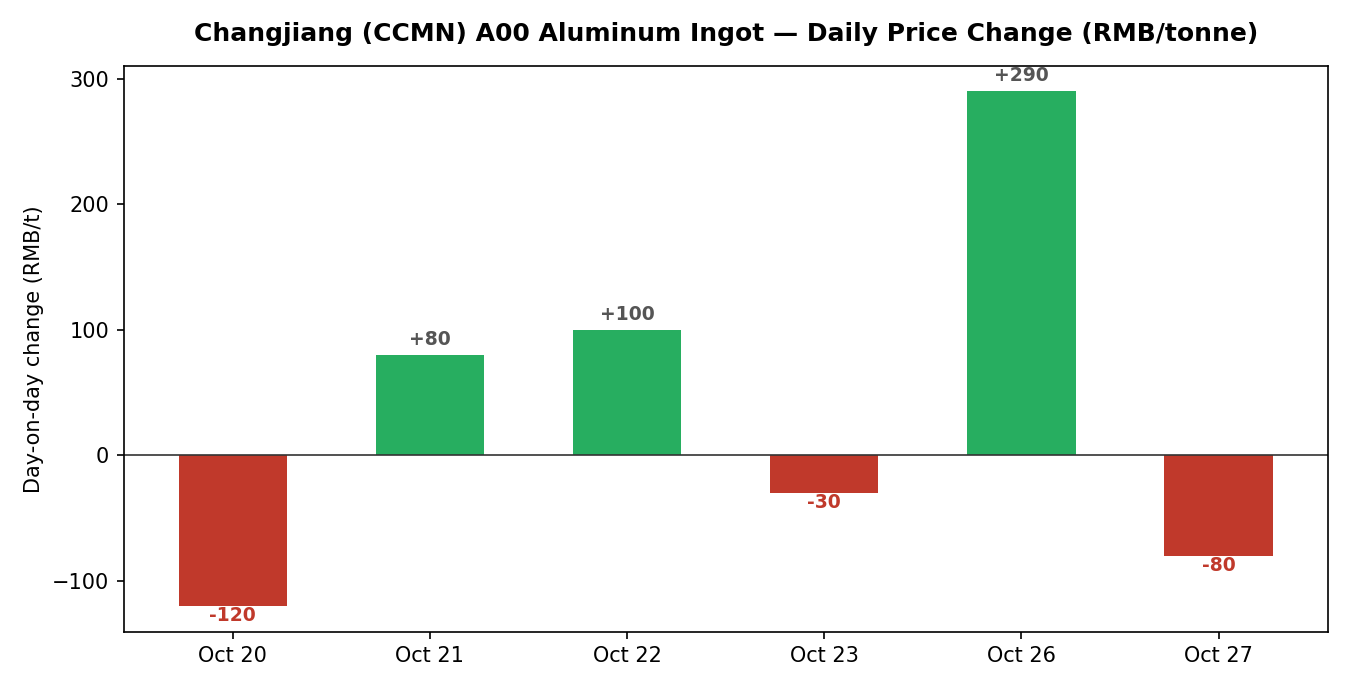
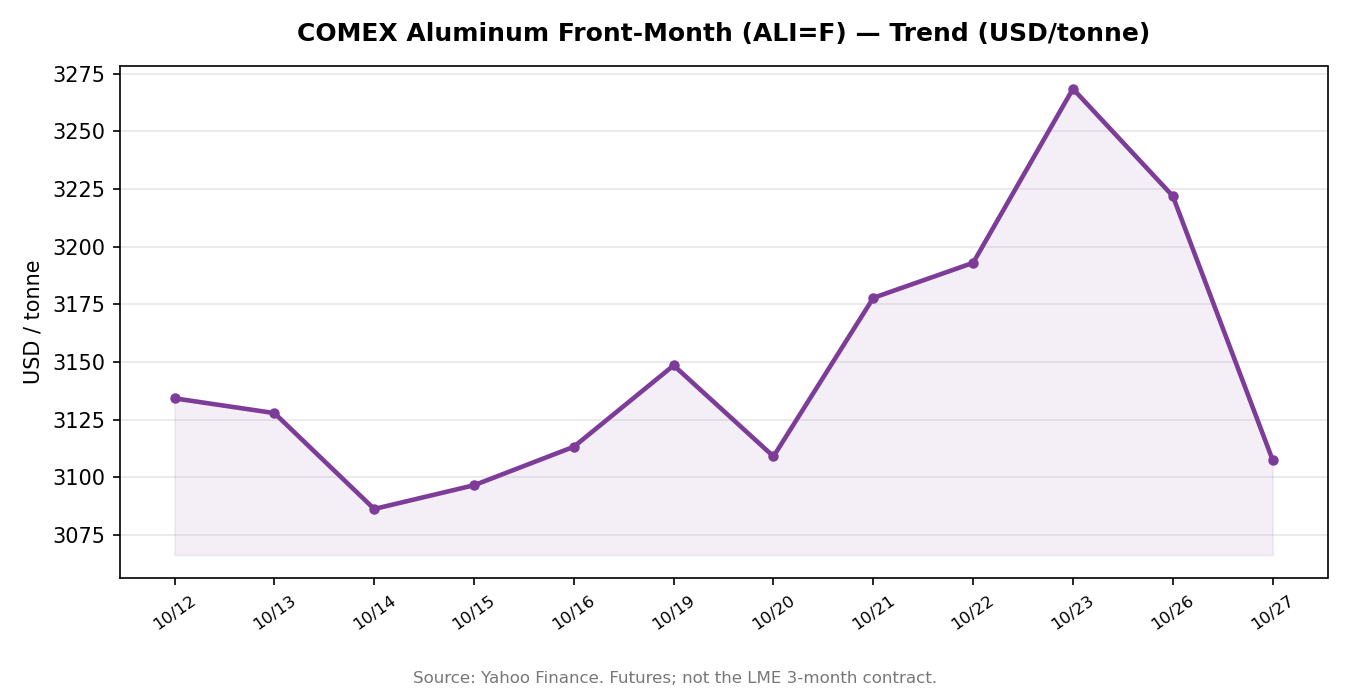
    October 27, 2026 — China’s domestic aluminum ingot market fell on the latest session. The Changjiang Nonferrous Metals Network (CCMN) A00 aluminum ingot benchmark moved -80 RMB/tonne day-on-day. Offshore, COMEX aluminum front-month futures closed at USD 3,107.5/t (-114.5, -3.55%).

    Cross-Platform Price Snapshot

    Benchmark Latest quote Day-on-day Source
    CCMN A00 aluminum ingot, spot (tax incl.) day change -80 RMB/t* -80 RMB/t Changjiang Nonferrous Metals Network
    COMEX aluminum, front month USD 3,107.5/t -114.5 USD/t (-3.55%) Yahoo Finance

    *CCMN’s absolute spot levels are member-only; day-on-day changes are public.

    CCMN A00: Recent Daily Changes

    Changjiang A00 aluminum ingot daily price changes

    Offshore: COMEX Trend

    COMEX aluminum front-month trend

    What It Means for Panel Buyers

    For buyers of aluminum façade panels and sheet, ingot is the single largest cost input. Sustained moves in the ingot benchmark typically feed through to mill and fabricator pricing within one to two quotation cycles. Buyers with Q4 project pipelines may want to request fresh quotes when the trend favors them — while remembering that surface treatment (PVDF, powder coating) and fabrication complexity still dominate the final panel price.

    Get this briefing every morning

    We publish a short aluminum ingot market update like this one every trading day — CCMN spot moves, offshore futures, and the charts that matter.

    Subscribe free by email →

    Data Notes

    • CCMN day-on-day changes are taken directly from CCMN’s daily A00 aluminum ingot reports (alu.ccmn.cn).
    • COMEX front-month prices via Yahoo Finance (futures contract, not LME 3-month).

    This briefing is for information only and does not constitute investment advice.

  • Oil Canning, Color Variation, Edge Damage: Common Aluminum Panel Defects and How Factories Prevent Them

    Oil Canning, Color Variation, Edge Damage: Common Aluminum Panel Defects and How Factories Prevent Them

    Solid aluminum facade panels are chosen for their clean lines, durability, and design flexibility. But even a well-specified project can be let down by surface defects that only show up once the panels are on the building: a wavy reflection across a flat wall, two adjacent panels that do not quite match in color, or a chipped edge discovered during installation. For US buyers sourcing panels from overseas, most of these problems are preventable — if you know what to look for and what to ask the factory before production starts. This guide explains the three most common defects in solid aluminum panels, why they happen, and how a capable factory prevents each one.

    Why Defects Matter More on Imported Panels

    When panels are fabricated locally, a defective piece can be remade in days. When panels ship from a factory in China to a job site in the United States, a remake means a new production run, new export packing, and weeks of sea freight — plus the cost of re-scaffolding a finished elevation. That is why defect prevention belongs in the specification and ordering stage, not in the punch list. The three defects below account for the majority of quality complaints on solid aluminum facade projects, and each one has a clear, checkable cause.

    Oil Canning: The Wavy Reflection Problem

    Oil canning is the visible waviness or rippling that appears on the face of a flat metal panel, especially under raking sunlight. It is not a structural failure — the panel still performs — but on a large, flat elevation it can be the first thing a building owner notices, and the hardest thing to fix after installation.

    The main causes are well understood. Thin-gauge panels spanning wide distances between fixings are the most vulnerable: a 2.0mm panel on a large cassette will show more movement than a 3.0mm panel on the same module. Uneven residual stress from the cutting and folding process can also leave the face slightly out of plane, and thermal expansion on a dark-colored south-facing wall can amplify the effect on hot days.

    Factories prevent oil canning in several ways. First, they match gauge to panel size — using 2.5mm or 3.0mm sheet for large modules, and adding stiffening ribs or a bonded reinforcement to the back of wide panels. Second, they control the folding process so that stress is distributed evenly across the panel face rather than concentrated at one bend. Third, they keep the panel’s flatness within a stated tolerance and check it on a flat table before the coating stage. When you order, ask the factory for its flatness tolerance and whether large panels receive back stiffeners as standard. A supplier that answers with a number rather than a promise is the one to trust.

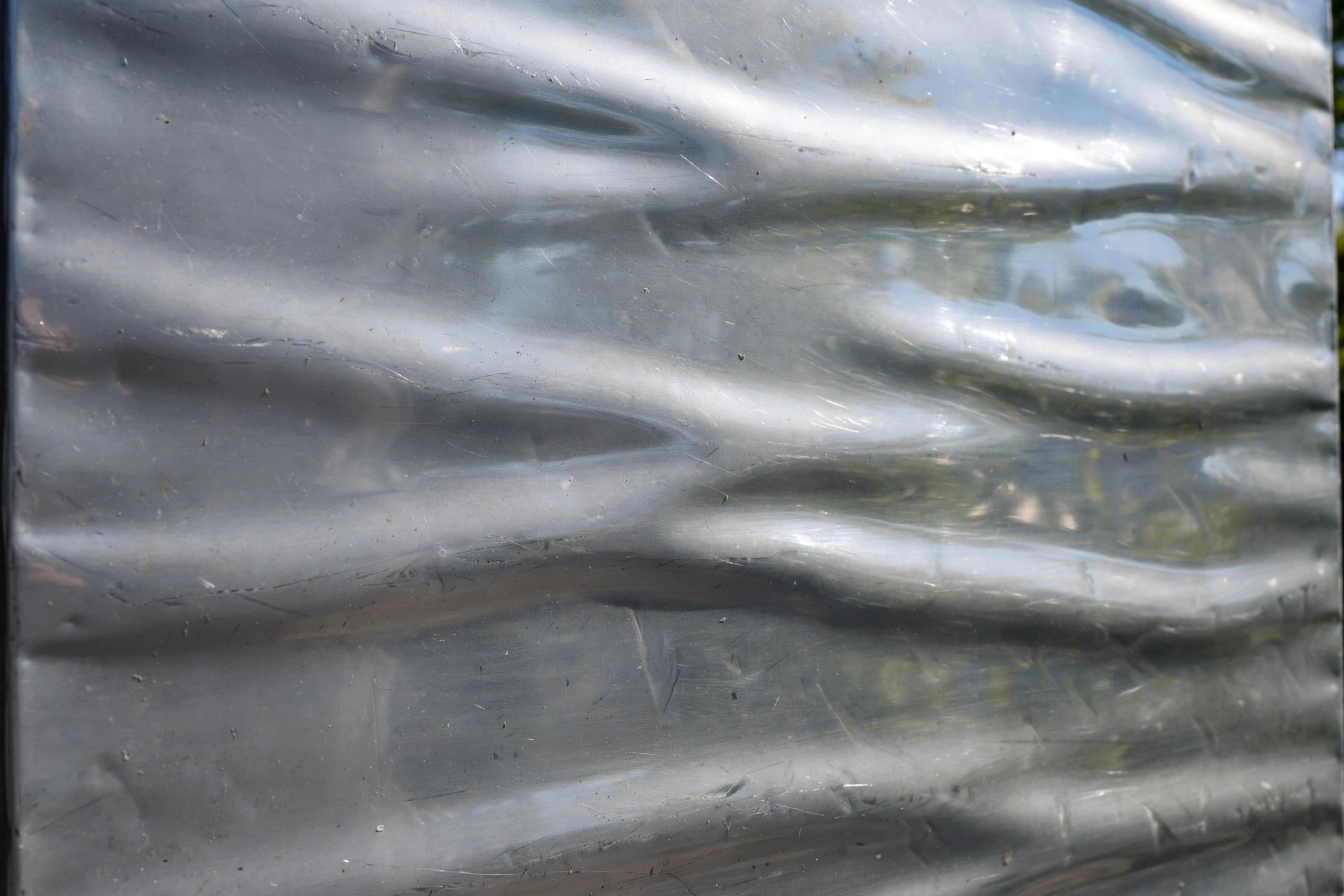
    Subtle oil canning waviness visible in the reflection on a flat aluminum facade panel
    Oil canning shows up as gentle waviness in the panel face, most visible under raking sunlight on large, flat elevations.

    Color Variation Between Panels

    Color variation is the second most common complaint, and the most misunderstood. Two panels can leave the factory in the same batch, in the same specified color, and still look different on the wall. The reasons are usually one of three things: different coating batches, different coating lines, or different viewing angles on metallic and pearlescent finishes.

    PVDF and powder coatings are mixed in batches. Even with tight controls, a new batch of the same RAL color can drift slightly, and panels coated on different days — or on different lines — can sit side by side with a visible step. Metallic finishes add another variable: the aluminum flakes in the coating reflect light directionally, so two identical panels can look different simply because one is viewed from the left and the other from the right.

    Good factories manage this by coating all panels for one elevation, or one project phase, from a single coating batch, and by keeping a retained sample from that batch for comparison. They also measure color difference with a spectrophotometer and work to a stated Delta E tolerance — commonly Delta E ≤ 1.0 for solid colors — rather than judging by eye alone. Before you place an order, ask three questions: will all panels for my project be coated from one batch, what Delta E tolerance do you guarantee, and can you supply a retained sample with the shipment? If the factory cannot answer the first question, plan your order so that panels for a single visible elevation ship together.

    Edge Damage and Handling Defects

    Edge damage is the most avoidable defect of all, because it usually happens after the panel is perfectly made. Chipped corners, dented folded edges, and scratches along the face are typically caused during handling, stacking, or transport — not during fabrication. A folded cassette edge is thin and exposed, and a single careless lift can deform it enough that the panel no longer sits flush with its neighbors.

    Prevention starts at the factory. Panels should be separated by protective interleaving paper, not stacked face to face. Corners should be protected with edge guards before the panels go into the crate, and crates should be built to the panel size rather than forcing panels into a generic box. At the coating stage, the finish should be fully cured before packing — a soft, under-cured coating picks up marks from anything that touches it.

    As the buyer, your leverage is in the packing specification. Ask the factory to describe its export packing in writing: interleaving material, corner protection, crate construction, and how panels are secured against movement in transit. Then inspect on arrival using a simple checklist — check a sample of corners and folded edges before signing the delivery note, and photograph any damage immediately. Damage found at delivery is the shipper’s and supplier’s problem; damage found a week later is usually yours.

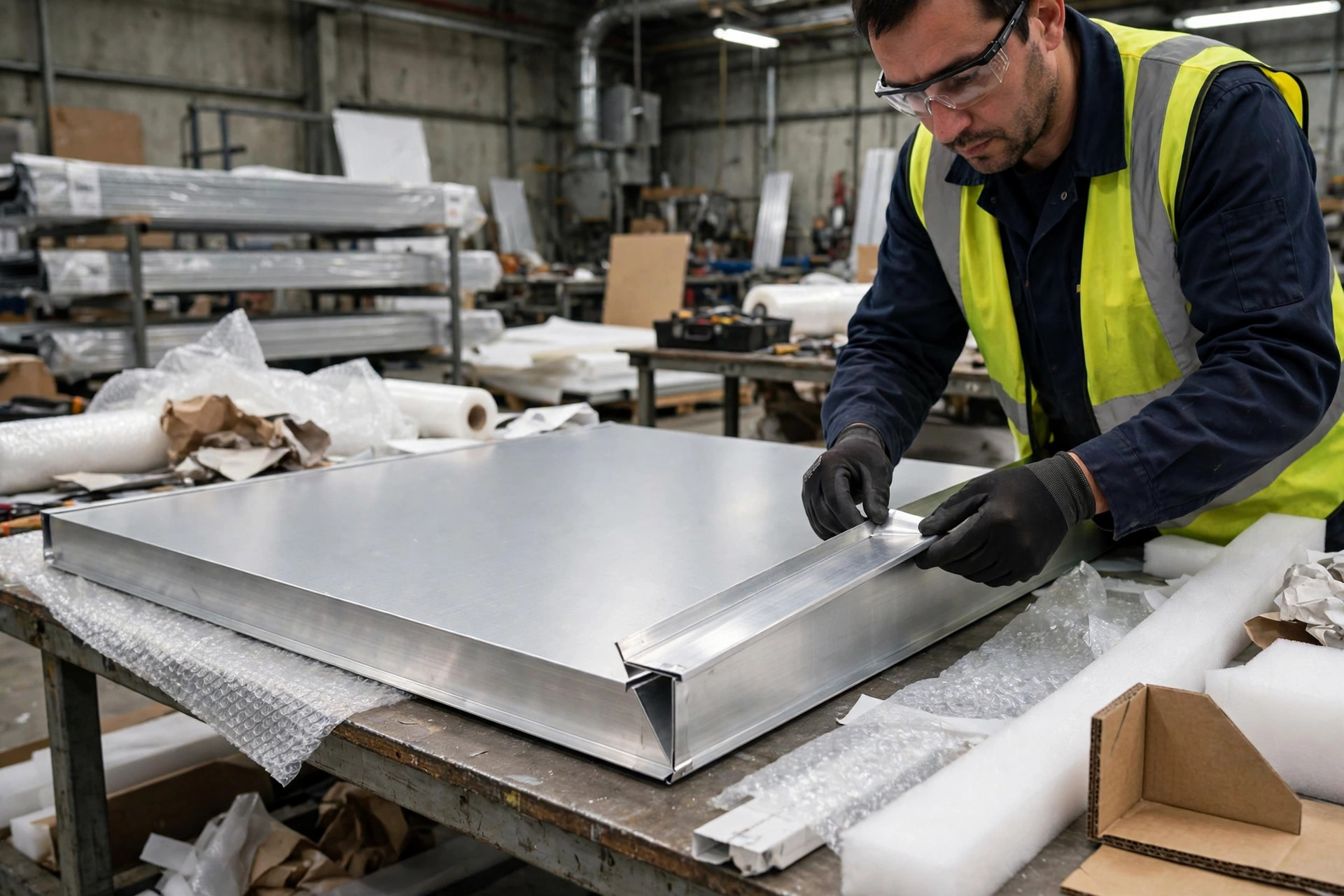
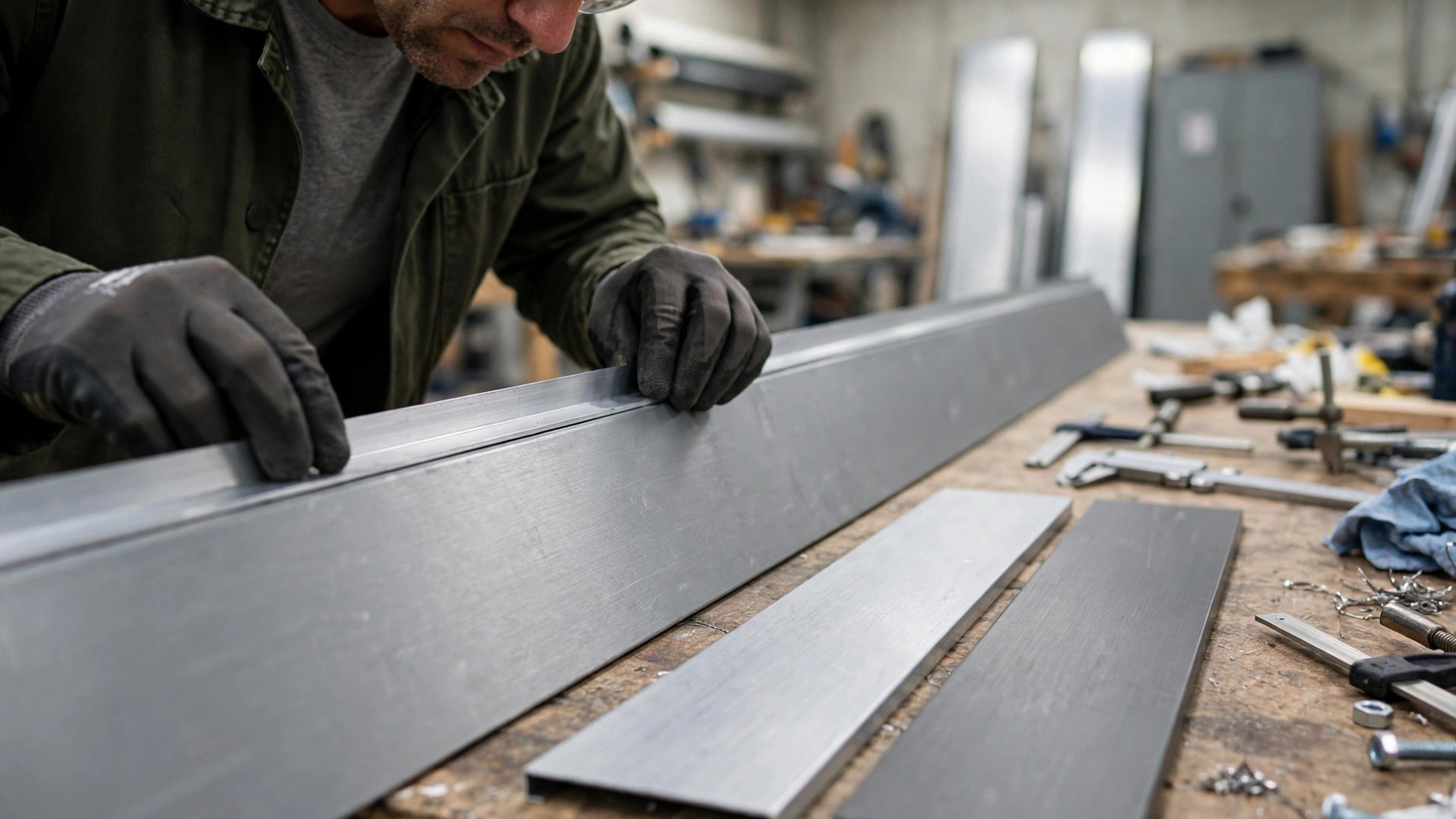
    Factory worker inspecting the folded edge and corner of a large aluminum facade panel
    Edge inspection before packing: a folded cassette edge is easily dented in handling, so corner protection and interleaving matter as much as fabrication.

    A Buyer’s Pre-Order Checklist

    You do not need to be a metallurgist to buy good panels. Before you confirm an order, run through these five checks with your supplier:

    • Gauge matched to module size: confirm the thickness (2.0, 2.5, or 3.0mm) and whether large panels get back stiffeners.
    • Flatness tolerance in writing: ask for the number, and how it is measured before coating.
    • Single-batch coating: confirm all panels for one elevation come from one coating batch, with a stated Delta E tolerance.
    • Retained sample: request a sample from the same coating batch to keep for future matching.
    • Export packing specification: interleaving, corner protection, and crate construction described in the order, not just promised verbally.

    A factory that answers these questions clearly — with numbers, samples, and written packing specs — has already shown you how it prevents defects. One that answers with general assurances has shown you something else.

    Conclusion

    Oil canning, color variation, and edge damage are not mysteries. Each has a known cause, a known prevention method, and a question you can ask before you order. The buyers who have the fewest problems on site are not the ones who found the cheapest panels — they are the ones who specified flatness, coating batch control, and packing in writing, and verified them on delivery. If you are planning a facade project and want to talk through panel gauge, finish, and packing for your specific elevations, browse products at juchangalu.com or send drawings for a detailed quotation.
  • How to Inspect Aluminum Facade Panels on Delivery: A QC Checklist for US Buyers

    How to Inspect Aluminum Facade Panels on Delivery: A QC Checklist for US Buyers

    Aluminum facade panels can leave the factory in perfect condition and still arrive with problems. A long sea voyage, a rough forklift move, or a crate stacked the wrong way can leave dents and scratches that only become obvious once panels are halfway up the facade — when fixing them costs ten times more. This checklist covers the inspections that matter most, in the order you should do them.

    Why Delivery Inspection Matters

    Once panels are installed, responsibility gets murky. A scratch found during installation could have happened in the factory, in transit, or on site — and every party will point at the other two. A documented inspection at delivery draws a clear line: anything wrong before you sign the delivery receipt is a shipping or factory issue; anything after is yours. That clarity is also what makes a replacement claim move quickly: both ask for dated photos and a delivery receipt that recorded the damage at the time.

    Before the Truck Arrives: Prepare Your Inspection Kit

    Good inspection starts before the truck backs in. Have the packing list, the purchase order, and the approved shop drawings on hand, so you can check what arrives against what was ordered. Bring a tape measure, a straightedge or long level, a color reference sample or approved color chip, a flashlight, and a camera. A simple printed checklist — one line per item in this article — keeps the inspection consistent across shipments and crew members.

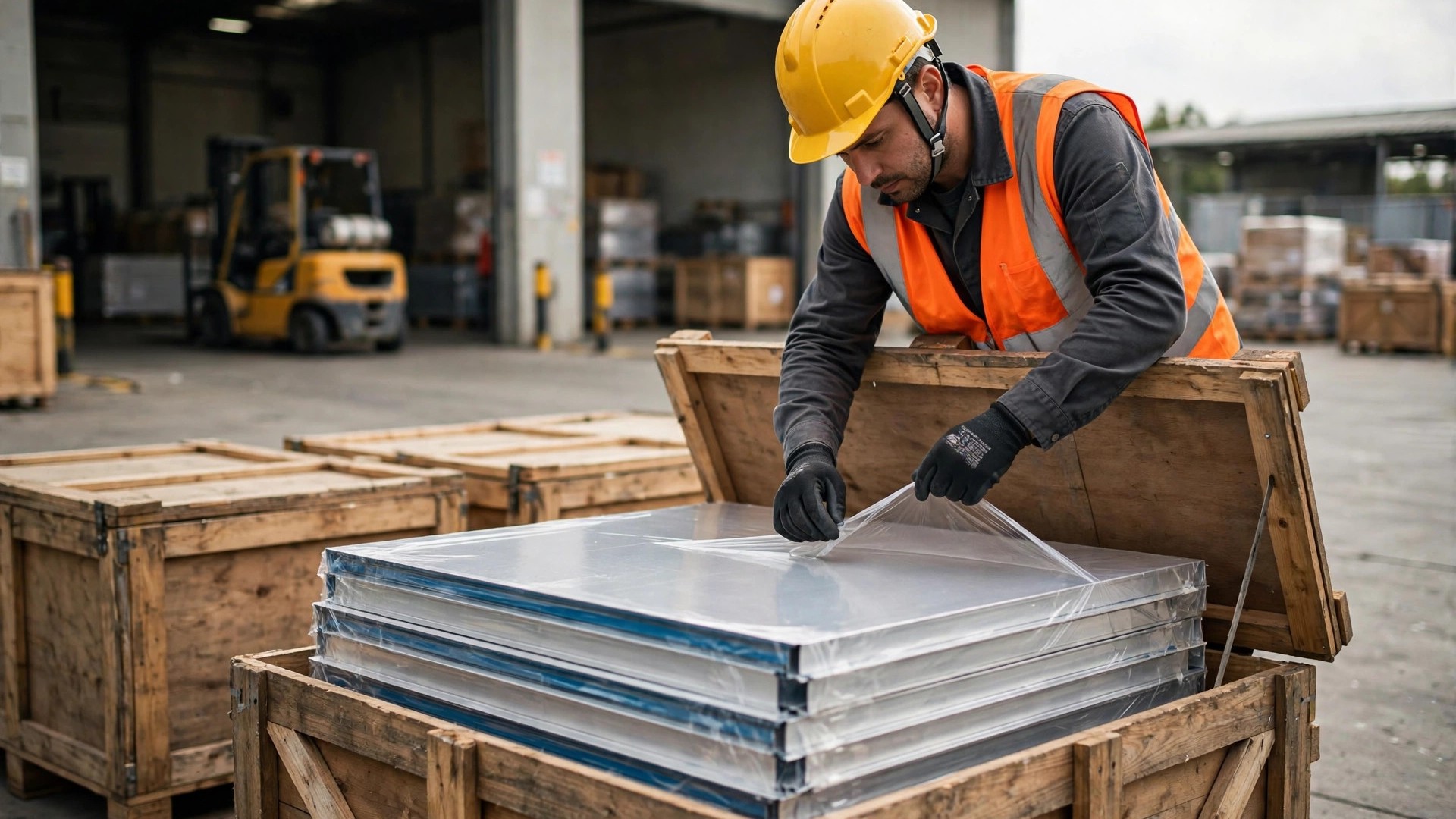
    Worker opening a wooden crate of aluminum facade panels on a loading dock
    Crates of aluminum facade panels arriving on site — check the packaging before any panel is unpacked.

    Step 1: Check the Packaging and Crate Condition

    Start with the outside of the shipment, before any panel is touched. Look for crushed corners, punctured crate walls, broken strapping, water stains, or tilt indicators that have tripped. Note any damage on the delivery receipt before you sign it — a clean signature on a damaged crate is the most common reason a freight claim gets denied. Open one crate at a time and check the internal protection: panels should be separated by protective film or interleaving paper, with edge protectors in place.

    Step 2: Verify Quantities, Sizes, and Panel Markings

    Count the panels against the packing list, crate by crate, and measure a sample of panels from each crate — length, width, and thickness. Solid aluminum facade panels are commonly supplied in 2.0, 2.5, or 3.0 mm thicknesses, in alloys such as 1001 or 3003 H24, with a conventional maximum sheet size of around 1300 by 4000 mm; your order documents will state the exact specification for your project. Check that the panel labels or crate stencils match the order: project name, panel type, color code, and quantity. Mismatched markings are an early warning that the wrong batch was loaded. Record any short shipment on the spot, with the crate number noted.

    Inspector checking aluminum facade panel flatness with a straightedge
    Checking panel flatness with a straightedge — raking light makes even slight distortion visible.

    Step 3: Check Color Consistency Across Panels

    Color variation is the defect buyers notice last and regret most, because it only shows up once panels are installed side by side. Lay sample panels from different crates next to each other under the same light — ideally outdoors in daylight, not under warehouse fluorescents — and compare them with the approved color chip. Look along the row, not just at one panel, and check from a few meters back, which is how the facade will actually be seen. Minor variation between batches is a known characteristic of coated metal; what you are screening for is a panel or crate that clearly stands apart from the rest. Photograph suspect panels with a reference panel in the same frame.

    Step 4: Inspect Flatness and Panel Geometry

    Place a straightedge across the face of each sampled panel and look for gaps that indicate bowing or oil canning — the visible waviness that appears when a thin sheet is not perfectly flat. Check the panel from several angles and in raking light, which makes even slight distortion visible. Measure the diagonals of a few panels to confirm they are square, and check that folded edges and returns are straight and at the correct angle. A panel that is out of flat may still be usable in a small format, but large-format panels show every ripple, so apply your strictest check to the biggest panels in the shipment.

    Step 5: Test Coating Adhesion and Surface Quality

    Run a gloved hand over the coated face to feel for grit, bubbles, or rough patches, and look for scratches, pinholes, or areas where the coating looks thin. Common finishes for aluminum facade panels include PVDF, powder coating, and roll coating, and each should present a uniform, even surface with consistent gloss. For a quick adhesion check, press a strip of masking tape firmly onto an inconspicuous area of the coating and peel it off sharply; coating that lifts with the tape is a red flag worth reporting. Skip destructive tests without the supplier’s agreement.

    Step 6: Check Edges, Folds, and Fixing Points

    Finally, inspect the details that hold the panel to the building. Look for cracked or split folds, dented corners, and burrs on cut edges that could cut installers or show through the joint. Check that stiffeners, where specified, are firmly attached, and that fixing holes or slots are in the positions shown on the shop drawings and are free of deformation. A bent fixing tab is easy to miss in a stack of panels and expensive to discover on a scaffold. Confirm each panel’s edge profile matches the approved sample.

    What to Do When You Find a Problem

    Separate the shipment into three groups: accepted, rejected, and hold for decision. Photograph every defect with a scale reference, such as a tape measure in the frame, and write a short description of each one with the panel and crate number. Notify the supplier in writing the same day, attaching the photos and the annotated delivery receipt, and copy the freight carrier if the damage looks transit-related. Do not install suspect panels “to keep the schedule moving” — once a panel is fixed to the wall, most suppliers will treat any defect as site damage. Ask the supplier to confirm in writing how to proceed, and keep that confirmation with the shipment file.

    Keep Records That Protect Your Claim

    For every shipment, file the packing list, the signed delivery receipt with any damage noted, the completed checklist, and the dated photos in one folder, keyed to the project and shipment number. This file is what turns a complaint into a claim: it proves what arrived, when, and in what condition. Over several shipments it also records supplier performance. The best delivery inspection is boring: same checklist, same photos, same file, every time.

    Ordering panels for a US project and want a factory that ships them properly protected and documented? Browse products at juchangalu.com or send your drawings for a detailed quotation.
  • US Tariffs on Chinese Aluminum Panels: What Importers Should Ask Their Customs Broker

    US Tariffs on Chinese Aluminum Panels: What Importers Should Ask Their Customs Broker

    If you import solid aluminum facade panels from China, the tariff line on your landed-cost sheet is no longer a footnote. For many buyers it is now the largest variable in the project budget. There is no single rate: what you pay depends on the product’s classification, which authorities apply, and when the shipment enters the country. This guide explains the layers that can apply and the questions to ask your licensed customs broker before you order.

    Tariff policy changes frequently. Rates here reflect public summaries available as of October 2026, given only to frame the conversation with your broker. This is not legal or tax advice — always confirm the duty on your shipment with your licensed customs broker.

    Why Tariffs Now Shape Every Aluminum Panel Quote

    For years, US buyers could treat duty on Chinese aluminum panels as a predictable, modest line item. That era ended in stages: Section 301 duties on Chinese goods, Section 232 duties on steel and aluminum, a short-lived reciprocal-tariff regime under IEEPA in 2025, and a wholesale restructuring of Section 232 in April 2026. The result is a layered system in which several duties can stack on one shipment — and the classification of your panels can move the bill by tens of percentage points. Budget the tariff line separately and re-verify it per order.

    The Layers That Can Apply to One Shipment

    One container of aluminum facade panels can attract several separate duties, each with its own legal authority:

    • Base MFN duty — the ordinary Most Favored Nation rate in the Harmonized Tariff Schedule (HTSUS).
    • Section 301 duties — extra duties on Chinese-origin goods; steel and aluminum products are generally listed at 25%.
    • Section 232 duties — national-security duties: 50% on articles wholly of aluminum, 25% on derivatives, on the full customs value since April 2026.
    • Anti-dumping and countervailing duties (AD/CVD) — separate orders can apply to specific aluminum products from China, depending on the orders in force.
    • The Section 301 forced-labor tranche — a further Section 301 layer since July 24, 2026, replacing the expired Section 122 surcharge; Section 232 goods are generally exempt.

    These layers stack in defined ways — and sometimes not at all — so a broker’s confirmation matters more than any general table.

    Close-up detail of solid aluminum facade panels on a modern building
    Close-up of solid aluminum facade panels: panel seams, coating, and fixings all feed into the HTSUS classification that decides the duty.

    Section 232: The Layer That Matters Most for Aluminum

    Section 232 is the duty most likely to dominate the landed cost. Since the April 6, 2026 restructuring, the program is tiered on full customs value: 50% on articles made wholly — or almost wholly — of aluminum, steel, or copper; 25% on derivatives whose foreign metal content exceeds 15% by weight; and no Section 232 duty where non-US metal content is 15% or less. Reduced rates apply in defined cases, such as 10% for derivatives made with at least 85% US-origin metal.

    Two details matter: the duty is assessed on the full customs value, not only the metal content. Every entry of covered aluminum must now report where the metal was smelted and cast; the product-exclusion process ended in March 2025.

    Section 301 and the Post-IEEPA Landscape

    Section 301 duties on Chinese goods remain in force and stack with Section 232 where both apply. For steel and aluminum products, the Section 301 list rate has generally been 25% — so a Chinese aluminum article can face both the Section 232 tier and the Section 301 duty on top of its base MFN rate. The IEEPA reciprocal tariffs that peaked at very high rates for China in 2025 were struck down by the Supreme Court in February 2026. A 10% Section 122 surcharge briefly replaced them, expiring July 24, 2026, when the Section 301 forced-labor tariff took its place — generally 10%, or 12.5% for a list of economies that includes China. Section 232 goods are exempt from that tranche, so it usually adds nothing for panels already in the program. The tariff landscape for Chinese goods has been rewritten three times in less than two years.

    Container port with gantry crane loading cargo onto a vessel
    A container port at golden hour: duties are assessed when the goods enter the United States, not when they were priced.

    Classification: Where the Duty Is Really Decided

    For facade panels, the key question is often classification, not the rate table. A solid panel, a perforated panel, a coated panel, and a panel shipped with its fixing system can fall under different HTSUS headings — meaning different duty layers, Section 232 treatment, and AD/CVD exposure. Classification also decides whether your panels count as an “article wholly of aluminum” at the 50% tier or a derivative at 25%. Two shipments of identical-looking panels can attract different duties if their construction, coating, or accessories differ — so experienced importers settle classification with their broker before the purchase order is signed.

    Six Questions to Ask Your Licensed Customs Broker

    Take this list to your broker:

    • What is the correct HTSUS classification for these exact panels — thickness, alloy, coating, perforation, and any fixing hardware shipped with them?
    • Which Section 232 tier applies — 50% wholly of aluminum or 25% as a derivative — and does the 15% threshold change anything?
    • Which Section 301 list duties apply, and how do they stack with Section 232 and the base MFN rate?
    • Are any anti-dumping or countervailing duty orders in force covering these panels?
    • What origin documentation is required — including smelt-and-cast declarations — and who must provide it?
    • Is a binding ruling worth requesting from US Customs and Border Protection for a recurring specification?

    If your broker cannot answer these from the specification alone, the specification needs more detail — alloy grade, coating, dimensions, and scope of supply — before anyone can quote a landed cost.

    How to Budget When the Rate Keeps Moving

    Until your broker confirms the duty, treat any tariff figure as a planning range. Model two scenarios — the 50% Section 232 tier plus the 25% Section 301 list duty, and the 25% derivative tier plus the same duty — and check whether the project works under the higher one. Keep the tariff line as a separate budget item. Separate the commercial negotiation from the duty question: the factory quotes panels, packing, and freight; only your broker confirms the duty. Duties are assessed as goods enter, not as priced, so re-confirm close to the shipping date.

    The Bottom Line

    US tariffs are now a layered system: base MFN duty, Section 301 list duties, the Section 232 tier, possible AD/CVD orders, and a policy backdrop rewritten several times since 2025. None of that makes importing impractical — it makes the broker conversation the first step, not the last. Get the classification right, confirm which layers apply, model the high end of the range, and budget the duty as its own line — then the price you negotiate is one you can trust.

    Planning a facade project with imported aluminum panels? Browse our solid aluminum facade panels at juchangalu.com, or send your drawings for a detailed quotation — and consult your licensed customs broker early, so your budget rests on confirmed duties, not assumptions.

  • Aluminum Ingot Daily — October 26, 2026: Market Closed (Weekend/Holiday)

    Aluminum Ingot Daily — October 26, 2026: Market Closed (Weekend/Holiday)

    October 26, 2026 — Weekend/Holiday Market Update. China’s domestic aluminum spot market is closed today (weekend/public holiday). No fresh Changjiang (CCMN) A00 aluminum ingot quote was published. Below is the last available reference.

    Last Available Benchmarks

    Benchmark Last quote Status Source
    CCMN A00 aluminum ingot, spot see last trading-day briefing Market closed Changjiang Nonferrous Metals Network
    COMEX aluminum, front month USD 3,138.5/t Futures reference Yahoo Finance

    What It Means for Panel Buyers

    With Chinese spot markets closed, no new ingot price signal today. The next CCMN A00 quote will set the tone for the coming trading week. Buyers with pending project quotations can use the last trading-day benchmark as reference — while remembering that surface treatment (PVDF, powder coating) and fabrication complexity still dominate the final panel price.

    Get this briefing every morning

    We publish a short aluminum ingot market update every day — CCMN spot moves, offshore futures, and the charts that matter.

    Subscribe free by email →

    This briefing is for information only and does not constitute investment advice.

  • How Sea Freight Shapes Your Aluminum Panel Budget: Container Math for US Importers

    How Sea Freight Shapes Your Aluminum Panel Budget: Container Math for US Importers

    When US buyers compare aluminum facade panel suppliers, the panel price usually gets all the attention. The freight line often gets a quick glance — until the first invoice arrives. For a product shipped in flat, bulky crates from China, ocean freight can add a meaningful percentage to your landed cost per square meter. The good news: freight is not a black box. Once you understand container math, you can estimate it, compare quotes fairly, and design your order to ship efficiently.

    This guide walks through the container sizes that matter for aluminum panels, how to estimate how many square meters fit in one box, and the cost drivers that sit on top of the ocean rate. It will not quote you a rate — freight prices move weekly — but it will show you how to read one.

    Why Freight Deserves Its Own Line in Your Budget

    Aluminum facade panels are light for their size but bulky to ship. A standard solid aluminum panel is only 2.0mm, 2.5mm, or 3.0mm thick, yet it ships as a rigid flat sheet up to 1300 × 4000mm. Panels cannot be folded, stacked without protection, or packed like small parts. They travel in wooden crates or on pallets, with protective film and edge guards, and every crate wastes some space around the panels themselves.

    That combination — low weight, large volume — is exactly what makes freight math matter. Ocean carriers charge by container, and within a container, by whichever is greater: the actual weight or the volumetric (dimensional) weight. For aluminum panels, volume almost always wins. So the real question is not “how heavy is my order?” but “how much container space does it occupy?”

    Container Basics: 20ft, 40ft, and 40ft High Cube

    Nearly all aluminum panel shipments from China to the US travel in one of three standard dry containers. Knowing their usable space is the starting point for any estimate:

    • 20ft container: about 33 cubic meters of internal volume, with a payload of roughly 28,000 kg. Best suited to smaller orders or heavy, compact loads.
    • 40ft container: about 67 cubic meters of internal volume, with a payload of roughly 26,000–28,000 kg. The workhorse for most facade panel orders.
    • 40ft high cube: about 76 cubic meters of internal volume, with similar payload to a standard 40ft. The extra 300mm of height is useful when crates are stacked.

    For aluminum panels, the 40ft high cube is often the most economical choice per square meter, because panel crates are tall and light: you run out of space long before you run out of weight allowance. A 20ft container can make sense for a small trial order or a single elevation’s worth of panels, but its cost per square meter is usually higher.

    One practical constraint: panel length. The longest standard panel (up to 4000mm) fits diagonally or lengthwise in a 40ft container, but crate design and loading sequence matter. Ask your supplier how they plan to crate and load panels of your longest size before you finalize the order — a crate that wastes 200mm of length at each end can cost you a surprising amount of capacity.

    Crated aluminum facade panels with protective film ready for export
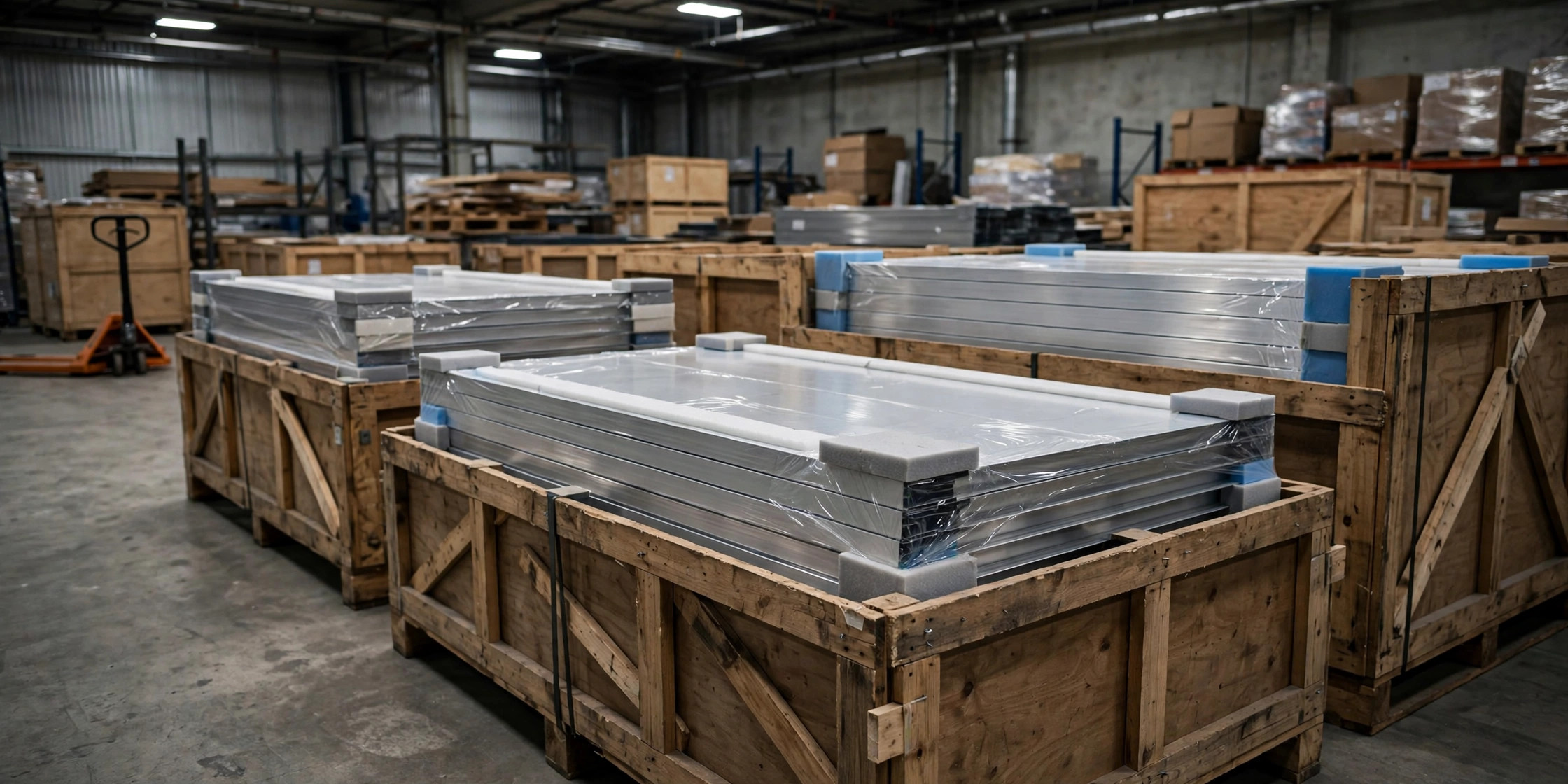
    Crated aluminum facade panels, protected with film and edge guards, ready for container loading.

    How Many Square Meters Fit in One Container?

    There is no single answer, because it depends on panel thickness, panel size, and crating. But a worked example shows the method. Take a typical order of 2.5mm panels in 1250 × 3000mm sheets:

    • One panel covers about 3.75 square meters.
    • A 2.5mm solid aluminum sheet weighs roughly 6.75 kg per square meter (aluminum density ≈ 2.7 g/cm³), so one panel weighs about 25 kg.
    • With protective film, separators, and a wooden crate, a stack of panels and its crate occupy far more volume than the panels alone — crating typically adds 15–30% to the footprint.

    As a rough planning figure, a 40ft high cube commonly carries in the range of 800–1,200 square meters of crated 2.5mm panels, depending on panel sizes and crate design. Thinner 2.0mm panels pack more square meters per container; thicker 3.0mm panels pack fewer, but the difference is smaller than many buyers expect, because crate dimensions — not panel thickness — usually set the limit.

    Use this kind of estimate only for budgeting. For a firm number, ask your supplier for a loading plan: how many crates, each crate’s dimensions and weight, and the total container count. A supplier who can produce that plan before you pay is showing you their export experience.

    Volumetric Weight vs Actual Weight: Which One You Pay For

    Ocean freight is normally priced per container (FCL — full container load), so volumetric weight matters less than it does in air freight. But it matters in two situations:

    • LCL (less than container load) shipments: if your order does not fill a container, the forwarder charges by the greater of actual weight or volumetric weight, usually calculated as volume in cubic meters × 1,000 kg (or × 167 kg per cubic foot, depending on the carrier’s formula). For crated panels, volumetric weight is almost always the higher number — and the one you pay on.
    • Inland trucking and port handling: drayage and some terminal charges can be weight- or volume-based, so the same logic applies at both ends of the journey.

    The practical takeaway: a shipment that looks light on paper can still be expensive to move. When comparing an FCL quote against an LCL quote, compare the total landed cost per square meter, not the headline rate. An LCL shipment that saves you from paying for an empty half-container can still cost more per square meter once volumetric charges and per-shipment handling fees are added.

    Container port with stacked shipping containers and a cargo ship being loaded
    A container port at work — most aluminum panel shipments from China to the US travel by ocean freight in standard dry containers.

    The Costs Beyond the Ocean Rate

    The ocean freight rate is only one part of the door-to-door total. When you build your budget, leave room for these:

    • Origin charges: export customs clearance, documentation, and terminal handling at the Chinese port.
    • Destination charges: US port handling, chassis fees, and drayage to your warehouse or job site.
    • Customs and duties: import duties and any applicable trade remedies depend on the product classification and current policy. Rates change — confirm the current treatment with your licensed customs broker before you budget, and keep a contingency line for it.
    • Insurance: marine cargo insurance is inexpensive relative to the cargo value and worth including, especially for finished, coated panels where a single scratched crate can mean rework.
    • Demurrage and detention: if your container sits at the port beyond the free days allowed, daily charges accrue quickly. Have your trucking and warehouse receiving plan ready before the vessel arrives.

    A useful discipline is to ask every freight quote to break out origin, ocean, destination, and customs separately. Two quotes with the same total can hide very different risk — one may include destination handling, the other may leave it to you.

    Five Ways to Lower Your Per-Square-Meter Freight Cost

    You cannot control the market rate, but you can control how efficiently you use the space you pay for:

    1. Fill the container. The single biggest lever is utilization. If your order fills 85% of a container instead of 60%, your cost per square meter drops by roughly the same proportion. Where possible, align your order quantity to full-container increments.

    2. Standardize panel sizes. Mixed sizes create awkward crate layouts and wasted space. Consolidating to fewer sizes — and keeping the longest dimension consistent — lets the factory crate tighter.

    3. Choose the right container. A 40ft high cube costs more than a standard 40ft, but if the extra height lets you load one more layer of crates, the cost per square meter falls. Ask for a loading comparison, not just a rate comparison.

    4. Ship finished panels, not air. Protective packaging is necessary, but over-crating is expensive. A factory experienced in exporting panels will use separators and edge protection that guard the finish without inflating crate volume.

    5. Plan the delivery end early. Book drayage and confirm warehouse receiving capacity before the vessel docks. Every extra day a container waits at the terminal adds cost that no supplier can absorb for you.

    The Bottom Line

    Sea freight shapes your aluminum panel budget through container utilization more than through weight. Understand the three container types, estimate your square meters per container, and read quotes as a breakdown — origin, ocean, destination, customs — rather than a single number. The buyers who budget this way rarely get surprised, and they can compare suppliers on true landed cost instead of panel price alone.

    If you are planning an order, send your drawings and panel schedule to the factory and ask for a loading plan with the quotation. A supplier that can show you exactly how your panels will be crated and how many containers they will fill is a supplier that has shipped this product before. Browse products at juchangalu.com or send drawings for a detailed quotation.
  • How US Buyers Vet an Aluminum Panel Factory in China: 10 Questions That Matter

    How US Buyers Vet an Aluminum Panel Factory in China: 10 Questions That Matter

    Ordering aluminum facade panels from a factory in China is a high-value decision: a single order can cover thousands of square meters, and the panels will define your building’s appearance for decades. A glossy website and a fast reply to your first email tell you almost nothing about whether that factory can actually deliver. The buyers who get the best results treat factory vetting as a structured process, not a gut feeling. Here are the ten questions that matter most before you place an order.

    1. What Aluminum Alloys and Thicknesses Do You Actually Stock and Produce?

    A credible aluminum panel factory should be specific. For solid aluminum facade panels, the common alloys are 1100 and 3003 in the H24 temper, supplied in 2.0mm, 2.5mm, and 3.0mm thicknesses. Ask which thicknesses the factory keeps in regular production and what its standard maximum panel size is — a typical capability is around 1300 x 4000mm. Vague answers such as “any thickness, any size” are a warning sign: real production lines have real limits, and a factory that will not state them may be trading rather than manufacturing. Request a sample panel in the exact alloy and thickness you plan to specify, and check its flatness and edge quality yourself.

    2. What Coating Lines Do You Run, and Who Supplies the Coating?

    The finish is what your client sees — and what fails first if it is done badly. Ask whether the factory applies PVDF fluorocarbon coatings in-house, what coating brand it uses, and whether it also offers powder coating and roller coating for different applications. PVDF is the standard for exterior architectural panels in the US market because of its resistance to chalking, fading, and chemical attack. A factory that can name its coating supplier and explain its pretreatment process (cleaning, chromate conversion, priming) is far more credible than one that simply lists “PVDF available” on a product page.

    Quality control inspection of a solid aluminum facade panel
    Color and coating quality are checked against the approved sample before panels leave the factory.

    3. Can You Show Me Your Fabrication Equipment?

    Aluminum facade panels are not bought off a shelf; they are cut, folded, punched, welded, and stiffened to your drawings. Ask for photos or a short video of the production floor: CNC punching machines, bending machines, welding stations, and the coating line. You are looking for evidence of a complete fabrication chain, not a warehouse of finished stock. If the factory refuses to show its floor, or sends only stock photos, treat that as a serious gap in transparency.

    4. How Do You Control Color Consistency Across Batches?

    Color mismatch between panels is one of the most common complaints on facade projects, and it is almost impossible to fix after installation. Ask how the factory controls color: do they measure color difference (Delta E) against an approved sample, do they keep retained samples from each production batch, and how do they schedule coating runs so that panels for one elevation are produced together? A factory with a real answer will talk about batch management and retained samples; a factory without one will say “no problem” and move on.

    Workers installing solid aluminum facade panels on a commercial building
    Proper installation and site handling are part of what a vetted factory supports with clear documentation.

    5. What Quality Inspection Happens Before Shipment?

    Ask for the factory’s pre-shipment inspection checklist. It should cover panel dimensions and diagonal tolerances, flatness, coating adhesion, color against the approved sample, and packaging condition. Ask whether you or a third-party inspector can attend the inspection, and whether the factory will share photos and measurement reports for your order before it leaves the plant. Inspection is not an insult to a good factory — it is standard practice for US buyers, and good factories welcome it.

    6. Can You Provide References from US or Export Projects?

    Domestic project photos do not prove export capability. Ask specifically for US projects, or at minimum for export projects with similar specifications: panel size, coating type, and order volume. References do not need to include client contact details — project names, locations, and photos are enough to confirm the factory has shipped comparable work. If a factory has no export references at all, your order becomes its learning curve, and you should price that risk into your decision.

    7. How Are Panels Packed for Ocean Freight?

    Aluminum panels travel a long way by sea, and damage in transit is expensive and slow to remedy. Ask how panels are packed: protective film on the coated face, edge protectors, foam separators between panels, and whether panels are crated or palletized for container loading. Ask what happens if panels arrive damaged — who files the claim, and how are replacements scheduled? Packaging details reveal how seriously a factory takes the export part of its business.

    8. What Documentation Comes with the Order?

    US projects run on paperwork: shop drawings, material certificates, coating test reports, and packing lists. Ask what the factory provides as standard, and whether it can supply mill certificates for the aluminum coil and technical data sheets for the coating system. Confirm that shop drawings are produced from your approved drawings, not from a generic template, and ask who reviews and signs them off before production begins.

    9. How Do You Handle Samples and Mock-Ups?

    Before committing to a full order, you will want a color sample, and for larger projects a full-size mock-up panel. Ask how the factory handles this: how long samples take, whether the sample is produced on the same coating line as the production run, and whether the sample cost is credited against the order. A factory that treats samples as a serious step — with the same coating and the same quality checks — is a factory that understands how US projects are actually approved.

    10. Who Is Your Point of Contact, and How Do You Communicate During Production?

    Finally, ask who you will actually talk to once production starts. A single named contact who understands your drawings, your schedule, and your quality requirements is worth more than a fast sales reply. Ask how production progress is reported: weekly photos, inspection reports, or a production schedule you can follow. Clear communication during production prevents the most common export problem of all — a container arriving that does not match what you thought you ordered.

    Vetting a factory is not about finding a perfect supplier; it is about finding one whose capabilities, quality controls, and communication habits match the demands of your project. Ask these ten questions, compare the answers across two or three factories, and the right partner usually becomes obvious. The cheapest quote rarely survives that comparison — and the factory that answers thoroughly is usually the one that delivers thoroughly, too.

    When you are ready to compare, browse the product range at juchangalu.com, or send your drawings for a detailed quotation.

  • What Affects the Lead Time of Custom Aluminum Facade Panels?

    What Affects the Lead Time of Custom Aluminum Facade Panels?

    When a US contractor or architect orders custom aluminum facade panels from China, one question comes up in almost every first conversation: how long will it take? The honest answer is that lead time is not a single number. It is the sum of several stages — design approval, material sourcing, fabrication, finishing, packing, and ocean freight — and each stage has its own variables. Understanding what drives each stage helps buyers plan realistic project schedules and avoid the costly surprise of panels arriving after the installation crew has already mobilized.

    Why Lead Time Is More Than “Production Time”

    Many buyers think of lead time as the time a factory spends making panels. In practice, production is only the middle of the chain. Before a single sheet is cut, drawings must be approved; after panels leave the coating line, they must be inspected, packed, and shipped across the Pacific. A delay at any point pushes the delivery date, which is why experienced importers ask their supplier to break the schedule down stage by stage rather than quoting one headline figure. When you compare suppliers, ask what each stage includes — a shorter quoted lead time may simply exclude the approval or shipping stages.

    Stage 1: Submittal Approval and Shop Drawings

    The clock usually starts once the buyer approves the shop drawings and color samples, not when the purchase order is signed. This stage covers the technical back-and-forth: confirming panel sizes, joint details, fixing systems, perforation patterns, and the exact coating color. Projects with curved panels, custom perforation, or non-standard fixing details naturally take longer to finalize, because each special feature needs its own drawing and confirmation. Buyers who arrive with complete drawings, a confirmed color reference, and a clear fixing system in mind can move through this stage far faster than those still deciding between options. As a rule, the approval stage is the one buyers control most — and the one most often underestimated in the schedule.

    Close-up of a folded solid aluminum facade panel showing stiffener ribs and fixing brackets
    Folded solid aluminum panels with stiffener ribs and fixing brackets, ready for the coating line.

    Stage 2: Material Procurement

    Once drawings are approved, the factory orders raw material: aluminum sheet or coil in the specified alloy and thickness, plus coating materials matched to the chosen color. Juchang Aluminum works with standard thicknesses of 2.0, 2.5, and 3.0mm and alloys such as 3003 H24, and standard gauges in common alloys are generally the fastest to source. Unusual thicknesses, special alloys, or custom coating colors can extend this stage, because the material may need to be produced to order or matched specially. This is also where order size matters: a large order may require several production batches of coil, and the factory will usually wait until the full material quantity is in hand before starting fabrication, so that all panels in one project come from the same batch and match in color.

    Stage 3: Fabrication — Cutting, Folding, and Forming

    Fabrication is where the panel takes shape: sheets are cut to size, folded into cassette form, perforated or carved where the design calls for it, and stiffeners and fixing brackets are attached. Flat rectangular panels move through this stage quickly. The schedule stretches when the design includes curved or double-curved panels, deep returns, intricate perforation patterns, or welded corners, because each of these needs extra setup, slower processing, and more careful handling. It also stretches when a project mixes many different panel sizes — every new size means a new machine setup. Consolidating panel sizes where the design allows is one of the simplest ways to keep fabrication on schedule.

    Workers installing aluminum facade panels on a modern building exterior
    Installing aluminum facade panels on site — the final stage of a schedule that starts with approved shop drawings.

    Stage 4: Surface Finishing and Curing

    After fabrication, panels go through surface treatment and coating — PVDF, powder coating, or roll coating, depending on the specification. The coating itself is applied in a controlled line, but the stage also includes pre-treatment, drying, and curing time, plus a color check against the approved sample before the batch is released. Custom colors take longer than standard colors, because the coating must be mixed and matched to the reference, and any mismatch means rework. Weather and humidity do not affect the indoor coating line, but they can affect the drying and handling of finished panels. This is also the stage where quality control is most visible: a reputable factory inspects coating adhesion, film thickness, and color consistency before panels move to packing.

    Stage 5: Packing, Shipping, and Customs

    Finished panels are packed in protective crates or pallets, loaded into containers, and shipped by sea to the US. Packing is slower than many buyers expect, because each panel must be separated with protective film and secured so it cannot shift or scratch during a long ocean voyage. Sea transit is the longest single leg of the journey and varies with the destination port, the sailing schedule, and seasonal congestion. Once the container lands, customs clearance and inland transport to the job site add further time. Buyers who plan around the container schedule — for example, by confirming the sailing date rather than assuming weekly departures — get a far more reliable delivery estimate.

    Five Factors That Stretch or Shrink the Schedule

    Across all six stages, five factors have the biggest effect on total lead time:

    • Design complexity. Flat, standard-size panels are fastest; curved, perforated, or carved panels add setup and processing time at every stage.
    • Color choice. Standard coating colors move faster than custom-matched colors, which need extra mixing and approval rounds.
    • Order size and panel variety. Larger orders need more material and more machine time, and many different panel sizes mean more changeovers.
    • Season and factory workload. Like any manufacturer, a panel factory has busier periods. Placing orders early, before the peak construction season, usually secures a better production slot.
    • Shipping route and port conditions. The destination port, container availability, and customs processing all sit outside the factory’s control, so they deserve their own buffer in the project schedule.

    How US Buyers Can Protect Their Project Schedule

    The most effective way to shorten lead time is to front-load decisions. Approve shop drawings and color samples early, confirm the fixing system before production starts, and keep panel sizes as consistent as the design allows. Ask the supplier for a stage-by-stage schedule — approval, material, fabrication, coating, packing, shipping — rather than a single number, and build a buffer for the stages the factory does not control, especially ocean freight and customs. Finally, order a little ahead of the installation date: panels stored properly on site are far cheaper than an idle installation crew waiting for a delayed container.

    Lead time is not something a factory can simply promise away. It is the result of design decisions, material choices, and logistics, and the buyers who understand it best are the ones whose projects run on time. If you are planning a facade project and want a realistic schedule for your specific panel sizes and finishes, send your drawings to the team at juchangalu.com for a detailed quotation — a clear scope is the fastest route to a reliable delivery date.

  • Aluminum Ingot Daily — October 25, 2026: Market Closed (Weekend/Holiday)

    Aluminum Ingot Daily — October 25, 2026: Market Closed (Weekend/Holiday)

    October 25, 2026 — Weekend/Holiday Market Update. China’s domestic aluminum spot market is closed today (weekend/public holiday). No fresh Changjiang (CCMN) A00 aluminum ingot quote was published. Below is the last available reference.

    Last Available Benchmarks

    Benchmark Last quote Status Source
    CCMN A00 aluminum ingot, spot see last trading-day briefing Market closed Changjiang Nonferrous Metals Network
    COMEX aluminum, front month USD 3,268.5/t Futures reference Yahoo Finance

    What It Means for Panel Buyers

    With Chinese spot markets closed, no new ingot price signal today. The next CCMN A00 quote will set the tone for the coming trading week. Buyers with pending project quotations can use the last trading-day benchmark as reference — while remembering that surface treatment (PVDF, powder coating) and fabrication complexity still dominate the final panel price.

    Get this briefing every morning

    We publish a short aluminum ingot market update every day — CCMN spot moves, offshore futures, and the charts that matter.

    Subscribe free by email →

    This briefing is for information only and does not constitute investment advice.